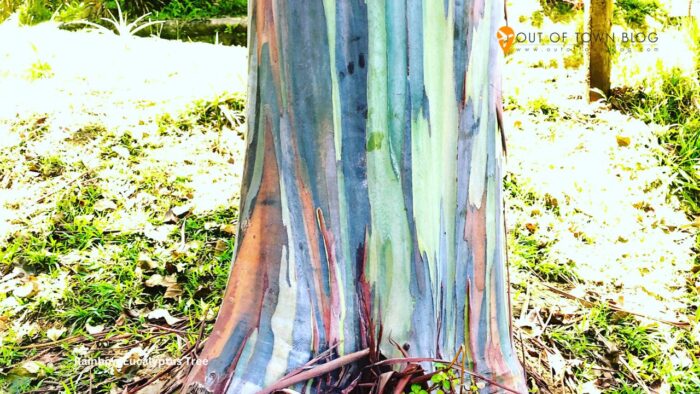

Hidden in the lush forests of Mindanao is one of nature’s most stunning sights: the Rainbow Eucalyptus. This tree is so striking that many people think it has been painted by hand. Its bark shows off bright streaks of green, blue, orange, maroon, and purple, making it look almost unreal, more like something from a fantasy movie than a real tree in the Philippines.

Rainbow Eucalyptus Tree
But there’s more to this tree than its beautiful looks. The rainbow eucalyptus has an interesting story that includes its biology, history, and many uses. It is native to the Philippines and is one of the few eucalyptus species found naturally in the Northern Hemisphere. In Mindanao, it is not just popular online—it also plays an important role in the local environment and economy.
The Origin of the Rainbow Eucalyptus
The Rainbow Eucalyptus (Eucalyptus deglupta) grows naturally in the tropical areas of the Philippines, Indonesia, and Papua New Guinea. In the Philippines, it is especially common in Mindanao, where the warm weather, rich soil, and plenty of rain help it thrive.
Most people think of eucalyptus trees as Australian, but the rainbow eucalyptus is different because it comes from tropical rainforests. It grows very quickly and can reach over 200 feet (60 meters) tall, making it one of the tallest trees in the tropics.
Why Does It Have Rainbow-Colored Bark?
The rainbow colors are not from paint, fungus, or a rare mutation. They are part of a natural process.
As the tree grows, pieces of its outer bark peel off at different times during the year. The new bark underneath starts out bright green because it has a lot of chlorophyll. As it gets older, the bark slowly changes color, turning blue, purple, orange, and reddish-brown.
Since different parts of the bark peel off at different times, you can see many colors on the tree at once. This is what gives the tree its famous rainbow look.

Uses of the Rainbow Eucalyptus
The rainbow eucalyptus is not just beautiful—it is also useful in many ways.
1. Paper Production
People grow this tree for pulpwood because it grows quickly and has a straight trunk, which makes it valuable for making paper.
2. Construction Material
Its hardwood is used to make lumber for light construction, furniture, and other wood products for inside the home.
3. Reforestation Projects
Because it grows fast and does well in tropical areas, people often use it for reforestation and to help restore damaged land.
4. Ornamental Landscaping
People all over the world plant rainbow eucalyptus trees in gardens, parks, and private estates because they look so amazing.

Fascinating Facts About the Rainbow Eucalyptus
It’s One of the Only Native Eucalyptus Species in the Philippines
Many people think eucalyptus trees only grow in Australia, but the rainbow eucalyptus is actually native to the forests of the Philippines.
It Can Grow Extremely Fast
When conditions are right, young rainbow eucalyptus trees can grow several feet in just one year.
Every Tree Has a Unique Color Pattern
No two rainbow eucalyptus trees look exactly alike. Each trunk develops its own natural “abstract painting.”
It Becomes More Colorful with Age
Older trees often display richer, deeper, and more dramatic color contrasts.
It’s a Global Attraction
The rainbow eucalyptus is now grown in tropical regions worldwide, including Hawaii, Costa Rica, and parts of Thailand, where travelers seek it out for photography and eco-tourism.
A Natural Treasure of Mindanao
In Mindanao’s forests, the rainbow eucalyptus reminds us that some of nature’s most amazing wonders are right around us. It is more than just a colorful tree—it stands for biodiversity, resilience, and the unique beauty of the Philippines’ natural heritage.
Whether admired by botanists, photographers, environmentalists, or curious travelers, the rainbow eucalyptus continues to inspire awe—proving that sometimes the most incredible works of art are not made by human hands, but by nature itself.
Follow and subscribe to OutofTownBlog.com on Facebook, Twitter, Instagram, Pinterest, and YouTube for more Travel-related updates.
Read: 12 Reasons Sunlight Ecotourism Island Resort Should Be Your Next Island Escape

Stacie Harris is a local resident and reporter of the Maple Grove area. Stacie reports on medicine and science for the Maple Grove Report.