Just over a month after Southside Community Health Services opened its new location on East Lake Street in Minneapolis, the medical center is set to launch what is believed to be the state’s first out-of-hospital clinic for survivors of sexual violence.
Southside was founded in 1971 and is designated as a Federally Qualified Health Center, meaning it receives federal funding to provide care to underserved and low-income patients. It serves an incredibly diverse population, in part due to its location in a neighborhood with relatively high percentages of residents who identify as Black, Hispanic, and American Indian.
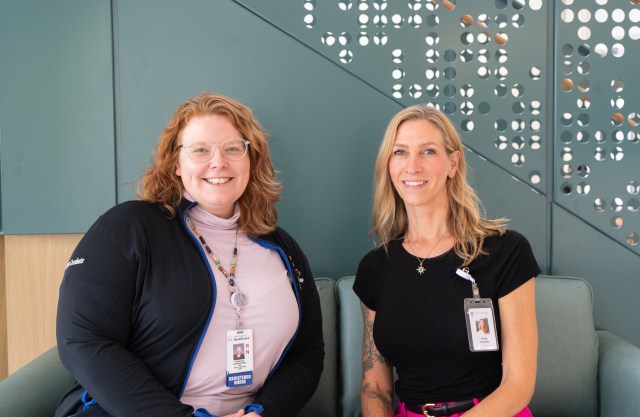
Sheila Kennedy, Southside’s medical director and a trained sexual assault nurse examiner, told MinnPost she has been wanting to open an examination and healing center for more than 15 years. Throughout her career, she has often met patients who underwent forensic exams in traditional emergency rooms after assaults, only to be on their own to find necessary follow-up services, like additional medical screenings, therapy or housing.
Related: University of Minnesota studies reveal disparities in intimate partner violence between rural and urban areas
“I just thought this is such a gap, and there’s such a need here for it to have kind of a one-stop shop for sexual violence survivors,” Kennedy said.

The new clinic, set to open in early July, will offer two main services: the forensic exam and follow-up care. Someone who was recently assaulted can come to Southside, no appointment required, and receive physical and mental health evaluations for any immediate needs before the forensic exam is performed. From there, Southside will page a sexual assault nurse examiner from the Hennepin Assault Response Team, based out of Hennepin Healthcare, to conduct the exam.
After the exam, Southside will offer follow-up medical care, including screenings and treatment for sexually transmitted infections, mental health services and coordination with community resources. Kennedy said these follow-up programs are crucial for preventing long-term health consequences that affect survivors at higher rates, like depression, anxiety, substance misuse, chronic pain, cardiovascular diseases and cancer.
“What I want this clinic to be is prevention of these long-term effects of sexual violence,” Kennedy said.
For assault survivors, the traditional hospital environment can be deeply distressing, said Victoria Pickering, the training and technical assistance director at the Minnesota Coalition Against Sexual Assault. Emergency rooms are busy, bright and loud. Patients may fear coming into contact with an illness, or that their injuries or pain level may not deem them “worthy” of getting emergency medical care.
“We are socialized to believe that (the emergency department) is where we go for the worst of the worst situations, and so if somebody is not in severe pain or is not suffering from life-threatening injuries, they may be uncomfortable,” Pickering said.
Southside designed its clinic intentionally to create a safer atmosphere. The forensic exam room is in a quiet, back corner next to the therapists’ rooms, so one can be called over quickly if needed.
The clinic is also designed to respond to people disproportionately impacted by sexual violence, including people of color, LGBTQ+ individuals and those with disabilities.
Studies have found, for example, that Hispanic, Black and Native women are affected by sexual violence at higher rates than white women; LGBTQ+ individuals face higher likelihoods of intimate partner violence; and people with disabilities are both more likely to be sexually assaulted and less likely to report it compared to those without disabilities.
To combat the disparities, Southside is partnering with local nonprofits that work with survivors of gender-based violence to establish more culturally-responsive service lines, Kennedy said. They include Esperanza United, serving the Latino community, Phumulani for African immigrants and refugees, the Minnesota Indian Women’s Resource Center for Native women, ThinkSelf for deaf, deaf-blind or hard of hearing individuals and the Sexual Violence Center, which has specific programs for LGBTQ+ survivors.
Vivian Huelgo, president and CEO at Esperanza United, celebrated the partnership, saying that beyond the ability to do referrals, it will enable clear communication and shared learning. “We’ll be able to provide updated and additional training and capacity building, and they can for us as well,” she said.
The partnerships may also help relieve patient anxiety, particularly for those with reason to fear traditional medical care.
For example, Huelgo said the Latino community in the Twin Cities is still reeling from the impact of Operation Metro Surge, when federal agents camped out at clinics and hospitals looking for patients to detain.
Related: 30 years in, Aurora Center is still supporting U of M sexual violence survivors
Many of the people who receive services from Phumulani arrive in the U.S. from war-torn countries, said founder and executive director Comfort Dondo. Some of their experiences, she said, have led to distrust of larger health care systems.
Aaron Gutzke, the executive director at ThinkSelf, told MinnPost through a sign-language interpreter that most people have never met a deaf person or learned how to communicate with them, which creates barriers and can cause access fatigue for deaf, deaf-blind or hard of hearing survivors.
Katie Meinhardt, ThinkSelf’s advocacy coordinator, made the point that a clinic designed to welcome the most hesitant patients is actually best for all patients. “When you design a system for the margins, the people who are on the outside,” she said through the interpreter, “you’re actually serving everyone.”
If you or someone you know is impacted by sexual or gender-based violence:
- Sexual Violence Center’s crisis line, available 24/7: 612-871-5111
- Esperanza United’s crisis line, available in English or Spanish 24/7: 651-772-1611
- Phumulani: 612-251-9421
- Minnesota Indian Women’s Resource Center: 612-728-2000
- ThinkSelf partners with Day One of Cornerstone, which has a crisis line available 24/7 that is monitored by people trained to work with those who are deaf, deaf-blind and hard of hearing: 612-399-9995 (text/SMS) and 1-866-223-1111 (voice)
- OutFront Minnesota’s help line, answered Monday through Friday between 9 a.m. and 5 p.m.: 800-800-0350 or email avp@outfront.org
Related