
Follow ZDNET: Add us as a preferred source on Google.
ZDNET’s key takeaways
- You can customize your Android Auto through developer mode.
- This mode is usually for developers and app creators.
- It’s easy to access, and you can make significant improvements.
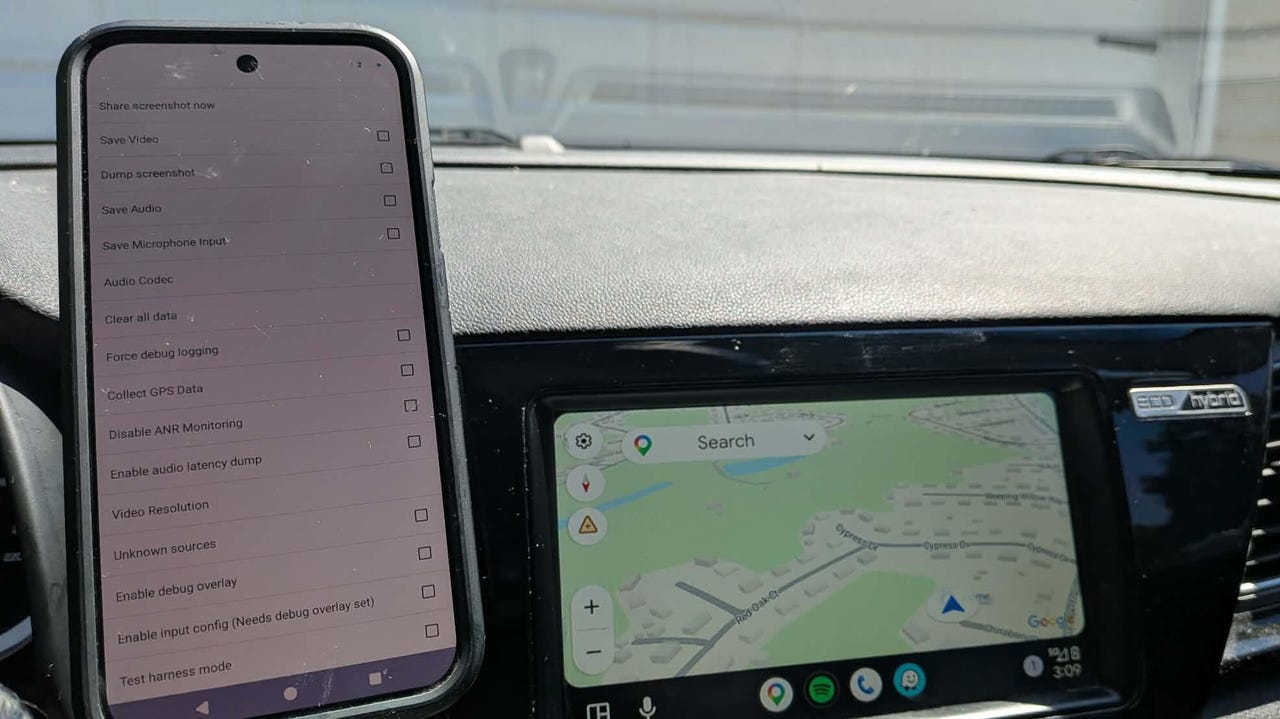
For most users, Android Auto is simply an easy way to handle navigation, music, and messages while driving. But if you’re willing to tinker a bit, you’ll find several settings that can completely change the look and functionality of your car’s infotainment system.
Just like your Android phone, Android Auto has its own developer mode that lets you access settings not intended for everyday users. And like your phone’s version, you can actually make some significant improvements. It’s not difficult to access, and it only takes a minute.
Also: I’ve used Android Auto for years, and these 5 changes solved my biggest issues
Here’s how to dive in.
The Android Auto app doesn’t appear among your regular apps, so you’ll need to go through your settings to find it.
- From Settings, search for Android Auto.
- Tap it, then select “Additional settings in the app.”
- Scroll down until you see Version, then tap it 10 times.
- Choose OK.
Once you have that enabled, here are some of the biggest changes you can make.
The best Android Auto developer setting changes
1. Force Day/Night Mode
This is my favorite developer setting, and the one most drivers could use immediately. By default, Android Auto automatically switches between day and night mode. Depending on your car, this might be triggered by the time of day, ambient lighting, or your headlights.
Also: Android phone slow? I changed 2 developer settings for an instant speed boost
With this setting, you can permanently set it to day or night, or use “Phone controlled,” which follows your phone’s system settings (like scheduled dark mode, sunrise-to-sunset theme, or always-on dark mode). If you’ve ever been frustrated when your Android Auto map switches to dark mode on a cloudy day or changes back and forth as you enter a tunnel, if you find dark mode hard to see or day mode too bright, or if you simply prefer one over the other, this is an easy way to have consistency.
You can change this option for Maps in the traditional settings, but in developer settings, you can tweak it for the whole interface.
2. Video resolution
This is especially useful if you have a large display in your car. Usually, Android Auto negotiates with your car to find a resolution that’s acceptable while saving bandwidth. This means it’s not always running at its highest possible resolution.
Also: Google will let you watch YouTube videos on Android Auto now – is your car supported?
The options you have will depend on your phone, but you can click through each one to see how it looks. If you go too high, especially on an older car, the screen may look worse or go completely black, but you can easily switch back.
Once you choose your new resolution, you’ll likely notice an immediate upgrade in sharpness on everything from your icons to your background art to your maps.
3. Wireless Android Auto
If you only use Android Auto occasionally, you might want to check this one out. By default, once you have Android Auto set up, it connects automatically whenever you start your car (if your car supports wireless connectivity). That’s convenient, but it drains your phone’s battery even if you’re not using Android Auto.
When you uncheck the Wireless Android Auto box, you’ll only connect when you plug in the cable. If the only time you use Android Auto is for navigation on a long road trip, you’d be better off saving your phone’s battery by not having it connect all the time.
4. Unknown sources
The Android Auto equivalent of sideloading, selecting the “Unknown sources” feature lets you install apps that aren’t officially sanctioned by Google.
Also: This fundamental Android feature is ‘absolutely not’ going away, says Google – but it is changing
Usually, your Android Auto apps are limited to mainstream options. But by using unknown apps, you can install niche media players that let you play local content or even play YouTube videos (official support is on the way, by the way), apps that mirror your entire phone, apps that monitor your car’s diagnostics, including OBD-II data and engine metrics, and improved smart home control apps.
For example, I’ve had success using AA Browser as a web browser, CarTube and CarStream to watch YouTube videos on my car’s screen, Fermata Auto to play locally stored videos, and Widgets for Auto to install custom Android phone widgets like weather, a calendar, and smart home toggles.