Pack Like a Pro: The 7kg Carry-On Only Challenge


Travel Light: Master the 7kg Carry-On Challenge

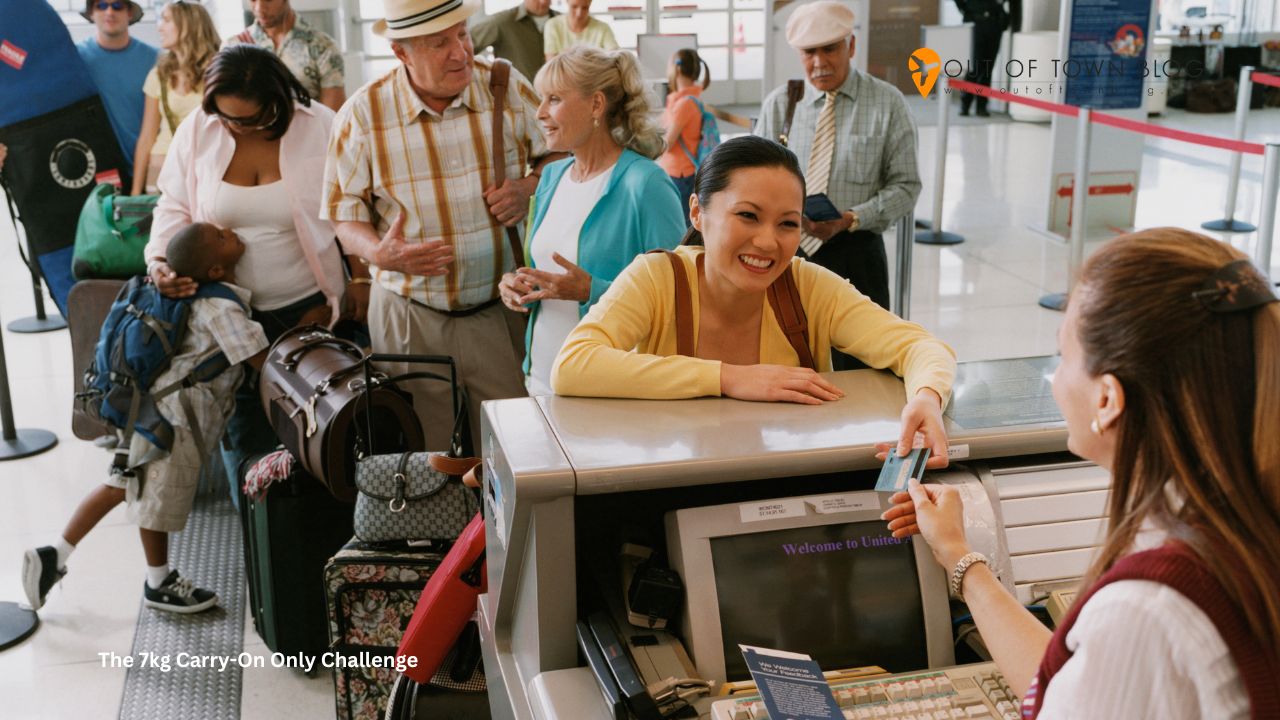
There’s a moment every frequent traveler knows—the quiet tension at the check-in counter as your bag is lifted onto the scale. Seven kilograms. Not 7.1. Not “almost.” Just seven.

The 7kg Carry-On Only Challenge

The 7kg Carry-On Only Challenge

On Philippine domestic flights with carriers like Cebu Pacific, Philippine Airlines, and AirAsia Philippines, that number is firm for economy passengers. Yet seasoned travelers move through airports effortlessly with nothing but a compact carry-on—never checking baggage, never paying extra, never repacking at the counter.

This isn’t luck. It’s a method.

After years of island-hopping—from Siargao surf trips to quick Manila–Cebu runs—I’ve learned that mastering the 7kg limit is less about sacrifice and more about precision.


The Foundation: Choosing the Right Bag

Your bag determines everything. Choose poorly, and you’ve already lost before packing begins.

Hard-shell luggage may look sleek, but it’s deceptively heavy—often consuming 2–3kg of your allowance before you’ve even packed a single item. Experienced travelers lean toward:

  • Lightweight backpacks (ideally 1–1.5kg)
  • Soft-sided carry-ons that can compress slightly
  • Minimalist designs without unnecessary structure

A well-chosen bag doesn’t just carry your belongings—it minimizes its own presence in your weight limit.

Airport staff focus on weight, not appearance. A bag that looks small but is dense can fail, while a fuller but lighter bag passes easily.


The Capsule Wardrobe Mindset

Packing light begins with rethinking clothing. You are not packing outfits—you are packing combinations.

Instead of bringing something new for each day, build a small system of interchangeable pieces:

  • Two to three lightweight tops
  • One or two bottoms
  • One outer layer for flights and cooler environments
  • One outfit that can shift between casual and slightly formal

Neutral colors—black, white, navy, beige—make mixing effortless and reduce the need for extras.

Clothing should also be practical: quick-drying fabrics allow you to wash and reuse items during your trip. Across destinations like Cebu City or Davao City, laundry services are widely available and inexpensive.


Packing Technique: Compression is Everything

Packing Technique
Packing Technique

How you pack is just as important as what you pack.

Rolling clothes instead of folding them saves space and reduces wrinkles. Packing cubes can compress items further while keeping everything organized. The goal is to eliminate unused space.

Shoes, often the bulkiest item, should never be left empty. Fill them with socks, chargers, or smaller items. Every gap in your bag is an opportunity.

Strategic placement matters as well. Heavier items should sit close to your back if you’re using a backpack, improving balance and comfort.


Toiletries: Ruthless Downsizing

Toiletries quietly consume both space and weight.

Full-size bottles are rarely justified on short domestic trips. Instead:

  • Transfer liquids into travel-size containers (100ml or less)
  • Use solid alternatives such as soap bars or shampoo bars
  • Bring only what you will realistically use

Anything else can be purchased at your destination. Convenience stores and pharmacies are easy to find throughout the Philippines, making it unnecessary to carry excess.


Go Digital, Stay Light

Paper may seem negligible, but it adds up and creates clutter.

Boarding passes, hotel confirmations, and itineraries can all be stored digitally. Offline maps, travel guides, and entertainment can also live on your phone.

Minimize electronics as well. A single charging cable or a compact multi-port charger can replace multiple cords.

If a device serves only one purpose, reconsider whether it’s worth the weight.


What You Wear Counts

Airlines weigh your bag, not what you wear. This creates an important advantage.

Wearing heavier items during your flight can significantly reduce your luggage weight:

  • Sneakers instead of packing them
  • Jeans or heavier pants instead of lighter alternatives
  • Jackets or hoodies layered on your body

Clothing with pockets can also hold small, dense items such as phones, wallets, or power banks.

This simple shift can remove up to a kilogram from your bag without violating any rules.


Personal Item Strategy

Pack Smart
Pack Smart

Most economy tickets include not only a 7kg carry-on but also a personal item.

Used correctly, this becomes your most effective workaround.

A small backpack, tote, or laptop bag can carry:

  • Electronics and gadgets
  • Travel documents
  • Heavier, compact items

Distributing weight between your main bag and your personal item lets you stay within limits while still carrying everything you need.


The Final Step: Weighing with Intention

Never rely on guesswork.

A portable luggage scale is one of the most useful tools a traveler can own. Weigh your bag before leaving for the airport and aim for a buffer—around 6.3 to 6.5kg—to account for small additions.

Airline staff rarely make exceptions, and even a slight excess can mean repacking or paying additional fees on the spot.

Preparing at home avoids unnecessary stress at the airport.


The Philosophy of Traveling Light

The 7kg challenge is not about restriction—it is about discipline and clarity.

When you carry less, every part of the journey becomes easier. You move quickly, avoid lines, and adapt without being tied down by your belongings.

Over time, you begin to notice a pattern: most of what you once considered essential never actually gets used.

Travel becomes lighter—not just physically, but mentally.

And in that space, the experience itself takes priority.


Follow and subscribe to OutofTownBlog.com  on  Facebook Twitter Instagram, Pinterest, and YouTube  for more Travel-related updates.

Read:


Source link

Leave a Reply

Subscribe to Our Newsletter

Get our latest articles delivered straight to your inbox. No spam, we promise.

Recent Reviews


The Argentine markets took a beating last week, but US Treasury Secretary Scott Bessent has rushed to the rescue with a remarkable promise: America will provide what amounts to unlimited support to prop up Argentina. His declaration that “all options for stabilization are on the table” – including swap lines, direct currency purchases, and buying Argentine government debt – represents an extraordinary blank check.

But here’s the real kicker: Bessent claims Argentina is “systemically important” to the United States. This is financial fiction at its finest.

The Systemic Importance Fairy Tale

Let’s be brutally honest: Argentina poses zero systemic risk to the US financial system. US banks have minimal exposure to Argentine debt. Trade between the two countries is negligible in the context of the US economy. If Argentina defaulted tomorrow, would Bank of America collapse? Would JPMorgan need a bailout? Of course not.

The “systemically important” label is being stretched beyond recognition. If Argentina qualifies, then virtually every country in Latin America – including those the Trump administration just hit with massive tariffs – should qualify too.

This isn’t about systemic risk; it’s about political preferences dressed up as financial necessity.

The Moral Hazard Machine

By offering essentially unlimited support to Argentina, the US is creating a massive moral hazard problem.

The message to Milei’s government is clear: Don’t worry about the hard work of building political coalitions or passing sustainable reforms through parliament. Uncle Sam will catch you if you fall.

This is precisely the wrong incentive structure. Argentina has defaulted on its sovereign debt nine times since independence. Nine times!

The country’s political economy is fundamentally broken, cycling through periods of populist spending followed by crisis and austerity. US financial support doesn’t fix this cycle – it enables it.

The Real Threat to US Financial Stability

Here’s the irony: While Argentina poses no systemic risk to the US, this bailout policy might. Not directly through financial contagion, but through the precedent it sets.

If the US Treasury is willing to provide unlimited support to a serial defaulter like Argentina simply because its president is friendly with Trump and speaks the MAGA language, what’s to stop other countries from playing the same game? Elect a Trump-friendly president, make the right noises about being an ally, and wait for the bailout when things go south.

This transforms the US Treasury into a global lender of last resort – not for genuine systemic crises, but for politically favored regimes. That’s a commitment the US cannot afford, especially when federal debt is already approaching dangerous levels.

The Buenos Aires Reality Check

The timing of Bessent’s announcement is telling. It comes right after Milei’s party got hammered in regional elections in Buenos Aires. The political message from Argentine voters was clear (rightly or wrongly): Milei’s policies aren’t working, and he lacks popular support for his reforms.

Rather than forcing Milei to build political consensus and pursue genuine institutional reforms, the US bailout allows him to double down on rule by decree. This is not sustainable governance. It’s political theater subsidized by American taxpayers.

Where’s the “America First”?

This is where the contradictions become absurd. The Trump administration came to power promising “America First” – putting American workers and taxpayers first, being tough on countries that don’t pay their fair share, and ending the era of the US playing global policeman.

Yet here we are, with a Trump-appointed Treasury Secretary promising unlimited support to a country that has stiffed international creditors nine times. How exactly does bailing out Argentine bondholders put American workers first? How does propping up a foreign government that can’t even win local elections serve US interests?

The Unlimited Commitment Problem

Perhaps most troubling is the open-ended nature of Bessent’s commitment. “All options are on the table” with no conditions, no limits, no requirements for structural reform. This isn’t a rescue package – it’s a blank check.

What happens when Argentina needs another injection in six months? Another one in a year? At what point does the US Treasury say “enough”? And when that moment comes as it inevitably will won’t the withdrawal of support trigger an even bigger crisis?

The Alternative Nobody Wants to Discuss

Here’s what should happen: Argentina should be allowed to face the consequences of its political and economic choices.

Yes, this means potential default. Yes, this means economic hardship. But it also means the country would finally be forced to confront its fundamental problems rather than papering them over with foreign money.

The IMF learned this lesson the hard way after multiple failed bailouts. Now the US seems determined to repeat the same mistakes, but with even less conditionality and oversight.

Conclusion

This isn’t about whether one likes or dislikes Milei. It’s about the dangerous precedent of the United States providing unlimited financial support to a country that poses no genuine systemic risk to the US financial system (or to the global financial system).

The moral hazard is obvious: Why should any country pursue painful but necessary reforms when they can simply wait for a bailout? Why should Argentina fix its institutional problems when the US Treasury stands ready to finance its dysfunction?

Ultimately, this policy doesn’t just threaten US financial stability through the direct cost of supporting Argentina.

It threatens the entire architecture of international financial responsibility. When “systemically important” becomes a political designation rather than an economic reality, and when bailouts come with no strings attached, we’re not promoting stability. The US taxpayers will be subsidizing instability.

The world is indeed upside down when an “America First” administration puts Argentine bondholders before American taxpayers.

PS Back in July I warned about Milei not being the miracle maker that some was making him up to be in my blog post Classical Liberals, Let’s Be Honest About Milei


Source link