
In the world of ride-on mowers, certain parts of the machine get all of the attention. Debates continue on aspects like Kawasaki vs. Kohler engines, deck size, and the effectiveness of each unit’s cutting system. However, even if you have the latest and greatest equipment, in terms of yard health, you might be overlooking something basic on your machine, your tires.
If you notice that your typically uniform cut is uneven, it could be a lack of air in your tires. There are many different mower models, so the easiest way to get the proper pounds per square inch (PSI) setting for your machine is looking along the sidewall of the tires. For example, according to Cub Cadet, most consumer level riding mowers require a maximum of 10 PSI in the rear and 14 PSI for the front tires.
However, one or more tires losing air can also angle your cutting deck. This can mean certain sections of grass will be cut shorter than others, leading to a variety of lawn issues. Unless you regularly verify tire pressure when the mower is cool and sitting on a level area, the situation may go unnoticed as it’s less conspicuous than a flat. Gone unaddressed, weeds could start creeping in, and parts of your yard could turn brown as grass cut too short can become susceptible to fungus. Unfortunately, it’s not just PSI you need to watch with regard to your mower’s tires.
Worn tires can tear up the grass and be more prone to leaks
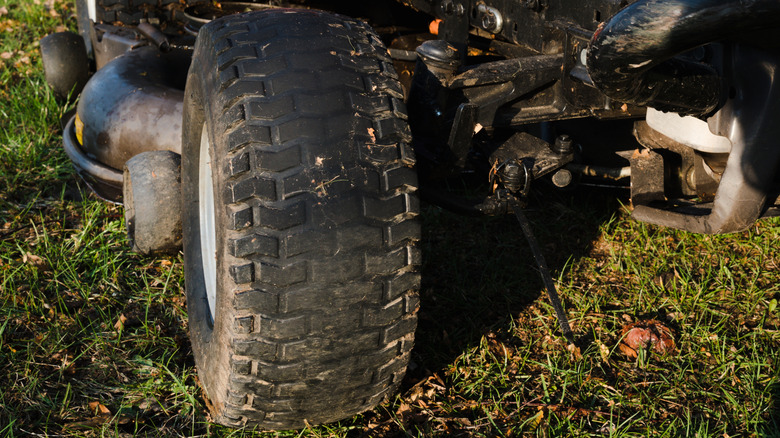
You might think that since riding mowers spend the majority of their time on grass, their rubber treads will last forever. However, they do wear down over time, due to things like loose debris in the grass and sun exposure. Worn out tires can create a few issues that will negatively impact your green space.
Those tread patterns are designed to give you enough traction to maneuver around your property when mowing. Aging tires will often be missing rubber material, and that can cause them to spin in place as they attempt to gain some traction, potentially damaging your grass and creating ruts. If you happen to get stuck, attempting to get your mower free can also create quite a bit of disruption to the turf.
Unfortunately, traction isn’t the only area problems arise. Worn tires can also experience cracking as a result of the sun’s rays. This can make the tire more susceptible to punctures and air leaks. If you’re concerned about losing air pressure, these simple tips can help keep your lawn mower tires from going flat.
This doesn’t necessarily mean you should run out of to buy new mower tires at the first since of trouble. New tires can also damage grass, for instance if you’re reckless cornering in a zero-turn — one of the things to stop doing if you have a riding mower — so doing regular maintenance is vital to avoid needing replacements prematurely.

Stephan is the sports journalist for the Maple Grove Report.