
The US Military’s Next-Gen GPS Program Is Still A Failure Nearly $8B Later


What could you do with ten years and 8 billion bucks? If you said “build a functional GPS control system for the US military,” you’d be incorrect. The Pentagon’s multi-year effort to establish a next-generation GPS program remains a non-starter, even after sinking billions upon billions into it. It’s so far from the finish line, it’s looking like the government could end up just cutting its losses and abandoning it altogether.

Originally due in 2016 (and at a price tag of $3.7 billion), the GPS Next-Generation Operational Control System, also known as OCX, still isn’t functional. That didn’t stop it from being formally delivered to the US Space Force in mid-2025, though. Nine months after that handover, OCX is still littered with unresolved technical issues system-wide. Meanwhile, the military is still managing its global navigation network with the aging infrastructure it wanted to get away from over a decade ago.

If OCX were up and running as intended, it’d control more than 30 GPS satellites as well as newer GPS III spacecraft. These craft are equipped with advanced anti-jamming and encrypted “M-code” signals used in modern warfare. But persistent software defects, rampant cybersecurity challenges, and a litany of system integration failures have prevented it from even becoming operational in the first place.

So much time and money with little to show for it

OCX was originally priced at $886 million when it was first contracted in 2010. The mind reels trying to comprehend how a project could get so far off course. Defense officials’ excuse to Congress is that testing with real satellites and equipment uncovered more issues than expected. Many of these remain unresolved, and the mounting setbacks are verging on insurmountable. Rather than trying to fix them all, senior leaders are now apparently considering upgrading the decades-old legacy control system and canceling OCX entirely.

It’s not an overstatement for some analysts to call it one of the most significant software failures in U.S. military history. A review from the country’s own Government Accountability Office (GAO) would agree. The GAO determined the project has suffered from poor acquisition decisions, a failure to spot development problems, and a persistently high defect rate in the software itself. The Pentagon explored potential cancellation as far back as 2016, yet the program has continued to waste time and money for an entire decade since.

The government blames the contractors, including Tomahawk missile manufacturer RTX. Unsurprisingly, the contractors point the finger right back at the government. Meanwhile, OCX remains unfinished with no resolution in sight.


Source link

Leave a Reply

Subscribe to Our Newsletter

Get our latest articles delivered straight to your inbox. No spam, we promise.

Recent Reviews


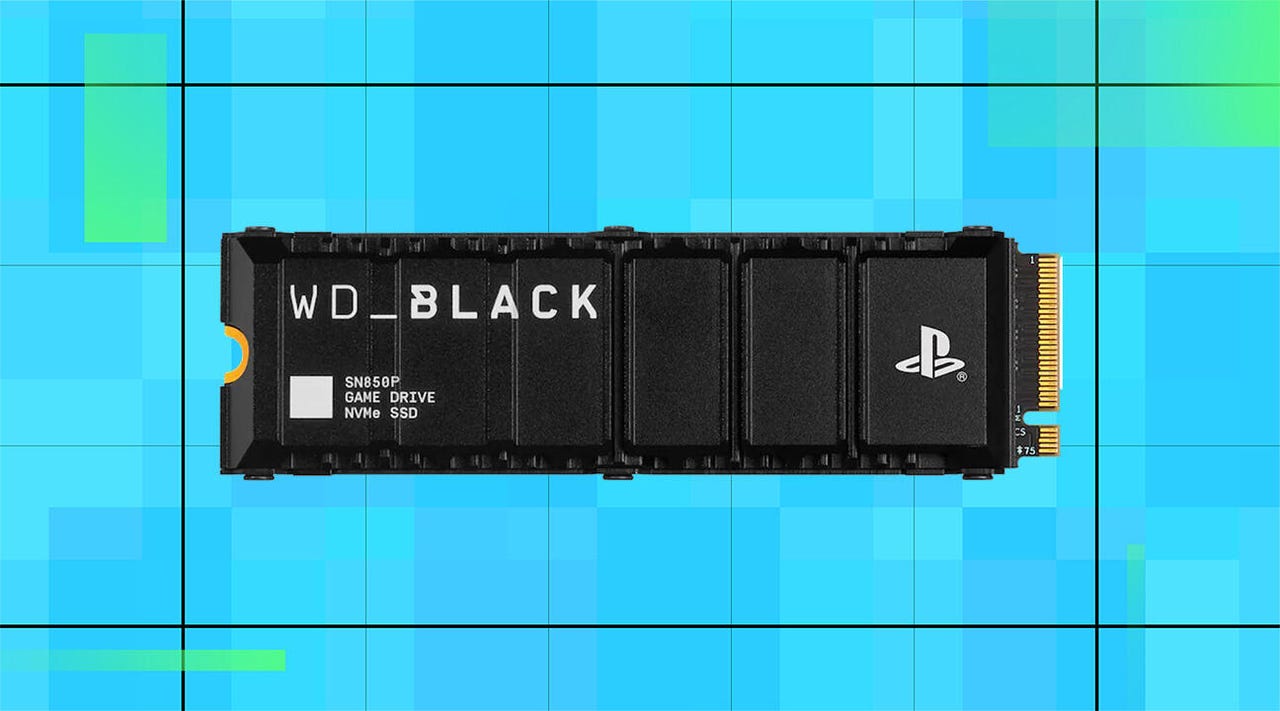
A WD Black SN850P SSD on a blue background

WD/ZDNET

High SSD prices got you down? Right now during Best Buy’s Tech Fest sale, you can save up to $2,800 on the WD Black SN850P storage drive. And while it’s officially licensed for use with PlayStation 5 consoles, it’s easy to reconfigure for use in gaming laptops and desktops for a boost in storage capacity. 

Also: The best Amazon Spring Sale deals: Save on streaming, Apple, Samsung, and more

Available in capacities from 1TB to 8TB, the WD Black SN850P can double, or even quadruple, your available storage space, giving you plenty of room for large game downloads, save files, screenshots, highlight reels, and more. With read and write speeds up to 7300 and 6600 MB/s, respectively, you’ll get much faster loading times than traditional HDDs as well as quicker access to your favorite apps, games, and programs.

Also: SSD vs HDD: What’s the difference, and which should you buy?

The integrated heatsink helps keep everything running at optimal temperatures to prevent data loss or corruption due to overheating. It can also be removed for easier installation in smaller PCs. 

By using flash memory rather than traditional mechanical platters, the WD Black SN850P can provide you with years of reliable data access with much less risk of internal damage due to shocks and bumps.

How I rated this deal 

Prices for RAM and SSD storage drives have skyrocketed as AI companies buy up available stock to power LLMs. And while this particular model is licensed for use with the PS5, you can quickly reconfigure it for use in laptops and desktop PCs. The 2TB model is marked down to $400, bringing it closer to pre-AI pricing, and the 8TB version is almost $2,800 off. While it’s still very expensive, it’s the lowest price I’ve seen on a high-end SSD in a long time. That’s why I gave this deal a 5/5 Editor’s rating.

Deals are subject to sell out or expire anytime, though ZDNET remains committed to finding, sharing, and updating the best product deals for you to score the best savings. Our team of experts regularly checks in on the deals we share to ensure they are still live and obtainable. We’re sorry if you’ve missed out on this deal, but don’t fret — we’re constantly finding new chances to save and sharing them with you at ZDNET.com


Show more

We aim to deliver the most accurate advice to help you shop smarter. ZDNET offers 33 years of experience, 30 hands-on product reviewers, and 10,000 square feet of lab space to ensure we bring you the best of tech. 

In 2025, we refined our approach to deals, developing a measurable system for sharing savings with readers like you. Our editor’s deal rating badges are affixed to most of our deal content, making it easy to interpret our expertise to help you make the best purchase decision.

At the core of this approach is a percentage-off-based system to classify savings offered on top-tech products, combined with a sliding-scale system based on our team members’ expertise and several factors like frequency, brand or product recognition, and more. The result? Hand-crafted deals chosen specifically for ZDNET readers like you, fully backed by our experts. 

Also: How we rate deals at ZDNET in 2026


Show more


Source link