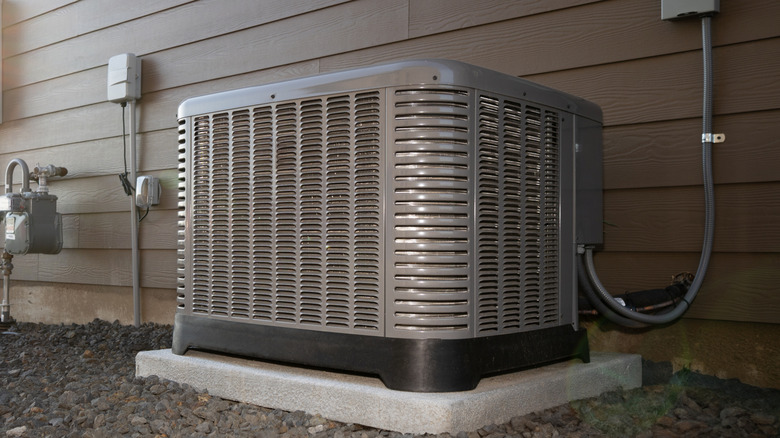
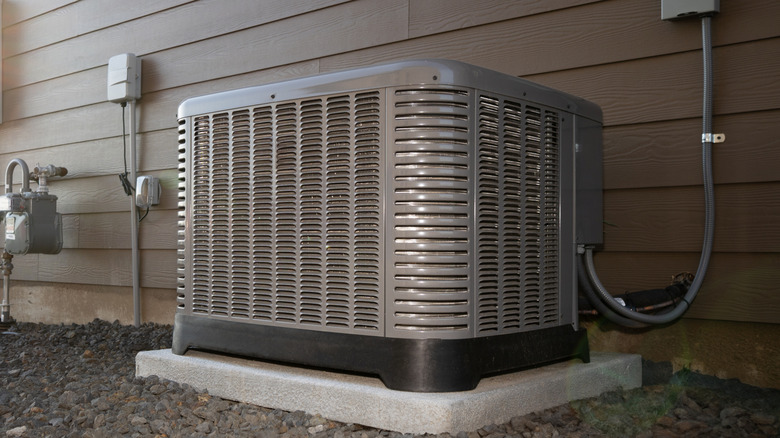
These New HVAC Units Could Help Ease Energy Costs & Power Grid Consumption


As much of a relief as it can be to turn on the heat in the winter or the air conditioning in the summer, flipping the switch has its drawbacks. Overusing these systems is just one of multiple mistakes that can increase an electric bill, but in an increasingly extreme climate, it’s hard to avoid. However, an air-conditioning company has introduced an intriguing new HVAC concept that tries to alleviate this issue. These new HVAC units from the American corporation Carrier could theoretically reduce electric bills and ease power grid strain by providing energy part-time, instead of just consuming it.

The HVAC unit Carrier began trialing in 2025 heats and cools as normal, but also features an internal battery. Carrier controls the batteries remotely, charging them when energy is at its most affordable (such as during peak solar production) and switching to battery power once power grid demand increases and electricity gets expensive. This reduces grid strain and the need to use energy directly from utility companies. At the time of publication, only a handful of homes in the United States are testing this tech, along with homes of several Carrier employees, though the company hopes to install it in millions of homes over the next decade-plus.

Naturally, testing these HVAC systems is a major part of getting them ready for more widespread use. Next to that, the biggest question surrounding them is how utility companies are responding to this innovation.

How this HVAC tech could benefit customers and utility companies
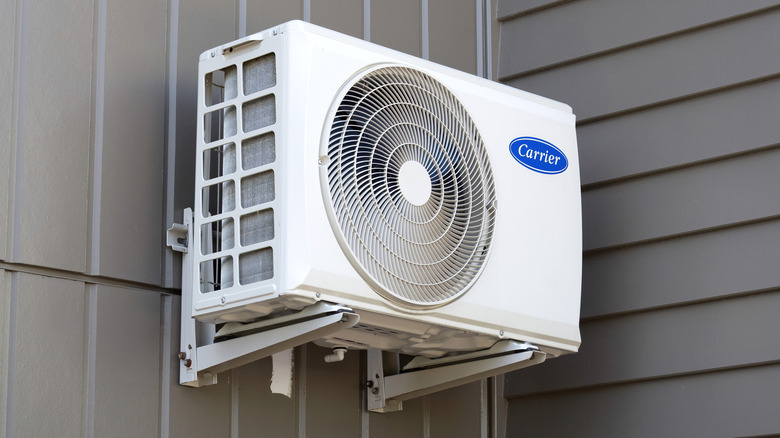
On paper, this concept seems very pro-customer and, to some extent, anti-utility company. It would reduce customers’ reliance on their electricity providers, lowering their bills and the revenue utility companies would generate. While this is true, power demand and consumption have increased sharply in recent years, largely due to the rise of artificial intelligence data centers. With some ever-hungry data centers in the U.S. plugged directly into power plants, the nation’s power grid can only handle so much. It can’t expand at the speed needed to meet the combined consumption of these data centers, homes, businesses, and more.

In this context, the rollout of battery-aided HVAC may become a roundabout win for utility companies. While expanding and improving energy infrastructure does make utility companies money, battery HVAC systems are a net benefit in terms of time and cost, and their implementation means less pressure to expand rapidly and massively. In 2026, eight unspecified utility companies across the U.S. will begin working with Carrier to test its battery HVACs. The hope is that this data will accelerate the approval of this battery technology, allowing Carrier to get its new HVAC units into customers’ hands as quickly as possible, thereby helping with their monthly bills.

At a time when just about everything is getting increasingly more expensive, and in a climate where some form of temperature control is almost a necessity, Carrier’s battery-equipped HVACs can’t come soon enough. Time will tell what results the testing yields and how the approval process will unfold.


Source link

Leave a Reply

Subscribe to Our Newsletter

Get our latest articles delivered straight to your inbox. No spam, we promise.

Recent Reviews


A new class-action lawsuit, filed on Monday by three teenage girls and their guardians, alleges that Elon Musk’s xAI created and distributed child sexual abuse material featuring their faces and likenesses with its Grok AI tech.

“Their lives have been shattered by the devastating loss of privacy, dignity, and personal safety that the production and dissemination of this CSAM have caused,” the filing says. “xAI’s financial gain through the increased use of its image- and video-making product came at their expense and well-being.”

From December to early January, Grok allowed many AI and X social media users to create AI-generated nonconsensual intimate images, sometimes known as deepfake porn. Reports estimate that Grok users made 4.4 million “undressed” or “nudified” images, 41% of the total number of images created, over a period of nine days. 

X, xAI and its safety and child safety divisions did not immediately respond to a request for comment.

The wave of “undressed” images stirred outrage around the world. The European Commission quickly launched an investigation, while Malaysia and Indonesia banned X within their borders. Some US government representatives called on Apple and Google to remove the app from their app stores for violating their policies, but no federal investigation into X or xAI has been opened. A similar, separate class-action lawsuit was filed (PDF) by a South Carolina woman in late January.

The dehumanizing trend highlighted just how capable modern AI image tools are at creating content that seems realistic. The new complaint compares Grok’s self-proclaimed “spicy AI” generation to the “dark arts” with its ease of subjecting children to “any pose, however sick, however fetishized, however unlawful.”

“To the viewer, the resulting video appears entirely real. For the child, her identifying features will now forever be attached to a video depicting her own child sexual abuse,” the complaint reads.

AI Atlas

The complaint says xAI is at fault because it did not employ industry-standard guardrails that would prevent abusers from making this content. It says xAI licensed use of its tech to third-party companies abroad, which sold subscriptions that led abusers to make child sexual abuse images featuring the faces and likenesses of the victims. The requests ran through xAI’s servers, which makes the company liable, the complaint argues.

The lawsuit was filed by three Jane Does, pseudonyms given to the teens to protect their identities. Jane Doe 1 was first alerted to the fact that abusive, AI-generated sexual material of her was circulating on the web by an anonymous Instagram message in early December. The filing says she was told about a Discord server by the anonymous Instagram user, where the material was shared. That led Jane Doe 1 and her family, and eventually law enforcement, to find and arrest one perpetrator.

Ongoing investigations led the families of Jane Does 2 and 3 to learn their children’s images had been transformed with xAI tech into abusive material.


Source link