
Aerodynamics are complicated, even at the level of pickup trucks. At first glance, it seems pretty straightforward — the less “stuff” is fighting the wind, the more slippery the vehicle becomes and, thus, the more efficient it is at highway speeds. Automakers have taken this into consideration since the early days of motoring, with today’s cars being so aero-conscious that many don’t even have traditional door handles anymore. It’s a little trickier with pickup trucks, though, because of that cargo-carrying bed. So how do you, as the owner, squeeze out some extra MPG?
One might assume that fitting something over the bed, whether it be a tonneau cover or bed cap, would improve fuel efficiency, and in a lot of cases that’s true. The key phrase here being “a lot of cases.” Covering the bed changes the aerodynamic profile of a pickup truck; that much is obvious. Unlike driving with the tailgate down, which is commonly accepted as being a negative, a tonneau cover or bed cap allows the air somewhere to “touch down” and flow off the back. Aerodynamics dictate that stagnant air in the back of a pickup bed creates drag and tries to suck the vehicle backwards. Tonneau covers keep the air from entering the bed, thus eliminating that void.
Except, that’s not how it works. It actually depends on what kind of bed cover you use, versus whether you have one or not. Believe it or not, in some cases, it’s actually better to run without a bed cover.
The aerodynamics of tonneau covers
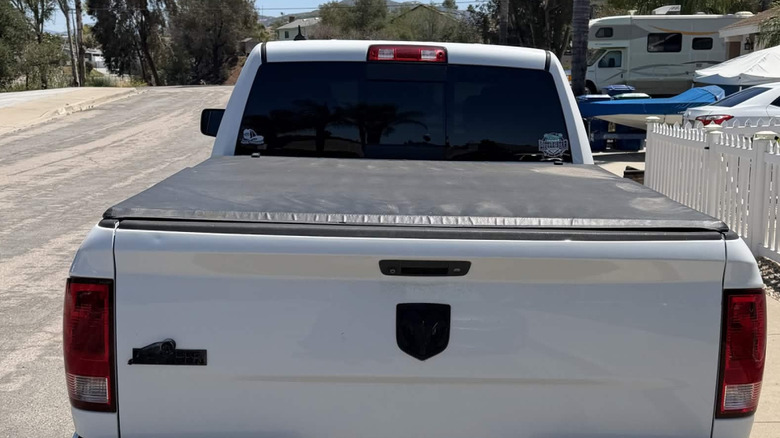
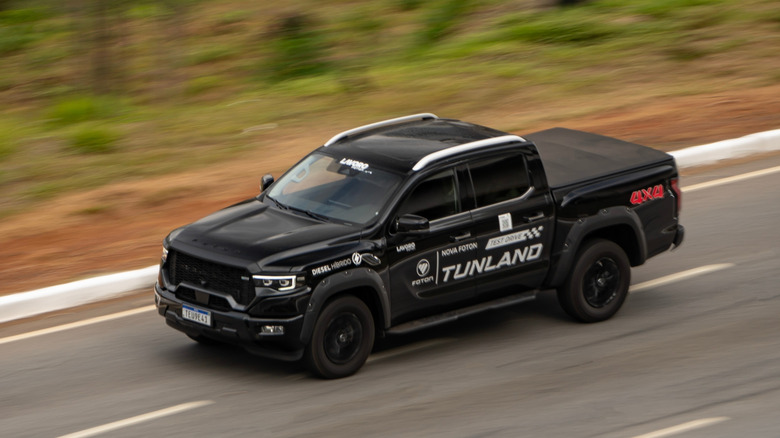
Most trucks offer a wide variety of covers, even for trucks with bed rails, so we’re not spoiled for choice here. But which cover you select makes a difference; there are three main types of tonneau cover that we’ll look at. There are lightweight, flexible coverings like those made of vinyl, rigid structures made of fiberglass or aluminum, and fastback-style covers. The latter group are those slanted covers that look like the back of a Humvee or a Cybertruck, a relatively recent innovation that’s been patented by Ram but is also available as an aftermarket add-on.
The actual percentages of fuel savings one could expect from a tonneau cover vary from study to study, with one verified by Motor Trend claiming a 4 to 10 percent boost in economy with a hard cover on a third-gen Dodge Ram. Moreover, their test truck was faster with the cover on than off. A finding by Consumer Reports contradicts this, however, with a similarly shaped fourth-gen Ram actually getting worse MPG with a soft cover fitted, dropping from 22.3 to 21.4.
The point is to prevent the air from stagnating and pulling the truck back like a parachute, so providing a surface for it to run along is ideal. That’s why the more aerodynamic slanted cover provides the greatest drag reduction while flexible covers offer the least, as you can see in a recent study at Research Gate. This is further substantiated by a 2007 study analyzing 13 different cover types on yet another Dodge Ram, to keep the data consistent.
How this affects your real-world MPG
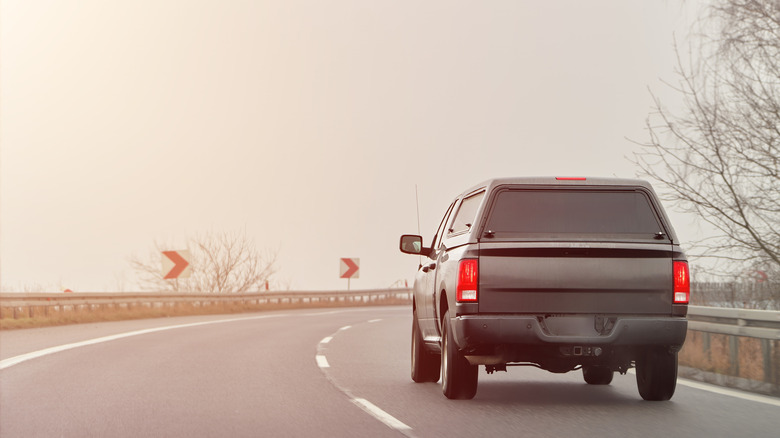
Obviously, we’re not all driving around at the same speed or with the same trucks, so comparing one result to another in the real world is more case-by-case. In other words (no pun intended) your mileage may vary. Online discussion forums and long-term reviews often praise the tonneau cover and/or bed cap for its ability to provide substantial benefits to your MPG (along with weatherproofing your cargo), but there are a few factors to consider.
First and foremost, these benefits will only apply at highway speeds. Drag increases with velocity-squared, so the faster you’re going, the more effective it’ll be. At low speeds, especially with bed caps or larger rigid covers over full-size beds, you’ll be weighing down your truck; in this case, something like a flexible cover would work best. Just make sure to properly adjust the tension; you want the vinyl to be as tight as possible to prevent the cover from flapping like a sail and ruining the aerodynamic benefits.
Next, if you want the most improvements, you want a nice, gentle curve from the roof to the tailgate; that’s why big rigs have those devices on the back of trailers, to reduce the wake they leave and, thus, improve efficiency. That’s why a slanted bed cover is so effective, but again, this comes at the penalty of weight. While no studies exist (yet) concerning these weight penalties versus highway gains, the bottom line is this: if you do more highway driving, invest in even a basic tonneau cover. If you do city driving, get something lightweight to avoid dragging around unnecessary mass.

Stephan is the sports journalist for the Maple Grove Report.