Harbor Freight has it priced at $199.99, regardless if you purchase in-store or online. The online checkout process lists two delivery options for my location in northeast Oklahoma: Flat rate shipping takes five to seven days and adds $23.94 to the price, while express shipping delivers the 68-pound Doyle vise to my door in two to four days for $99.55.
Harbor Freight, known for listing competitors’ prices for comparison, suggests the Wilton 1765 vise lists for $1,187.45, $987 more than the Doyle. While we can find the Wilton Tradesman 1765 vise priced as low as $790.49 from multiple sources using Wilton Tools’ Buy Now button, including Amazon with free shipping, that’s still over $500 more than Harbor Freight’s Doyle vise, even with flat rate shipping. One exception is if we use Harbor Freight’s express shipping; then the Doyle vise is only $490 cheaper.
We don’t recommend buying home improvement tools based solely on the cheapest price. However, with 383 customer reviews to its credit as of this writing, the Doyle vise holds a 4.9-star rating, with 99% of customers recommending it to others.
A comparison of Doyle and Wilton vises
The Doyle 6-inch swivel vice, one of Harbor Freight’s top-rated tools, features replaceable hardened-steel jaws that actually measure 6.5 inches wide (6 ½-inch is also cast into the side of the vise body) with an advertised 6.5-inch maximum jaw opening. However, we’d advise caution clamping anything approaching 6 inches in the vise jaws as there aren’t a lot of threads left to engage the spindle nut at that point. The Doyle vice is made from 60,000 PSI ductile cast iron, and it provides up to 9,900 pounds of clamping force.
The Doyle vise mounts to a workbench or stand through four holes equally spaced around the base. To enable rotating the vise 360 degrees, loosen the two handles securing the body to the base without removing them completely. An anvil measuring 3.6 by 4.5 inches is located on top of the vise’s body.
In addition to the Doyle’s 6.5-inch jaw opening, the vise has a 4.25-inch throat depth, which allows it to accept pipe and round stock up to 6 inches in diameter using the pipe jaws located below the main vise jaws. The pipe jaws have a minimum holding capacity of 1-inch in diameter.
The specs provided by Wilton don’t have the same level of detail as Harbor Freight’s documents. Still, the Wilton Tradesman 1765 has listed dimensions of 6.5-inch jaw width, maximum opening of 6 inches, and a 4-inch throat depth.
The Wilton 1765 features similar mounting and 360-degree swivel features as the Doyle, and authorized retailer specs indicate the Wilton vise is made of the same 60,000 PSI ductile iron. Both vises come with lifetime warranties and enclosed spindle nut designs to discourage contamination and loss of lubricant in the rotating mechanism.
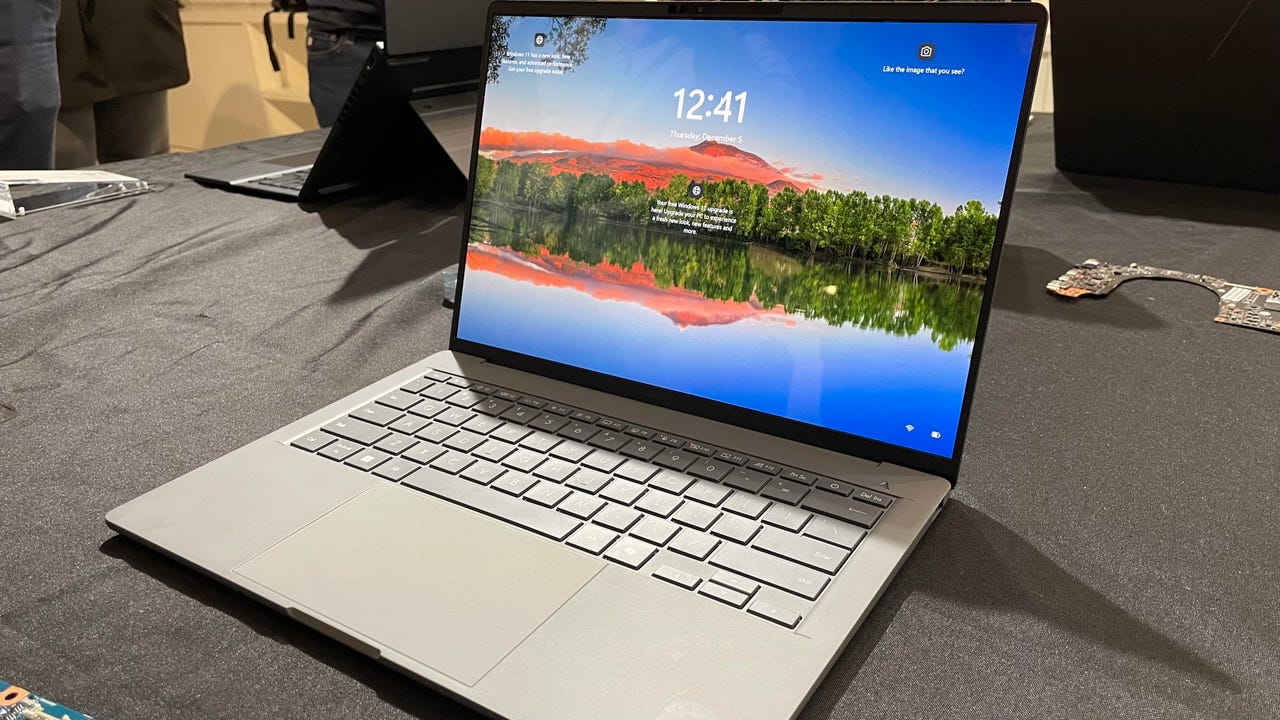
Are you buying — or planning to buy — a new PC? What are you going to do with the computer it’s replacing?
You may be planning to hand down the old device to a family member or reassign it to another employee in your small business. Perhaps you’ll donate it to a local charity, put it up for sale, or take advantage of an offer to trade in the old device.
Before you do any of those things, your top three priorities should be:
Migrating your apps and files to your new device
Expunging your personal data from the old PC
Resetting the device’s operating system so the new owner can be productive right away
As with all things Windows, there are multiple ways to accomplish these goals.
In this post, I’ll outline your options and share some thoughts on when to choose each one. (Spoiler: The most important question is who you’re planning to give the PC to.)
But first, a few things you should do to get that old PC ready.
Step 1: Migrate your apps and files
Your new PC comes with a squeaky-clean Windows installation. Before you can get any serious work accomplished, you need to install the apps you use regularly. You can use this opportunity to weed out old apps you no longer use, or you can simply transfer everything and sort through it later.
Start on the old PC by running the Windows Backup app, which is included with Windows 11.
The Windows Backup app saves a core group of apps and settings.
Screenshot by Ed Bott/ZDNET
It uses your personal Microsoft account to back up Windows settings, as well as a complete list of apps you’ve installed from the Microsoft Store. It also lets you back up your personal folders (Documents, Pictures, and Desktop) to OneDrive so you can transfer them from the cloud to your new PC.
Run Windows Backup on your old PC to save its current state to the cloud. Then go to the new PC and sign in with the same Microsoft account. As part of the initial setup process, you’ll get the option to restore your new profile from the backup you just saved.
Back on the old PC, you’ll need to take an additional inventory of legacy software (older Windows desktop apps not available in the Microsoft Store). You can find a list of these programs by going to Control Panel > Programs > Programs & Features. Make sure you have any activation codes or installer files you need to reinstall the apps on your new PC, and remove the activation for any programs that require that option.
Next, make sure your important files are backed up. If you use a cloud storage service like OneDrive, Google Drive, or Dropbox, any data files you’ve uploaded will be easy to transfer to the new PC. As an extra precaution, I recommend creating an image backup of your old PC, saving its contents to a removable hard drive. (For instructions, see “Windows 10 how-to: Create a full image backup using this hidden tool.” Don’t let the title fool you; this ancient utility works with Windows 11, too.) That backup file contains everything on your old PC. In a pinch, you can mount the backup image on your new PC to recover a lost file.
Step 2: Use encryption tools to wipe the old data
It’s worth noting that installing a new operating system doesn’t automatically wipe out traces of the old data. The bits and bytes that make up those erased files remain on the disk, potentially accessible by someone with modest technical skills and disk recovery software. If you’re concerned that the next owner of your PC might try to recover your old files, you should take extra precautions.
The simplest solution, on a PC running Windows 11 Pro, is to enable BitLocker Disk Encryption and set it to encrypt the entire disk. (For details, see my complete guide to BitLocker.)
After you wipe the PC, any data left behind that you previously encrypted will be unrecoverable unless someone has your 48-digit recovery key. On a PC running Windows 11 Home, delete any important data files and then manually wipe the erased disk space. Open a Command Prompt window and run this command:
cipher /w:c:
If your old PC is still running Windows 10, this is an excellent time to upgrade to Windows 11, which still has a long and productive life ahead of it.
Step 3: Prepare the old PC for a new owner
With those chores out of the way, it’s time to choose one of the three options to install a new copy of Windows 11 for the new owner of your old PC.
Option1: Reset
This is the simplest way to remove your existing installation and replace it with a clean copy of Windows 11. You don’t have to mess with bootable media, and you can choose the option to download a completely fresh set of installation files instead of using your current Windows system files.
To get started, go to Settings > System > Recovery. Under the “Recovery options” heading, click the Reset PC button. For the first step of this procedure, you have to choose one of two options.
If you’re giving your PC to someone else, choose the “Remove everything” option.
Screenshot by Ed Bott/ZDNET
Do not choose the Keep My Files option. Because you’re passing this device along to someone else, choose Remove Everything.
You also have the option to wipe the drive clean. That precaution adds significant time to the reset and isn’t necessary if you’re passing the PC along to a family member or an employee in your small business. But do take this precaution if you’re selling or donating the PC to a stranger who might be tempted to rummage through the deleted-but-not-yet-overwritten disk space in search of recoverable data files.
The second step offers the choice of a Cloud Download or a Local Reinstall. The only reason to choose the cloud option is if your PC has some nagging performance or reliability issues and you’d like to give its new owner a completely fresh start. If your old PC has no underlying issues, skip the big download and choose the option to reinstall using the existing files.
After making those choices, you’ll need to confirm your decision to reset the PC twice more. The first confirmation offers you one final chance to change your mind about the cloud download and data wipe options.
When you get to the final confirmation screen, click Reset to begin the process. After it’s complete, you’ll be at the initial setup screen for Windows 11. You can safely power the PC down at that point and let the new owner complete the setup and sign in with their personal account.
Option 2: Reimage
The built-in Windows 11 Reset process works for most situations, but there’s one specific circumstance where it falls short. If you own a Windows laptop or gaming PC with custom drivers and utilities that enable specific hardware features, you might prefer to reinstall the manufacturer’s factory image. This option is especially useful if the PC is still covered under the manufacturer’s warranty.
If the recovery image is available on your PC, you might be able to restore that image directly. Some OEMs also offer the option to download a clean, up-to-date image during the recovery process. To get started, go to Settings > System > Recovery. Under the “Recovery options” heading, click “Restart now.” If you see an option to restore the factory image, you’re in luck.
If that option’s not available, you might be able to download a current recovery image from the PC maker, which you can use to create bootable recovery media. For details and download links for Dell, HP, Lenovo, and Microsoft Surface PCs, see “How to get a free Windows (or Linux) recovery image for your OEM PC.”
Option 3: Reformat and clean install
The ultimate recovery option for Windows experts is a clean install of Windows 11 using bootable media. This option is appropriate if a recovery image isn’t available and you want to reformat the system disk completely to remove all traces of your old data.
Before you begin, go to Settings > System > Activation. Confirm that your copy of Windows is properly activated. If you see any activation errors listed, resolve them before continuing.
To begin the reset process, you’ll need bootable installation media. Use the Media Creation Tool to download the latest installation files from the Download Windows 11 page and create a bootable USB flash drive.)
Next, find the right combination of keystrokes and/or incantations to boot directly from that drive into the Windows Setup program. Use the built-in tools to reformat and/or repartition the target drive. Don’t skip the formatting step, or all your old files will remain on the drive in a Windows.old folder that will be accessible to the new owner.
Finally, install Windows 11. Because you’re doing this on hardware that’s already been activated, you can skip the part where you’re asked to enter a product key; Windows will install the correct edition and activate automatically after the new owner signs in for the first time.
To provide the best experiences, we use technologies like cookies to store and/or access device information. Consenting to these technologies will allow us to process data such as browsing behavior or unique IDs on this site. Not consenting or withdrawing consent, may adversely affect certain features and functions.
Functional
Always active
The technical storage or access is strictly necessary for the legitimate purpose of enabling the use of a specific service explicitly requested by the subscriber or user, or for the sole purpose of carrying out the transmission of a communication over an electronic communications network.
Preferences
The technical storage or access is necessary for the legitimate purpose of storing preferences that are not requested by the subscriber or user.
Statistics
The technical storage or access that is used exclusively for statistical purposes.The technical storage or access that is used exclusively for anonymous statistical purposes. Without a subpoena, voluntary compliance on the part of your Internet Service Provider, or additional records from a third party, information stored or retrieved for this purpose alone cannot usually be used to identify you.
Marketing
The technical storage or access is required to create user profiles to send advertising, or to track the user on a website or across several websites for similar marketing purposes.