This Temporary Solution For High Fuel-Prices Isn’t Ideal For Every Type Of Engine


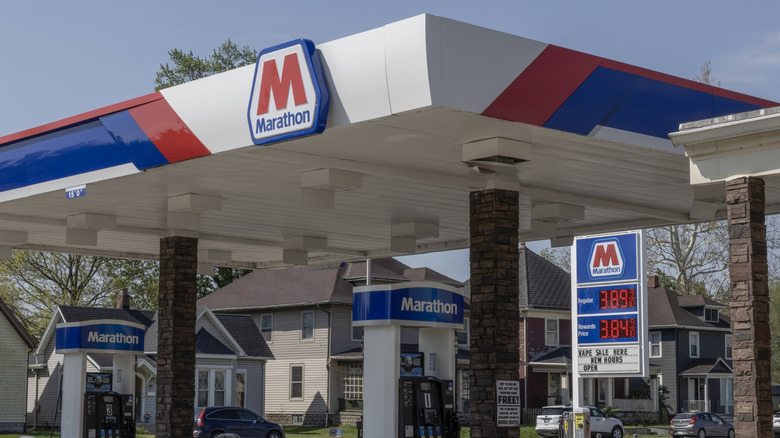
Fuel prices across the United States and the world at large continue to increase. Gas recently hit a four-year high and it’ll be some time before it drops, leading to a federal effort to reduce the economic impact of higher prices. The EPA approved the nationwide sale of E15 fuel beginning May 1, with availability initially scheduled to continue until May 20. Some states have committed to making it available for longer, though: Florida, for example, began selling E15 on May 1 and will continue selling it for 90 days. 

E15 is a winter mixture that contains between 10.5% to 15% ethanol — a slight increase from the 10% ethanol of typical gas. E15 is usually 5 to 10 cents cheaper per gallon, which should help offset the increased fuel costs. Unfortunately, not all drivers can or should take advantage of this move, as not all cars can use it safely. Ethanol is a form of alcohol; inside an older car can dislodge rust in the fuel tank (thereby gumming up the fuel system), wear out parts like fuel pumps, and get stuck in filters. It’s generally only recommended for cars built after 2001 and those with flex-fuel capabilities. Motorcycles, engines on equipment like chainsaws and lawn mowers, heavy-duty vehicles, and off-roading vehicles should also avoid using E-15. E-15 won’t just affect some vehicles, either; there are also economic and environmental elements to consider.

Further impacts of E-15 fuel use
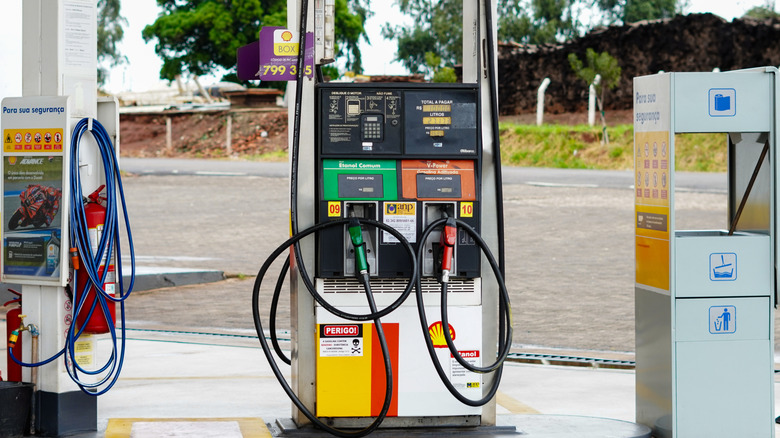
On top of its incompatibility with older vehicles, there are other downsides to E15. For one, 15’s higher ethanol content means it will offer slightly lower fuel economy than E10, although there’s an argument to be made that other factors like driving speed, wind, and more will have a larger impact on your vehicle’s fuel economy than the additional ethanol in your fuel tank. Still, even if you did everything to avoid wasting fuel in your car, odds are E15 will still send you back to the gas station a bit sooner by virtue of its lower gasoline content.

Meanwhile, there’s the matter of E15’s environmental impact. Overall, there are conflicting reports regarding whether it’s a greener alternative to normal gas. It has been claimed that warmer temperatures are linked to increased evaporation of E15 and eventual smog formation. This is not a view shared by all: A 2023 study published in Fuel, for example, found that E15 is more environmentally-friendly than regular gasoline, with reduced emissions across the board. At the time of publication, there’s still a fair amount of time left for U.S. drivers to fill up with E15, so those with the right vehicles should be able to save some money at the pump — hopefully without any adverse effects on the environment.


Source link

Leave a Reply

Subscribe to Our Newsletter

Get our latest articles delivered straight to your inbox. No spam, we promise.

Recent Reviews


Payments are at the heart of any accounting and bookkeeping firm. But what happens when your clients don’t pay on time? The cost isn’t just financial. There’s often an emotional toll, a drain on time, and a real barrier to growth.

We surveyed 800 small-to-medium business (SMB) decision-makers across Australia and New Zealand to better understand the state of late payments today, and the findings are powerful.

The GoCardless Pursuing Payments 2025 report uncovers the true impact of late payments and what you can do to break the cycle.

1. The pursuit of payments is still a time drain for many businesses

Over a quarter of small businesses report spending up to an hour every single week just chasing down late payments.

Think about that – a full hour of every work week, gone. That’s an hour that could be spent onboarding new clients, innovating, or simply focusing on what you do best. Instead, it’s lost to the frustrating and awkward task of debt collection.

Unfortunately, the problem isn’t getting any better. Nearly half of SMBs are waiting longer for payments now than they were just 12 months ago (48% in Australia and 51% in New Zealand). And with rising living costs, it’s no surprise that 59% are worried this trend will only get worse.

2. Late payments take a financial and emotional toll

While the time sink is bad enough, the financial and emotional impact can be far-reaching.

41% of Australian SMBs and 35% of New Zealand SMBs report that their payments are, on average, more than 14 days overdue. And these delayed payments inflict a substantial financial hit with 15% of SMBs in both countries losing up to $1,000 every month.

Our research also showed the heavy emotional cost. Chasing money creates tension with customers, causes stress, and makes business owners feel anxious and frustrated. It’s a vicious cycle that can distract from your day-to-day business and core purpose.

3. Bad cash flow is bad for growth

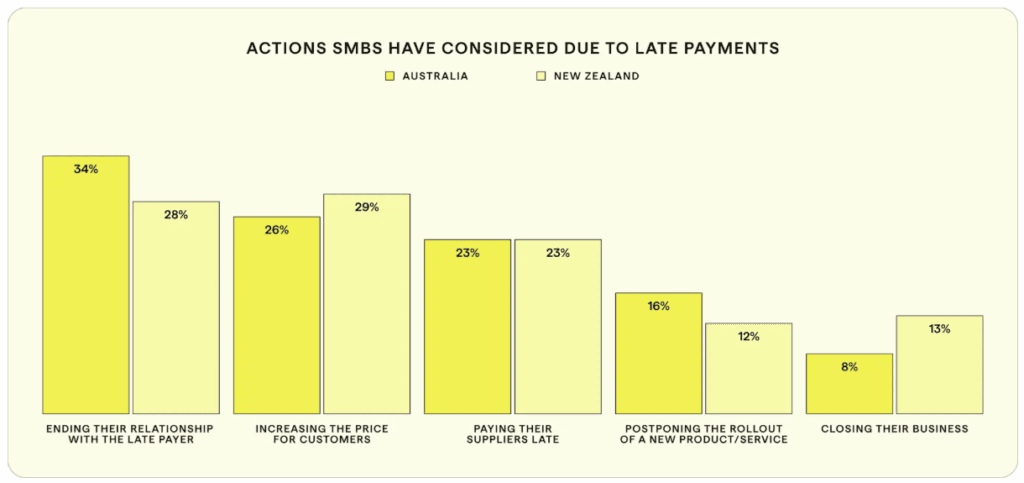
Delayed payments often mean poor cash flow and can result in businesses having to put a hold on future plans. Here are a few growth-stunting actions Australia and New Zealand SMBs have been forced to take due to late payments:

  • Ending their relationship with the late payer
  • Increasing the price for their customers
  • Being late paying their suppliers
  • Postponing the rollout of a new product or service
  • Closing their business

4. Late payments don’t have to be inevitable

So, what’s the solution? The good news is that SMBs are hungry for change. Two-thirds of the businesses we surveyed said they’re interested in using new technology to get a handle on late payments.

That’s where technology comes in. By adopting modern methods like bank payments with GoCardless (think, payments that are made from one bank account directly to another, including BECS Direct Debit and PayTo) you can create, schedule and collect payments for your client invoices on their due date – all from your existing Xero setup.

It’s time to put a stop to the endless admin, reduce costly payment failures, and get paid up to 47% faster. Connect GoCardless to Xero to automate invoice payments, and take back control of your business’s cash flow and growth. 

Was this article helpful?

YesNo


Source link