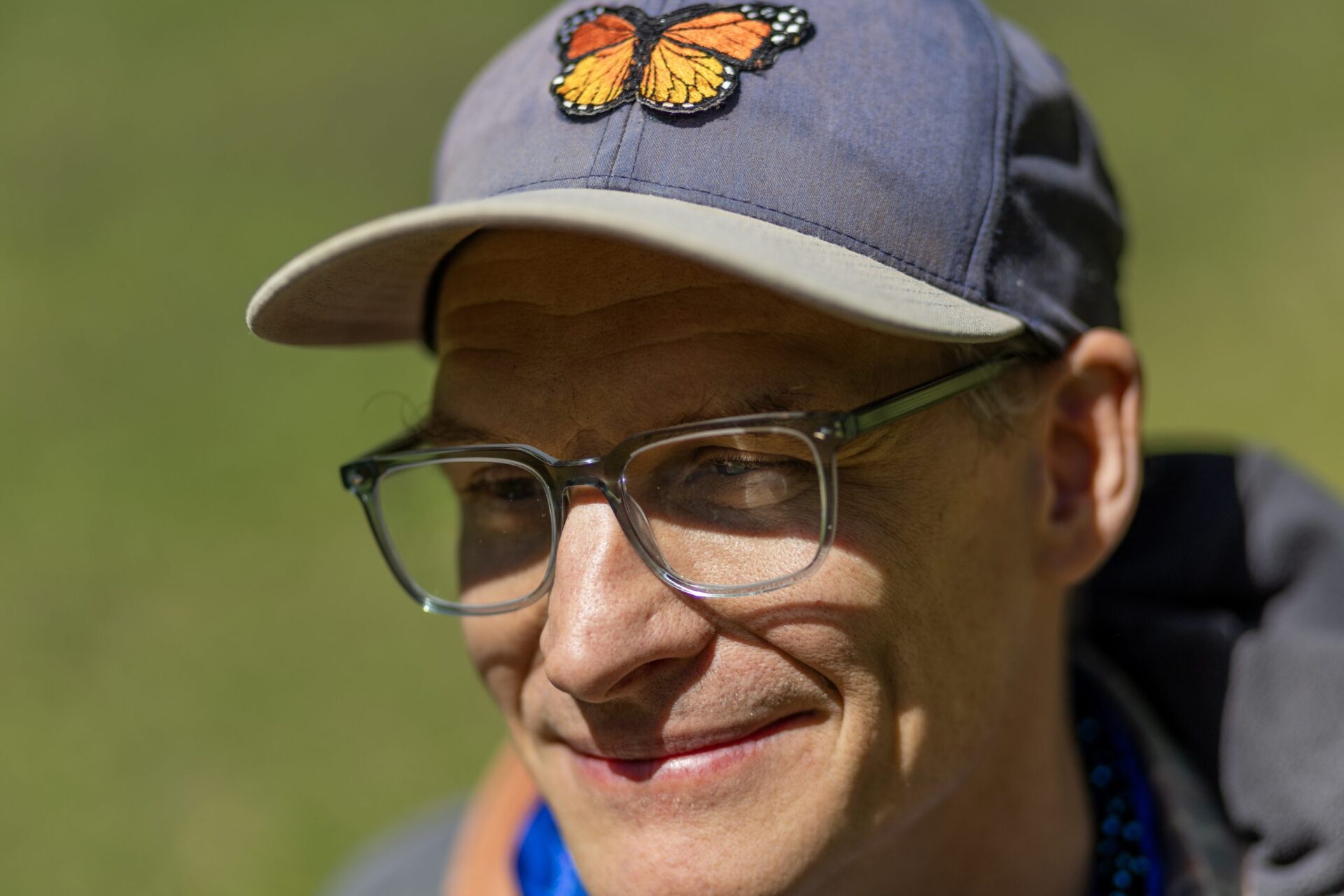
The first piece of music JG Everest ever composed was a thunderstorm on an upright piano when he was only a few years old.
Starting with light “raindrops” on the high keys, the song built as the rain picked up and the “thunder” crashed before the storm subsided and the sun emerged. Even without traditional verses, these nature-inspired compositions were music to a young Everest, becoming an early foundation for his “Sound Garden” musical installations at natural sites.
“I’m kind of creating these similar, almost weather system approaches to the way I write the music,” said Everest, a longtime leader in the Twin Cities’ experimental music scene. “(It’s) kind of a full circle back to that very early thing.”
Now, as Everest plans a permanent Sound Garden at Eagan’s Caponi Art Park, he’s also collaborating with the Earl E. Bakken Center for Spirituality & Healing at the University of Minnesota’s School of Nursing to explore how art and artistic activities – like meandering through trees, immersed in music – can benefit brains and bodies.

For the Sound Gardens, Everest visits a nature site, typically a park, and composes music that fits with the surrounding environment. After a few weeks of visits, composing and tweaking the music, he places spatial speakers, each playing a different part of the symphony, throughout the site to create an immersive, 3D soundscape.
No two listening experiences are the same. The gardens are self-guided and the composed music is meant to mingle with natural sounds, meaning each individual hears a different mix of the arrangement.
Some Sound Gardens feature dancers and choirs moving throughout the space. Others have poems and sculptures by community members scattered about. Notebooks are strewn throughout the site to let guests share thoughts, feelings, ask questions, draw pictures or write poems and stories.
Related: New Minneapolis healthcare clinic expands access for low-income residents
“It was more than just creating the immersive experiences,” Everest said. “It was wanting to continue to lean into this idea of creating opportunities for ceremony.”
Everest’s first Sound Garden took place in 2016 at the Ordway Prairie Preserve in west-central Minnesota. Now, they’ve popped up throughout the state, including in state parks, on frozen lakes, at the Minneapolis Institute of Art and in health care facilities and nursing homes.
In early 2024, Everest partnered with the Bakken Center to bring more Sound Gardens to the community. One goal of the work is to advance the field of “NeuroArts,” an emerging research area that studies how artistic activities can impact people’s brains and bodies.
“While the arts have of course played a critical role in civilizations for centuries, we are just beginning to understand all the ways in which they support health and healing, wellbeing and flourishing in individuals and communities,” said Sue Nankivell, Bakken Center’s director of business development and community relations, by email.

So far, research on the Sound Gardens is anecdotal, with both Everest and Nankivell describing listeners becoming more relaxed, attuned to their senses and even moved to tears. Broader studies suggest that music and exposure to nature have positive impacts on physical and mental health and wellbeing.
“There’s decades of research that show that nature exposure and music reduce stress, anxiety and improve mood. So Sound Gardens bring these two powerful interventions together in one place,” Mary Jo Kreitzer, director of the Bakken Center.
From 2024: Summer Sound Garden in Silverwood Park
Currently, Everest is working on a proof of concept for a permanent Sound Garden at Caponi Art Park, planned to launch this fall. If successful, he said the hope is to have the permanent installation ready in 2027.
It’s all about providing visitors with a more immersive art experience, said Adam Scarborough, the park’s program and volunteer coordinator.
“All of our programming is essentially about connecting art in nature and connecting our community with art in nature,” he said. The Sound Gardens “sit at the heart of what Caponi Art Park wants to do.”

Everest said the possibility of a permanent Sound Garden also makes it easier to gather quantitative data rather than only visitor testimonials, which could encourage more research into the health effects. The research, in turn, could prompt the development of more art and community spaces.
Art-centered gatherings, whether a performance or “a project where people can be part of a place,” he said, are increasingly rare but as important as ever. “I just think community art centers can be that,” Everest said.
Related