What Happens When A Fire Breaks Out On A US Aircraft Carrier’s Flight Deck?


The dangers of fire on the flight deck were tragically highlighted in 1981 aboard the USS Nimitz. In this instance, an EA-6B Prowler was attempting to land and crashed into several F-14s. The resulting fire and explosions killed 14 crew members and injured another 42. The damage to the aircraft carrier, including the destroyed aircraft, was estimated to be around $60 million. 

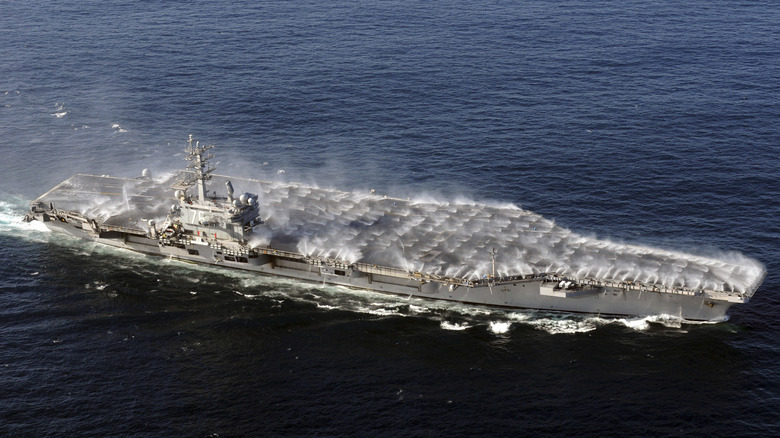
In the aftermath, investigations found that, although firefighting efforts began immediately, critical systems did not respond as quickly. The carrier’s Aqueous Film-Forming Foam (AFFF) washdown system — designed to blanket the flight deck in fire-suppressing foam — was not fully activated for more than two minutes. Part of this system also discharged only seawater due to technical faults. 

That delay proved to be costly. Even after the main fire was brought under control, the danger wasn’t over. Concealed ordnance later detonated in the wreckage, causing additional casualties. Incidents like this, although rare, highlight a reality on the flight deck: When a fire breaks out, every second counts, and everyone must know what they’re doing. So, what actually happens in those first moments when a fire breaks out, and who is responsible for bringing the situation under control? 

Responding to a flight deck fire
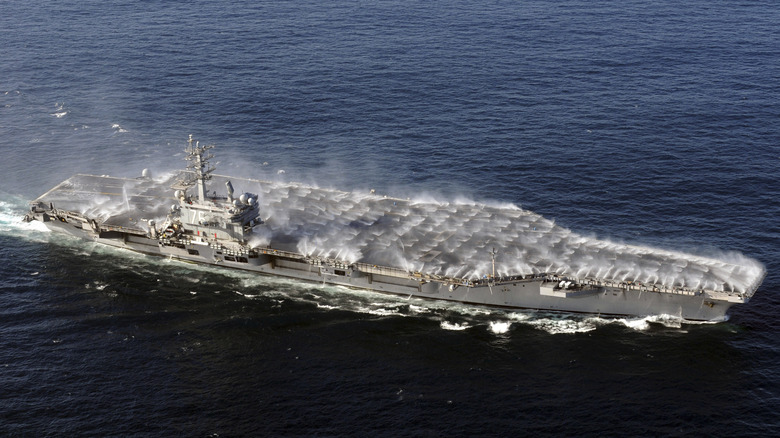
When a fire breaks out on a carrier’s flight deck, the response begins with whoever is closest, although it quickly becomes a coordinated effort. Crew members are trained to move toward clearly marked firefighting stations positioned across the deck. These stations, including AFFF foam outlets and integrated communication ports, allow personnel to activate fire suppression systems and report the incident. 

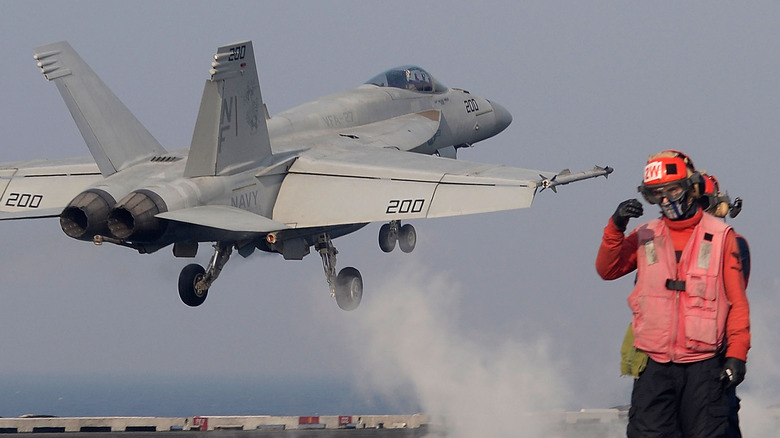
At this point, dedicated crash and salvage crews take over. Identified by their red jerseys, these teams are effectively the flight deck’s fire department. As well as being responsible for fighting the fire, they’re also tasked with rescuing personnel and operating specialized firefighting equipment. The “red jerseys” are directed by the Aircraft Crash and Salvage Officer — or Air Bos’n — who supervises the team during the handling of such emergencies. 

In terms of firefighting itself, the aforementioned AFFF foam remains the go-to method. However, the firefighting teams also have access to a range of supporting systems that can be used depending on the situation. Saltwater stations — marked with a “W” — can be used if a broader firefighting response is required. Additionally, portable fire extinguishers using agents such as PKP dry chemical and CO2 are available if needed. While the lessons learned from the Nimitz incident have undoubtedly improved safety on carrier flight decks, there is no room for complacency anywhere on a carrier when it comes to fire. This was demonstrated by the recent fire on the USS Gerald R. Ford — currently the world’s largest aircraft carrier

Why flight deck fires are so dangerous

While the fire on the Gerald R. Ford demonstrates the risks of a fire anywhere on a ship, the flight deck of a carrier is a real danger zone. At any given moment, the deck could be packed with fuel-laden aircraft, live ordnance, and equipment, all in close proximity. This is why the flight deck of an aircraft carrier is one of the world’s most dangerous workplaces. It’s also an environment where even a small fire could escalate rapidly. 

Fuel is one of the biggest risks. Aircraft are often fueled up for a mission or in the process of being refueled, and any ignition source could potentially lead to a fast-spreading fire. In the 1981 USS Nimitz incident, leaking JP-5 fuel from at least one damaged aircraft helped sustain the blaze, allowing it to spread across the flight deck. The presence of fuel alone is a big enough risk, but add some high-explosive ordnance to the mix and the potential for secondary explosions is introduced. 

Again, this was a point that was tragically illustrated in the Nimitz incident. In that case, a Sparrow missile detonated after the fire had been declared out and firefighters were clearing smoldering debris. The ensuing blast killed another two crew members and injured 29. On a carrier’s flight deck, there is no margin for error or delay — only a narrow window in which a fast coordinated response is the difference between a minor incident and a large-scale catastrophe. 


Source link

Leave a Reply

Subscribe to Our Newsletter

Get our latest articles delivered straight to your inbox. No spam, we promise.

Recent Reviews


We may receive a commission on purchases made from links.

Michelin is a French multinational company that many consumers consider to be one of the most satisfying major tire brands. This firm makes several tire models that offer comfort, performance, all-terrain prowess, and everything in between — including cutting-edge products like the $42,000-per-set Michelin Pilot Sport PAX that it developed specifically for the Bugatti Veyron. Aside from its own tires, Michelin also owns other tire brands that you might be familiar with, including BFGoodrich, Achilles, and Corsa.

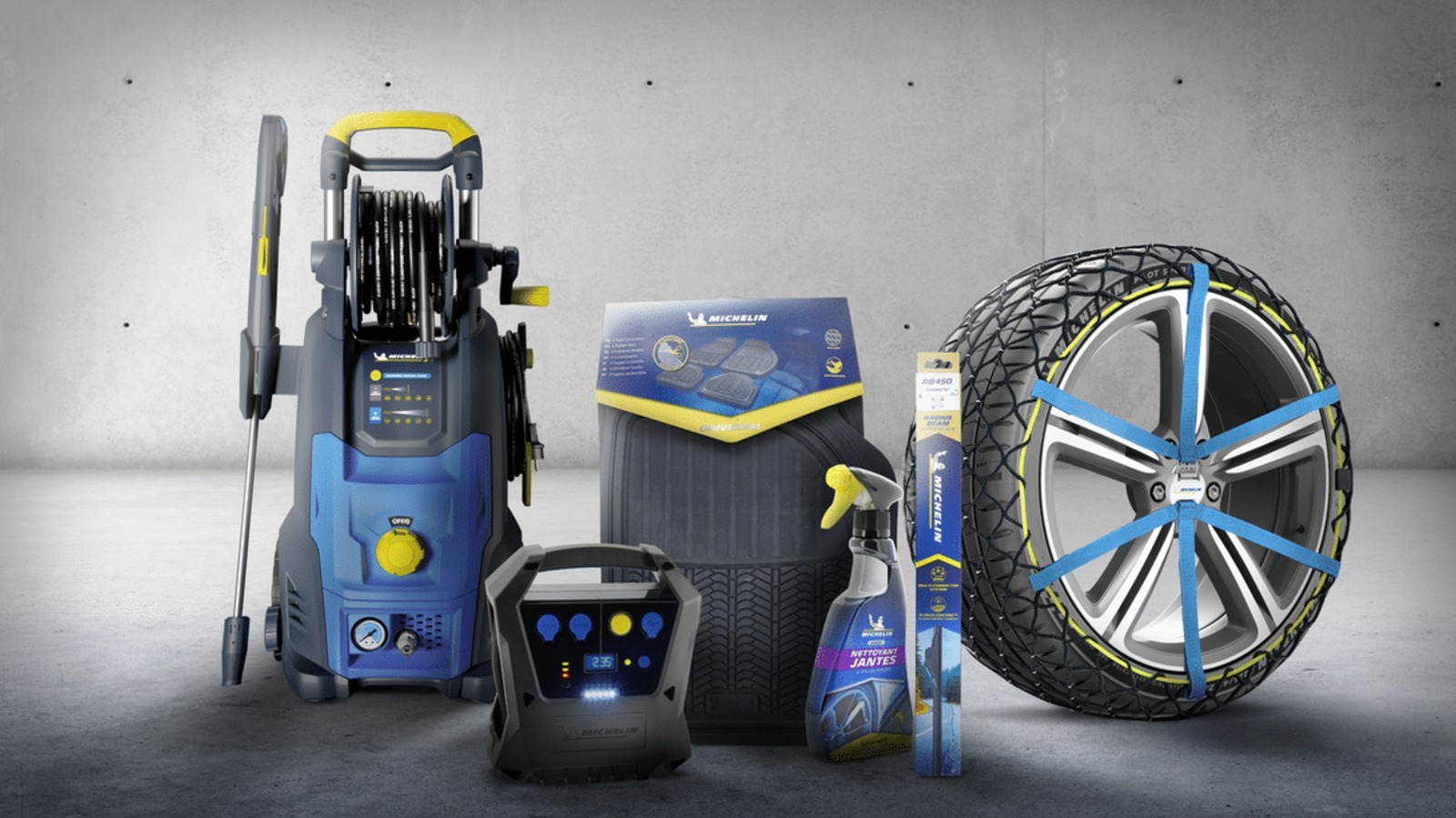
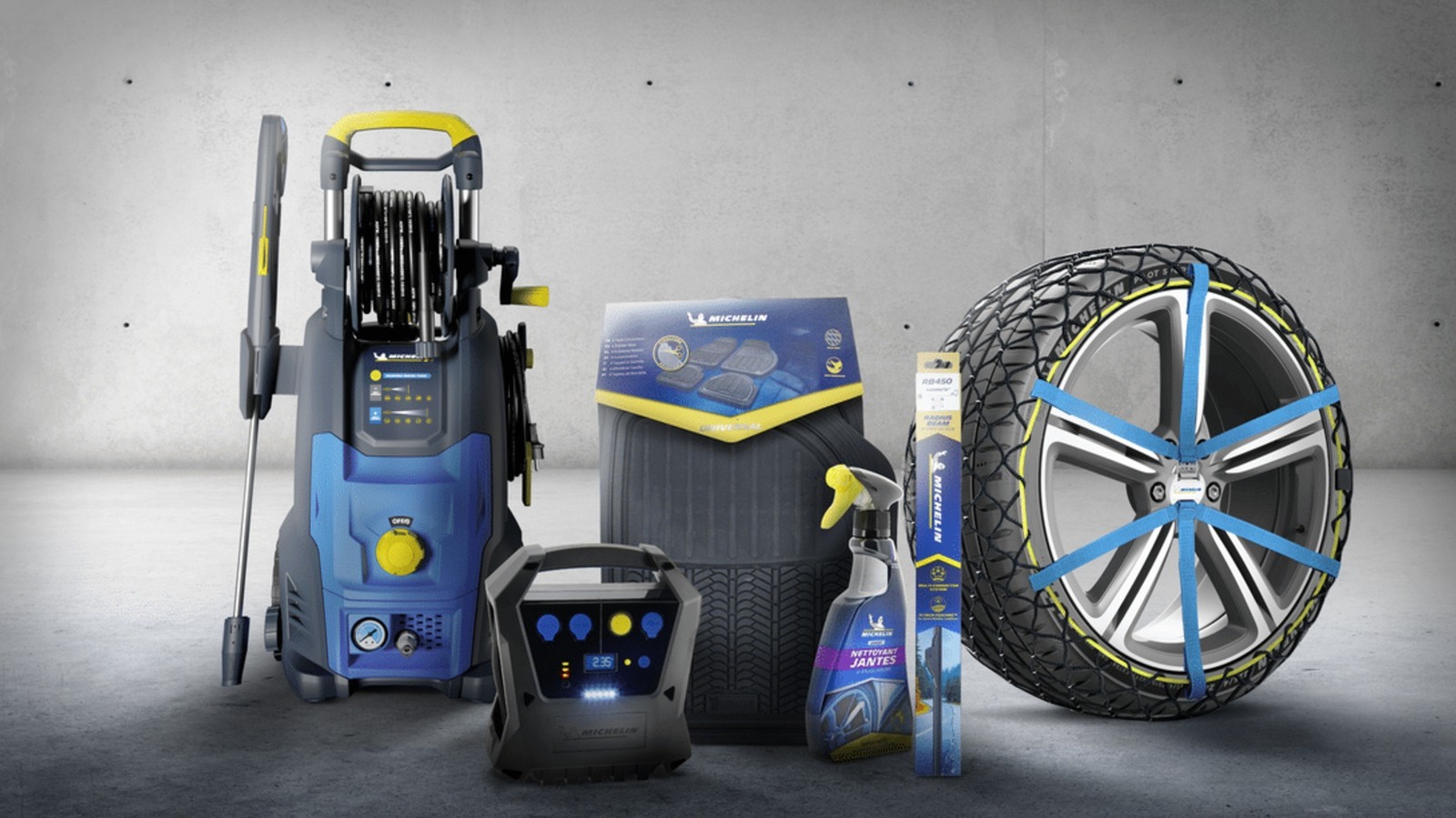
While tires are what Michelin is known for, the company has put its name to more than the rubber that wraps around your car’s rims. In fact, the company sells several other products that aren’t tires. So, we’re listing a few Michelin-branded items that you can buy online and in retail stores. While they might not all be made of rubber or even related to vehicles, these tools and accessories can come in handy when keeping your car — and even yourself — in good shape.

Michelin tire inflator

Since Michelin is primarily known for its tires, it makes sense for the company to sell a Michelin-branded tire inflator as well. That way, if you get a flat on one of the Michelin tires on your car or want to regularly top up your car’s tire pressure to maintain optimum performance, you can use a Michelin-branded pump to fill up your tires. The company actually sells several types of inflators on its Amazon page, but it only offers a single motorized unit — the Michelin Micro Tyre Inflator, which is available on Amazon for $98.99.

This little device is only slightly wider than an iPhone 17 and weighs about 400 grams, or 14 ounces. This means it’s easy to store in your car and to move to whichever tire needs topping up. More importantly, it takes power from a 12-volt socket, allowing you to run it using your car’s battery. It also has a USB port for charging your phone (or any other USB device) in case of an emergency.

Some users say that the device is slow, taking about 12 minutes to bring a tire from 10 to 32 PSI, but that’s not unexpected given its small size. Still, it should be good enough for regular weekly maintenance if you know your car’s proper tire pressure, or in case of an emergency. Its biggest downside is that you need a power source to run it, but having a dead battery and a flat tire simultaneously is likely a rare occurrence in many modern cars.

Michelin mini fridge

Taking a road trip during the summer can get you thirsty, and there’s no better way to quench that thirst than by drinking a cool can of soda (or your beverage of choice). If you want to ensure that you’ll always have a cold drink ready while you’re driving on the freeway, Michelin’s mini fridge will help you with that. This nifty little refrigerator is available on Amazon for just $99.99 and can be connected to either 110V AC or 12V DC power, ensuring that it will work on both your desk and in your car.

The mini fridge measures 6.9 x 9.45 x 10 inches (17.5 x 24 x 25.4 cm), meaning it can easily fit on a garage shelf or office desk. It should also be small enough to put on the floor of your car. Despite that relatively small size, it’s large enough to fit six 350-ml cans or four 500-ml bottles, and it will keep these items at a chilly 32 degrees Fahrenheit or 18 degrees Celsius. It also has an LED light on the door, so it can double as a night light if necessary.

Aside from keeping your drinks (and other food items) below room temperature, it also has a few other creature comforts. These include a removable shelf and door basket for flexibility and easy cleaning, as well as a retractable carry handle and a self-locking door to make transportation easier.

Michelin car floor mats

Heavy-duty car floor mats are often made from rubber for durability and water resistance, and since Michelin is in the business of rubber, it makes sense for the company to offer exactly that. So, if you want to protect your vehicle’s floor from dirt, dust, and mud, the company can help you with its Michelin all-weather car floor mats. This four-piece package is available on Amazon for $49.99 and comes in either black or tan.

The surface of these floor mats is specially designed to trap debris, snow, and water, preventing them from ruining the carpet on your vehicle. The mats have a cleat backing that grips your car’s floor and prevents them from slipping. The front row mats also come with what Michelin calls a Gripclip Retention System, allowing them to clip into your vehicle’s safety clips and adding even more reassurance that they won’t accidentally slip while you’re driving and pose a hazard to your safety.

These mats are universal and will work in most vehicles. However, they’re also easy to customize: If you find them a bit too large for the footwell of your tiny hatchback, you can use a pair of scissors to trim the edges for a perfect fit.

Michelin Stealth Ultra wiper blades

While Michelin’s Stealth Ultra wiper blades aren’t generally considered among the best windshield wipers, they appear to be a pretty good choice given their four-star rating on Amazon. These wipers cost $49.99 and are available in various size combinations for all sorts of cars. This ensures that no matter what vehicle you’re driving, you can probably find a set that will fit your needs.

These Michelin wipers are curved to conform to the shape of your windscreen for a clean, streak-free wipe. The company’s Amazon listing claims that these are designed to “withstand rain, wind, snow, mud, dust, or any other debris that might hamper your windshield’s visibility.” While you might think that windshield wipers are pretty simple items, and that you can just purchase any generic wipers off the internet, you must remember that they’re essential so that you have the best visibility possible during inclement weather. So, for your safety, consider investing in a set from a reputable brand like Michelin.

Michelin work boots

Michelin is known for making rubber tires to put on your car’s “feet,” but did you know it also makes shoes for the driver’s feet? The company makes sports & outdoor footwear, as well as shoes for work and safety. For this example, we have the Michelin HydroEdge Steel Toe waterproof work boot, listed for $210 on Amazon and at Georgia Boot. This shoe is available in U.S. sizes from 7.5 up to 14, ensuring that no matter what size you wear, you can get a Michelin work boot for yourself.

As the name suggests, this pair of shoes has steel toes to protect your feet from accidental impacts and is fully waterproof to help keep your feet dry, even in supposedly severe conditions. It also meets ASTM F2413 standards for electrical protection, meaning it has fully insulating soles to protect you from electrical hazards at work. Michelin also added what it calls an Advanced Rear Suspension system to its heel, ensuring proper shock absorption when you walk.


Source link