What Is The 3-Minute Rule For Air Conditioners?


Summer heat is scorching across the United States and people are likely adjusting their air conditioners from the ideal temperature in an effort to cool down. Though it seems like a quick and easy fix, there’s a complex process happening inside an AC unit, which is where the 3-minute rule comes in. This rule involves the AC’s components and how they function during normal operation.

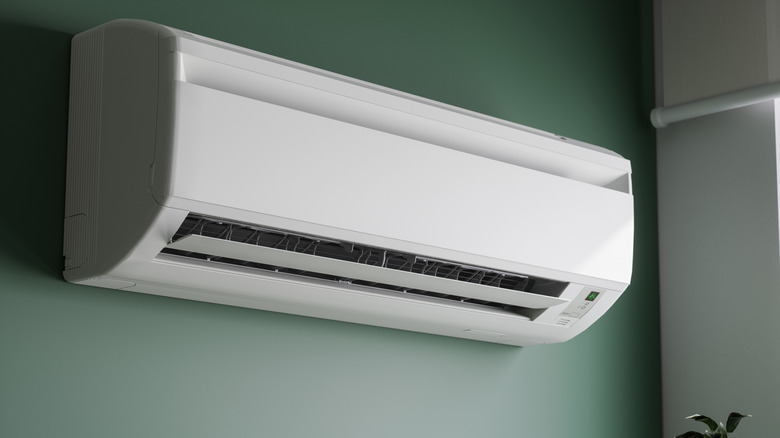
The “3-minute rule” describes compressor control behavior built into HVAC systems. This control determines the restart timing after the AC unit shuts down, which is typically around 3 to 5 minutes. These systems manage the compressor’s operation through timed cycles which are linked to thermostat demand. This includes set limits on how quickly the compressor can turn on and off, instead of tracking a fixed number of cycles.

The reason for the 3-minute gap is to keep the system from starting up too quickly after it shuts down. Without it, an AC unit would cycle on and off too frequently and put mechanical strain on the system and decrease the unit’s operational efficiency. Air conditioners already share some common problems, and a unit that cycles too much could result in a house feeling cool but humid at the same time. At the very least, it could cause inconsistent temperatures from one room to the next.

Inside AC compressors and alternative solutions
The compressor is the main part of the air conditioning system and it’s responsible for circulating refrigerant through the unit. This is done through a process in which the low-pressure refrigerant gas is compressed into a high-pressure state, which allows for heat to be released through the condenser coil. When that happens, the refrigerant cycles back indoors, which allows cool air to be circulated back into the home as heat is pulled out. Because of the work it does, the compressor’s effectiveness impacts how efficiently the unit performs.

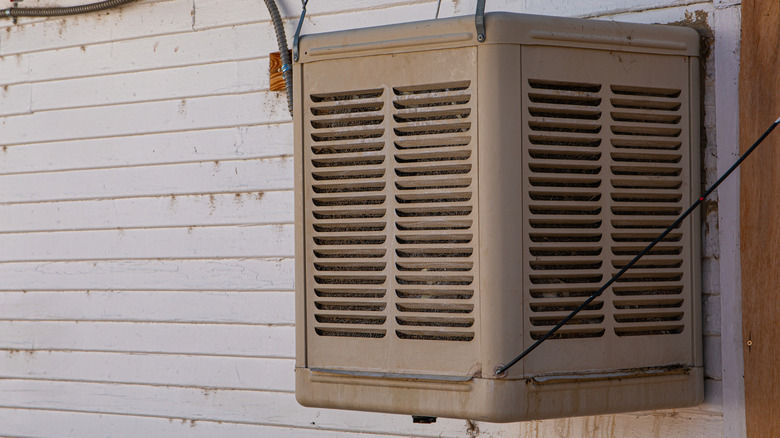
In contrast, evaporative coolers, also known as swamp coolers, use water evaporation instead of refrigerant-based compression. These systems work through a process in which water-soaked pads cool outdoor air passing over them, and that air is then pulled into the home. Unlike AC compressors that rely on a timed restart schedule, evaporative coolers bring in fresh air continuously. These units are typically more energy efficient, though they do need a constant water supply to be effective. They also tend to work best in dry climates.

Absorption heat pumps/coolers also do not use compressors in order to provide cool air, though this technology is typically installed in large residential or commercial environments. These systems utilize a cycle in which a heat source like natural gas drives an ammonia-water process to move heat. A low-power pump then circulates the solution and restarts the cycle. This allows the space to cool as heat is transferred out.


Source link

Leave a Reply

Subscribe to Our Newsletter

Get our latest articles delivered straight to your inbox. No spam, we promise.

Recent Reviews


To paraphrase a famous superhero, flying is, statistically speaking, the safest way to travel. It is, of course, also one of the more expensive modes of transportation available to travelers. And yes, if you’ve rolled a suitcase into an airport any time in the past couple of decades, you know travelers are required to adhere to dozens of rules and regulations before they board a plane, and even more while they’re up in the air.

Most of those rules are put in place by the Transportation Security Administration (TSA) and the Federal Aviation Administration (FAA), the government agencies tasked with overseeing and regulating transportation and civil aviation in the United States, respectively. Apart from the myriad rules drawn up by those factions, many major airlines have added to the list with regulations that their passengers must adhere to in-flight, and yes, you agree to those terms anytime you buy a ticket by way of a “contract of carriage.”

United Airlines just added a pretty major new rule to its CoC that requires all passengers to use headphones when enjoying content with audio from a personal device like a laptop, tablet, or mobile phone. The rule is intended to limit environmental noise in the plane’s cabin, thereby ensuring a more pleasurable flight for both passengers and crew. Still, you may be surprised just how far United is threatening to go in punishing those who refuse to adhere.  

United may take its headphones policy to extreme measures in some cases

If you’ve ever been seated near someone who isn’t using headphones (which is one of the necessary in-flight gadgets) while watching a movie, listening to music, or even scrolling through social media in flight, you no doubt agree that United’s new headphones rule is one that’s very much worth enforcing. In fact, many other airlines already have similar policies in their own contracts of carriage. Even still, none of those policies are quite as severe as United’s, with the airline’s new CoC amendment stating that failure to adhere to the headphones rule could ultimately result in your removal from the flight.

That CoC goes on to state that not only might you be removed from the flight you’re on if you refuse to use headphones, but you may also be permanently banned from flying with United Airlines. As travel expert Scott Keyes told CBS, United is the first major airline to take such a hardline stance on the matter of headphones, but it wouldn’t be surprising to see its competitors quickly adopt similar policies.

Interestingly enough, it is not made entirely clear just how far United is prepared to go in enforcing the rule. For instance, it would be relatively easy to remove a passenger from the plane prior to takeoff. It’s much harder to imagine that United would go so far as to land a plane mid-flight to the same end. But perhaps that is where the threat of a permanent ban comes into play. Only time will tell.


Source link