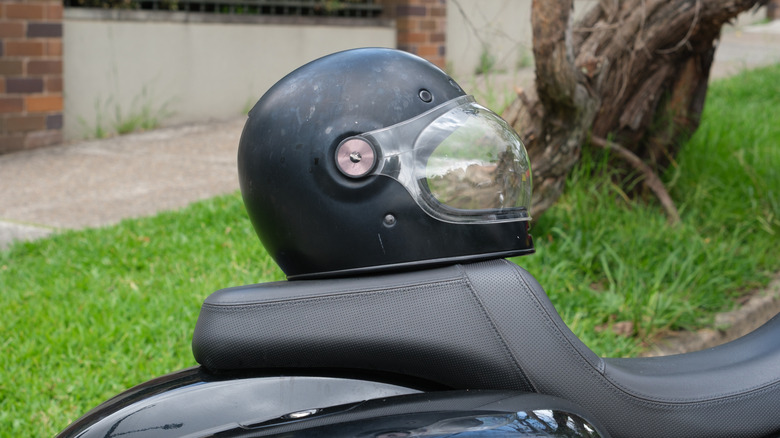
What Is The 5-Year Rule For Motorcycle Helmets?


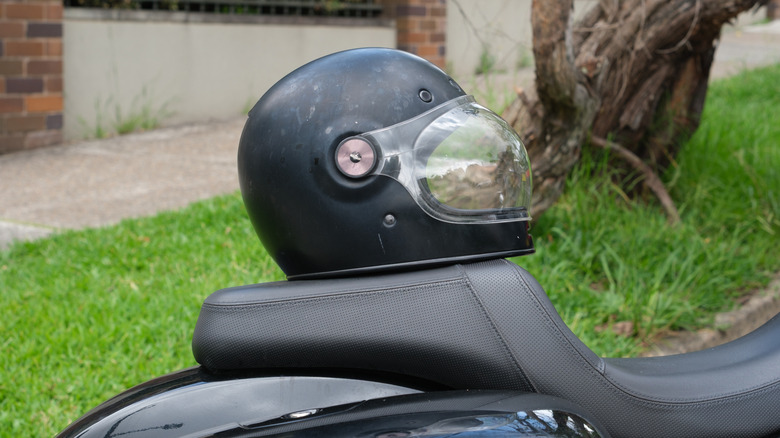
Most of your riding gear shows clear signs of wearing out. Boots split, gloves thin out, and jackets fray. With these, you can tell when it’s time for a replacement. But helmets are arguably sneakier, because, contrary to appearances, they do have a lifespan – and it’s not tied to how scruffy they look.

The five-year rule serves as a rough yardstick for when it’s time to replace your helmet with a new one. It may sound harsh, especially if you’ve spent money on customizing your beloved helmet, but there’s a pretty solid reason behind it. The component at fault is the EPS liner, which is basically an expanded polystyrene foam that sits between your skull and the hard outer shell.

This liner is made out of the same material that cushions a new TV inside its box; because it’s foam, it will absorb some of your sweat when you ride. Then, when it dries out, it shrinks a little and stiffens. It’s estimated that the foam will shrink 3 to 5% annually. Use a helmet for five years, and the problem starts to add up.

How can you be sure about the rule?

Helmet manufacturers recommend you stick to the five-year rule, too. helmet. Arai, for example, suggests that owners replace helmets after five years of use. It appears the foam degrades even when the helmet isn’t in use, though, as the company caps its warranty at seven years from the date of manufacture. Shoei also draws the line at five years from the first retail sale. In fact, it goes a step further, recommending a new helmet even if the EPS liner still looks good and the helmet has never been in a crash.

There are ways to tell if it’s indeed the time for a replacement, in case you want to double-check. You can start with the shell and hunt for cracks or any deformation by running your fingers over it. Then there’s the EPS itself. If it starts showing through on the inside, that means it’s either too worn out or has shrunk significantly, meaning it’s time for a change.

A more surefire way is to wear the helmet, fasten the strap, and give your head a little shake. If the helmet twists around or doesn’t fit as it used to, that’s your cue. Of course, if you ever crash, you should replace it right away, no matter how fresh it looks. At that point, the question turns to what to look for when buying a new motorcycle helmet.

What if you overuse or underuse the helmet?

Sometimes, it’s about the mileage rather than the actual passage of time. Generally, the five-year rule assumes you’re clocking somewhere around 6,000 to 8,000 miles a year. That works out to about 40,000 to 50,000 miles over five years. Commuters who ride more than that should replace helmets after two or three years, because the liner may wear out much faster. Frequent riding also means more mishaps, including drops. These are usually fine, but can still cause damage in some cases.

Even if you’re on the other end of the spectrum and barely use your helmet, though, you’ll still have to replace your helmet after five years. Moisture can slowly evaporate out of the foam or seep in; either way, it’s bad for the liner. Storing it carefully can probably stretch that out a bit, but why risk it? Besides, if your helmet is super old, it may miss out on the comfort and safety upgrades available on newer units, like the MIPS helmet technology that minimizes rotational forces in a crash.


Source link

Leave a Reply

Subscribe to Our Newsletter

Get our latest articles delivered straight to your inbox. No spam, we promise.

Recent Reviews


evergreen-deals-imagery

Hisense/ZDNET

Follow ZDNET: Add us as a preferred source on Google.


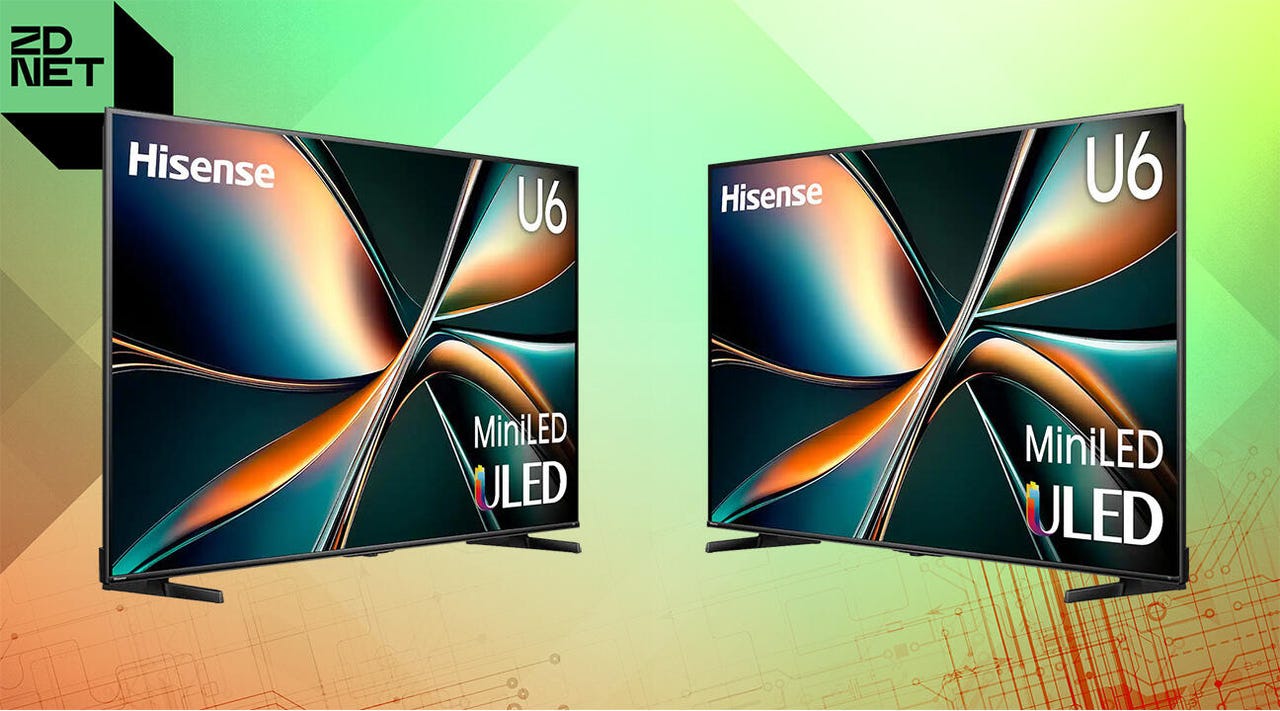
Whether you’re looking to upgrade your main TV to set up the ultimate home theater, or you’re just looking for a high-quality second screen for your home, you’d be hard-pressed to find a better option than the Hisense U6 Pro. And just in time for the FIFA World Cup, you can pick up the 75-inch Hisense U6 Pro for just under $850 at Amazon — a nearly 40% discount.

Also: TCL vs. Hisense

The Mini LED panel is Pantone Validated for color accuracy, which means you’ll get some of the best picture quality outside of ultra-premium OLED and Micro RGB models. It’s also backed up by a 144Hz refresh rate, making it perfect for smoother motion while watching live sports, streaming, and console gaming. 

Speaking of gaming, the dedicated picture mode supports AMD FreeSync Premium Pro VRR to help prevent screen tearing. There’s also an AI Sports mode that automatically detects when you’re watching a live match and adjusts the refresh rate, sound, and picture settings for the best experience, making it a fitting choice for soccer fans ahead of the World Cup.

Also: The best Hisense TVs of 2026: Expert tested and reviewed

You’ll get audio to match with support for Dolby Atmos virtual surround sound and a built-in subwoofer for deep bass tones that make movie soundtracks and your favorite music more impactful. If you prefer to have more control over your sound, you can set up home audio equipment with either the HDMI eARC connection for near-perfect video and audio syncing or via Bluetooth for a fully wireless setup. And if you’ve set up a security camera system, you can show feeds from up to four cameras at once on your Hisense U6 Pro to keep an eye on your home.

How I rated this deal 

The Hisense U6 Pro is a great midrange Mini LED TV that offers a 144Hz refresh rate, Dolby Vision IQ HDR, Dolby Atmos virtual surround sound, and built-in Alexa voice controls. The Pantone Validated panel gives you incredibly accurate colors for more lifelike images. And at a discount of nearly 40% on the 75-inch model, you’re getting an excellent value for your next home theater upgrade or second-screen addition. That’s why I gave this deal a 4/5 Editor’s rating.

Deals are subject to sell out or expire anytime, though ZDNET remains committed to finding, sharing, and updating the best product deals for you to score the best savings. Our team of experts regularly checks in on the deals we share to ensure they are still live and obtainable. We’re sorry if you’ve missed out on this deal, but don’t fret — we’re constantly finding new chances to save and sharing them with you at ZDNET.com


Show more

We aim to deliver the most accurate advice to help you shop smarter. ZDNET offers 33 years of experience, 30 hands-on product reviewers, and 10,000 square feet of lab space to ensure we bring you the best of tech. 

In 2025, we refined our approach to deals, developing a measurable system for sharing savings with readers like you. Our editor’s deal rating badges are affixed to most of our deal content, making it easy to interpret our expertise to help you make the best purchase decision.

At the core of this approach is a percentage-off-based system to classify savings offered on top-tech products, combined with a sliding-scale system based on our team members’ expertise and several factors like frequency, brand or product recognition, and more. The result? Hand-crafted deals chosen specifically for ZDNET readers like you, fully backed by our experts. 

Also: How we rate deals at ZDNET in 2026


Show more


Source link