What’s The Warranty On The Harbor Freight Backhoe & How Does It Compare To Tractor Supply’s?


A functional backhoe is hardly one of those tools that qualifies as a must-have for your average home owner. To that end, some big box home improvement outfits like The Home Depot instead offer the devices on a rental basis to those who need one for a particular project. If, however, you feel like a backhoe is just the thing you need in your own yard care regimen, you can actually purchase one through several consumer retailers these days. 

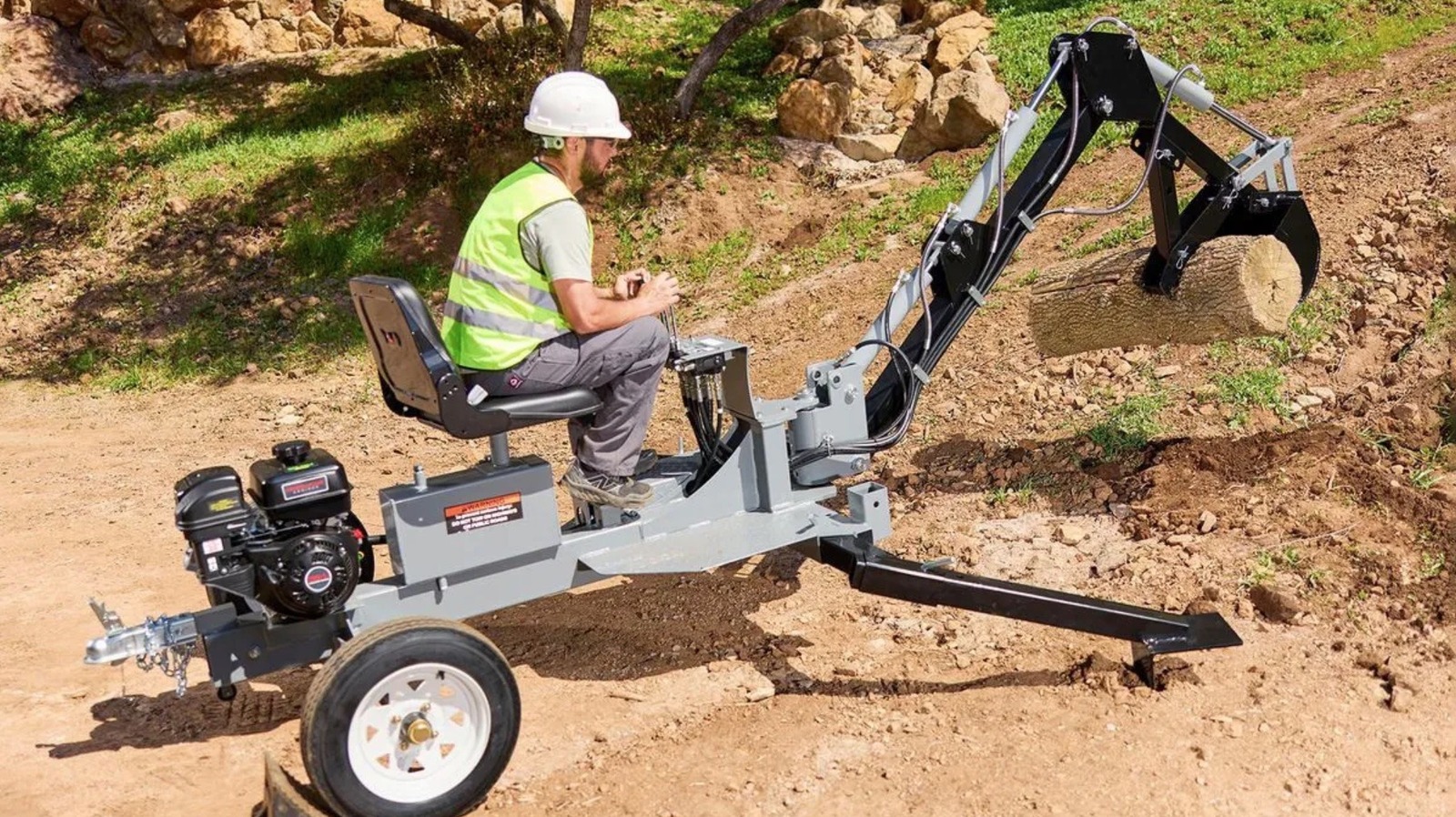
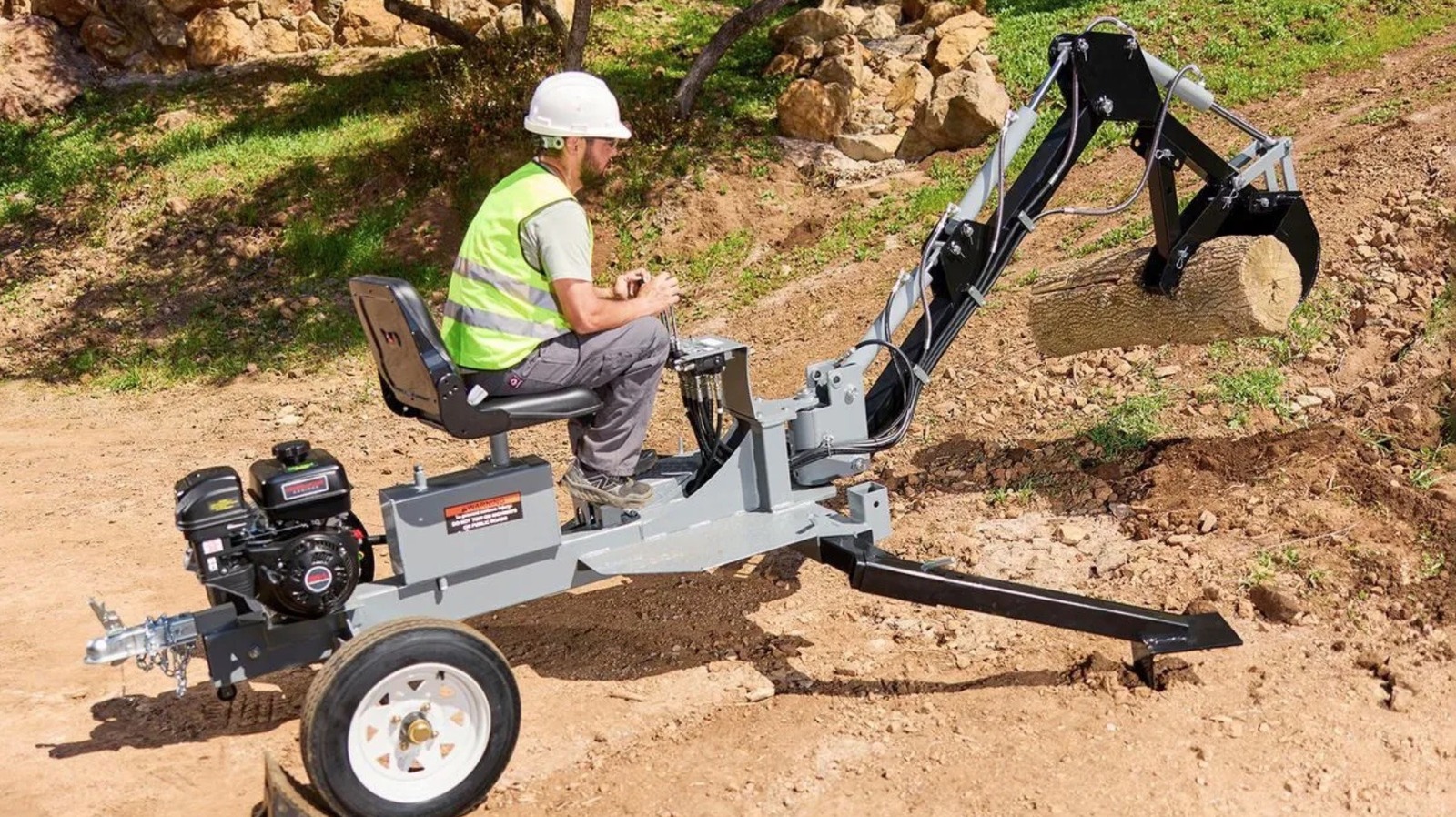
Harbor Freight Tools is selling an 8-horsepower towable backhoe from Central Machinery, one of several notable in-house brands owned by Harbor Freight Tools. The device, sold for $2,999.99, is powered by a 301cc Predator engine and boasts a 660-pound lifting capacity. Apart from that, the backhoe has a 4-foot boom travel, as well as an arm that can extend up to 8 feet, swing 60 degrees in either direction, and dig up to 6 feet deep. 

Users have also rated the Central Machinery backhoe at 4.7 stars, signaling it may be worth the $3,000. Making the device more intriguing to potential buyers is the two-year warranty Harbor Freight is backing the product with, which ensures the product will be “free from defects in material and workmanship” for the entirety of that span. That’s assuming, of course, that the machine has been properly cared for and has not been misused. 

How Tractor Supply’s backhoe warranty compares

According to Harbor Freight’s website, there may be another subtle catch or two with that warranty coverage, so you’ll want to be be sure to read up on the fine print if you’re looking to buy one. While you’re reading up, you should, perhaps, also consider shopping around for options, as Tractor Supply Co. also offers a towable backhoe in its lineup of online offerings. 

Tractor Supply’s model is from NorTrac and is advertised as a Towable Trencher. The device is also considerably more expensive, with the publicly traded retailer pricing it at $3,999.99. Part of the price difference stems from the fact that the NorTrac trencher boasts considerably more power via a 420cc, 15-horsepower motor from Ducar engine. Like the Central Machinery backhoe, this one also swivels 60 degrees and boasts an arm length of 8 feet, though it can reportedly dig slightly deeper to 6.7 feet. Interestingly enough, the engine upgrade doesn’t come with additional lifting power. In fact, the NorTrac’s lifting capability is far lower than its Harbor Freight competitor at 340 pounds. 

The warranty for the NorTrac backhoe is also considerably less extensive than the Central Machinery device, with Tractor Supply Co. listing one-year of limited coverage for the machine on its website. You can, however, add additional coverage to the machine at the point of purchase, with Tractor Supply offering one and two-year protection plans for $349.99 and $449.99, respectively. The brand promises to “fix it, replace it, or reimburse you for it” should the device malfunction during that period. 


Source link

Leave a Reply

Subscribe to Our Newsletter

Get our latest articles delivered straight to your inbox. No spam, we promise.

Recent Reviews


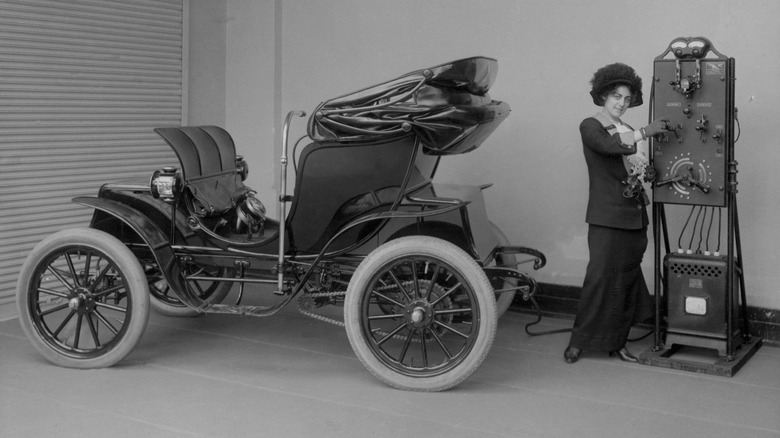
It’s easy to assume that vehicles all had internal combustion engines until very recently. Gasoline and petrol engines were the standard for decades, after all, so why would early vehicles be any different? In reality, the early days of the automobile era were more varied than you might expect, and even featured a range of electric cars. Yes, despite electric vehicles not truly taking off until the 21st century, the first electric vehicles are much older than you think; drivers in the 1900s were going around town in electric vehicles — and where there are EVs, there are charging stations.

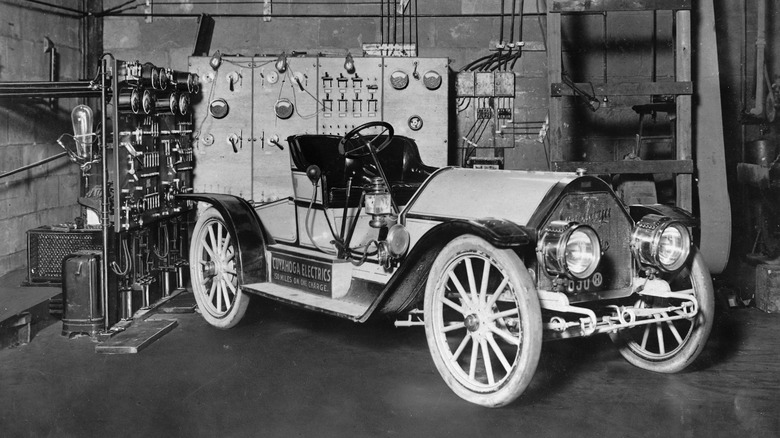
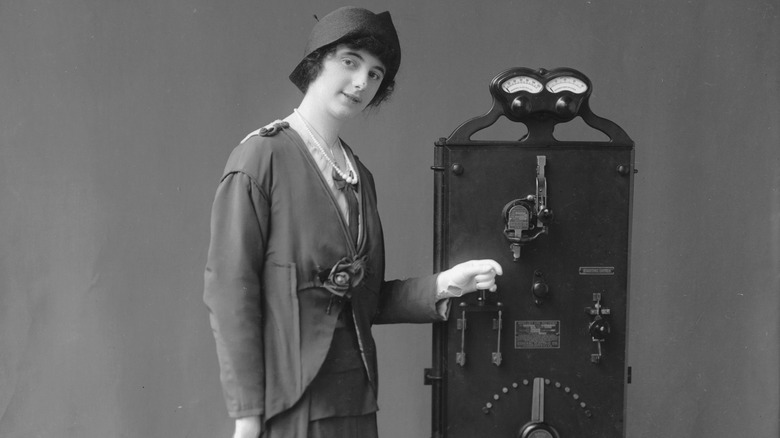
One such station, visible in the image above, was the creation of General Electric. Formally called the mercury arc rectifier, it took alternating current and sent it through vaporized mercury in a glass tube. This converted it into direct current, which powered up the EV’s battery. The woman in the image, who’s charging a Columbia Mark 68 Victrola, is standing at the control panel, which allowed a user to adjust power levels. 

These chargers could be installed everywhere, including homes, businesses, and public parking garages, supporting the electric vehicle boom of the early 20th century. While 21st-century EV chargers have come a long way from where they were, the basic building blocks are all still there, and it’s fascinating to see.

How EV chargers have evolved since the early 20th century

EV charging has changed a lot in some ways — but not in others. At the core of it all is the aforementioned conversion from AC to DC, which still happens when you charge modern EVs at standard charging stations. The difference is that your vehicle’s on-board charger performs the conversion, not the charger. Old EV chargers took between several hours and a day to charge, and current-day units can similarly take a few hours to well over a day from empty, depending on the charger’s speed. Fast chargers, which provide DC directly, can cut this down to around an hour or less.

Old-school and modern EV chargers also differ in how they provide power to the vehicle. Mercury arc rectifiers connected directly to the negative terminal of the lead-acid battery that needed charging. Nowadays, EVs use dedicated charging ports. Battery swapping was also commonplace in the early 1900s, and companies like General Electric tried to cash in by offering to replace drivers’ old, run-down batteries with new ones for a fee. That’s not yet possible with most mainstream EVs, although companies like Stellantis have tried to introduce EV battery swapping with moderate success.

Even if they were unrefined compared to today’s models, early EVs seemed to be on to something. Why, then, did electric cars fail, and how did gasoline end up becoming the predominant power source for vehicles?

What led to the downfall of the original wave of electric cars

EVs were no mere fad in the 1900s and 1910s. According to the 1900 United States census, 1,575 of the 4,192 vehicles sold that year were electric, with the value of these early EVs — $2,873,464 — accounting for more than half of the total market value of $4,899,443. It wasn’t just EVs, either; other sources of propulsion, like steam, were also vying for a foothold in the automobile market. By the 1920s and 1930s, though, these had all been superseded by the internal combustion engine.

One of the major drawbacks of early EVs was the fact that electricity was not yet widely available. Electrical hookups were a rarity outside of major cities, limiting the use of these vehicles. The lead-acid batteries they used also had their fair share of issues. They needed to be inspected, cleaned, and repaired every few days, making them more of an inconvenience than anything. Worse yet, they had poor mileage, and, with chargers possibly out of reach, many likely didn’t want to risk being stranded while out for a drive.

Eventually, price reductions for gas cars and improvements such as electric starters and better reliability prompted buyers and automakers alike to move away from electric rides. Thus, while the best-selling EVs of 2026 show that it’s a good time for EVs, this electric boom plainly isn’t the first of its kind. Early EVs eventually fizzled out, but they still set the stage for our current fascination with electric vehicles.


Source link