
Who Makes Sub-Zero Refrigerators And Where Are They Manufactured?


Sub-Zero is often ranked among the most respected names in the refrigerator game. The brand also ranks as one of the more innovative outfits in the consumer arena, with its design team pioneering dual refrigeration, a setup that uses separate evaporators and compressors for the refrigerator and freezer. The brand also led the custom refrigeration market in integrated coolers, which essentially turn any drawer or cabinet in your house into a cooling unit. These Consumer Reports-recommended fridges are also intuitively designed to adapt to an individual owner’s usage. 

These advancements didn’t happen overnight, of course, with the Sub-Zero company developing those game-changing features, and many more, over the course of more than eight decades in existence. The company came into being at the behest of one Westye F. Bakke, an engineer from Wisconsin who first started tinkering with refrigeration while looking for a way to properly preserve his Diabetic son’s Insulin.

Bakke also spent several years helping Frank Lloyd Wright customize refrigerators for the iconic architect’s patrons. Thus, when Bakke founded Sub-Zero Group Inc. in 1945, he sought to marry the worlds of architecture and engineering. Today, Sub-Zero is still designing refrigerators to that very end. The company is also still headquartered in Wisconsin, and yes, it is still independently owned. In fact, Sub-Zero is still run by the Bakke family, with James J. Bakke now serving as the third-generation CEO of the family-owned brand. 

Sub-Zero refrigerators are made in the USA

If you’re eyeing a Sub-Zero refrigerator for your kitchen, you should first know that they are among the more expensive you can buy in the consumer arena, with prices starting in the $9,000 range. Sub-Zero has positioned itself as a uniquely American brand since its founding. However, in today’s market, many are only willing to apply that tag to companies that aren’t just headquartered within the borders of the continental United States, but also manufacture their goods there. 

If you’re staunch in your desire for an American-made appliance, you can rest assured that the brand’s cooling devices are actually made in the USA. For that matter, the brand’s high-end appliances have always been manufactured in the States, with Sub-Zero initially setting up shop in its home state of Wisconsin. As the company’s story goes, Westye Bakke built the first Sub-Zero prototype in his own basement circa 1943. 

The company has come a long way since the days of Bakke’s basement innovations. However, many of its refrigerators are still manufactured in Wisconsin by way of Sub-Zero’s Fitchburg production facility. Apart from the Wisconsin facility, Sub-Zero also operates a manufacturing plant in Goodyear, Arizona, and in May 2026, the brand went on to open a sprawling new 600,000-square-foot facility in Cedar Rapids, Iowa. These days, Sub-Zero has also become a singular player in the luxury appliance market, claiming ownership over the Wolf range brand and high-end dishwashing outfit Cove. And yes, those brands also make their products in U.S. facilities. 


Source link

Leave a Reply

Subscribe to Our Newsletter

Get our latest articles delivered straight to your inbox. No spam, we promise.

Recent Reviews


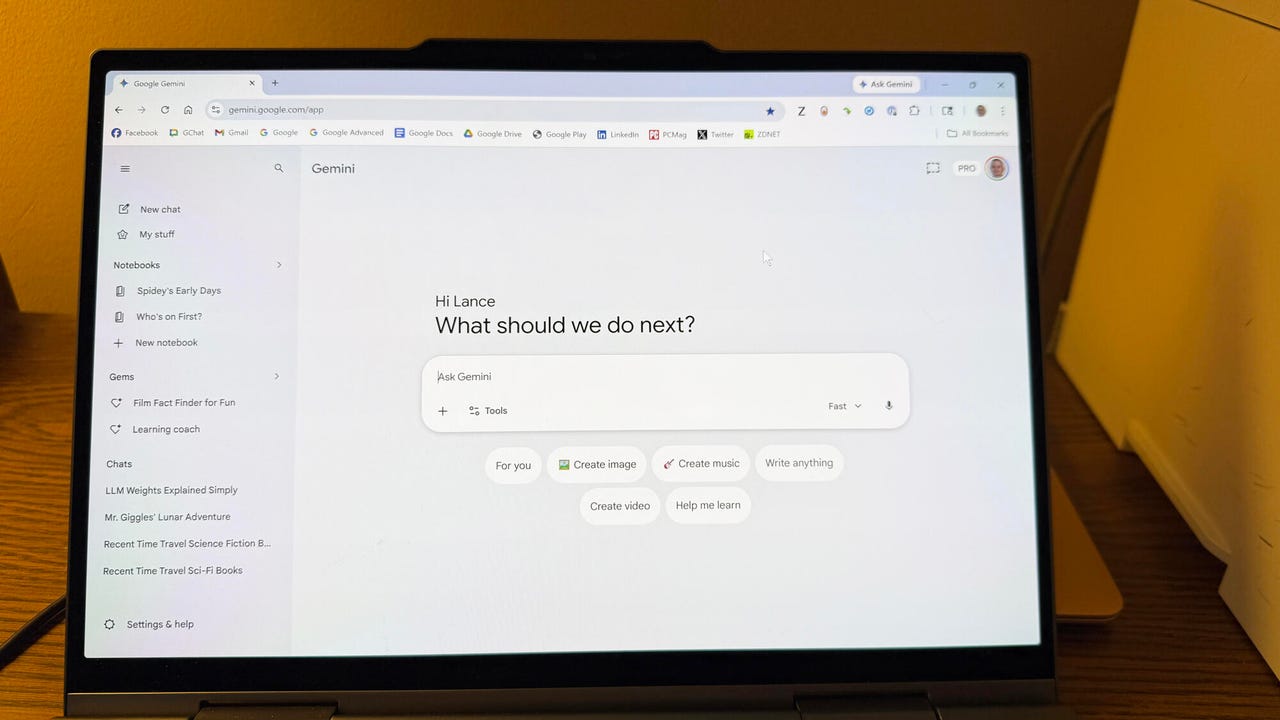
Google Gemini

Lance Whitney/ZDNET

Follow ZDNET: Add us as a preferred source on Google.


ZDNET’s key takeaways

  • Google is downloading a 4GB file to the PCs of many Chrome users.
  • The file is harmless and is used for the Gemini Nano on-device LLM.
  • You’ll see it if you’ve opted into the on-device AI setting in Chrome.

Google is silently saving a Chrome-related file to many computers. That’s nothing earth-shaking. But this file is a hefty 4GB in size, which has caught the attention of some Google watchers. What is the file, why is it being installed, and how can you check for it?

Also: I let Chrome’s AI agent shop, research, and email for me – here’s how it went

In a new blog post, computer scientist Alexander Hanff, aka the Privacy Guy, pulled back the curtain on this mysterious file. Named weights.bin, the file is being downloaded deep within the user data folder of many Chrome users. The file itself is related to Gemini Nano, which Google is using as the on-device AI model for Chrome users.

If you delete the file, it comes back

Though there’s nothing risky or dangerous about the file, Hanff and others have expressed concerns that it’s being downloaded without users’ knowledge or permission. And if you delete the file, it eventually comes back, Hanff said. That by itself is hardly alarming; that’s part of any software update. Rather, some of the criticism centers on the file’s size. If you have ample hard disk space, then 4GB is likely not a big deal. But if you’re running low, that big a file might chew up space you can’t spare.

Traditionally, AI models like Gemini use the cloud to interact with you. Submit a request, ask a question, or kick off a conversation, and the AI taps into its online data and resources to respond. But that method can be slow and naturally requires that you be connected. By traveling between your device and the cloud, your data can also be exposed.

A trend has emerged in which companies are experimenting with locally stored LLMs (large language models). That not only speeds up the process, but it also means you can use the AI offline and more securely. Gemini Nano has already been in play on Google’s own Pixel phones.

That explains why the file is so large; it has to pack in a lot of data. In this case, a weights file contains numbers that measure the level of importance an AI model assigns to your input. The AI uses these values to determine what should come next. For example, let’s say you start typing the phrase “Why did my new phone cost me an arm and a…” at the prompt. The AI assigns weights to your input to help it predict that the next word would be “leg.”

Also: This powerful Gemini setting made my AI results way more personal and accurate

How can you tell if the file has been downloaded to your PC? First, open Chrome, go to Settings, and select System. On the System screen, check whether the On-device AI option is turned on. If so, then you probably have the file or will soon get it.

To double-check, you’ll have to navigate to the user folder on your PC. That location varies based on your operating system. On my Windows 11 PC, I ran a search in File Explorer for weights.bin. The search took a long journey through the following path: C:\Users\lance\AppData\Local\Google\Chrome\User Data\OptGuideOnDeviceModel\2025.8.8.1141. At that final location, the weights.bin file appeared, measuring 4GB.

Since the file is downloaded again if you simply delete it, you’ll have to take an extra step to get rid of it permanently. After you delete the file, go back to Settings in Chrome and select System. Then  turn off the switch for On-device AI.

But as long as you have enough disk space (and if you can’t spare 4GB, then it’s time to clean up your drive), the file is little cause for concern. Just forget about it, especially if you’re keen to try on-device AI, and we’ll see what the future holds for Gemini Nano.


Source link