
We recently heard that Europe could be down to a 6-week supply of jet fuel.
The problems take us far beyond Europe.
Jet Fuel Problems
With availability plunging and prices rising, jet fuel is one casualty of the Iran War.
Looking at Europe’s jet fuel availability, we would see that the last shipment from the Gulf just arrived. As a result, they won’t see shortages for a month or two. Because 75% of Europe’s jet fuel imports (375,000 barrels a day) came from the Gulf, it will all depend on how much they can replenish when inventories sink. The U.S., where they are buying more than usual, is a possibility but it won’t be enough. Also, they have increasingly turned to Nigeria’s recently launched (2024) Dangote refinery. Still, if the Europeans cannot buy at least 50% of what they have lost, they can expect shortages by June, even though they produce approximately two-thirds of what they need domestically. Predictably, the exporting nations that include Spain will suffer less than the import dependent countries like the U.K.
As for airline revenue, it all adds up to shifting routes and flight cancellations. The Dutch airline KLM said they were eliminating 160 routes this summer because pricier fuel made them “uneconomic.” South Korean airlines expect to elevate surcharges during May. It is also likely that they, like other airlines, will further favor the businesspeople that pay more while minimizing cheaper tourist flights. In addition, schedules could get more of the most profitable transatlantic flights and fewer similar destinations.
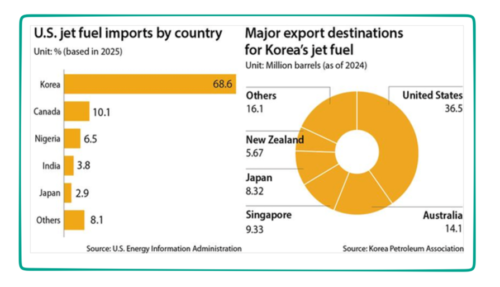
Furthermore, South Korea, as a major jet fuel producer, has announced it is favoring domestic demand. While the US imports just 6.6% of its jet fuel, the West Coast uses imports, mostly from South Korea, for 15% to 20% of its needs.
Similarly, Australia especially will suffer from South Korean export restrictions:
So, for starters, understanding the impact of the Iran War on jet fuel takes us to KLM flights, a Nigerian jet fuel refinery, the U.S. West Coast, and South Korea. It is about higher prices and lower availability. A global problem, jet fuel touches governments, businesses, and consumers at home and at work.
Our Bottom Line: Supply and Demand
Responding, the supply side will produce less, charge more, and adjust its routes. Correspondingly, we have the quantity demanded from airlines and consumers facing the higher prices that shift their decisions.
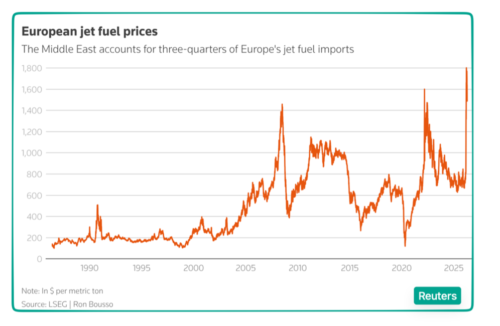
Indeed, the spike in this graph tells a complicated story:
My sources and more: Thanks to the BBC’s World Business Report podcast for alerting me to jet fuel problems. From there, we went to a South Korean newspaper that partners with the NY Times. Then, Reuters, here and here, and Marketplace came in handy.

Nicole Byers is an entertainment enthusiast! Nicole is an entertainment journalist for the Maple Grove Report.