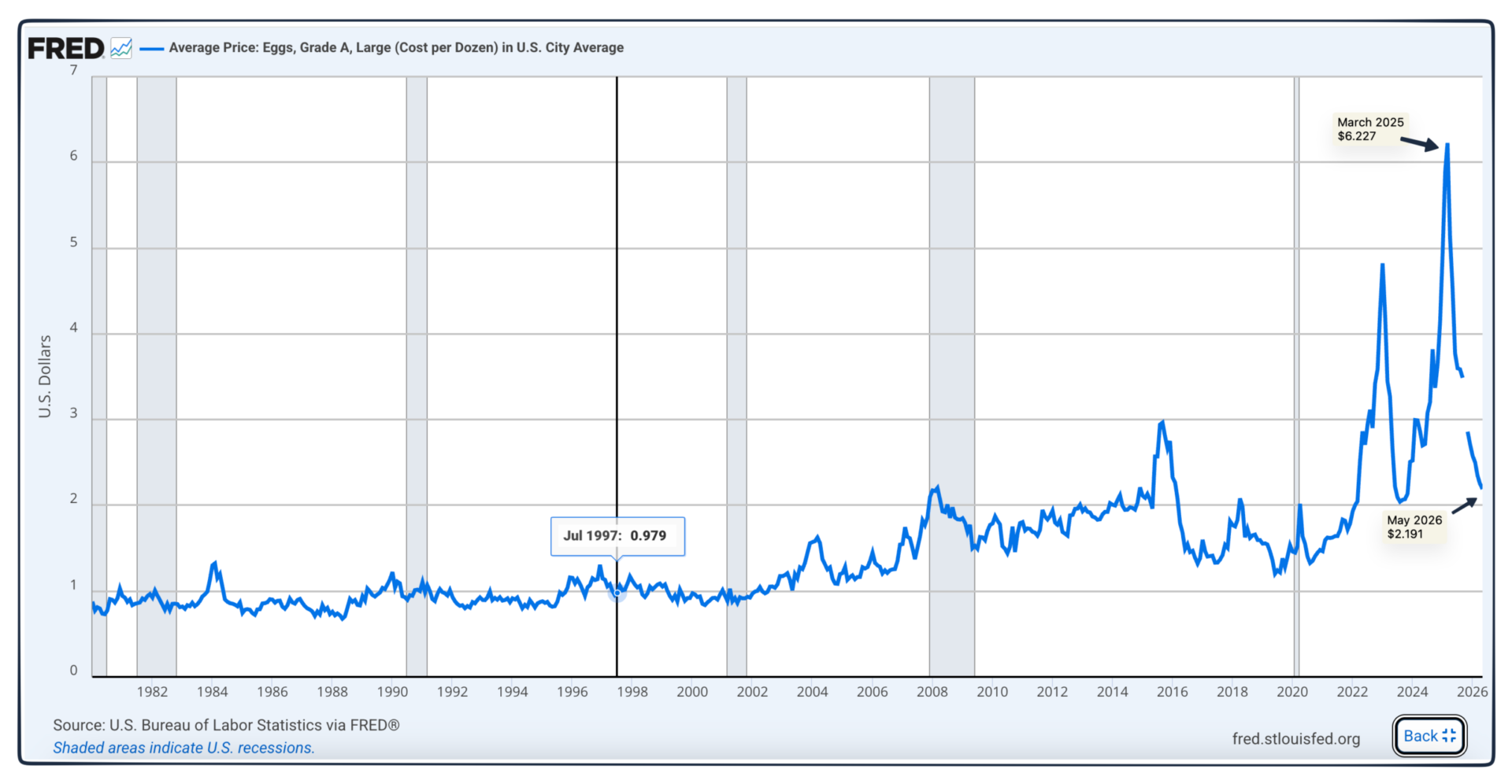

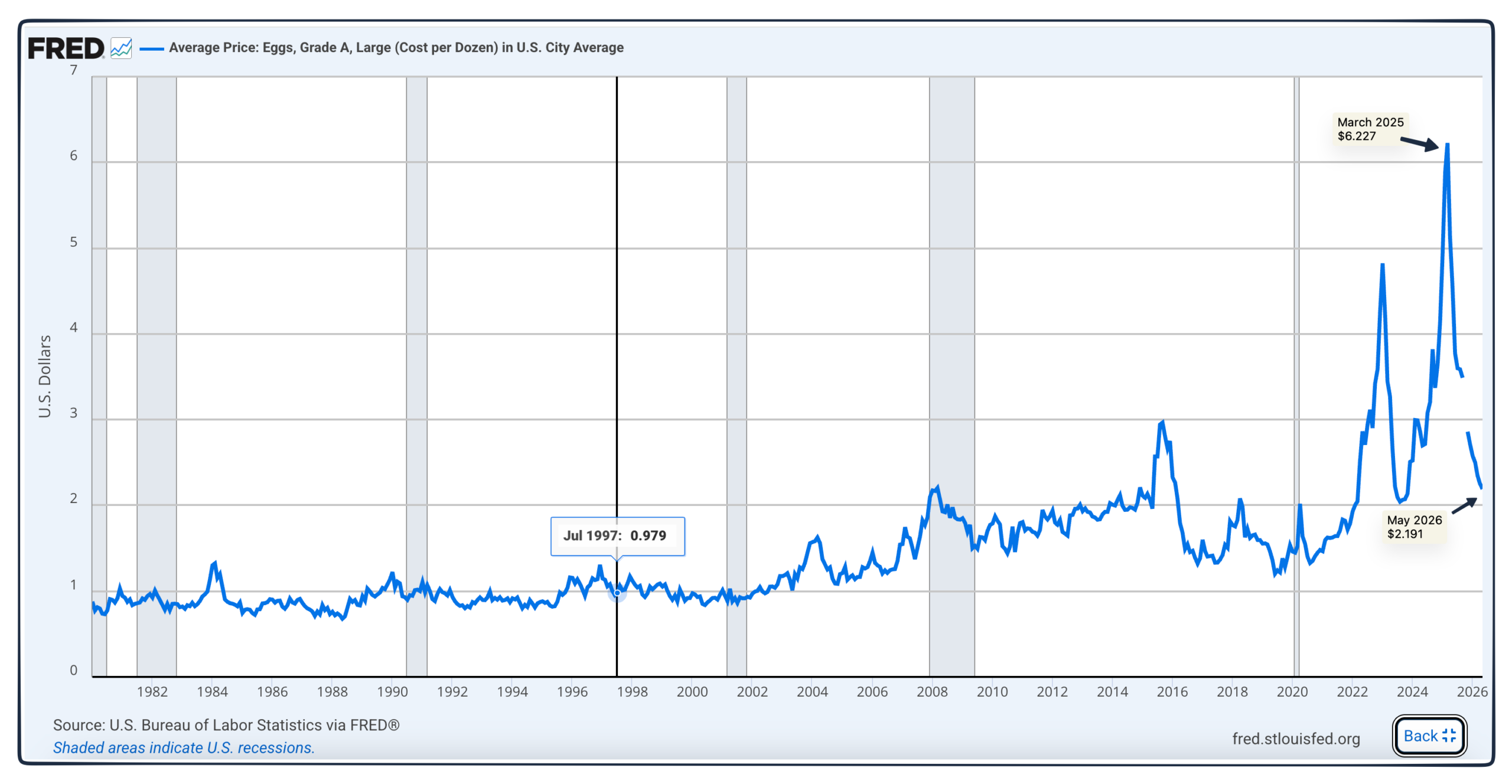
Plunging from recent highs, egg prices are way down:
Before we look at why, let’s start with some egg facts.
What We Always Wanted To Know About Eggs
You might have always wondered which came first, the chicken or the egg. According to food guru Harold McGee, it was the egg. The first eggs date back 250 million years ago from reptiles that moved from a watery home to the land. Then, approximately 100 million years later, birds evolved. After that, only 4 or 5 thousand years ago, we got the modern chicken.
Also, I suspect that, like me, you’ve taken the modern egg carton for granted. However, as one of those everyday inventions we ignore, it played an eg-citing (sorry-could not resist) role. Mass producing the modern egg, someone had to solve a breakage problem. The result was the modern egg carton:
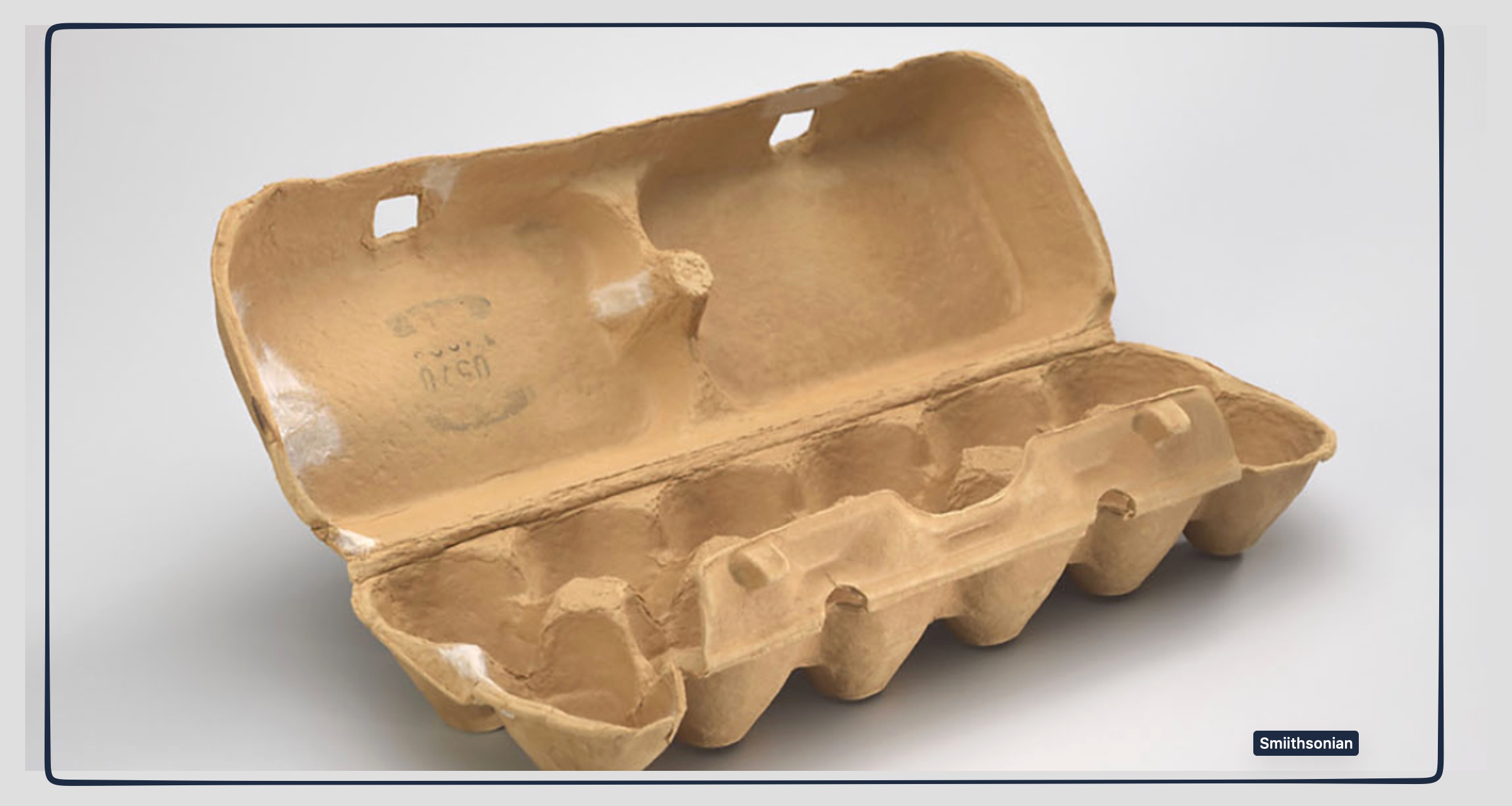
Before we had egg cartons, one railway delivery service said breakage claims totaled $100,000 a month (equal to $1.5 million today). At that time, they packed eggs in wooden crates or baskets or tubs. One crate was called the Humpty Dumpty:
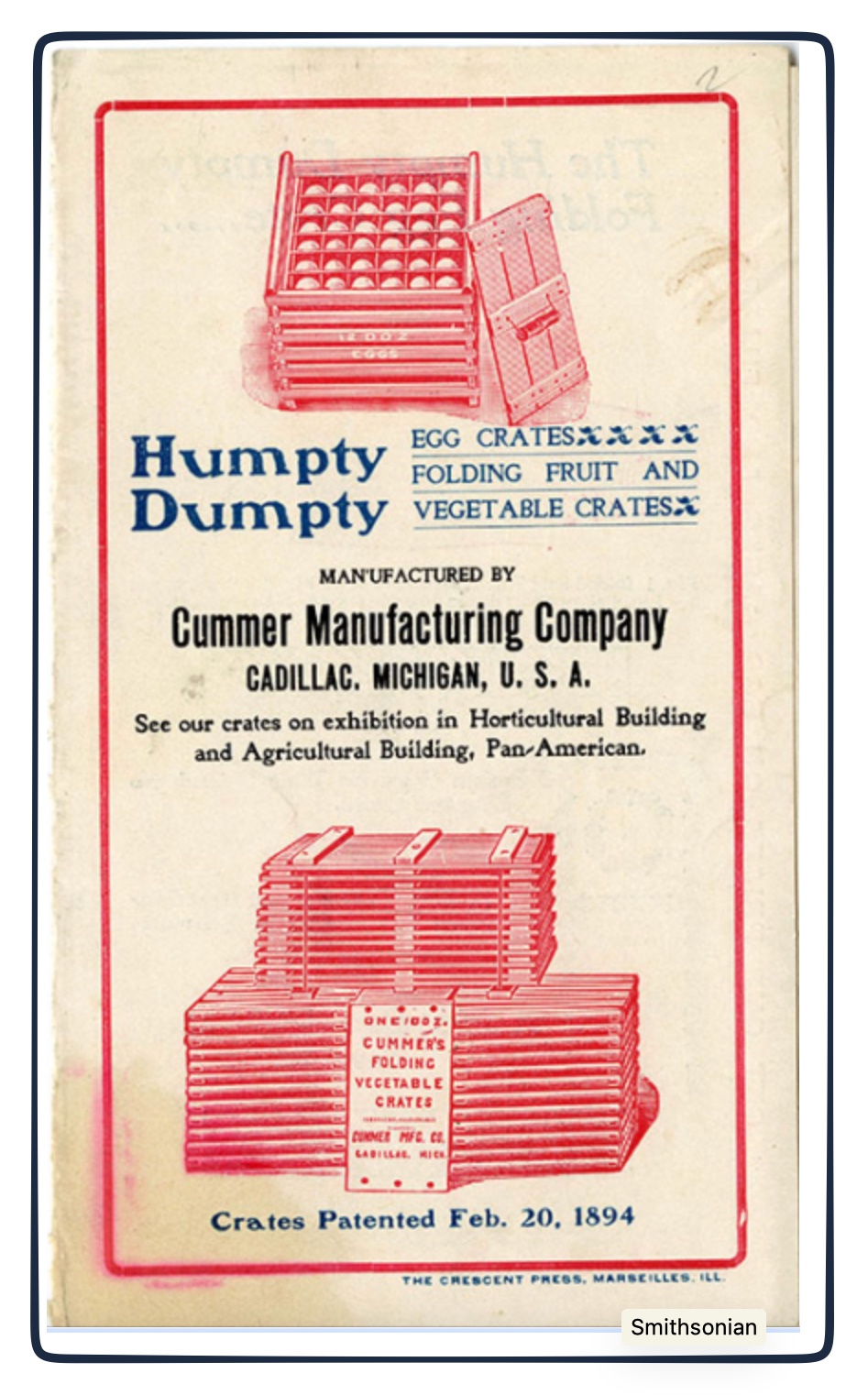
A Smithsonian article told us why egg packaging was so important. As they explained, the newer containers facilitated “less waste from spoiling, better handling, efficiencies in storing and display on store shelves, quicker sales with less weighing and wrapping, and standardization and uniformity. And, the package itself could advertise the product with printed logos and slogans of manufacturers and the selling agents.”
Consequently, advances in paper manufacture led to a series of increasingly better egg cartons. We got the first egg carton that we would recognize in 1926.
Our Bottom Line: Egg Prices
The egg price plunge is a supply and demand story. After the scourge of bird flu wiped out millions of chickens, farmers restored their flocks. As a result, now, we have 9 million more hens laying eggs than last year. And that’s too many.
Meanwhile, on the demand side of egg markets, consumers are displaying a protein bump. Traditionally, egg consumption has been inelastic. As economists, we know that we are referring to our minimal response to a price change.
Analytically, we are comparing the proportional change in quantity (numerator) to the proportional change in price (denominator). If the quantity’s percent change is bigger, then the item is elastic. By contrast, we have inelasticity when our denominator is larger because the percent change in price was bigger. Egg consumption is traditionally inelastic. As a result, because of our surging protein quest we need to shift our inelastic demand curve to the right.
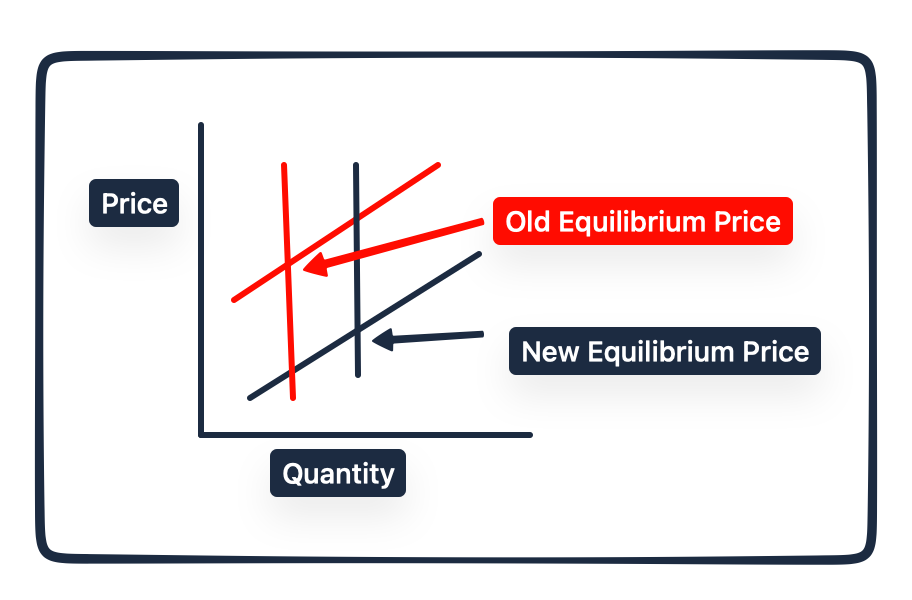
Below, I’ve increased supply and demand. The new black lines meet at a lower egg equilibrium price:
In wholesale markets, at 90% less, farmers were getting 70 cents a dozen. So while you and I are happy with lower egg prices, farmers are not.
Maybe though, one graph tells the whole egg price story (and why we are scrambling to buy more eggs).
My sources and more: We started today’s post with this NY Times article. From there, for the ideal sources of egg and poultry insight, we went here, here, and here. Also, you might enjoy this Odd Lots podcast series, “Beak Capitalism.”
The post Why We’re Scrambling to Buy Cheaper Eggs appeared first on Econlife.

Nicole Byers is an entertainment enthusiast! Nicole is an entertainment journalist for the Maple Grove Report.