Jake Benson has a strong pitch for supporting local news.

“Don’t get fooled by the bright lights of Fox News and CNN, because once the story is done, they’re gone,” he said. “They don’t really care about you, and your local reporters do.”

Since the late 1970s, Benson has been one of those local news hounds in northern Minnesota. He publishes the Proctor Journal and two other papers, but his roles are varied enough to include deliveries when duty calls.

Wearing multiple hats is common in local news, where outlets often want for staff and work within tight budgets. Between the Proctor Journal, Hermantown Star and Floodwood Forum, Benson said his papers have about nine total workers.

Any additions to organizations of this size are welcome, which is why he hopes the state will start funding an internship program for newsrooms.

“I see it as a needed benefit,” Benson said. “Certainly for a number of papers, it could be a lifesaver.”

The money would come through a bill proposed at the Legislature that would establish public funding for a local news talent pipeline program. Rep. Julie Green, DFL-Edina, and Sen. Heather Gustafson, DFL-Vadnais Heights, introduced the proposals, gaining bipartisan support in committees.

Advocates spotlighted the proposal and other plans for supporting local news last week at the Capitol. A newly formed group of news and civic organizations known as the True North News Alliance organized a rally calling for internship funding, media literacy incentives and tax credits for newsroom staff, among other legislative priorities. (MinnPost is a member of the Minnesota Newspaper Association, which is involved with the alliance.)

How could the funding be used? 

House bill 4072 and Senate bill 4183 would give $500,000 worth of workforce development grants to the Minnesota News Media Institute. The institute, a nonprofit arm of the Minnesota Newspaper Association, currently supplements internship wages at newsrooms.

State funding would build on it, said Lisa Hills, executive director of the association. The program currently provides up to $1,000 each for about 10 interns per year, while the proposed pool of money could cover an intern’s full salary. 

“(The internships have) been a good program, good experience, and we’re excited about the possibility of this moving forward,” Hills said. 

As written, the bill takes a holistic approach to local news. Many small newsrooms in Minnesota are in Greater Minnesota, but the program wouldn’t have geographic constraints. 

It wouldn’t be limited to reporter internships, either, or newspapers. A television or radio broadcaster or digital outlet could apply for funds, and an intern could gain experience as a reporter, advertising designer, sales person or any other role involved in operational functions. 

The premise is to get people interested in learning about the news industry through the doors, said Andrew Meuleners, the general manager of Herald Journal Publishing based in Winsted. Given the known workforce gaps in the industry, he doesn’t think the bill is seeking too much. 

“We’re not asking for the moon,” Meuleners said. “We’re asking for something that has happened for other industries for years.”

His newspaper group has between 20 to 25 employees. Reporters cover anything from government meetings to 100th birthdays to high school sports.

A recent intern started out primarily interested in sports reporting. They left with experience writing sports, features and meeting stories, plus shooting photos. 

Benson is just as effusive in his praise for the internship program. It fills gaps that are hard to fill in Greater Minnesota, he said.

“It’s getting increasingly tough to find people, especially at smaller publications,” he said.

Yet there’s undoubtedly news to report in these communities, said Tara Brandl, co-owner of Above the Fold Publishing. Her group of four publications, with a combined five full-time staffers, includes the Tracy Area Headlight Herald

Bringing in an intern in past years meant more coverage at city events and meetings, coverage that readers expect from their hometown paper. No one, least of all national and statewide news organizations, would be there to cover those stories otherwise.

“We run our newspapers with the motto that everyone has a story and it’s our job to tell it,” said Brandl, who is also serving as the Minnesota Newspaper Association president this year. “That’s what local journalism is.” 

Have other states done anything like this?

Yes. Minnesota’s bill would be akin to programs adopted by Washington state, California and New Mexico since 2020. Rebuild Local News, a nonprofit, detailed each state’s approach in a letter of support for the Minnesota bill.

New Mexico’s program has placed 35 fellows and 27 paid interns at local news organizations since 2020. Since 2023, California is up to 111 fellows in 110 newsrooms. To go with its 16 fellows since 2024, Washington has a goal to place one in every county by 2029. 

Illinois went in another direction in 2025, providing refundable tax credits to local news outlets trying to retain or hire journalists. In its first year, the Illinois Local Journalism Sustainability Tax Incentive Program distributed $4 million, according to a policy paper by Rebuild Local News.

These state-level initiatives overcame concerns that government support would compromise editorial independence. They also went against the federal grain, where Republicans in Congress have severed public funding to broadcast stations they deem to be partisan. On editorial independence, backers of public funds for news have argued that preserving local reporter positions are worth it as long as guardrails are in place. 

Brandl is encouraged by the reception she’s seen to the internship funding proposal. Support for it goes beyond the news industry, bringing in lawmakers from across the aisle, civic organizations and businesses. The city of Proctor, where Benson serves on the City Council, even passed a resolution in support of it. 

“We saw some support both on the Senate and House sides, and across party lines, which is super important,” Brandl said. “Our reps are really seeing the impact of local news and it’s not a Democrat or Republican issue; it’s a state of Minnesota issue.”


Source link

Leave a Reply

Subscribe to Our Newsletter

Get our latest articles delivered straight to your inbox. No spam, we promise.

Recent Reviews


We may receive a commission on purchases made from links.

Michelin is a French multinational company that many consumers consider to be one of the most satisfying major tire brands. This firm makes several tire models that offer comfort, performance, all-terrain prowess, and everything in between — including cutting-edge products like the $42,000-per-set Michelin Pilot Sport PAX that it developed specifically for the Bugatti Veyron. Aside from its own tires, Michelin also owns other tire brands that you might be familiar with, including BFGoodrich, Achilles, and Corsa.

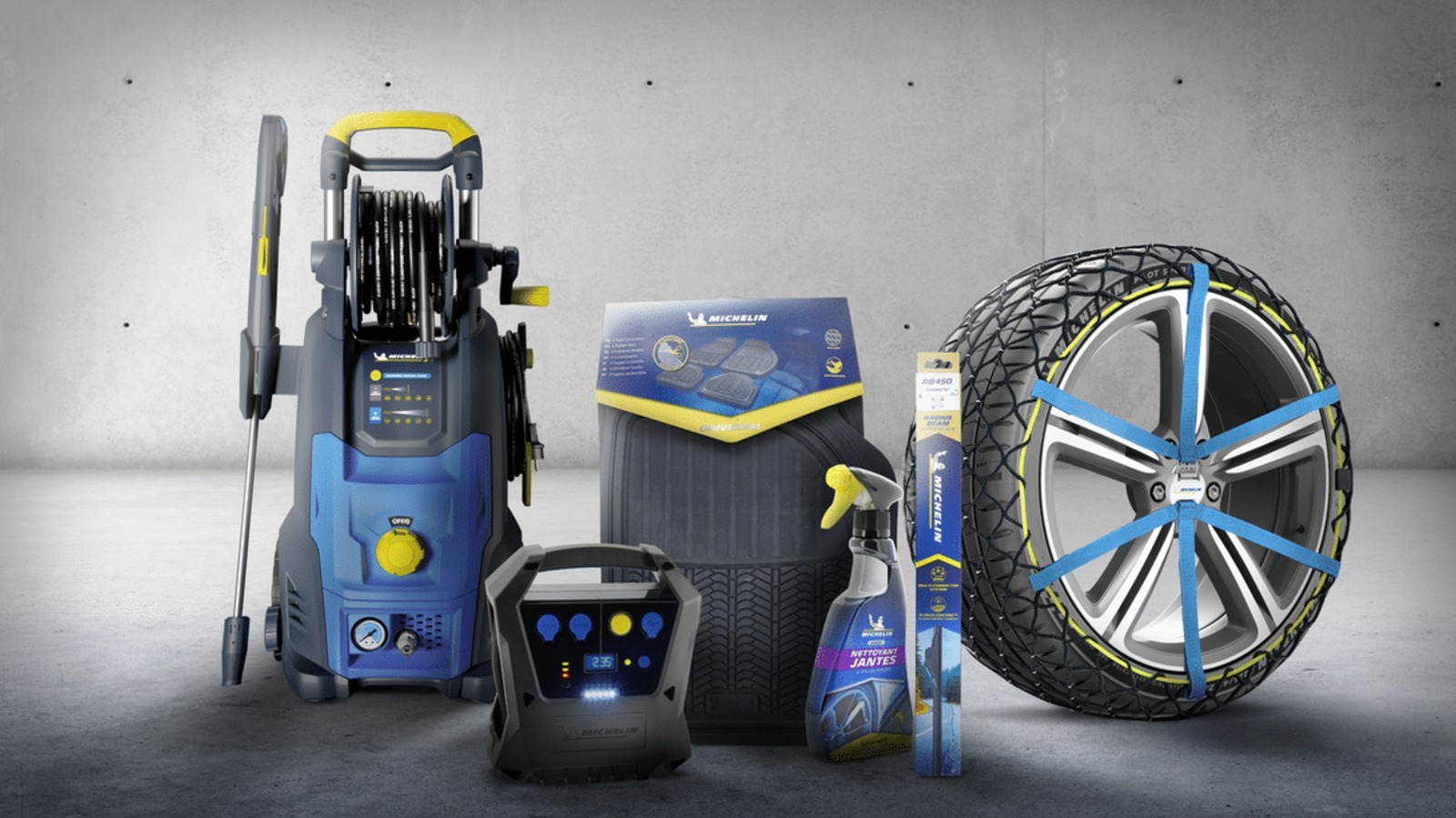
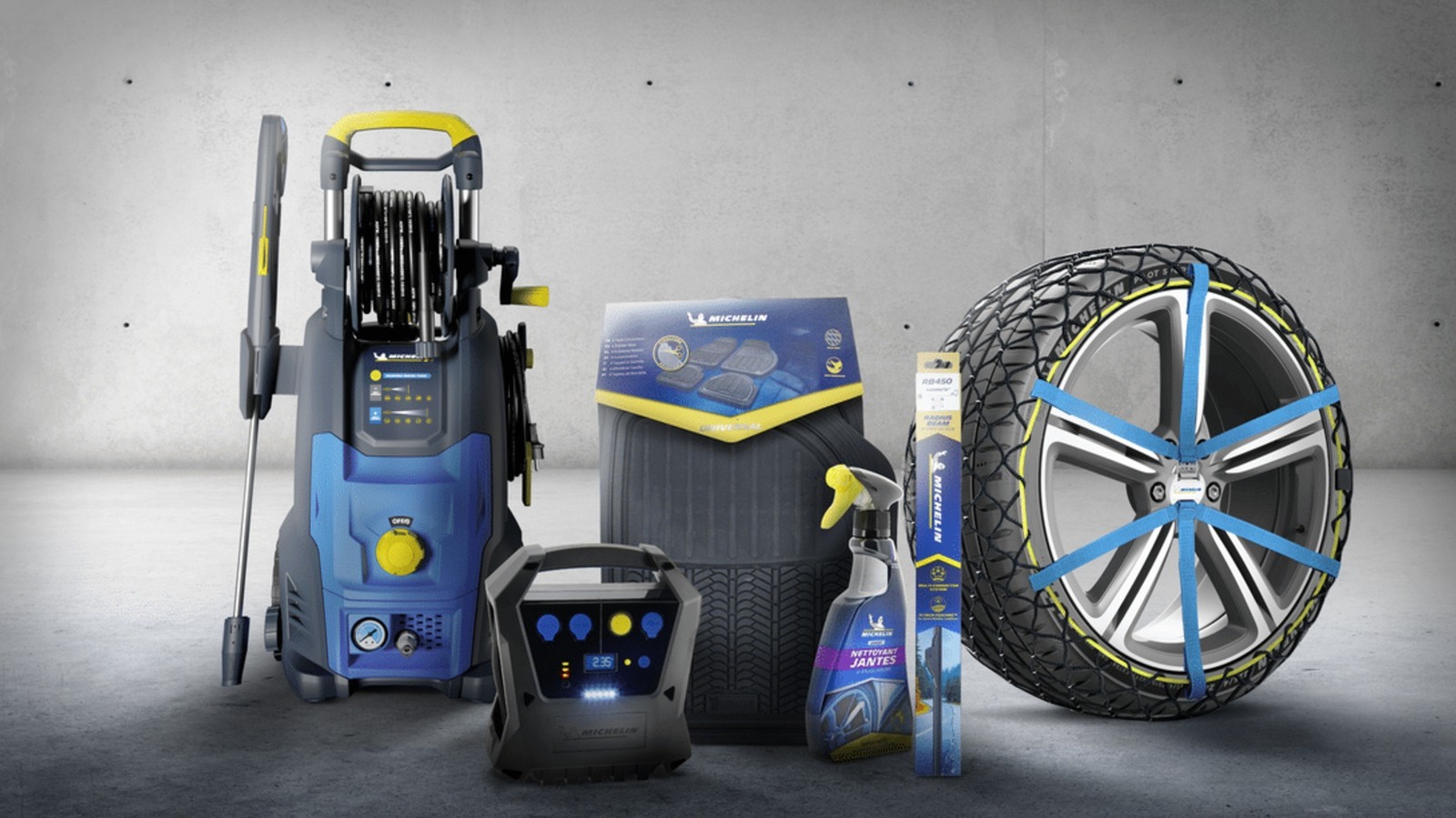
While tires are what Michelin is known for, the company has put its name to more than the rubber that wraps around your car’s rims. In fact, the company sells several other products that aren’t tires. So, we’re listing a few Michelin-branded items that you can buy online and in retail stores. While they might not all be made of rubber or even related to vehicles, these tools and accessories can come in handy when keeping your car — and even yourself — in good shape.

Michelin tire inflator

Since Michelin is primarily known for its tires, it makes sense for the company to sell a Michelin-branded tire inflator as well. That way, if you get a flat on one of the Michelin tires on your car or want to regularly top up your car’s tire pressure to maintain optimum performance, you can use a Michelin-branded pump to fill up your tires. The company actually sells several types of inflators on its Amazon page, but it only offers a single motorized unit — the Michelin Micro Tyre Inflator, which is available on Amazon for $98.99.

This little device is only slightly wider than an iPhone 17 and weighs about 400 grams, or 14 ounces. This means it’s easy to store in your car and to move to whichever tire needs topping up. More importantly, it takes power from a 12-volt socket, allowing you to run it using your car’s battery. It also has a USB port for charging your phone (or any other USB device) in case of an emergency.

Some users say that the device is slow, taking about 12 minutes to bring a tire from 10 to 32 PSI, but that’s not unexpected given its small size. Still, it should be good enough for regular weekly maintenance if you know your car’s proper tire pressure, or in case of an emergency. Its biggest downside is that you need a power source to run it, but having a dead battery and a flat tire simultaneously is likely a rare occurrence in many modern cars.

Michelin mini fridge

Taking a road trip during the summer can get you thirsty, and there’s no better way to quench that thirst than by drinking a cool can of soda (or your beverage of choice). If you want to ensure that you’ll always have a cold drink ready while you’re driving on the freeway, Michelin’s mini fridge will help you with that. This nifty little refrigerator is available on Amazon for just $99.99 and can be connected to either 110V AC or 12V DC power, ensuring that it will work on both your desk and in your car.

The mini fridge measures 6.9 x 9.45 x 10 inches (17.5 x 24 x 25.4 cm), meaning it can easily fit on a garage shelf or office desk. It should also be small enough to put on the floor of your car. Despite that relatively small size, it’s large enough to fit six 350-ml cans or four 500-ml bottles, and it will keep these items at a chilly 32 degrees Fahrenheit or 18 degrees Celsius. It also has an LED light on the door, so it can double as a night light if necessary.

Aside from keeping your drinks (and other food items) below room temperature, it also has a few other creature comforts. These include a removable shelf and door basket for flexibility and easy cleaning, as well as a retractable carry handle and a self-locking door to make transportation easier.

Michelin car floor mats

Heavy-duty car floor mats are often made from rubber for durability and water resistance, and since Michelin is in the business of rubber, it makes sense for the company to offer exactly that. So, if you want to protect your vehicle’s floor from dirt, dust, and mud, the company can help you with its Michelin all-weather car floor mats. This four-piece package is available on Amazon for $49.99 and comes in either black or tan.

The surface of these floor mats is specially designed to trap debris, snow, and water, preventing them from ruining the carpet on your vehicle. The mats have a cleat backing that grips your car’s floor and prevents them from slipping. The front row mats also come with what Michelin calls a Gripclip Retention System, allowing them to clip into your vehicle’s safety clips and adding even more reassurance that they won’t accidentally slip while you’re driving and pose a hazard to your safety.

These mats are universal and will work in most vehicles. However, they’re also easy to customize: If you find them a bit too large for the footwell of your tiny hatchback, you can use a pair of scissors to trim the edges for a perfect fit.

Michelin Stealth Ultra wiper blades

While Michelin’s Stealth Ultra wiper blades aren’t generally considered among the best windshield wipers, they appear to be a pretty good choice given their four-star rating on Amazon. These wipers cost $49.99 and are available in various size combinations for all sorts of cars. This ensures that no matter what vehicle you’re driving, you can probably find a set that will fit your needs.

These Michelin wipers are curved to conform to the shape of your windscreen for a clean, streak-free wipe. The company’s Amazon listing claims that these are designed to “withstand rain, wind, snow, mud, dust, or any other debris that might hamper your windshield’s visibility.” While you might think that windshield wipers are pretty simple items, and that you can just purchase any generic wipers off the internet, you must remember that they’re essential so that you have the best visibility possible during inclement weather. So, for your safety, consider investing in a set from a reputable brand like Michelin.

Michelin work boots

Michelin is known for making rubber tires to put on your car’s “feet,” but did you know it also makes shoes for the driver’s feet? The company makes sports & outdoor footwear, as well as shoes for work and safety. For this example, we have the Michelin HydroEdge Steel Toe waterproof work boot, listed for $210 on Amazon and at Georgia Boot. This shoe is available in U.S. sizes from 7.5 up to 14, ensuring that no matter what size you wear, you can get a Michelin work boot for yourself.

As the name suggests, this pair of shoes has steel toes to protect your feet from accidental impacts and is fully waterproof to help keep your feet dry, even in supposedly severe conditions. It also meets ASTM F2413 standards for electrical protection, meaning it has fully insulating soles to protect you from electrical hazards at work. Michelin also added what it calls an Advanced Rear Suspension system to its heel, ensuring proper shock absorption when you walk.


Source link