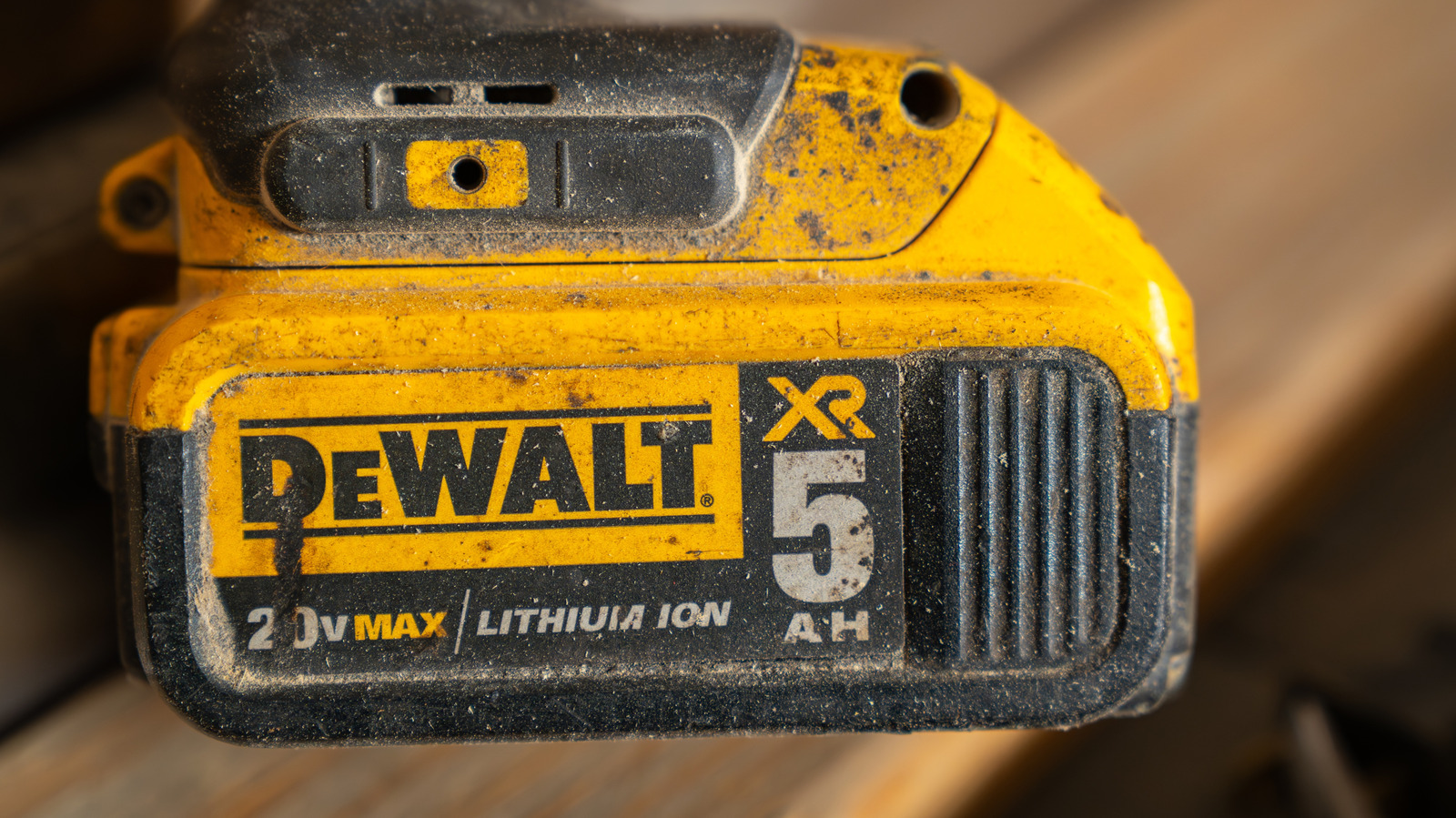
In the power tool game, having your branding down is everything, and DeWalt has remained pretty consistent with its products over the past few decades — when customers see black and yellow in a tool context, their mind automatically goes to DeWalt. With that said, the company isn’t afraid to make minor, yet noticeable tweaks here in there. One of the most recent is a change to one of DeWalt’s many battery types, specifically the 20V XR battery offerings. Looking closely at the labels on the sides of these batteries and at their online descriptions, there is a noticeable change to how these batteries are categorized and advertised.
For example, the 20V Max XR compact battery has only recently taken on this naming. Not long ago, it was known as the 20V Max XR PowerStack compact battery, with the PowerStack branding removed from the online DeWalt listing, and this change is reflected on the battery itself. This change is observed through the 20V Max XR compact battery kit listing on the DeWalt website, which features images of previous designs with the large and small PowerStack logos. On top of this, PowerStack and PowerPack logos have been removed from many other 20V DeWalt batteries.
All in all, this isn’t too massive of a change, especially for those who aren’t all that picky about their DeWalt batteries so long as they get the job done. The question is, though, does this slight rebrand mean anything for the batteries’ performance level? Thankfully, based on the image changes, DeWalt’s battery system hasn’t changed outside of these missing PowerStack and PowerPack logos.
Has DeWalt made functional changes to its batteries?
At the end of the day, a missing logo and some description changes doesn’t make too much of a difference. However, if DeWalt altered how its batteries work, that would be cause for customers to be disgruntled. As mentioned before, they’re still the same shape and size across the board, and for those worried they’ll have to delve into the pros and cons of power tool battery adapters, the manner in which they connect to DeWalt power tools hasn’t changed.
With that said, there is the question of the fate of the PowerStack and PowerPack lines. PowerStack batteries were introduced as a more powerful and efficient series of batteries, notable for their flat pouch cells over standard cylindrical ones. PowerPack batteries offer similar benefits utilizing multi-tab battery cells as opposed to traditional single-tab cells. Nothing has come to light that confirms the demise of these sublines or the technology behind them, so we’ll just have to wait and see if DeWalt sheds any light on the disappearance of these labels down the line.
While the fate of the PowerPack and PowerStack labels remains something of a mystery for the time being, there don’t seem to be many significant battery changes in DeWalt’s lineup. Based on the revised images, the impacted battery models are likely to connect and get the job done as they always have, just with a little less paint and branding on their sides.