Where Tobacco Taxes Work Well


Urged to forbid smoking, Napoleon III said, “This vice brings in one hundred million francs in taxes every year. I will certainly forbid it at once–as soon as you can name a virtue that brings in as much revenue.”

Still today, Napoleon was right, but not entirely.

Tobacco Taxes

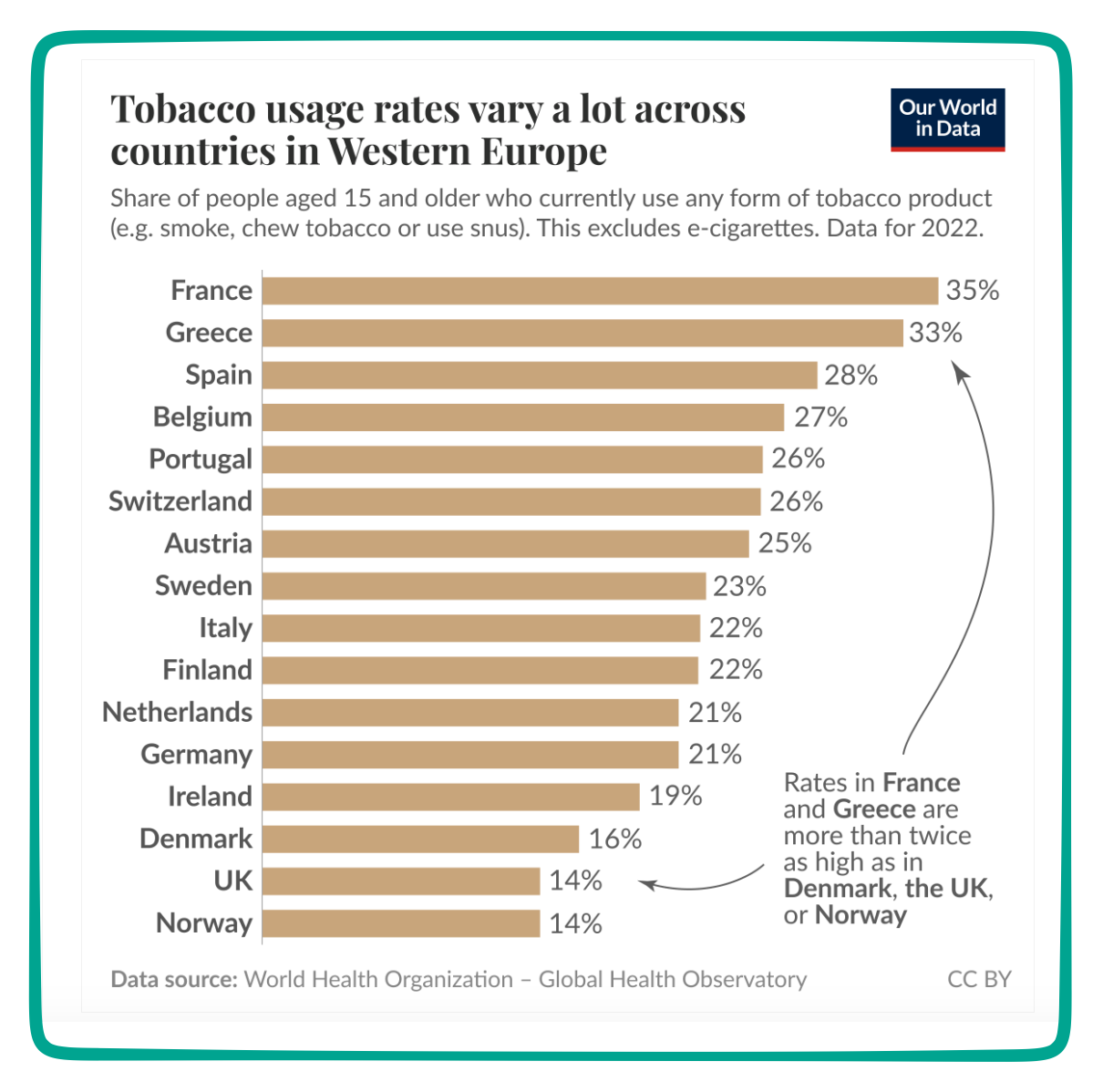
France, Greece, and Spain top a Western European list of tobacco users:
European tobacco usage

Consequently, it makes sense that the EU, and especially France (at €8.09/$9.51 per 20-cigarette pack), tax tobacco products. Meanwhile, Bulgaria’s €2.03 ($2.38) tax for a 20-cigarette pack is the EU’s lowest:
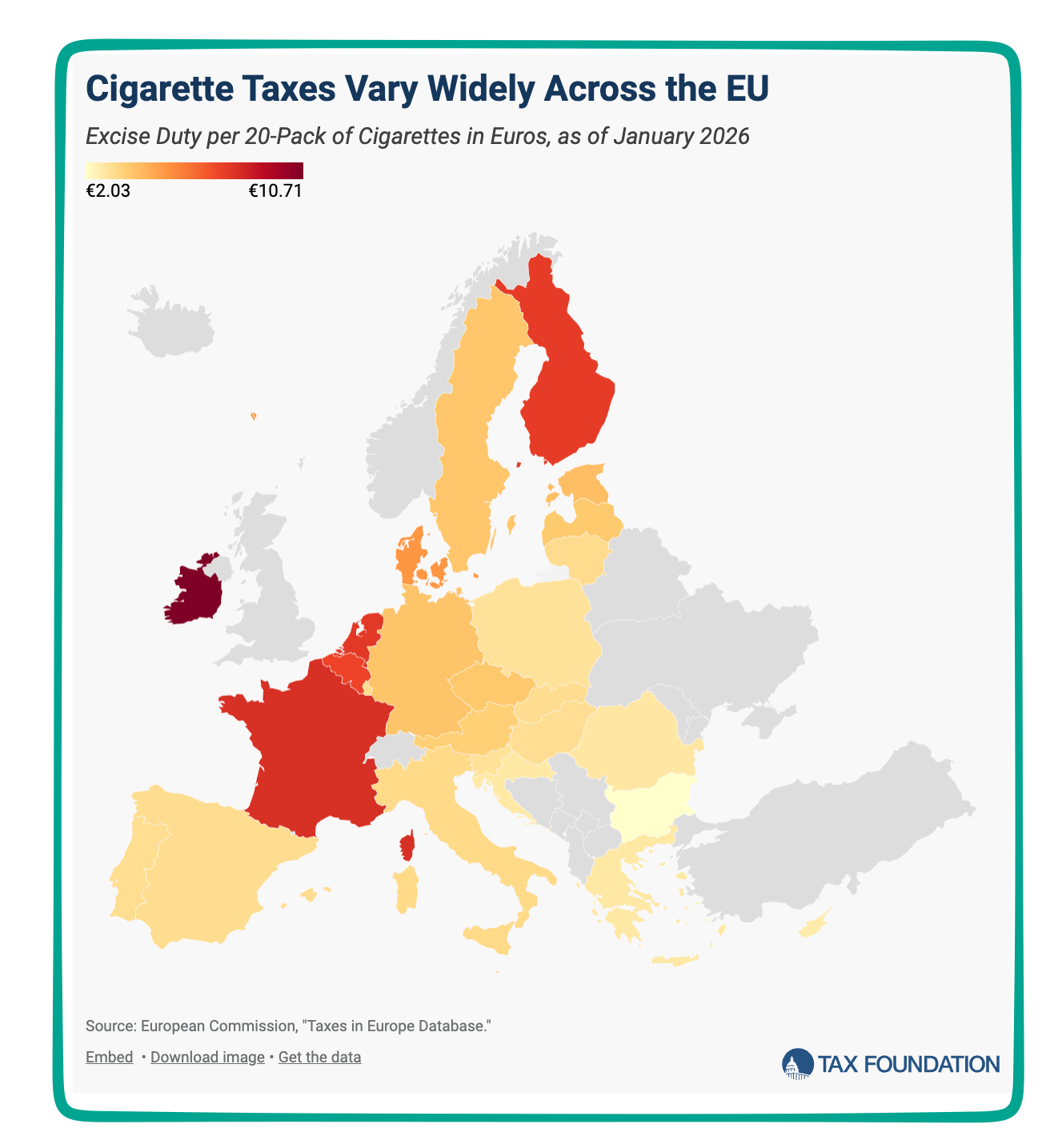
cigarette taxes

Cigarette Taxes

EU countries do not have a choice. Subject to a minimum, the required tax is €1.80 ($2.11) per 20-cigarette pack in addition to a percent of the average retail price (unless the price per pack is more than €2.30). Then, adding in the EU VAT, smokers typically pay more for the tax than for the cigarette.

Smuggling

The downside, however, is smuggling. In the EU, smuggled cigarettes from low-price Germany wind up in France. Similarly, because of smuggling, high cigarette tax states like New York lost out on an estimated $21.95 billion in revenue between 2007 and 2023. We could say, though, that New York’s loss was New Hampshire’s gain. The cigarettes from New Hampshire that were sold elsewhere generated more than $1 billion in extra revenue for them:
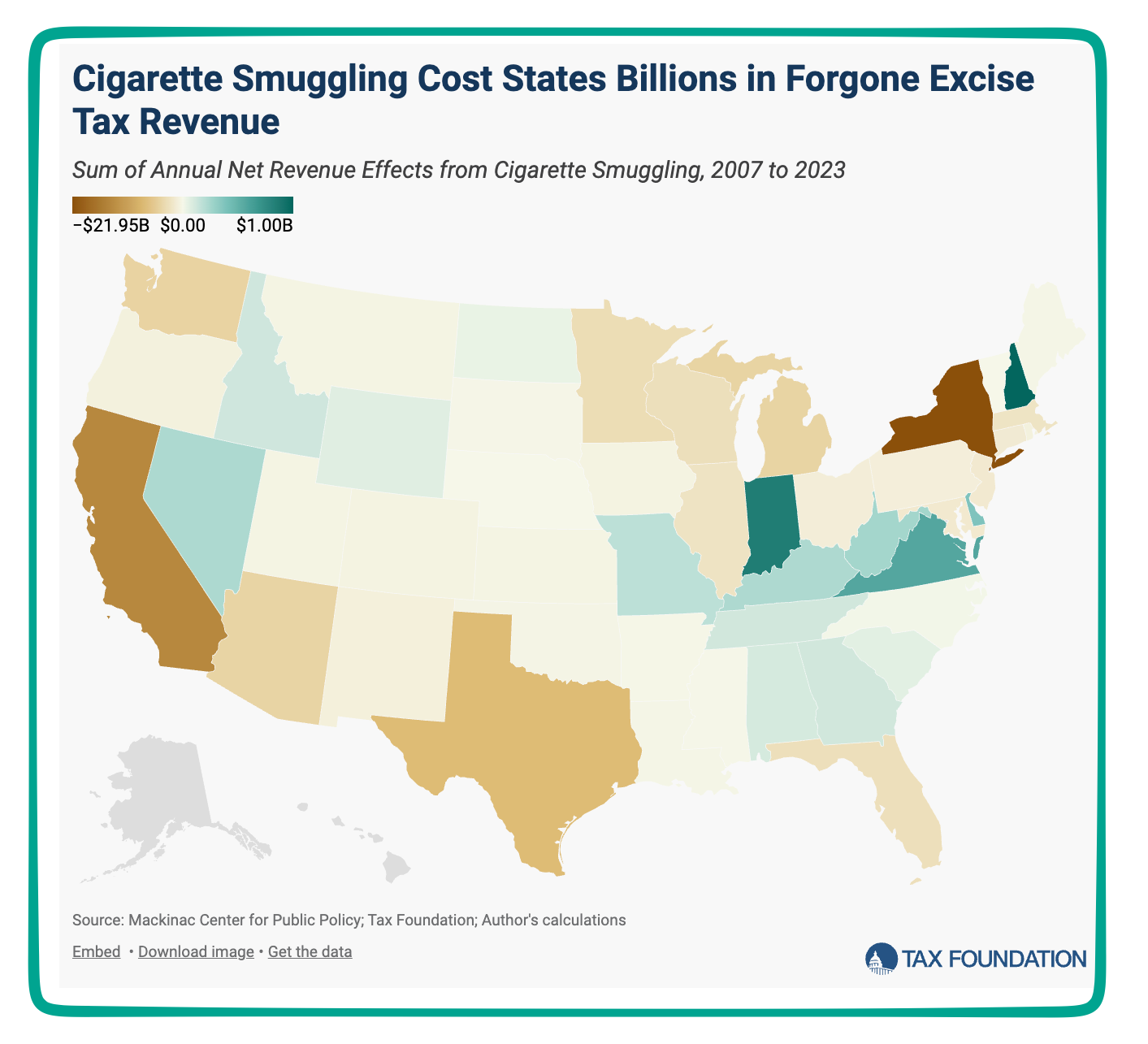
cigarette smuggling

Our Bottom Line: Elasticity

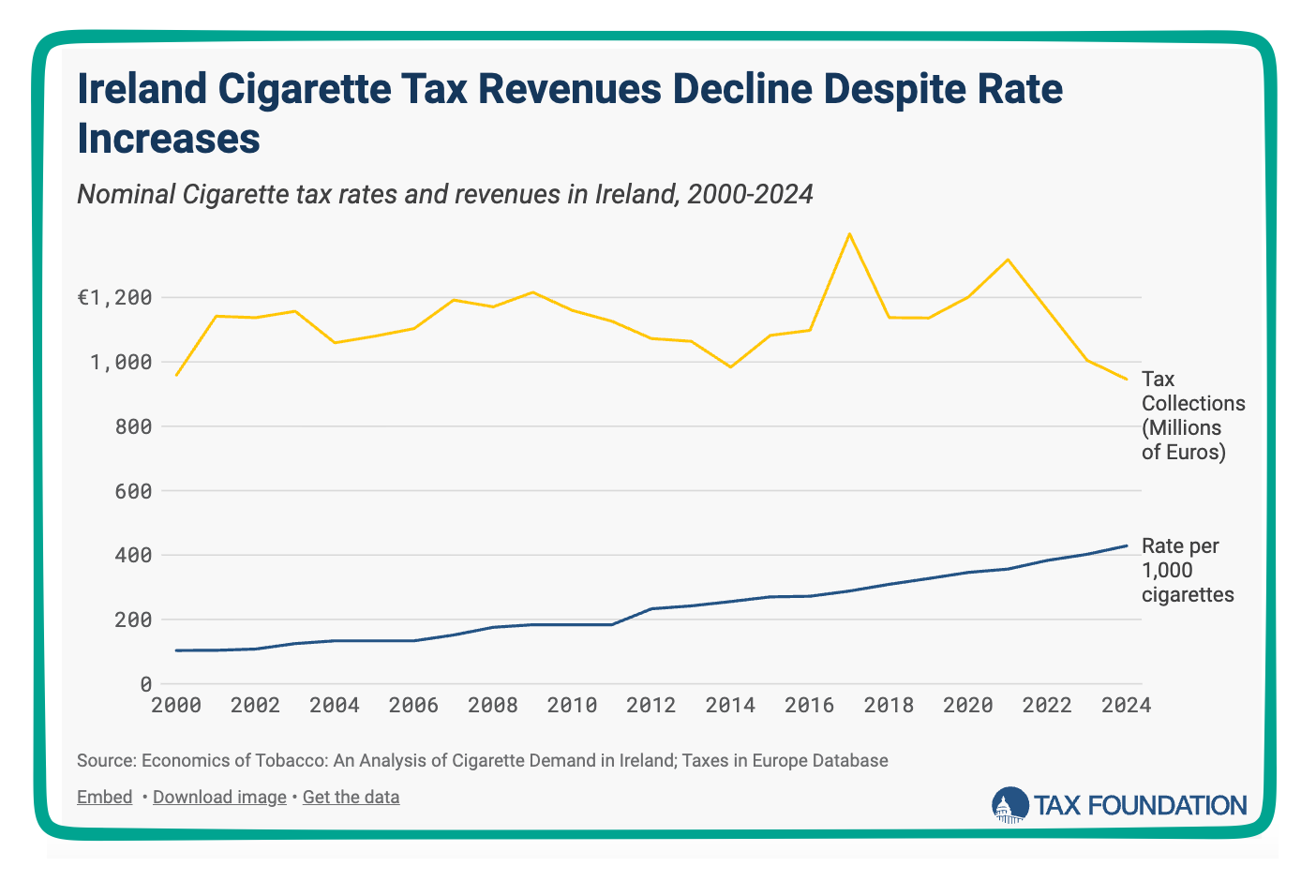
Napoleon III was not entirely correct because a state’s revenue depends on its tax rate. At too high a rate, revenue plunges. Explained with precise numbers by the Tax Foundation, it is all about the price elasticity of demand (PED). While the law of demand says we buy less when price rises, the question is how much less. Called elastic PED, when the decline is steep, then revenue also falls. Consequently, policy makers need to know when our quantity demanded moves from inelastic (prices have little effect) to elastic.

In Ireland, they miscalculated:tobacco tax elasticity
So, where are we?

Returning to our title, to find a tobacco smuggler, we might go to a state with high tobacco taxes.

My sources and more: Thanks to my IMF email for inspiring today’s post. From there, my next destinations were the Tax Foundation and Our World in Data. Then, if you want some confusion, do go to this EU tobacco tax website. And finally, do take a look at the economist that explained it all.


Source link

Leave a Reply

Subscribe to Our Newsletter

Get our latest articles delivered straight to your inbox. No spam, we promise.

Recent Reviews


Google Pixel 10a

Kerry Wan/ZDNET

Follow ZDNET: Add us as a preferred source on Google.


ZDNET’s key takeaways

  • A suit alleges Google transmitted user data without permission.
  • If you have used an Android device since 2017, you may be eligible.
  • You will need a notice ID and confirmation code to file.

Have you used an Android phone to access the internet in the past eight years? You might be in line for payment from a class action lawsuit against Google, but there are some important things you need to know.

Taylor et al. v. Google LLC alleges that Android phones sent information to Google without users’ permission, even when the phones weren’t in use, and all apps were closed, using users’ cell data they paid for. Google could have made these data transfers happen when the device was connected to Wi-Fi, the suit says, but it chose to make them happen at any time.

Also: The best data removal services of 2026: Delete yourself from the internet

Google hasn’t acknowledged any wrongdoing, but agreed to a settlement to avoid the prospect of court proceedings. This is unrelated to the recent $700 million Google Play class action lawsuit. 

How to file a claim

Anyone who used a cellular connection on an Android phone from Nov. 12, 2017, to the date the settlement receives final approval is eligible to participate in this suit. If you’re in this group, you should receive a notice with a code either in the mail or via email — if you haven’t already.

To file a claim, start by going to www.federalcellularclassaction.com. You will need your notice ID and confirmation code. If you believe you are eligible but don’t receive communication, you can email info@federalcellularclassaction.com. I’ve reached out to the settlement administrator to see if there’s a deadline by which you should receive your communication.

Also: Amazon is refunding nearly $1 billion to customers – are you eligible?

It’s not finalized how much each person will get in this suit. There is a $135 million settlement fund for approximately 100 million settlement class members, but since this sort of suit often sees only single-digit percentage participation, your payout can be up to $100. Each class member will receive the same amount after administration costs, taxes, and attorney fees. Eligible settlement class members will receive payment after the court grants final approval. The final approval hearing is June 23, 2026, so you won’t get anything before then.

One important thing to note is that if you’re eligible for this suit but don’t select a payment method, the administrator will still attempt to pay you. But if the administrator does not have your correct information, you may not receive your money.


Source link