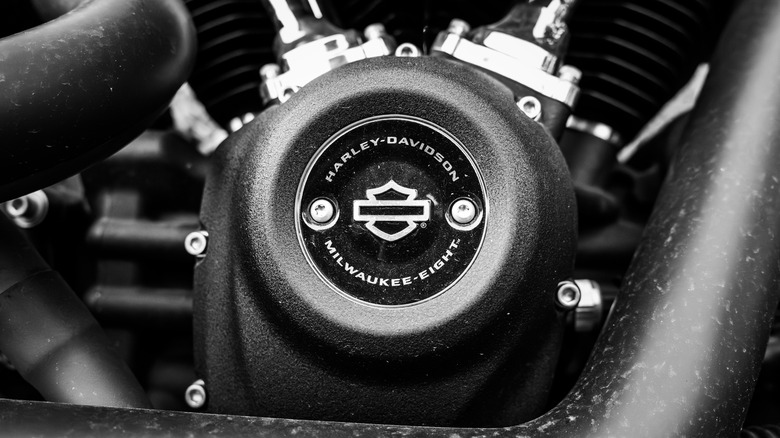
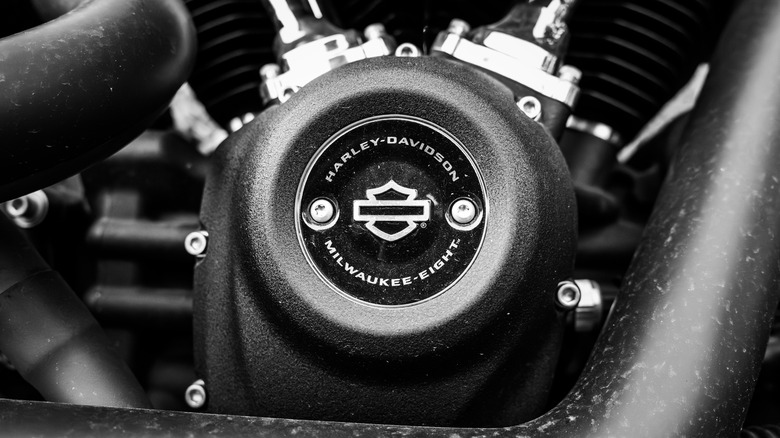
Many motorcyclists are passionate about their rides, and that’s especially true of Harley-Davidson owners. That appreciation goes beyond the brand’s iconic logo and company legacy, as the longevity of the bikes and their engines is often a huge selling point. When it comes to the Milwaukee-8 engine, it’s common to find owners praising its reliability online — albeit with some notable exceptions.
Harley owners mostly appreciate the engine, with the reliability seemingly a strong point. A Harley owner on the UKGSer claimed to have put over 16K miles on two different Milwaukee-8-powered bikes without issue, while a Harley-Davidson Forum poster asserts that they had put 224,000 trouble-free miles on their 2020 bike over five years. Reddit users also loved the M8, with many agreeing it’s a great engine that often outperforms other engines.
However, some owners have had problems with the 114 variation of the Milwaukee-8. Much of those problems are related to oil collecting at the bottom of the engine’s crankcase, a condition known as “sumping.” There are many tales of this occurring online, though evidence suggests that the issue is limited to older models.
The evolution of the Milwaukee-8 engine
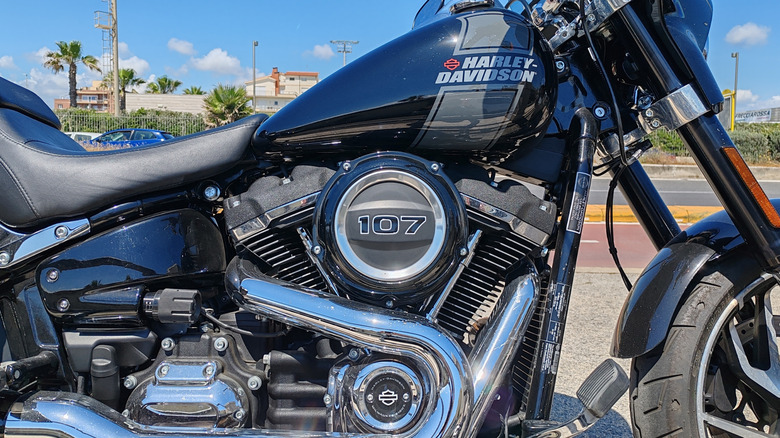
Harley-Davidson first acknowledged the Milwaukee-Eight’s sumping issue in a 2017 factory service bulletin. The bulletin noted that the issue primarily occured during extended periods of high-rpm operation or under heavy engine load. These situations would lead to an excessive amount of oil gathering in the engine’s crankcase, affecting the flywheel movement and causing the bike to lose power. High levels of engine braking were also possible, as was engine damage. Affected models included the Touring, CVO, Trike, Police, and Softail.
But while this was one of the reasons riders may have stayed away from even used Harleys, the company appears to have addressed the issue. The 2017 bulletin includes technical updates, indicating that the issue may have been fixed by implementing revised oil pump designs. These new pumps had updated part numbers and were installed to replace older pumps in affected motorcycles.
Despite any early problems, Harley-Davidson continues to use the M8 family of big-twin engines in the Touring and Softail models. The lineup’s variants currently include 107, 114, 117, and 121 cubic-inch models, with the 121-CI version powering certain CVO models like the Road Glide ST. These versions emphasize improved airflow, combustion efficiency, and better output compared to earlier large-displacement Harley engines like the Twin Cam engines.