Maple Grove Daily

Maple Grove Daily

Subscribe to Our Newsletter

Get our latest articles delivered straight to your inbox. No spam, we promise.


With gasoline prices hitting four-year highs and continued uncertainty about when they might come back down, many American motorists have changed up their driving habits to save money. Some drivers have simply decided to drive less, while others have tried to adjust their driving style to use less fuel. In some cases, the high cost of gas may even have encouraged some drivers to switch to more efficient vehicles.

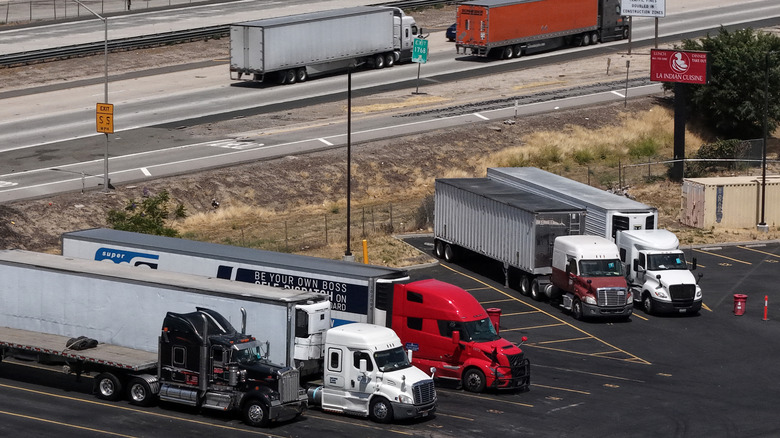
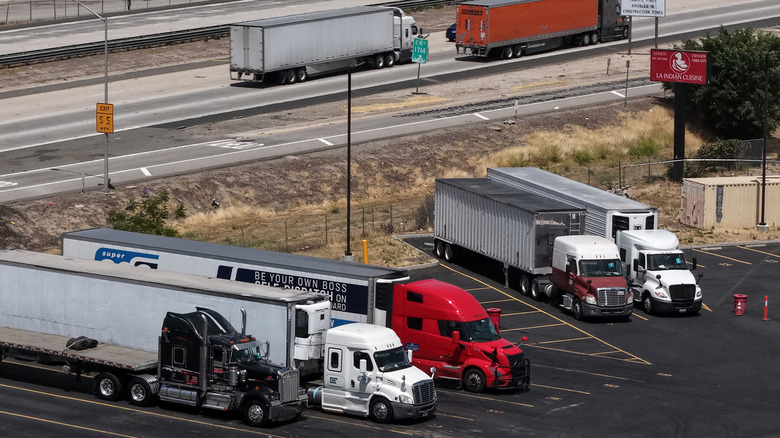
This rise in fuel prices has, of course, an even larger impact on those who drive for a living and the transportation industry as a whole. The American trucking industry has been especially hard hit by skyrocketing diesel prices, which have caused many freight carriers to raise their rates to compensate. 

Like drivers of passenger cars, truck drivers can save fuel by changing how they drive, and data shows that American truckers have indeed dropped their overall speeds in response to elevated diesel prices. Trucking, however, is a complex industry, and while driving slower could help save on fuel costs, there’s more to consider than fuel consumption. Slower trucks can cause other issues for freight providers, chief among them drivers spending more hours on the road, which, in some cases, could end up costing more than they save.

What happens when diesel skyrockets in price
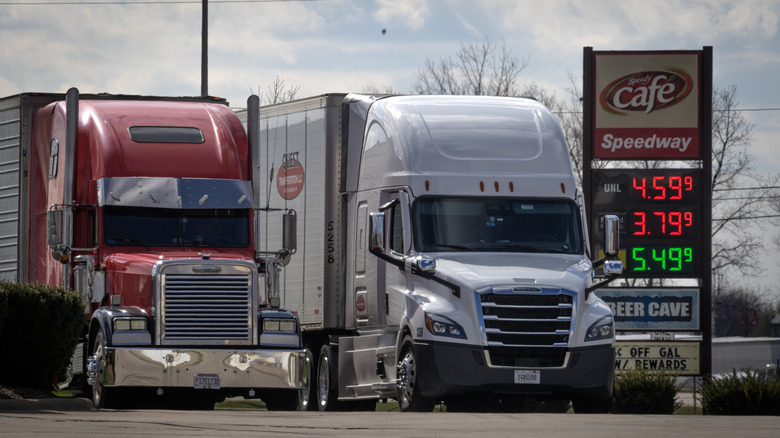
Even though diesel fuel is typically cheaper in the United States than in Europe, its prices are still much more volatile than gas and rise faster during turbulent geopolitical situations. Naturally, this has a cascading effect on the transportation industry, which relies on diesel-powered trucks carrying loads over vast distances. Eventually, the added cost of transport is likely to be felt in the prices of goods themselves. 

Whether it’s an instinctive response from drivers or a dedicated strategy, during the spring of 2026, trucks slowed their speed on American highways by about 4%. For semi trucks, a slightly slower highway speed between 55 and 60 mph is said to be the sweet spot for fuel savings. As you’d expect, owner-operators who fuel their own trucks are more likely to slow their speeds compared to drivers who work for large retailers, which cover the cost of fuel. 

Some highway freight providers have decided that the fuel savings from reduced speeds are worth the slightly longer delivery times, which they feel won’t substantially impact their business. However, some experts have warned that slower travel speeds could come with significant trade-offs and hidden costs.

There’s more to trucking than fuel costs

Driving slower will reduce fuel consumption, sure, but time spent on the road is also a crucial aspect of the trucking industry. For a truck driver who is paid per mile traveled, slower speeds mean they’ll end up working more hours to cover the same distance — which isn’t particularly desirable.   

Beyond that, there are strict rules that dictate the amount of time truckers can spend on the job — and those working hours often include other things beyond just logging miles on the open highway. For example, if there’s a delay in picking up a load or other issues at distribution centers or freight yards along the route, slower speeds could further compound that time crunch, ultimately costing providers more in man-hours and delays than they save.

Whether truckers decide to drive more slowly on the highway — potentially resulting in longer deliveries and more hours on the road — or pass increased fuel costs on to clients and eventually consumers, it’s safe to say that they all hope that high diesel prices are temporary. For the trucking industry as a whole, the sooner that fuel prices go down, the sooner things can get back up to speed, both literally and figuratively. 



Source link


Harley-Davidson has a long history of powering its motorcycles with “Big Twin” engines. So much so that the company’s Milwaukee-Eight engine represented the ninth generation of these iconic powerplants. With this engine, Harley-Davidson aimed for a more modern design with four valves per cylinder — hence the “Eight” in the title. 

It also brought improved thermal management and a better overall refinement to the table. And, not incidentally, it just happens to produce what must be regarded as one of the most iconic “rumbles” in motorcycling. Depending on the version, the Milwaukee-Eight produces a stout 114 horsepower and has a torque rating of 128 lb-ft. 

Now, the latter figure is important because it shows this is not an engine that chases horsepower. Rather, it’s one that likes a bit of grunt at the low end of the power spectrum. This means that just defining what V-Twin engines are more powerful than Harley’s doesn’t tell the whole story.

But that doesn’t mean it’s not a fun exercise!

Other manufacturers have taken a different approach, designing V-Twins that scream with sheer power rather than grunt with torque. Let’s take a look at some of the V-Twins that beat Harley-Davidson’s Milwaukee-Eight — at least in terms of power, that is.

Ducati Superquadro 1285

There is a quote on the Ducati website that says of the Superquadro engine: “Designed for the track, developed for the road.”  On the face of it, this could be taken as just another slogan composed by those clever marketing people. But actually, it tells us a lot about how the ethos of the two brands differs and how this translates into the engines that power their motorcycles. 

This quote reflects the company’s heritage, and the Superquadro 1285, with its focus on performance, is a rich part of this pedigree. In its most extreme form, this high-revving V-twin produces over 200 horsepower — a figure that comfortably eclipses even the most powerful versions of the Milwaukee-Eight. 

Those who know Ducati won’t be surprised to hear that the beating heart of this engine is Ducati’s signature desmodromic valvetrain. While many of this complex system’s advantages have been negated by engine and material innovations, Ducati still manufactures a handful of motorcycles that use desmodromic valvetrains

Ultimately, comparing this engine to the Milwaukee-Eight is not about saying the most powerful engine is the better one. These are two engines designed for different niches; it’s like comparing an F1 car to a grand tourer. 

KTM LC8 1301

If the Ducati Superquadro represents a racing thoroughbred adapted for the road, then the KTM LC8 1301 shows what happens when the same pursuit of power is applied with a more street-focused mindset. Found in machines like the 1290 Super Duke, this V-Twin delivers a level of power that comfortably exceeds the Milwaukee-Eight, but doesn’t quite boast the thoroughbred-like horsepower of the Superquadro.

Like the Ducati, the LC is a liquid-cooled high-revving design that produces a respectable 180 horsepower, substantially higher than Harley’s engine. However, in terms of performance, this engine is something of a halfway house — it doesn’t have the racetrack-like aspirations of the Ducati, but it isn’t quite the torquey monster that the Milwaukee-Eight is. 

While the Milwaukee-Eight is designed to deliver its strength low down, the LC8 encourages riders to explore the higher rev range, but without the outright aggression of the Ducati motor. It’s this versatility that has seen KTM claim the engine is unique in the market for its ability to seamlessly equip the brand’s flagship Naked, Sport Tourer, and Travel models.

Indian PowerPlus 108

Moving back closer to the Harley design ethos, next on our list is the Indian PowerPlus 108. At least in terms of the bikes they’re developed for, this engine offers a more direct comparison with the Milwaukee-Eight.

Developed for models like the Challenger and Chieftain, the PowerPlus is a liquid-cooled V-twin that outperforms the Milwaukee-Eight, at least in peak horsepower. However, it does so without compromising on the torque delivery you’d expect from an engine designed for a touring class of motorcycle. 

The Indian PowerPlus 108 delivers 122 horsepower, down from the previous two engines but still more than the 114 horsepower delivered by high-output variants like Milwaukee-Eight 117. However, as close as this figure is, even this slight disparity is missing, with both engines delivering an identical 128 lb-ft. While on paper it looks like there’s very little to separate the engines, we should mention that this comparison compares a standard Indian PowerPlus against a high-output Milwaukee-Eight. A more typical rating for the Milwaukee is about 105 horsepower and a torque rating of around 125 lb-ft. 

Finally, it’s also worth noting that the newer Indian PowerPlus 112 engine delivers more horsepower and torque.

Harley-Davidson Revolution Max 1,250cc V-twin

It seems fitting that the last word on this should go to Harley-Davidson itself. The Harley-Davidson Revolution Max 1250 engine is a clean-sheet design specifically for the Pan America range of motorcycles. It also represented a change of focus from the company, one which demonstrated that the relatively low horsepower of the Milwaukee-Eight was a design decision.

In other words, the Revolution Max could be Harley saying, “You want power and torque? We can deliver that too.” The 1,250cc engine retains Harley’s smooth low-end torque, delivering 94 lb-ft of peak torque, a step down from the Milwaukee-Eight. However, in terms of horsepower, the Revolution Max outmuscles its older sibling with a maximum rating of 150hp.

The Revolution Max is a liquid-cooled motor that features a double-overhead camshaft, independent variable valve timing, and a rev ceiling of 9500 RPM. For comparison, a standard Milwaukee-Eight 117 redlines at 5,600 rpm, with the high-output Milwaukee revving to 5,900 rpm. This massive difference in maximum engine speed accounts for much of the Revolution Max’s extra horsepower. 

What this tells us is that measuring an engine’s performance isn’t as simple as saying it has more power — ergo, it’s the best. Successful motorcycle engines are judged not just on who can supply more power on a basis — but on who can design the best engine to suit the needs of the bike it’s intended to power.


Source link

Recent Reviews