This Highly-Rated Samsung Phone Is Way Cheaper Than The Galaxy S26 (And Selling-Out Fast)


We may receive a commission on purchases made from links.

Samsung’s top-of-the-line Galaxy S26 Ultra gives tough competition to the likes of the Pixel and the iPhone, but it also has the highest list price, starting at $1,300. If you don’t see much value in its S Pen or its fancy new Privacy Display, however, you could always shop for the regular Galaxy S26, which also happens to be one of the best compact smartphones you can buy. Samsung bumped the price of the base model Galaxy S26 this year by $100, with the device now starting at $900, but it does offer twice the storage at 256GB. If you’re looking for the best bang for the buck, though, you might want to consider the Galaxy A26.

It sits quite a few tiers below the Galaxy S26 and is not meant to compete with premium offerings from other brands. What it offers, though, is an essential Samsung experience for people who prefer One UI or those who have already dipped their toes in Samsung’s ecosystem by purchasing a pair of Galaxy Buds or a Galaxy Watch. Launched at $300, the Galaxy A26 can often be had for well under its retail price. 

Currently on Amazon, the Galaxy A26 is priced at $263 and seems to be quite popular with a 4.1-star rating and over 1,100 reviews. Though you can also find a Galaxy S26 at a discount quite often, the A26 is substantially more affordable and checks many of the right boxes.

The Galaxy A26 gets many things right
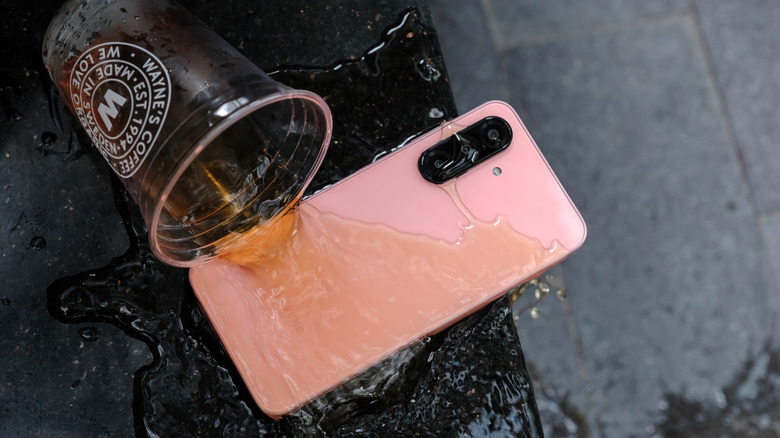
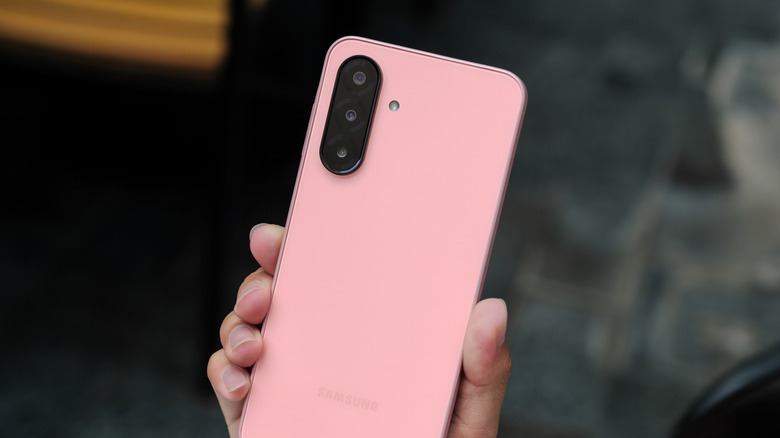
Despite using a plastic frame, the Galaxy A26 comes with a glass back panel that’s protected by Gorilla Glass Victus+. The display is larger at 6.7 inches, and it is an AMOLED panel that refreshes at 120Hz. Although the base variant that Samsung sells comes with 128GB of storage, the Amazon listing points to the model with 256GB of space and 8GB of RAM. It even one-ups the Galaxy S26 by offering a microSD card slot for future expandability.

Samsung’s seven-year software update policy for its flagship S and Z-series devices is commendable, but the Galaxy A26 isn’t too far behind with six generations of OS upgrades and six years of security updates. The budget segment is where manufacturers usually skimp on the software experience, so there aren’t many options better than the Galaxy A26 if you’re looking for longevity.

With Ingress Protection (IP) ratings becoming more common in smartphones, it’s nice to see the Galaxy A26 come with an IP67 certification. Owing to its lower-powered internals, Samsung has hilariously advertised only a few “Awesome Intelligence” features with the A26. These include Google’s Circle to Search and Samsung’s Object Eraser — both of which are arguably some of the more useful AI features around. The mid-range and budget segments are usually where OEMs have to work the hardest to stand out. This is why Samsung is also including a 25W charger in the bundle — something Galaxy S26 buyers will have to shell out extra for.

Where the Galaxy A26 cuts corners
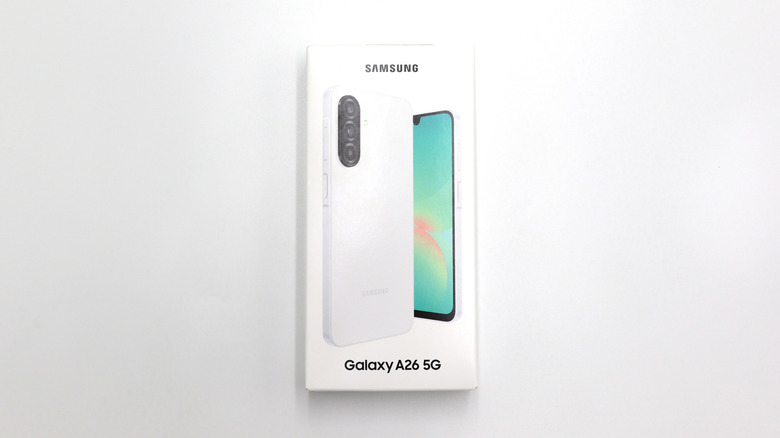
Samsung’s obsession with trying to make all of its phones look the same isn’t necessarily a bad thing — it actually gives the Galaxy range a brand identity. However, this means the triple-camera setup on the Galaxy A26 is really just two useful sensors and a third 2-megapixel macro camera. The Exynos 1380 chip that powers the phone is decent enough for day-to-day tasks and a bit of gaming, but it really is no match for the Snapdragon 8 Elite Gen 5 that Samsung’s flagship models use.

The display is a fast AMOLED panel, but it doesn’t have HDR certification. The display resolution is the same as the Galaxy S26, so text and videos should look plenty sharp. The waterdrop notch and the thicker bottom bezel do take away the premium look that the Galaxy S series enjoys, but at least the phone doesn’t have a large notch and a 60Hz display (like a certain $600 iPhone).

The Galaxy A26 packs in a 5,000 mAh battery — the same capacity as the flagship Galaxy S26 Ultra. However, battery life has reportedly been one of the phone’s weakest aspects. In GSMArena’s review, the Galaxy A26 fell behind other similarly priced smartphones. It’s also missing wireless charging, though at this price point, that doesn’t come as a surprise. The Galaxy A26 doesn’t come with support for Samsung DeX, which, on other phones and tablets, lets you connect to a display wirelessly for a desktop-like experience.


Source link

Leave a Reply

Subscribe to Our Newsletter

Get our latest articles delivered straight to your inbox. No spam, we promise.

Recent Reviews


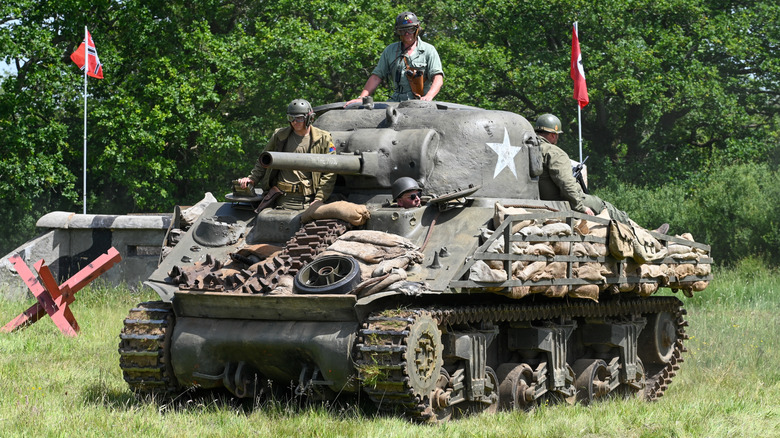
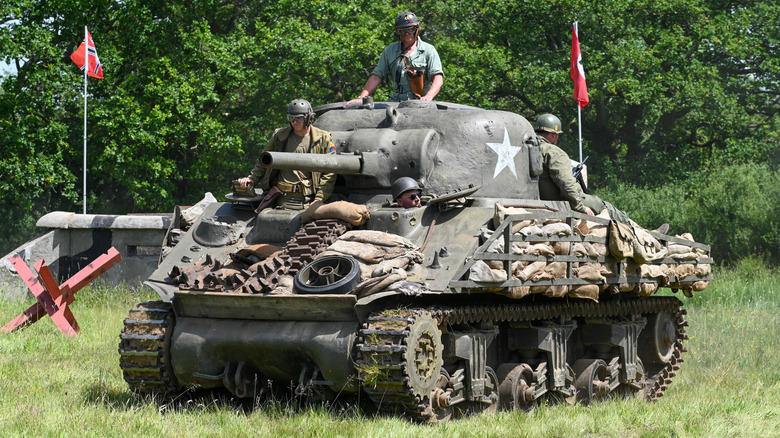
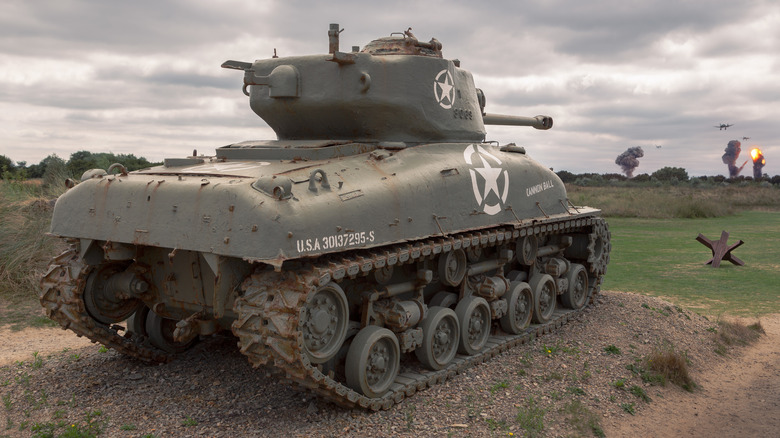
A 100-year-old World War II veteran was recently reunited with the tank he drove during the Battle of Iwo Jima. The tank was an M4 Sherman, and the veteran was Marine Corporal Leighton Willhite. The M4 Sherman was America’s most common tank during that war, with about 50,000 produced before the war’s end. It dominated the battlefield long after WWII.

The detective work behind the reunion of the soldier and the tank was performed by Jonathan Bernstein, Arms and Armor Curator at the National Museum of the Marine Corps. Bernstein did extensive research at the National Archives into the unique aspects of the tanks of the 5th Tank Battalion that served on Iwo Jima. It turns out that this specific tank, named “Lucky,” had countermeasures designed to minimize the effects of Japanese magnetic anti-tank mines. This included nails welded point-up onto its upper surfaces to prevent the mines from being placed flush against its upper body, where they would cause major armor damage. While the nails were gone, the weld scarring remained from where they’d been attached. Photographs shot during the battle confirmed that “Lucky” was present there on March 1, 1945. According to Bernstein, it is very rare to be able to put a specific crew together with the tank they operated, but it definitely happened here.

Corporal Willhite, who was 18 at the time, also demonstrated immense bravery when he and his commander left the tank to rescue another tank crew who became trapped. Willhite received the Bronze Star with Valor.

What role did Sherman tanks play in the Battle of Iwo Jima?

The M4 Sherman tanks, as exemplified by “Lucky,” played a key role in the Battle of Iwo Jima, where their biggest strengths and weaknesses were displayed. The volcanic sand terrain was difficult for the tanks to negotiate, causing many transmission failures for the Shermans. It’s also where three U.S. Marine divisions went up against a heavily fortified Japanese force that had no qualms about sacrificing itself to slow the Marines’ advance. 

A favorite Japanese tactic was to attack the Marines’ tanks with satchel charges strapped to their backs, detonating their charges after sliding underneath the tanks, where the armor was not as strong. Magnetic mines that stuck to the tanks’ bodies were also used by the Japanese. This led to a variety of “adaptations” made to the Sherman tanks. 

These included the welded-on nails, plus wooden planks along the sides of the tanks that protected the tanks’ suspensions and reduced the effects of shaped charges. In addition, there were other adaptations, including spraying sand onto freshly painted areas of the tank to prevent Japanese magnetic mines from adhering to it. Sections of the tanks’ tread, known as track blocks, were also spot-welded onto vulnerable parts of the tanks, such as the front and the turret, where they offered additional protection and could be accessed if spare parts were needed. According to a report from the 5th Tank Battalion on the subject of Iwo Jima, “The all-around performance of the M4A3 tank was exceptionally good.” During the five-week battle that ended in victory, 7,000 Marines died, and 20,000 were injured.

What happened to Lucky between Iwo Jima and its recovery at Camp Lejeune in 2002?

Following the victory at the Battle of Iwo Jima, “Lucky” went back to Hawaii, where it was refitted for its next planned role, showing how tanks shaped the course of WWII. Along with 71 other tanks, “Lucky” was converted into a flame-thrower tank, which replaced around 60% of its ammunition storage capacity with tanks capable of holding 300 gallons of napalm. The event that these 72 tanks were being prepared for was the invasion of Japan, which ended up not happening, thanks to the atomic bombs “Little Boy” and “Fat Man” being dropped on Hiroshima and Nagasaki, Japan, in August of 1945. This, combined with the concurrent Soviet invasion of Manchuria, led to Japan’s formal surrender in September of that year. 

Later, “Lucky” was used as a training tank for an indeterminate period, after which it was sent to Camp Lejeune, the Marine base in North Carolina. It was left in a wooded area of the base until it was discovered by some Marines in 2002, who sent it to the National Museum of the Marine Corps. And the rest is history.

The story of “Lucky” and Corporal Willhite is just one small piece of the vast World War II panorama of events that stretched across the entire world by the time it ended. It exemplifies how millions of American and other Allied soldiers were engaged in bloody battles across many different locations, fighting for a cause they truly believed in. There’s a reason that this cohort is known as “The Greatest Generation.”


Source link