This Highly-Rated Samsung Phone Is Way Cheaper Than The Galaxy S26 (And Selling-Out Fast)


We may receive a commission on purchases made from links.

Samsung’s top-of-the-line Galaxy S26 Ultra gives tough competition to the likes of the Pixel and the iPhone, but it also has the highest list price, starting at $1,300. If you don’t see much value in its S Pen or its fancy new Privacy Display, however, you could always shop for the regular Galaxy S26, which also happens to be one of the best compact smartphones you can buy. Samsung bumped the price of the base model Galaxy S26 this year by $100, with the device now starting at $900, but it does offer twice the storage at 256GB. If you’re looking for the best bang for the buck, though, you might want to consider the Galaxy A26.

It sits quite a few tiers below the Galaxy S26 and is not meant to compete with premium offerings from other brands. What it offers, though, is an essential Samsung experience for people who prefer One UI or those who have already dipped their toes in Samsung’s ecosystem by purchasing a pair of Galaxy Buds or a Galaxy Watch. Launched at $300, the Galaxy A26 can often be had for well under its retail price. 

Currently on Amazon, the Galaxy A26 is priced at $263 and seems to be quite popular with a 4.1-star rating and over 1,100 reviews. Though you can also find a Galaxy S26 at a discount quite often, the A26 is substantially more affordable and checks many of the right boxes.

The Galaxy A26 gets many things right
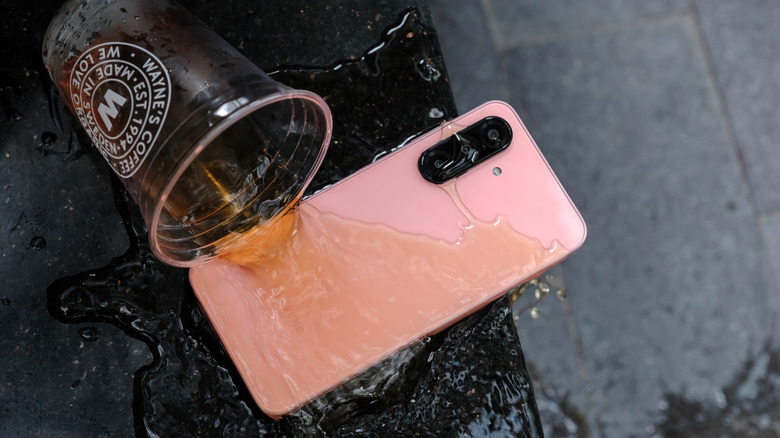
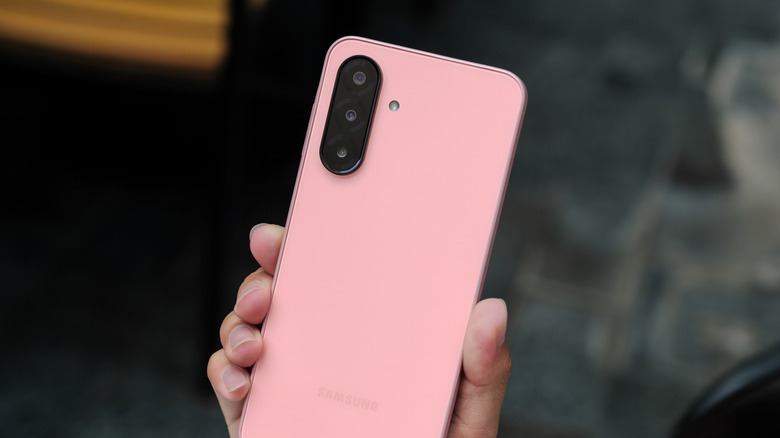
Despite using a plastic frame, the Galaxy A26 comes with a glass back panel that’s protected by Gorilla Glass Victus+. The display is larger at 6.7 inches, and it is an AMOLED panel that refreshes at 120Hz. Although the base variant that Samsung sells comes with 128GB of storage, the Amazon listing points to the model with 256GB of space and 8GB of RAM. It even one-ups the Galaxy S26 by offering a microSD card slot for future expandability.

Samsung’s seven-year software update policy for its flagship S and Z-series devices is commendable, but the Galaxy A26 isn’t too far behind with six generations of OS upgrades and six years of security updates. The budget segment is where manufacturers usually skimp on the software experience, so there aren’t many options better than the Galaxy A26 if you’re looking for longevity.

With Ingress Protection (IP) ratings becoming more common in smartphones, it’s nice to see the Galaxy A26 come with an IP67 certification. Owing to its lower-powered internals, Samsung has hilariously advertised only a few “Awesome Intelligence” features with the A26. These include Google’s Circle to Search and Samsung’s Object Eraser — both of which are arguably some of the more useful AI features around. The mid-range and budget segments are usually where OEMs have to work the hardest to stand out. This is why Samsung is also including a 25W charger in the bundle — something Galaxy S26 buyers will have to shell out extra for.

Where the Galaxy A26 cuts corners
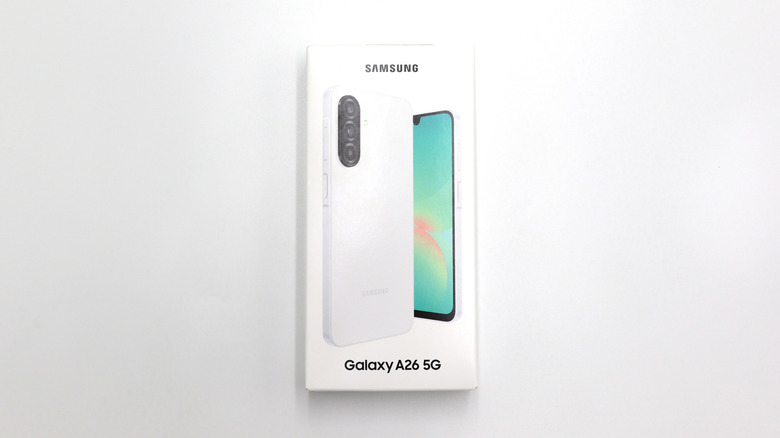
Samsung’s obsession with trying to make all of its phones look the same isn’t necessarily a bad thing — it actually gives the Galaxy range a brand identity. However, this means the triple-camera setup on the Galaxy A26 is really just two useful sensors and a third 2-megapixel macro camera. The Exynos 1380 chip that powers the phone is decent enough for day-to-day tasks and a bit of gaming, but it really is no match for the Snapdragon 8 Elite Gen 5 that Samsung’s flagship models use.

The display is a fast AMOLED panel, but it doesn’t have HDR certification. The display resolution is the same as the Galaxy S26, so text and videos should look plenty sharp. The waterdrop notch and the thicker bottom bezel do take away the premium look that the Galaxy S series enjoys, but at least the phone doesn’t have a large notch and a 60Hz display (like a certain $600 iPhone).

The Galaxy A26 packs in a 5,000 mAh battery — the same capacity as the flagship Galaxy S26 Ultra. However, battery life has reportedly been one of the phone’s weakest aspects. In GSMArena’s review, the Galaxy A26 fell behind other similarly priced smartphones. It’s also missing wireless charging, though at this price point, that doesn’t come as a surprise. The Galaxy A26 doesn’t come with support for Samsung DeX, which, on other phones and tablets, lets you connect to a display wirelessly for a desktop-like experience.


Source link

Leave a Reply

Subscribe to Our Newsletter

Get our latest articles delivered straight to your inbox. No spam, we promise.

Recent Reviews


Google Pixel 10a

Kerry Wan/ZDNET

Follow ZDNET: Add us as a preferred source on Google.


ZDNET’s key takeaways

  • Android 17 is here, along with the June Pixel Drop.
  • The OS is rolling out to Pixel devices first.
  • Users are getting upgraded productivity, security, and more.

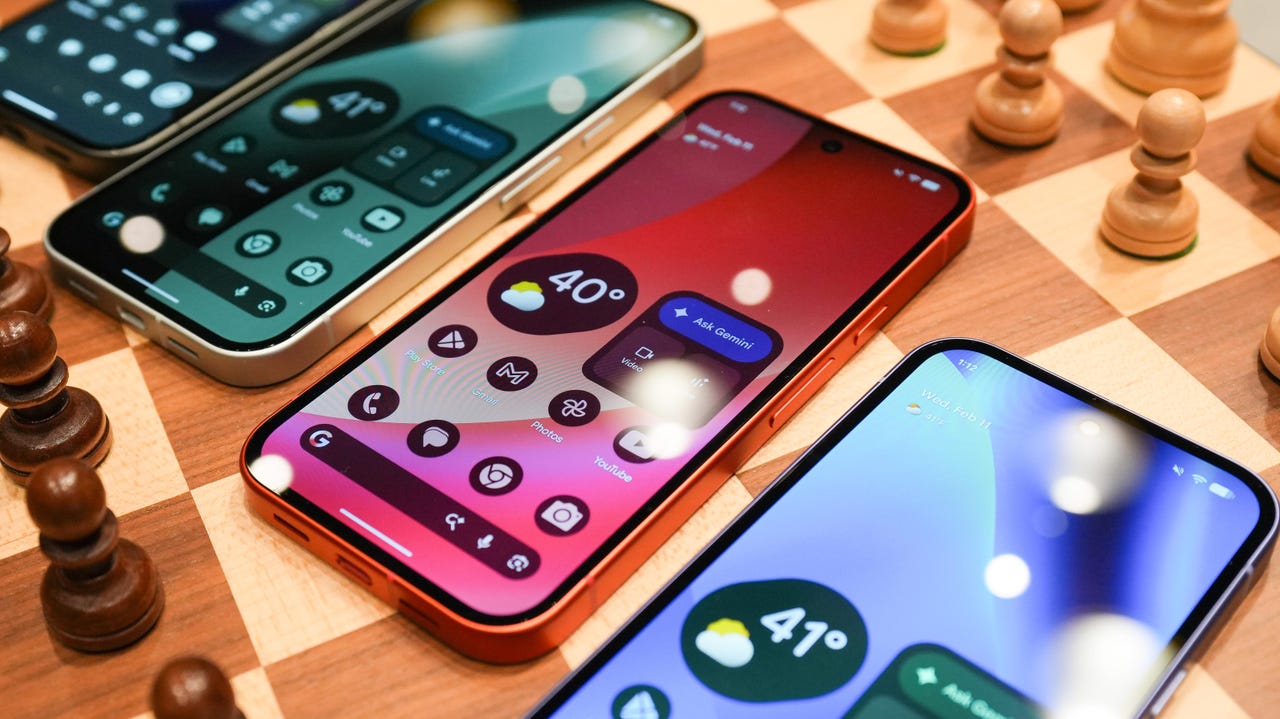
Android 17 is officially here, and it’s a doubly good day for Pixel users, as it’s bringing the June Pixel Drop with it.

Google has rolled out its annual OS update and its latest collection of Pixel-exclusive features at the same time, and the updates pack not only some practical features that will make an impact on how you use your phone daily, but also security protections, some new translation tricks, and more. Pixel Watches — the 2 and later — are included, too, with a potentially life-saving feature addition.

Also: I’m a devoted iPhone user but Android 17 is tempting me with its new video and social features

Here’s a look at what’s new in Android 17, which starts rolling out today to Pixel phones first and then to other devices “throughout 2026,” along with what’s new in the June 2026 Pixel Drop.

What’s new in Android 17?

Since many manufacturers now offer longer update windows, usually 4 to 7 years, a wide range of devices are eligible. The updated OS starts rolling out today to Pixel 6 phones and newer. Samsung’s Galaxy S23 series and newer will get it as One UI 9, along with the Flip 5 and newer, Galaxy A24 and newer, and Tab S9 series. OnePlus will bring Android 17 to the OnePlus 11 and newer.

1. App Bubbles

Perhaps the most useful feature is Bubbles, which lets you turn any app into a floating bubble on your main screen. All you have to do is long-press an app, and it becomes an easy-to-access bubble. If you consistently switch back and forth between apps or need to access a certain app often, like a map or airline app while you’re on a trip, you can now find what you need more quickly.

Pixel Folds are getting a special Bubble Bar at the bottom of the screen that lets you organize, move, and access your recent bubbles from one dedicated space.

2. Additional security

Android 17 is also bringing boosted security. 

To start, you can now grant an app temporary access to your exact location and share only specific contacts. 

Additionally, an enhanced “Mark as lost” feature, located in Find Hub, lets you lock a missing phone with your biometrics, so even if a thief has your passcode, they can’t access anything on your device or turn off tracking. 

Improvements to Live Threat Detection block more suspicious apps and scams, Google explained, and enhanced Advanced Protection mode helps keep you safe from sophisticated threats. Lastly, Google is reducing the number of times someone can attempt to guess your PIN and adding longer wait times between failed attempts.

Also: How to clear your Android phone cache – the 30-second routine every user should be doing

3. Screen reactions and more

Also new is Screen Reactions, which lets you take a selfie video overlaid on a screen recording in lieu of a green screen; a 50/50 gaming mode with a dynamic pad for foldables; and built-in parental controls beyond Pixel devices, so you can set screen time limits and content filtering with a PIN, even if you don’t link your Google Account.

What’s in the June Pixel Drop?

Beyond Android 17, Pixel users are getting several Pixel-specific upgrades in the June Pixel Drop.

1. Custom greetings for Take a Message

Introduced in 2025, Take a Message expands on the Pixel call screening feature and gives you a real-time transcript of what the caller is saying, along with AI-generated follow-up steps. Now, Take a Message has custom greetings, letting you record a personalized outgoing message instead of the default voice.

2. New AI models

Two new AI models are making their way to Android phones. The first is Gemini Omni, a new way to create and edit videos. Gemini Omni lets you type in a prompt and get a custom, high-quality video. This is available on all devices with the Gemini app for Gemini Pro users only.

Also: Everything we saw at Google I/O: Gemini 3.5, Android XR glasses, Spark, and more

Also on the way is Lyria 3, which lets you create original tracks using text prompts or images as inspiration. You can prompt Gemini with the style, vocals, and tempo you want. This is coming to all Android 17 Pixel phones and Folds.

3. Voice Translate for the Pixel 10a

One of the Pixel 10 series’ exclusive features is Voice Translate, which provides a real-time translation on phone calls in the speaker’s voice. ZDNET’s Sabrina Ortiz tried the feature last fall, noting how quickly the feature worked and how well it copied her voice. Voice Translate is getting a small expansion, coming to the Pixel 10a.

Also: iOS 27 envy? 4 features you can already use on an Android phone (including Samsung models)

4. Android Quick Share expansion and more

Pixel users are also getting an expansion of Android Quick Share compatibility with AirDrop, coming to the Pixel 9a and Pixel 8a, and an expansion of Magic Cue to more apps, coming to the Pixel 10 series.

What’s new for Pixel Watches?

Pixel Watches are only getting one new feature, but it’s a potentially big one. Core detection features, including Car Crash Detection, Fall Detection, and Loss of Pulse Detection, are getting emergency sharing. If a severe event is detected, Google explains, your Pixel will call emergency services and notify your chosen contacts. You can toggle emergency contacts on or off for each type of event.

Also: This silent Android feature scans your photos for ‘sensitive content’ – how to uninstall it

Fall Detection is coming to the Pixel Watch, plus the 2, 3, and 4, while Car Crash Detection is coming to the Pixel Watch 2, 3, and 4. Loss of Pulse Detection is only coming to the last two generations, the Pixel Watch 3 and 4.


Source link