Servant leadership can help to restore trust in public institutions


Public trust in government is fragile. Regardless of political affiliation, many Americans have grown skeptical of the institutions that serve them. The reasons are numerous and complex, but the consequences are clear: when trust declines, our ability to solve problems together declines as well.

As our nation prepares to elect new leaders, there is an important lesson worth remembering: leadership is not primarily about authority, power or winning. It is about serving.

Servant leadership turns the traditional view of leadership upside down. Rather than asking, “How can others help me succeed?” servant leaders ask, “How can I help others succeed?” They measure success not by personal recognition or power, but by whether the people and institutions they lead become stronger, more capable and more trusted.

I learned this lesson during one of Minnesota’s darkest moments.

In August 2007, the Interstate 35W bridge over the Mississippi River collapsed, taking 13 lives and injuring 145 people. As commissioner of the Minnesota Department of Transportation after the collapse, I witnessed firsthand the grief, anger and uncertainty that followed. Beyond the physical devastation, public confidence in our transportation system had been shaken.

Rebuilding a bridge was a significant engineering challenge. Rebuilding trust was an even greater one.

We quickly recognized that no single individual could accomplish this task alone. Success required a team of servant leaders — people who placed the needs of citizens above personal recognition or political advantage. Engineers, project managers, construction workers, public information officers and countless others embraced a simple but powerful question: “What do the people of Minnesota need from us right now?”

The answer was clear. They needed competence. They needed transparency. They needed honesty. And they needed leaders who served others through everyday actions — listening, showing compassion, being present and consistently putting others first.

Throughout the recovery and reconstruction effort, we committed ourselves to open communication. We shared what we knew, acknowledged what we did not know and focused relentlessly on serving the public. Decisions were made not for personal or political gain, but for the benefit of the people we served.

The result was not only the successful completion of a new bridge in record time. It was the restoration of public confidence.

Today, our political environment often rewards a different model of leadership — one centered on division, self-promotion and ideological combat. Public officials are frequently encouraged to speak first, listen second and view opponents as enemies rather than fellow citizens with differing perspectives.

This approach may generate headlines, but it rarely builds trust.

Servant leadership offers another path.

Servant leaders understand that leadership begins with humility. They listen before they speak. They seek to empower others rather than dominate them. They recognize that public office is a temporary stewardship, not a personal possession, and they place the common good ahead of partisan interests.

Most importantly, servant leaders understand that trust is earned through consistent actions over time. Citizens do not expect perfection from their leaders. They do expect integrity, compassion, accountability and a genuine commitment to serving others.

Our elected officials face enormous challenges. No single philosophy or political party has a monopoly on wisdom. But leaders from every political persuasion can benefit from embracing the principles of servant leadership.

If we hope to restore confidence in our public institutions, we must first restore confidence in those who lead them.

The work of rebuilding trust is not unlike rebuilding a bridge. It requires vision, collaboration, competence and patience. Above all, it requires leaders who understand that their highest calling is not to be served, but to serve.

That lesson helped Minnesota recover from tragedy. It can help strengthen our democracy today.

Tom Sorel served as commissioner of the Minnesota Department of Transportation from 2008 to 2012, leading the agency during the reconstruction of the Interstate 35W bridge. He is the author of “Biscuit the Dog: Finding the Heart of Servant Leadership.”


Source link

Leave a Reply

Subscribe to Our Newsletter

Get our latest articles delivered straight to your inbox. No spam, we promise.

Recent Reviews


Google Pixel 10a

Kerry Wan/ZDNET

Follow ZDNET: Add us as a preferred source on Google.


ZDNET’s key takeaways

  • Android 17 is here, along with the June Pixel Drop.
  • The OS is rolling out to Pixel devices first.
  • Users are getting upgraded productivity, security, and more.

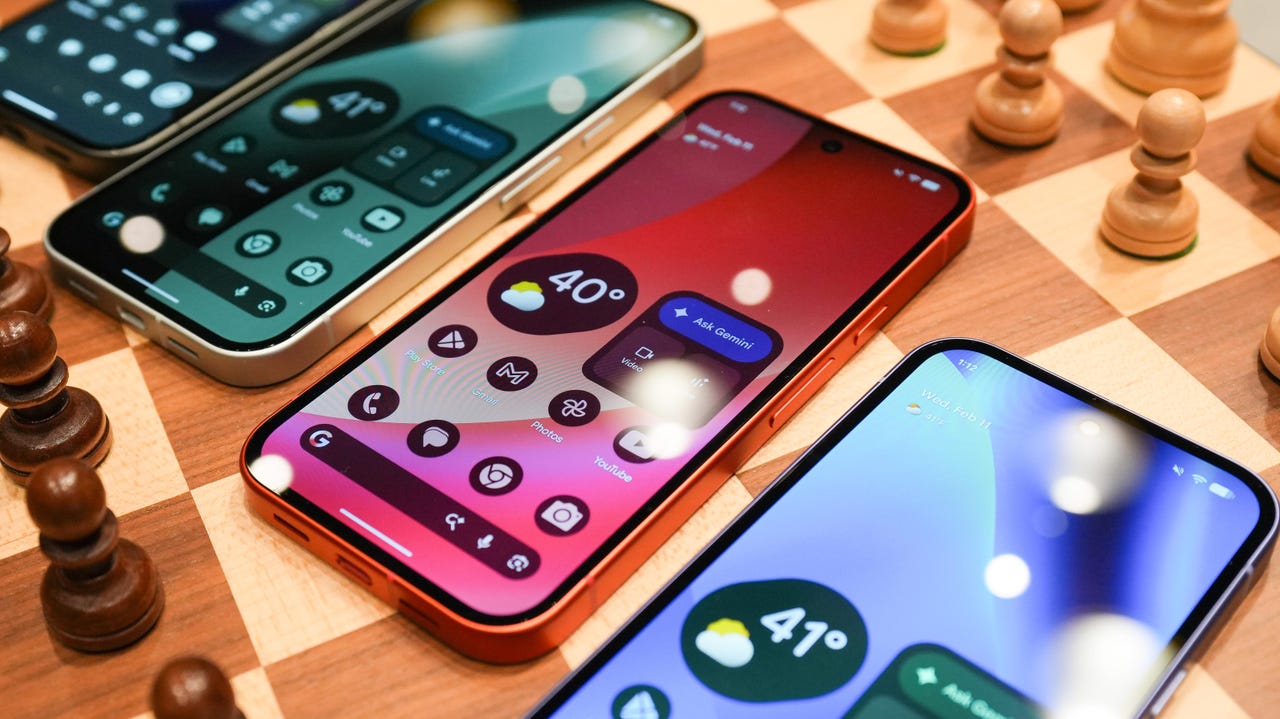
Android 17 is officially here, and it’s a doubly good day for Pixel users, as it’s bringing the June Pixel Drop with it.

Google has rolled out its annual OS update and its latest collection of Pixel-exclusive features at the same time, and the updates pack not only some practical features that will make an impact on how you use your phone daily, but also security protections, some new translation tricks, and more. Pixel Watches — the 2 and later — are included, too, with a potentially life-saving feature addition.

Also: I’m a devoted iPhone user but Android 17 is tempting me with its new video and social features

Here’s a look at what’s new in Android 17, which starts rolling out today to Pixel phones first and then to other devices “throughout 2026,” along with what’s new in the June 2026 Pixel Drop.

What’s new in Android 17?

Since many manufacturers now offer longer update windows, usually 4 to 7 years, a wide range of devices are eligible. The updated OS starts rolling out today to Pixel 6 phones and newer. Samsung’s Galaxy S23 series and newer will get it as One UI 9, along with the Flip 5 and newer, Galaxy A24 and newer, and Tab S9 series. OnePlus will bring Android 17 to the OnePlus 11 and newer.

1. App Bubbles

Perhaps the most useful feature is Bubbles, which lets you turn any app into a floating bubble on your main screen. All you have to do is long-press an app, and it becomes an easy-to-access bubble. If you consistently switch back and forth between apps or need to access a certain app often, like a map or airline app while you’re on a trip, you can now find what you need more quickly.

Pixel Folds are getting a special Bubble Bar at the bottom of the screen that lets you organize, move, and access your recent bubbles from one dedicated space.

2. Additional security

Android 17 is also bringing boosted security. 

To start, you can now grant an app temporary access to your exact location and share only specific contacts. 

Additionally, an enhanced “Mark as lost” feature, located in Find Hub, lets you lock a missing phone with your biometrics, so even if a thief has your passcode, they can’t access anything on your device or turn off tracking. 

Improvements to Live Threat Detection block more suspicious apps and scams, Google explained, and enhanced Advanced Protection mode helps keep you safe from sophisticated threats. Lastly, Google is reducing the number of times someone can attempt to guess your PIN and adding longer wait times between failed attempts.

Also: How to clear your Android phone cache – the 30-second routine every user should be doing

3. Screen reactions and more

Also new is Screen Reactions, which lets you take a selfie video overlaid on a screen recording in lieu of a green screen; a 50/50 gaming mode with a dynamic pad for foldables; and built-in parental controls beyond Pixel devices, so you can set screen time limits and content filtering with a PIN, even if you don’t link your Google Account.

What’s in the June Pixel Drop?

Beyond Android 17, Pixel users are getting several Pixel-specific upgrades in the June Pixel Drop.

1. Custom greetings for Take a Message

Introduced in 2025, Take a Message expands on the Pixel call screening feature and gives you a real-time transcript of what the caller is saying, along with AI-generated follow-up steps. Now, Take a Message has custom greetings, letting you record a personalized outgoing message instead of the default voice.

2. New AI models

Two new AI models are making their way to Android phones. The first is Gemini Omni, a new way to create and edit videos. Gemini Omni lets you type in a prompt and get a custom, high-quality video. This is available on all devices with the Gemini app for Gemini Pro users only.

Also: Everything we saw at Google I/O: Gemini 3.5, Android XR glasses, Spark, and more

Also on the way is Lyria 3, which lets you create original tracks using text prompts or images as inspiration. You can prompt Gemini with the style, vocals, and tempo you want. This is coming to all Android 17 Pixel phones and Folds.

3. Voice Translate for the Pixel 10a

One of the Pixel 10 series’ exclusive features is Voice Translate, which provides a real-time translation on phone calls in the speaker’s voice. ZDNET’s Sabrina Ortiz tried the feature last fall, noting how quickly the feature worked and how well it copied her voice. Voice Translate is getting a small expansion, coming to the Pixel 10a.

Also: iOS 27 envy? 4 features you can already use on an Android phone (including Samsung models)

4. Android Quick Share expansion and more

Pixel users are also getting an expansion of Android Quick Share compatibility with AirDrop, coming to the Pixel 9a and Pixel 8a, and an expansion of Magic Cue to more apps, coming to the Pixel 10 series.

What’s new for Pixel Watches?

Pixel Watches are only getting one new feature, but it’s a potentially big one. Core detection features, including Car Crash Detection, Fall Detection, and Loss of Pulse Detection, are getting emergency sharing. If a severe event is detected, Google explains, your Pixel will call emergency services and notify your chosen contacts. You can toggle emergency contacts on or off for each type of event.

Also: This silent Android feature scans your photos for ‘sensitive content’ – how to uninstall it

Fall Detection is coming to the Pixel Watch, plus the 2, 3, and 4, while Car Crash Detection is coming to the Pixel Watch 2, 3, and 4. Loss of Pulse Detection is only coming to the last two generations, the Pixel Watch 3 and 4.


Source link