Why Did Automakers Stop Using Bulky Bumpers On Their Cars?


At one time, automobiles in the United States were big, boxy, and often covered in swathes of chrome. But over the years, vehicles have become more compact and streamlined, ditching chrome in favor of other options. The bulky bumpers that characterized American-market cars gradually disappeared as well, thanks to amended government regulations introduced in 1983.

Those regulations were set forth by the National Highway Traffic Safety Administration (NHTSA) and lowered the front and rear impact requirement from 5 mph to 2.5 mph. The updated rules also reduced corner impact requirements to 1.5 mph. These changes allowed automakers to be more flexible with their bumper designs. So, instead of relying on massive front and rear structures, designers could focus more on creating bumpers that blended into the vehicle’s body. As a result, the big and heavy bumpers that were the norm during the 1970s gave way to newer setups that were more integrated into the automobile’s overall shape while still offering protection in low-speed collisions.

This change came after the NHTSA reviewed both the costs and benefits of the Bumper Standard as it existed at the time. In a 1981 evaluation, the agency determined that the requirements, while strict, may not have benefited consumers enough. Taking the findings and public comments into account, the NHTSA amended the Bumper Standard in 1982, with the changes taking effect for 1983 model year vehicles.

The evolution of the automobile bumper
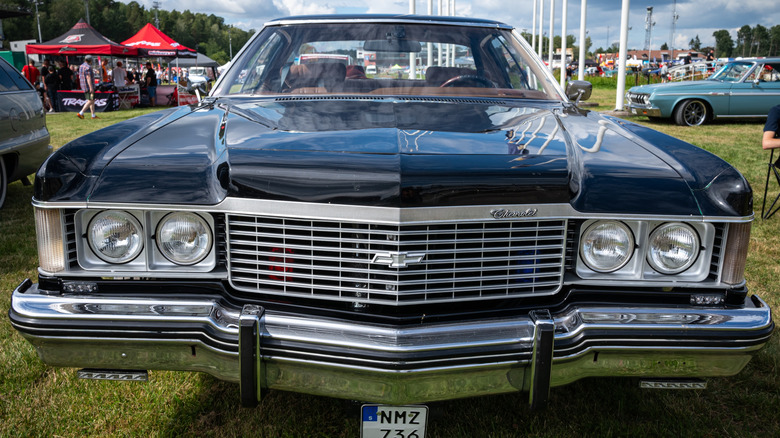
During the early days of automobiles, carmakers used bumpers as protective equipment for the vehicle and its passengers. But bumpers were also seen as an important style element that added to the vehicle’s overall appearance. However, that changed when the NHTSA’s Federal Motor Vehicle Safety Standard No. 215 (FMVSS 215), known as Exterior Protection, was introduced for model year 1973. That standard listed a specific front and rear impact requirement, also known as the 5-mph bumper rule, leading automakers to design new, bigger bumpers to comply.

Some car manufacturers actually just attached large steel bumpers to existing designs instead, which contributed to the new era of bulky front ends. These new bumpers often extended farther from the body than previous structures, which increased the front and rear overhangs. They also added significant weight. Not all automakers went down this path, though; some chose instead to develop bumpers that fit the vehicle and didn’t ruin the lines. The Corvette C3 is a great example of this.

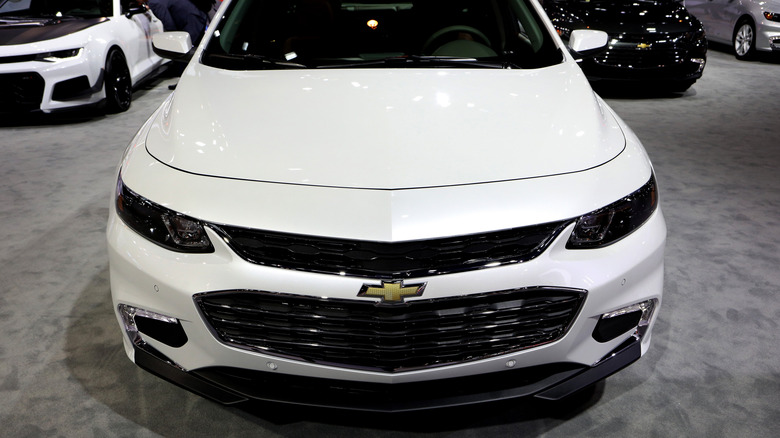
Today’s bumper systems are not as visible as they were in years past, with automakers now hiding the necessary safety components behind a plastic cover. Underneath that cover lies thick, energy-absorbing foam and metal reinforcement, a combination that allows manufacturers to maintain low-speed impact protection, per government standards, without compromising on aesthetics.


Source link

Leave a Reply

Subscribe to Our Newsletter

Get our latest articles delivered straight to your inbox. No spam, we promise.

Recent Reviews


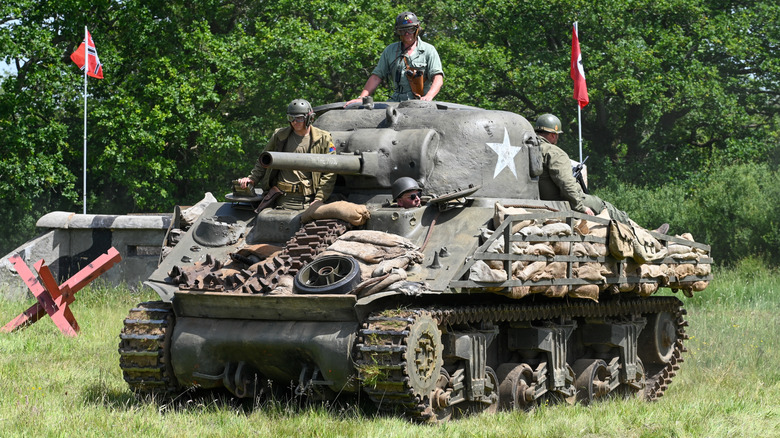
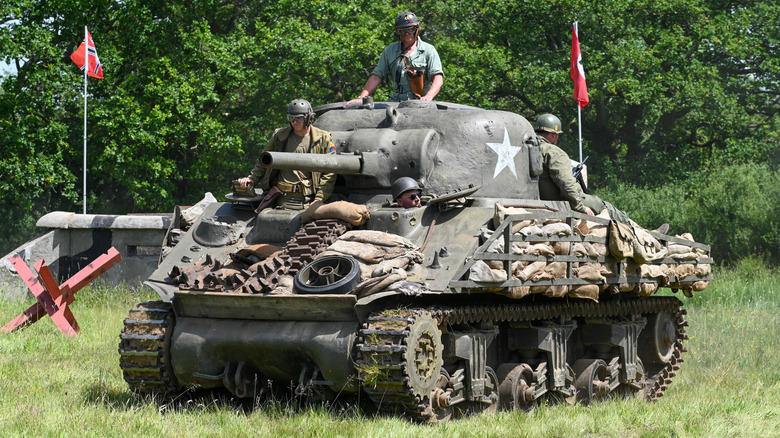
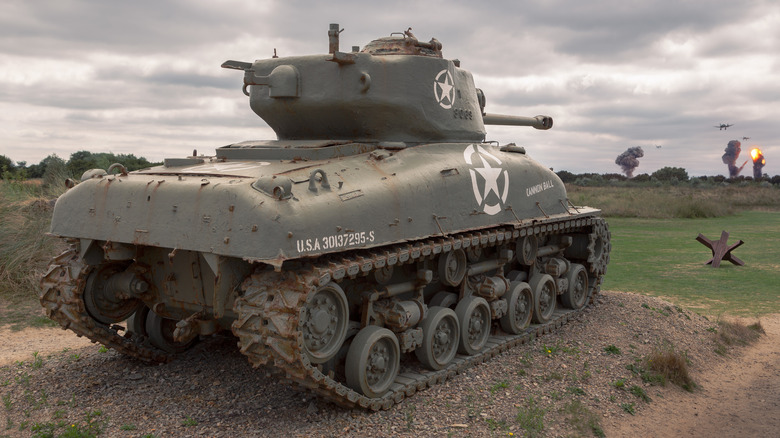
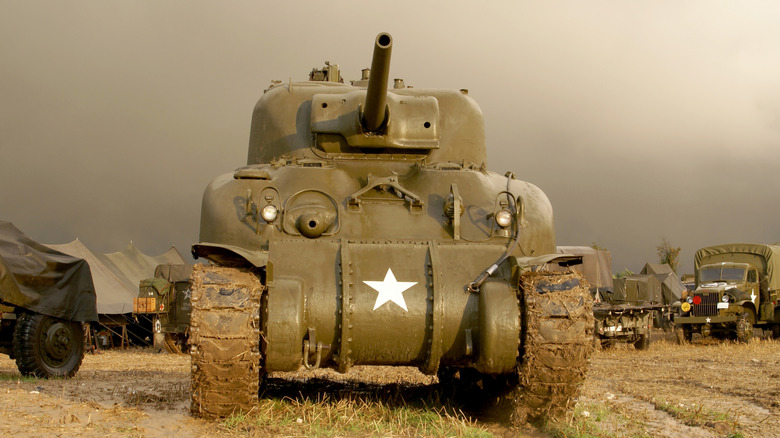
A 100-year-old World War II veteran was recently reunited with the tank he drove during the Battle of Iwo Jima. The tank was an M4 Sherman, and the veteran was Marine Corporal Leighton Willhite. The M4 Sherman was America’s most common tank during that war, with about 50,000 produced before the war’s end. It dominated the battlefield long after WWII.

The detective work behind the reunion of the soldier and the tank was performed by Jonathan Bernstein, Arms and Armor Curator at the National Museum of the Marine Corps. Bernstein did extensive research at the National Archives into the unique aspects of the tanks of the 5th Tank Battalion that served on Iwo Jima. It turns out that this specific tank, named “Lucky,” had countermeasures designed to minimize the effects of Japanese magnetic anti-tank mines. This included nails welded point-up onto its upper surfaces to prevent the mines from being placed flush against its upper body, where they would cause major armor damage. While the nails were gone, the weld scarring remained from where they’d been attached. Photographs shot during the battle confirmed that “Lucky” was present there on March 1, 1945. According to Bernstein, it is very rare to be able to put a specific crew together with the tank they operated, but it definitely happened here.

Corporal Willhite, who was 18 at the time, also demonstrated immense bravery when he and his commander left the tank to rescue another tank crew who became trapped. Willhite received the Bronze Star with Valor.

What role did Sherman tanks play in the Battle of Iwo Jima?

The M4 Sherman tanks, as exemplified by “Lucky,” played a key role in the Battle of Iwo Jima, where their biggest strengths and weaknesses were displayed. The volcanic sand terrain was difficult for the tanks to negotiate, causing many transmission failures for the Shermans. It’s also where three U.S. Marine divisions went up against a heavily fortified Japanese force that had no qualms about sacrificing itself to slow the Marines’ advance. 

A favorite Japanese tactic was to attack the Marines’ tanks with satchel charges strapped to their backs, detonating their charges after sliding underneath the tanks, where the armor was not as strong. Magnetic mines that stuck to the tanks’ bodies were also used by the Japanese. This led to a variety of “adaptations” made to the Sherman tanks. 

These included the welded-on nails, plus wooden planks along the sides of the tanks that protected the tanks’ suspensions and reduced the effects of shaped charges. In addition, there were other adaptations, including spraying sand onto freshly painted areas of the tank to prevent Japanese magnetic mines from adhering to it. Sections of the tanks’ tread, known as track blocks, were also spot-welded onto vulnerable parts of the tanks, such as the front and the turret, where they offered additional protection and could be accessed if spare parts were needed. According to a report from the 5th Tank Battalion on the subject of Iwo Jima, “The all-around performance of the M4A3 tank was exceptionally good.” During the five-week battle that ended in victory, 7,000 Marines died, and 20,000 were injured.

What happened to Lucky between Iwo Jima and its recovery at Camp Lejeune in 2002?

Following the victory at the Battle of Iwo Jima, “Lucky” went back to Hawaii, where it was refitted for its next planned role, showing how tanks shaped the course of WWII. Along with 71 other tanks, “Lucky” was converted into a flame-thrower tank, which replaced around 60% of its ammunition storage capacity with tanks capable of holding 300 gallons of napalm. The event that these 72 tanks were being prepared for was the invasion of Japan, which ended up not happening, thanks to the atomic bombs “Little Boy” and “Fat Man” being dropped on Hiroshima and Nagasaki, Japan, in August of 1945. This, combined with the concurrent Soviet invasion of Manchuria, led to Japan’s formal surrender in September of that year. 

Later, “Lucky” was used as a training tank for an indeterminate period, after which it was sent to Camp Lejeune, the Marine base in North Carolina. It was left in a wooded area of the base until it was discovered by some Marines in 2002, who sent it to the National Museum of the Marine Corps. And the rest is history.

The story of “Lucky” and Corporal Willhite is just one small piece of the vast World War II panorama of events that stretched across the entire world by the time it ended. It exemplifies how millions of American and other Allied soldiers were engaged in bloody battles across many different locations, fighting for a cause they truly believed in. There’s a reason that this cohort is known as “The Greatest Generation.”


Source link