
When browsing the best rechargeable flashlights for your next outdoor adventure, it’s easy to get caught up in differences like cost and manufacturer. But when it comes to the flashlight’s capability, it’s important to know that more lumens isn’t always better. In fact, if you choose a model that has over 1,000 lumens, you’ve probably got more light than you actually need.
Typically, around 300 up to 1,000 lumens is the sweet spot for most camping and hiking environments. This range provides enough brightness for everyday outdoor activities, without getting too much output. Higher-powered flashlights from the most popular flashlight brands can be helpful in some situations, especially when you need to see farther distances or if you’re looking for specific, hard-to-find things in the underbrush. But hanging out around a campsite usually doesn’t require anything more than a device with lower output.
Using a flashlight with a higher lumen rating also comes with an important power trade-off. You may get the best shine from a high-powered flashlight, but that increased brightness requires more energy and can thus reduce battery life. Additionally, the National Park Service notes that more light is not always better when spending time outside, as it can obscure natural darkness. It can also impact natural resources, wildlife, and the overall outdoor experience.
How flashlight design impacts performance
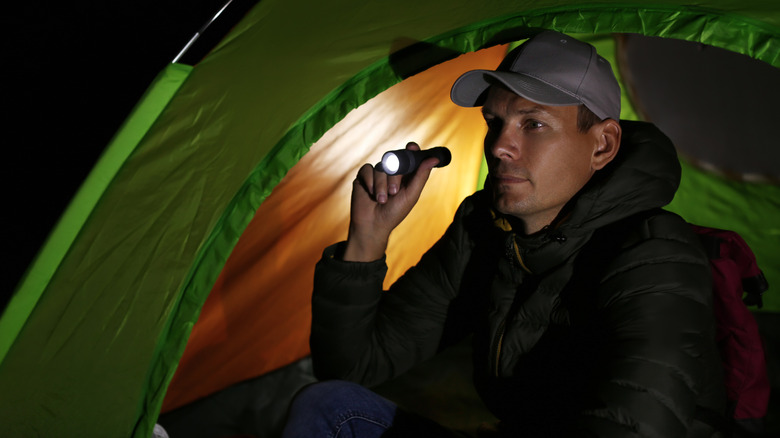
While lumen strength is important when selecting the best lighting gear options for your camping trip, it actually doesn’t tell you the whole story. The lumen rating of a flashlight measures the light output from the bulb and reflector that is concentrated into the beam itself. So the higher the lumens, the more intense the beam is. But it does not measure just how far the light will travel or how effectively it will light up an area.
Beam distance, beam intensity, and beam type all play a role in how useful a flashlight will perform in different outdoor situations. For example, a wider flood beam is good when working around the campsite, while a more focused beam is better when walking on a trail at night. This means the brightest flashlight on the market is not always the best choice. A flashlight’s design and how it actually distributes light can be just as important as its overall lumen output.
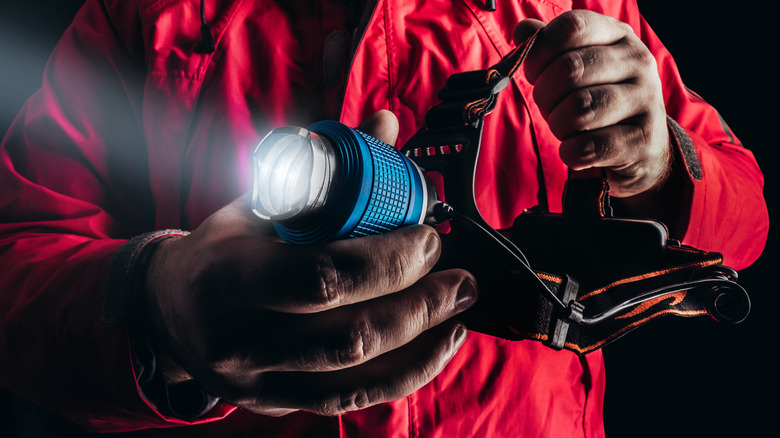
Different flashlight types are suitable for different activities. Smaller flashlights are easy to carry and can work well as backup options, while larger models can provide enough power in moments when you need to light up a bigger area. Headlamps are a good option, because you can keep both hands free while hiking, setting up camp, or doing things after dark. The level of versatility in some flashlights can vary, which is why it’s best to choose options that can handle more than one task.

Stephan is the sports journalist for the Maple Grove Report.