Is It Safe To Use The Air Conditioner When It’s Smoky Outside?


In January 2025, Southern California was ravaged by wildfires that destroyed some communities and left others with smoky, ashy air. Then, in July 2026, wildfires in Canada saw smoke transform the skies in the Midwest and northeast United States. 

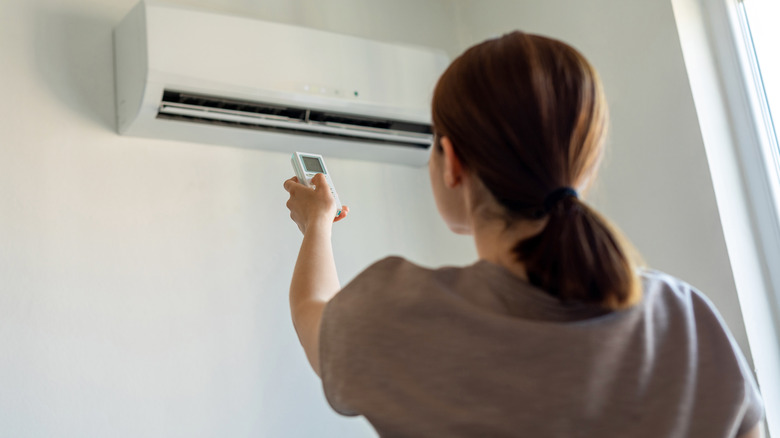
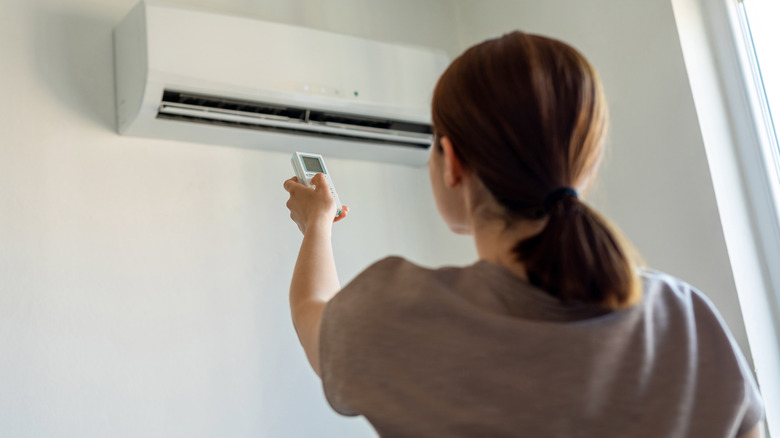
The air quality outside may scare some families into staying indoors. If you’re remaining inside, you can still use your air conditioner, but you’ll want to keep some things in mind. Check if your air conditioner has a “fresh air intake mode” and then set it to “recirculate,” which will use the air inside your home rather than the air outside. The filter should also be clean and new — you may have to replace it, or upgrade to a MERV 13-rated filter (or higher) if possible. 

Central air systems will treat all of the air circulating throughout the house, so it’s completely safe to use with the right mode and filter. If you’re using a window AC unit, make sure the seal is tight, so outdoor air doesn’t get in. You should not use a portable air conditioner that requires a vent outside since this may take in smoke. 

How to keep your air quality free of smoke while using AC

If you’re planning to stay inside with the air conditioner on during times when the air quality outside is poor, there are other things you can do to improve the air quality inside your home. First, close all of the windows and doors to not let any outside air in. You may even want to use weather-sealing tape if you don’t have good insulation. Use a fan to help circulate indoor air, especially if your air conditioner doesn’t have a recirculate mode. 

Investing in an air purifier for each room will significantly improve air quality. You could also get a portable air purifier and place it in a high-traffic area. There are air purifier options for every budget. You also should not smoke, burn candles, or use a gas stove indoors. You may also want to avoid vacuuming. This sounds counterproductive, but it can actually stir up the dust that’s inside your home. If you’re still concerned, you can use an N95 respirator to keep the smokey air from entering your lungs.


Source link

Leave a Reply

Subscribe to Our Newsletter

Get our latest articles delivered straight to your inbox. No spam, we promise.

Recent Reviews


Traffic lights are one of those pieces of street furniture you probably don’t think about all that much until you’re stuck waiting at them. They all serve the same core purpose of letting vehicles know when it’s safe to move ahead or not, but there’s more variation among them than you might expect. Some traffic lights have two red arrows, others have a blinking green light, and one traffic light in New York even has upside down green and red lights thanks to protests by resident Irish immigrants.

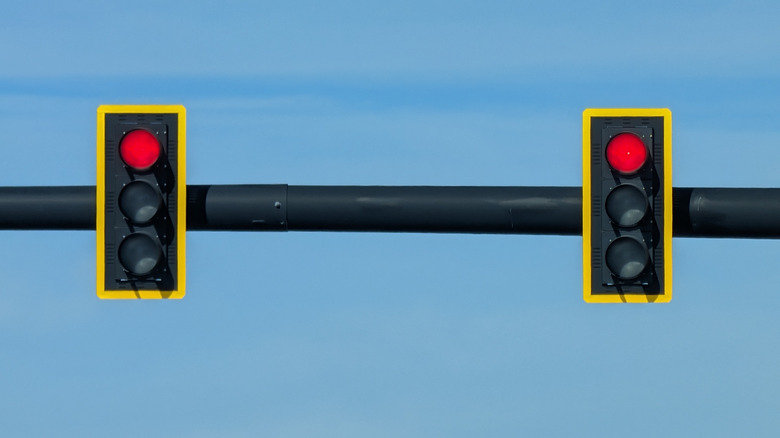
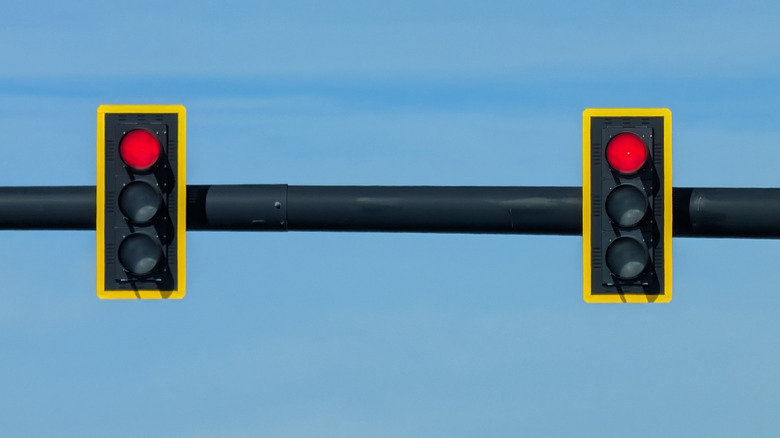
You might also notice that some traffic lights are surrounded by yellow borders that usually stretch between 1-3 inches around the edge of the signal. These reflective yellow borders are installed to boost their visibility at night, making them more instantly recognizable by tired or distracted drivers. They also help drivers with color vision deficiencies spot them quicker. As a bonus, a reflective border will remain visible even when the lights are inoperative due to a power outage, which helps warn all drivers that there’s an intersection ahead.

Installing a reflective border is one of the cheapest ways to boost the visibility of a traffic light, but research has shown that it makes a notable difference to road safety. In fact, one 2005 study found that intersections where traffic lights had reflective borders installed saw a 15% decrease in crashes.

Other subtle safety-centric traffic light differences

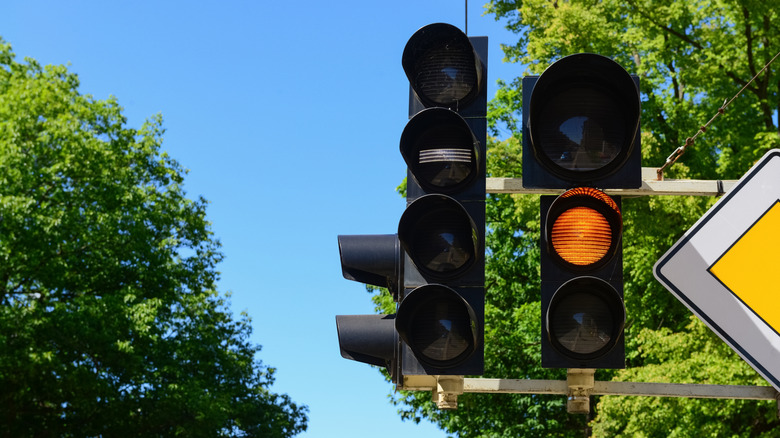
Even a traffic light that doesn’t have a noticeable visual difference like a reflective yellow border might still be different to a light that’s just down the road. Another tactic employed by transport agencies to boost road safety is adjusting the amount of time each traffic light’s yellow light phase lasts.

The goal is to give drivers enough time to recognize the yellow light and slow down without making it last so long that drivers start to treat it as an extension of the green light. Too long or too short and the risk of drivers running red lights increases, which can lead to a higher rate of crashes. There’s no one set ideal period of time for a yellow light to last, since it depends on a range of factors like the overall layout of the intersection, the speed of the surrounding roads, and the speed that drivers will need to slow down to in order to make their turn safely.

The latest traffic lights can use automated systems to monitor and adjust the yellow light phase in real time. It’s a far cry from the early, simplistic traffic lights that were used before modern computers were invented.


Source link