Americans Can Leave Their Passports At Home Traveling To These 3 Hidden Island Getaways


Share The Article

We all love a good island escape, but dealing with customs, paying for international flights, and panicking over whether your passport expires in three months can be a massive headache.

The good news? You don’t actually have to leave the country to get that totally disconnected, off-the-grid island vibe. The U.S. has a ton of incredible islands hidden just off the coast or tucked away in the Great Lakes that completely transport you to another world.

Best of all, you just need your driver’s license to get there.

If you are ready to trade the mainland rush for some serious island time, here are 3 epic passport-free getaways you need to check out.

PLUS: I’ve built an interactive quiz for you at the end of this article to find which one is your perfect match!

1. Mackinac Island, Michigan
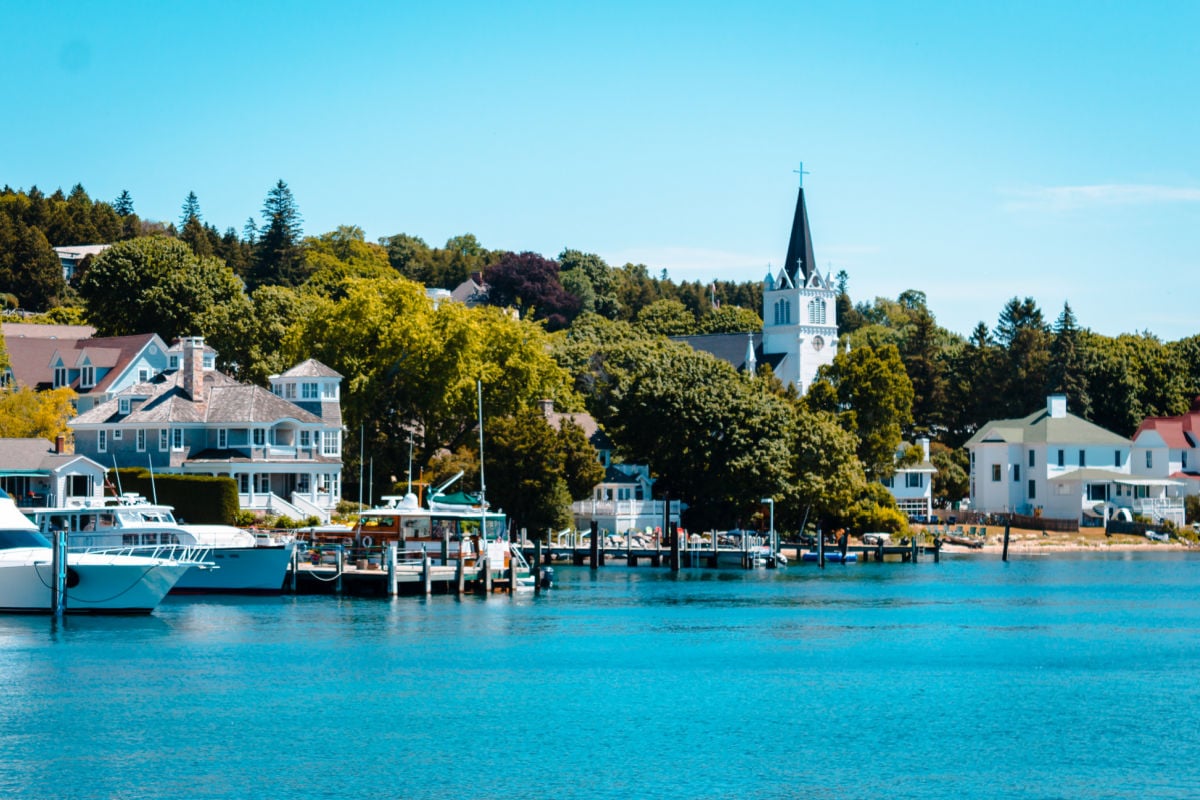
The Harbor at Mackinac Island

I was literally just here, and the entire experience was absolutely amazing.

Tucked right between Michigan’s Upper and Lower Peninsulas, Mackinac (pronounced Mack-in-aw) feels like stepping right out of a time machine.

The coolest part about the island is that motor vehicles are completely banned. There are zero cars allowed.

I stayed at The Inn at Stonecliffe, which I completely loved and will pick for every new trip, and it was the first time (but not the last!) I have ever been picked up from a small airport in a horse-drawn carriage.

The Inn at Stonefliffe in Mackinac Island

Taking bikes down into town and riding the horse-drawn carriages was so fun and totally changes your pace of life.

You ease into island time quickly here, and life feels more relaxed almost immediately.

If I had to pick a place to unwind for a week without leaving the country, this is my new top spot.

One of my absolute favorite parts of the trip was renting a bike and cruising the big trail that wraps around the entire perimeter of the island. You can make stops along the way downtown, at Arch Rock, or even Cannonball for a mid-trail ice cream.

It is a super flat, gorgeous paved path right on the water’s edge. You just pedal along, grab some world-famous fudge in town, and soak in the Great Lakes breeze.

2. San Juan Islands, Washington
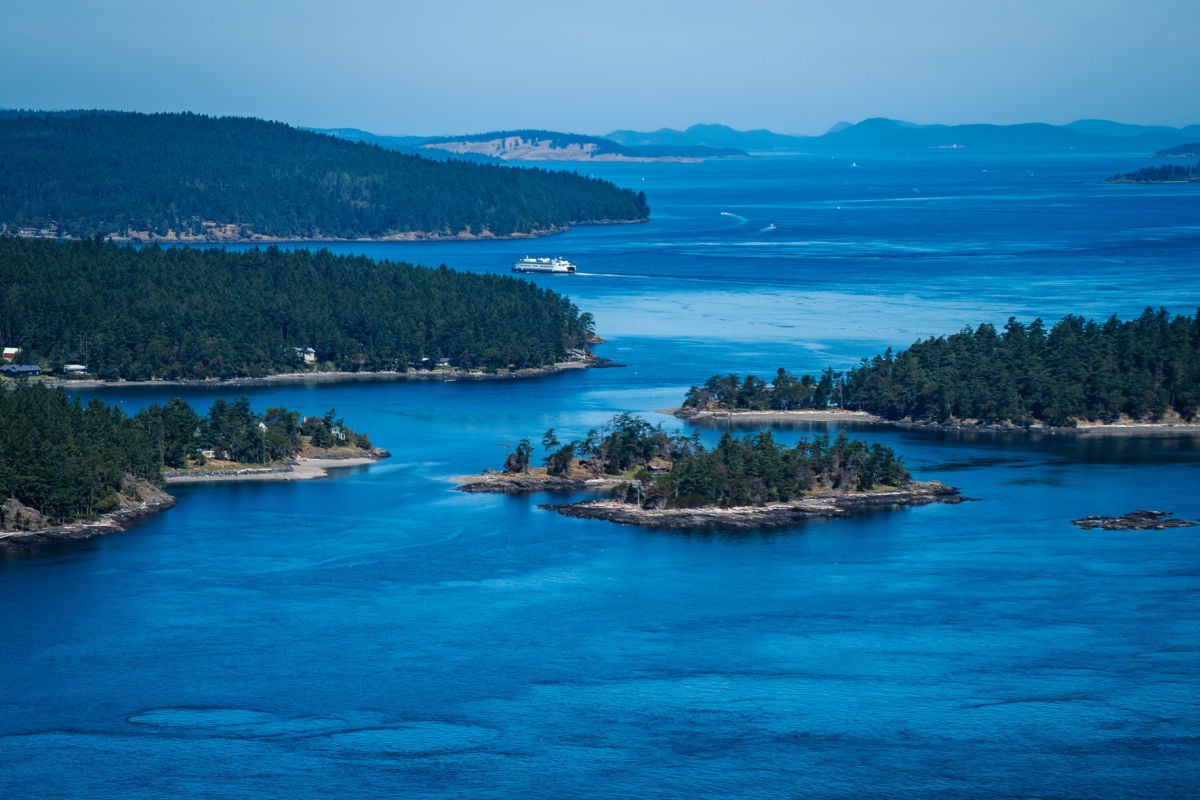
Aerial Photo of San Juan Islands near Friday Harbor

If you want a moodier, Pacific Northwest version of an island escape, you have to head out to the San Juan Islands.

Located just off the coast of Washington state, you hop on a scenic ferry ride from the mainland town of Anacortes, and suddenly you are dropped into a wild, pine-covered paradise.

The archipelago is made up of over 100 islands, but San Juan Island and Orcas Island are the main hubs.

The vibe here is rugged and heavily focused on the outdoors. Instead of lounging on white sand, you spend your days sea kayaking through the coves and hiking up through the misty, old-growth forests.

The absolute biggest draw here is the wildlife. This is one of the best places in the entire world to spot wild Orca whales.

You can post up at Lime Kiln Point State Park and literally watch the pods breach and swim right past the rocky shoreline.

3. Block Island, Rhode Island

Block Island, off Rhode Island’s coast, features sandy beaches, bluffs, lighthouses, dunes, and scenic bike paths amid a charming, laid-back island atmosphere.

If you love the classic, preppy New England aesthetic but want to dodge the insane summer crowds of Nantucket or Martha’s Vineyard, Block Island is your spot.

It sits just a short, breezy ferry ride south of the Rhode Island mainland.

Block Island is incredibly laid back.

It is small enough that you don’t really need a car—most people just rent a moped or a bicycle at the ferry dock and spend the weekend cruising the rolling green hills and checking out the historic lighthouses.
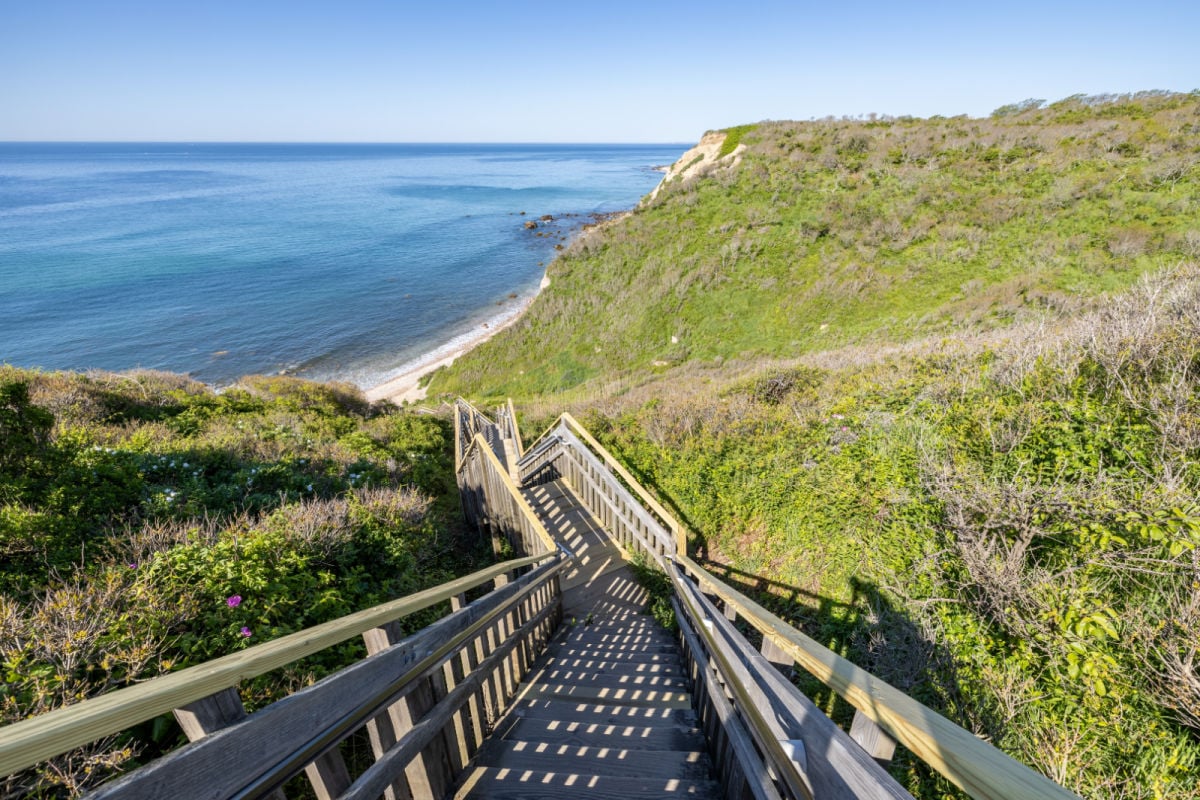
Long wooden staircase leading down to the beach at Mohegan Bluffs, Block Island, Rhode Island, USA

The absolute must-see spot on the island is the Mohegan Bluffs.

They are massive, 200-foot clay cliffs that drop straight down into the Atlantic Ocean.

You can take a massive wooden staircase all the way down to a secluded beach at the bottom.

Spend the afternoon down by the water, and then head back into town to crush some fresh, locally caught lobster rolls.


Now take this quiz to find your perfect passport-free escape!


Step 1 of 3

What’s your ideal island atmosphere?


Step 2 of 3

How do you want to get around?


Final Step

What’s your ultimate vacation activity?


🐴

Mackinac Island, MI

The Time Machine Escape

Tap to Reveal Details

Mackinac Island

Why it’s a match: You love historic charm and a slower pace! Motor vehicles are completely banned here. You’ll get around strictly by bicycle or horse-drawn carriage.

Must Do: Rent a bike and cruise the flat, paved perimeter trail right on the water’s edge, then head into town to grab some of their world-famous fudge!

🐋

San Juan Islands, WA

The Pacific Northwest Paradise

Tap to Reveal Details

San Juan Islands

Why it’s a match: You want a rugged, outdoor-focused adventure! Hop a ferry from Anacortes and drop straight into misty, old-growth pine forests.

Must Do: Grab a sea kayak to paddle through the coves, or post up at Lime Kiln Point State Park to watch pods of wild Orcas breach right near the rocky shoreline!

🦞

Block Island, RI

The Preppy Coastal Retreat

Tap to Reveal Details

Block Island

Why it’s a match: You love the classic New England aesthetic without the insane crowds of Nantucket! It is small, laid-back, and perfect for cruising on a moped.

Must Do: Check out the Mohegan Bluffs—massive 200-foot clay cliffs dropping straight into the Atlantic. Take the wooden stairs to the beach, then crush some fresh lobster rolls!


Source link

Leave a Reply

Subscribe to Our Newsletter

Get our latest articles delivered straight to your inbox. No spam, we promise.

Recent Reviews


There are certain engine configurations that are known even to those whose interest in engines is minimal. For instance, most people will know what makes a V-engine a V-engine, and even the differences between an in-line and flat engine

One engine design trait that’s perhaps less well-known is also related to the engine block, but not to with how the cylinders are arranged in the engine, rather with how they’re supported and cooled. When looking at this aspect of engine design, there are really three main types of engine block to look at. At the extremes are closed-deck and open-deck engine blocks, with some modern engines taking a halfway house approach with a semi-closed design. 

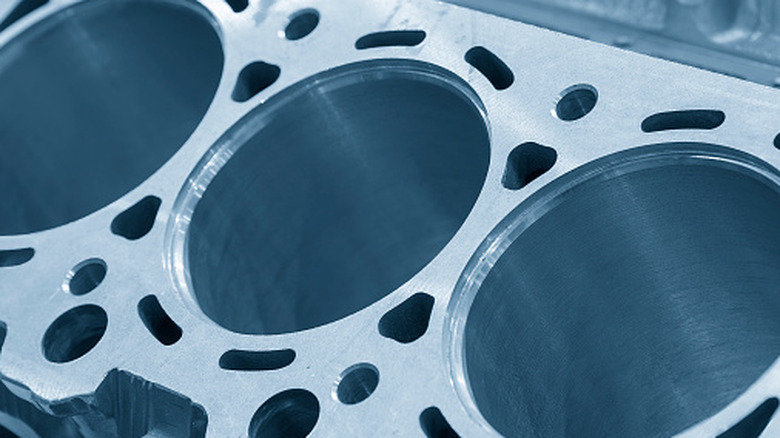
Let’s start by defining what an engine deck is. Essentially, the engine deck is that part of the block that the head gasket sits on, and the engine head attaches to. This means that an inline engine with a single line of cylinders will have one deck, whereas a V-configuration with two banks of cylinders will have two decks. 

Now that we understand that, we can begin to discuss the differences between closed-deck and open-deck engine blocks. In an open-deck engine, there is open space around the top of the cylinders that allows the coolant to circulate more freely. In a closed-deck design, in case you haven’t guessed it by now, the deck features extra material that offers less in the way of cooling, but it does support the cylinders more rigidly. Let’s pop the cylinder head off and have a closer look at these engine block types and why they matter more than you may think. 

Open-deck engines are cool, but flawed

For engine makers, there are definite advantages to open-deck designs — they cost less to manufacture when compared to closed-deck engines, and keep the engine cooler by exposing more of the surface area of the cylinder to the cooling liquid. 

However, all this open space around the cylinders is all very well and good when looking at cooling and manufacturing complexity — but cracks start to appear (sometimes literally) when we look at other aspects of closed-deck engine blocks. While it’s unfair to call open-deck engines unreliable and leave it at that, there are trade-offs in the design, and these become more noticeable in high-performance situations.

Essentially, the lack of material at the top of the engine deck means the engine is less structurally rigid right at the point where it meets some of the most extreme forces engines have to cope with — the combustion point at the top of the cylinder.

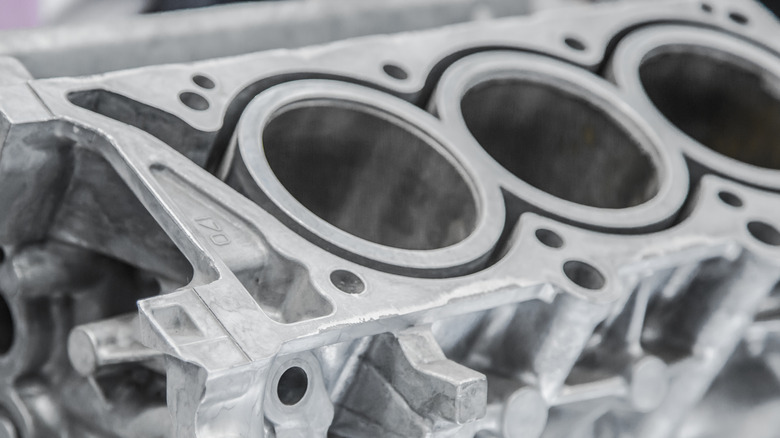
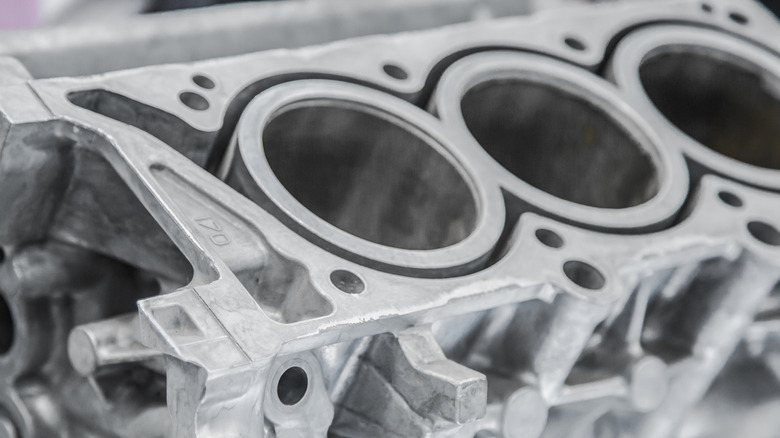
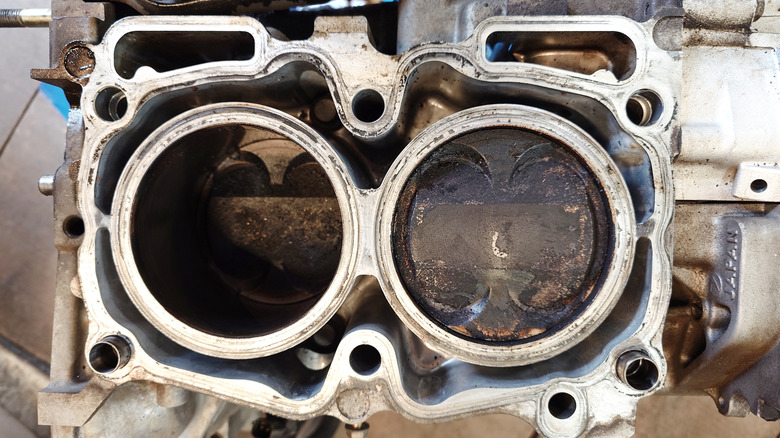
If you removed the head from an open-deck design and look down at the deck, this structural weakness is visible. From this viewpoint, the cylinders look separate from the rest of the engine block, with the gap between the two being used for coolant, as some open-deck designs have limited support at either end of the cylinder bank. While this gives more space for coolant to move freely, the downside is that it also does the same for the cylinder. Over time, even the limited movements of cylinders can weaken the head gasket and bring all the associated troubles that follow such a failure. 

Why some engines use closed- and semi-closed deck designs

Open-deck engine blocks are optimized for cooling and manufacturing efficiency. However, incorporate such a configuration in a high-revving, turbocharged brute of an engine and, well, it could end very badly. This is why such engines will usually use a closed-deck configuration. 

In a closed-deck engine, the open spaces around the cylinders of an open deck are filled with additional material. Obviously, the removal of such space and the flexibility it gives to the cylinders substantially strengthens the engine block. This is why some people fill engine blocks with concrete — it removes the flexibility afforded by the presence of cooling chambers. This is especially important for high-performance engines, but to call it overkill for the family runabout is not overstating the case. 

However, and the more observant among you will be there by now, filling an engine’s cooling cavities with material may add strength — but at the expense of cooling efficiency. This is why many modern turbocharged engines or higher-performance engines use a halfway house design in the form of semi-closed decks. 

Semi-closed decks are a compromise design that offers more rigidity to the cylinders by adding more support points. These supports are usually at the top of the cylinder. For instance, while there are pros and cons to Subaru’s EJ20 engine, the company released a version with a semi-closed deck with four additional support points, which should make it less prone to bore distortion. Ultimately, open-deck and closed-deck engine blocks represent design decisions based on the demands the engine is expected to handle. 


Source link