

Yard care can take more time than expected and if you find that you’re spending too much time mowing, it’s possible you don’t have the right sized lawn mower deck. But before you decide to buy a bigger one, beware that even if a new deck looks like it may fit, that does not mean it will. It all comes down to individual manufacturer design and how a deck is engineered to fit a specific model.
Each lawn mower manufacturer builds the frame, mounting points, and lift system around a fixed deck setup. This means that even decks with the same cutting width may not attach or operate correctly on another model. The mower’s PTO system also plays a major role, because both manual and electric PTO setups use different configurations that must match up precisely with the deck’s drive. The deck’s lift components are designed for very specific pivot points as well, which means that even small differences can prohibit a proper fit.
The key factor to remember is that because mower decks are designed to fit specific models, your best move is to verify part numbers before moving forward. Simply buying a deck from the same manufacturer as your mower isn’t enough, as similar setups may not be compatible with your exact model. If you’re browsing for a replacement deck from another manufacturer, be sure it’s compatible with your mower and always buy from a reputable retailer.
Understanding lawn mower deck size and why it matters
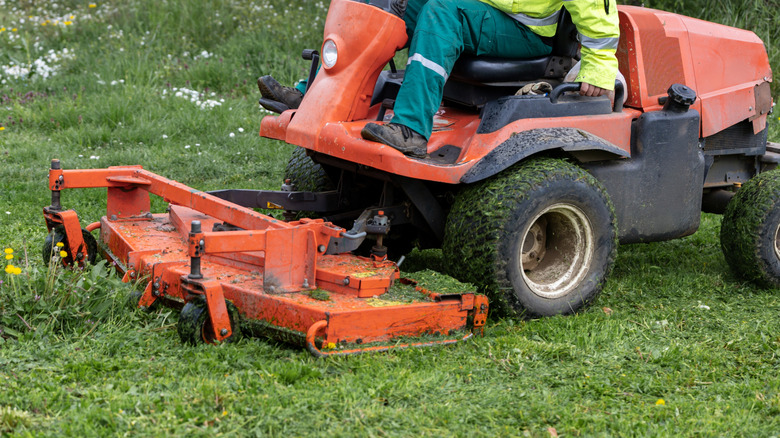
Lawn mower deck size is actually the cutting width of the mower, or the total reach of grass that’s cut in a single pass. For example, a 42-inch deck cuts a 42-inch path, while a 60-inch deck covers five feet at a time. Technically speaking, a larger deck does increase overall efficiency because you don’t need as many passes while mowing as you would with a smaller deck.
Replacing a deck isn’t the same as replacing the mower, but going with a bigger deck in order to save time does come with a price. That’s because a larger deck generally requires more engine power to operate. You’ll also need more space while mowing, which can be challenging when working in tight corners. This is why manufacturers match the deck size to the mower’s design, so the components will work together to deliver the expected performance.
Installing an Original Equipment Manufacturer (OEM) deck usually involves a process specific to the mower as well. Typically, the deck is lowered and disconnected from the mounting points and support rods. The drive belt is then removed from the engine pulley and the deck is slid out from under the mower. New deck installation follows the same steps in reverse. In many cases, this can be a complex process requiring precise connections that must be set correctly. Otherwise, the deck may not operate properly.

Stephan is the sports journalist for the Maple Grove Report.