
One European country never got the memo that nothing in life is free.
Despite being one of Europe’s richest countries in terms of bank account commas, consider it a good deed or simply a flex, they’re the only EU nation to offer free transportation nationwide for tourists.
Unlike in Malta, where locals get free transit and tourists still have to pay fees, that’s not the case here.
I know so because I’ve done it myself and had a great time without paying a dime.
You hop on, hop off, and enjoy the ride — no questions asked.
Before diving deeper, I can’t recommend enough to download this app: Mobiliteit.lu.
It’s a lifesaver to help you navigate tiny, yet timeless, Luxembourg, one of Europe’s most underrated countries — but word is leaking out about how awesome it is to explore, as they welcomed a record number of train passengers in 2025.
No Stone Unturned: Explore Luxembourg End To End For Free

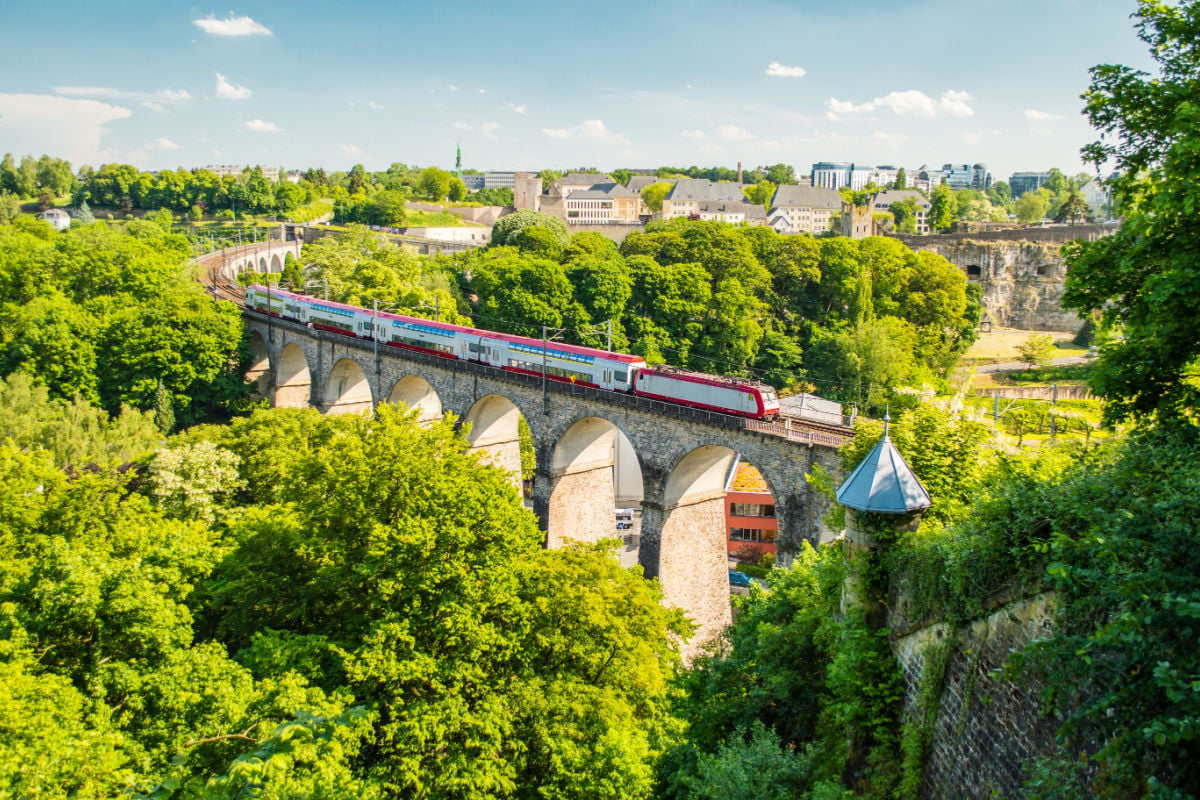
Luxembourg is a map-dot nation sandwiched between Germany, France, and Belgium, but it’s often overlooked due to its upscale reputation, where grandiose architecture gleams at every turn and the city seems to spill from clifftops down into storybook valleys.
So, what makes Luxembourg such a draw if prices drive people away before they even get a chance to visit?
Let’s tap the brakes first.
As someone who visited fairly recently, I can tell you I was surprised by how affordable Luxembourg was.
The only head-turning price points were hotels. Everything else felt very standard: a few bucks for coffee or a local beer, and German-style bar grub like sausages not topping $6.

Unless you’re dead-set on being bougie and shopping at all the Italian fashionista stores, you can undoubtedly squeeze in a budget-friendly trip here.
And think about it — if transit is free, that helps your bottom line…
Say you spend $200 on a hotel (I highly recommend DoubleTree by Hilton Luxembourg), unlike other expensive cities, where buying a transit pass feels like someone hacked your PIN code before you even leave the airport, your Luxembourg hotel suddenly feels less painful because you can hop around all day without spending a penny.
Think of Luxembourg as your own self-guided sightseeing tour.

That’s how my girlfriend and I tackled it, and we fell in love with all the castles and timeless villages, and even discovered there’s a hidden wine country region accessible by train that rarely ever makes the average traveler’s radar.
Is Luxembourg Boring?
Hey, we’re all professionals here, but that doesn’t mean we have to agree on everything.
As an American, I loved Luxembourg as it didn’t feel overly touristy, it has a wow factor for both its aesthetics and reverse sticker shock since I expected it to be more expensive, and it felt incredibly safe to wander at all hours, even the rare graffiti’d alley.

Our other Senior Writer, Vini, doesn’t agree, but he’s European and has been to almost every European country.
He says it’s one of the most boring cities in Europe.
So, here’s a summary of our trip, so you can decide for yourself:
- Kickstarted each morning with a scenic forest hike outside the DoubleTree Hotel
- Perused the local farmers market and discovered Luxembourg’s food scene is wildly underrated
- Sipped velvety cappuccinos among stately old buildings in a historic plaza
- Got lost countless times gawking at Old World streets and bridges
- Made our own pub-crawling tour once we realized beer wasn’t going to dent our wallet
- Hung out at Scott’s Pub for hours overlooking the flowing Alzette River (one of my all-time favorite European bars)
- Took the train around the city, then out to the Moselle region for a day of riverside wine tastings

We loved it — and that was just a couple of days spent here. We still talk about how much a delightful surprise Luxembourg was and only wish there were direct flights from the States.
Luxembourg Is One Of Europe’s Safest Countries
Don’t just take it from me.
Travelers have spoken by scoring Luxembourg a super high 89/100 on our Safety Index:
One of the most impressive aspects of Luxembourg City, especially, was that they don’t shy away from it being a drinkin’ town.

As such, even after the public trains shut dow for the night, you can still hop aboard the after-hours City Night Bus on weekends to ensure you get where you need to go safely, as well as keeping drunk drivers off the roadways.
Additionally, the State Department backs up the claim too as Luxembourg’s current advisory is designated with the lowest classification, Level 1: Exercise Normal Precaution.


Stacie Harris is a local resident and reporter of the Maple Grove area. Stacie reports on medicine and science for the Maple Grove Report.