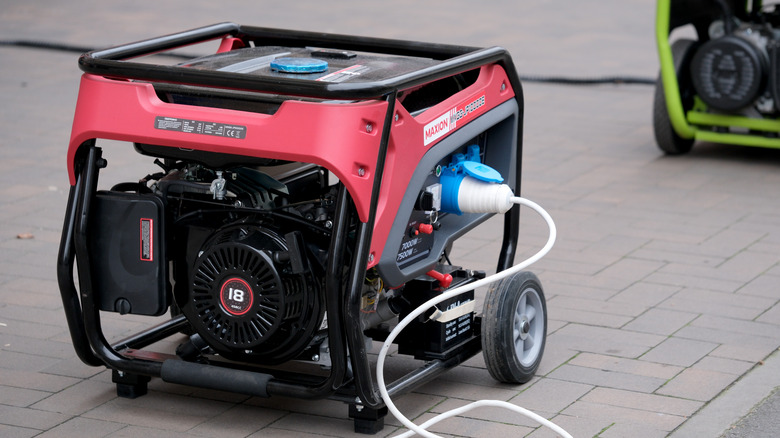
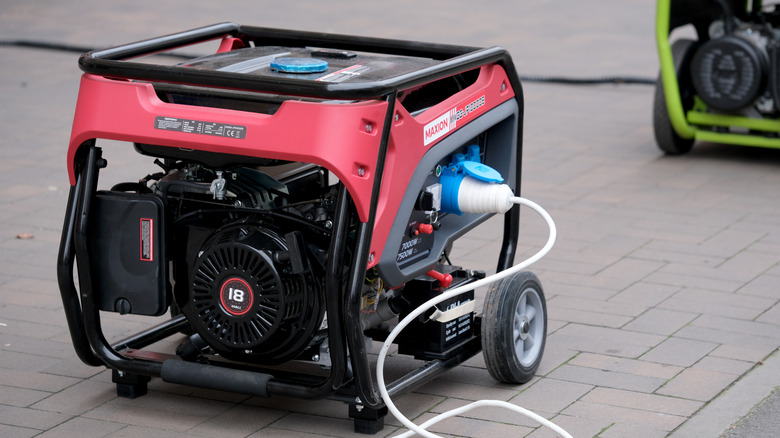
How Far Should A Generator Be From Your House When In Use?


It’s hard to overstate just how valuable and convenient a portable generator can be. They can provide emergency backup power during an outage or blackout or make a camping trip a lot more comfortable. They can even potentially save lives in times of catastrophic power grid failure. Whole-home generators have become increasingly popular over the years as well, with Consumer Reports saying they can potentially increase the value of your property between 3% to 5%. All that aside, generators also pose an inherent safety risk if not installed or used properly.

According to the United States Consumer Product Safety Commission, about 100 people a year die from non-fire related carbon monoxide poisoning associated with portable generators. Portable generators continue to be the most dangerous fuel-burning consumer product on the market as it relates to carbon monoxide poisoning –- even more so than gas-powered furnaces or stoves. While portable generators and other gas-powered tools should never be operated indoors, simply placing them outside isn’t enough — they need to be at least 20 feet away from your home.

The generator 20-foot rule helps protect against carbon monoxide poisoning
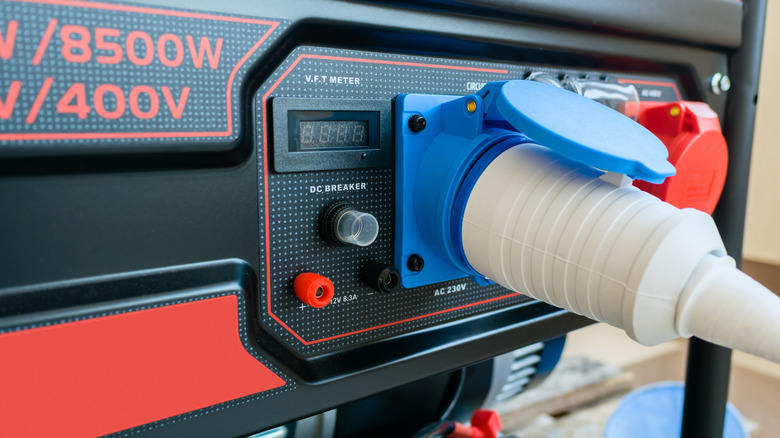
When using a portable generator, maintaining a minimum of 20 feet from the home is of paramount importance. This may not be guidance you’ll see from a generator manufacturer, but both the CDC and the US CPSC recommend it. As critical weather events continue to rise alongside the world’s drastically changing weather, carbon monoxide related deaths and injuries usually crop up in their wake. The February 2021 winter storm (Winter Storm Uri) that left millions without power in Texas also resulted in what many experts believe is the worst carbon monoxide poisoning event in years, as desperate people made dangerous home heating mistakes in a bid to keep warm. 

Some state governments –- like Texas –- have not formally required CO alarms by law in the past, but after the 2021 storm and epidemic of carbon monoxide poisoning that followed, renewed interest and scrutiny into protecting people from carbon monoxide has sparked some amount of reform. The federal government has known about the CO hazards generators pose for years, and the CPSC has required warning labels on them since 2007, in hopes of curtailing carbon monoxide related deaths. However, the warning labels were never intended to replace greater federal regulation, which has categorically failed over the years as the generator industry continues to mostly regulate itself.

How to protect yourself while using portable generators
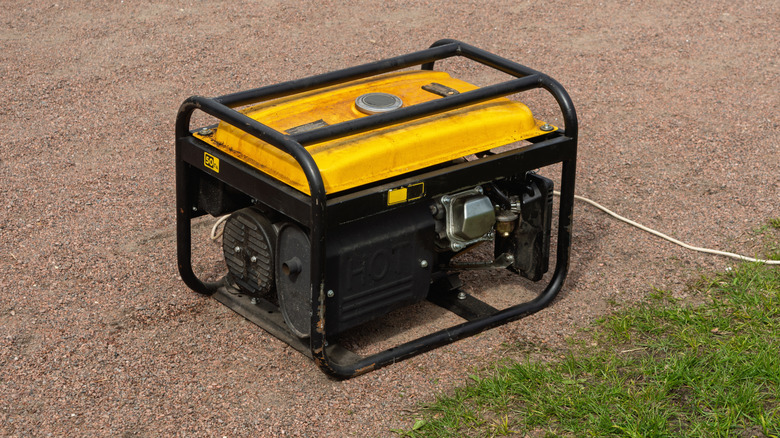
Until such a time that greater laws exist to help protect and educate consumers, when using a portable generator, you need to be your own first line of defense. That starts with making sure you have CO alarms in your home. The National Fire Protection Agency calls for CO alarms to be installed in a centralized location outside of bedrooms, on every floor of the home, and anywhere else as applicable by state and local codes. CO alarms should be tested monthly and interconnected, if possible. In the absence of hardwired alarms, there are wireless options available.

When it comes time to shop for a portable generator, opt for one that has an integrated shut-off switch that will kill the generator if high carbon monoxide levels are detected. Many generator makers have started using this technology, like Harbor Freight’s Predator series and its CO Secure feature. However, not all generator brands do, and there is no legal requirement for them to do so –- shop accordingly.

No matter what the product manual says, the safest thing is to set the generator up at least 20 feet from the property; a heavy duty power cord can be used to close the distance. Set the generator up on a stable, non-flammable surface, and try to keep it out of the elements –- by using some type of open, canopy-like structure. Under no circumstances should you backfeed your electrical system with a “suicide cord” or similar option. If you don’t have an interlock or a transfer switch, you need to use an extension cord to plug in your load(s) directly into the generator. If anything prevents you from using a generator safely, then you should not use one.


Source link

Leave a Reply

Subscribe to Our Newsletter

Get our latest articles delivered straight to your inbox. No spam, we promise.

Recent Reviews


The Argentine markets took a beating last week, but US Treasury Secretary Scott Bessent has rushed to the rescue with a remarkable promise: America will provide what amounts to unlimited support to prop up Argentina. His declaration that “all options for stabilization are on the table” – including swap lines, direct currency purchases, and buying Argentine government debt – represents an extraordinary blank check.

But here’s the real kicker: Bessent claims Argentina is “systemically important” to the United States. This is financial fiction at its finest.

The Systemic Importance Fairy Tale

Let’s be brutally honest: Argentina poses zero systemic risk to the US financial system. US banks have minimal exposure to Argentine debt. Trade between the two countries is negligible in the context of the US economy. If Argentina defaulted tomorrow, would Bank of America collapse? Would JPMorgan need a bailout? Of course not.

The “systemically important” label is being stretched beyond recognition. If Argentina qualifies, then virtually every country in Latin America – including those the Trump administration just hit with massive tariffs – should qualify too.

This isn’t about systemic risk; it’s about political preferences dressed up as financial necessity.

The Moral Hazard Machine

By offering essentially unlimited support to Argentina, the US is creating a massive moral hazard problem.

The message to Milei’s government is clear: Don’t worry about the hard work of building political coalitions or passing sustainable reforms through parliament. Uncle Sam will catch you if you fall.

This is precisely the wrong incentive structure. Argentina has defaulted on its sovereign debt nine times since independence. Nine times!

The country’s political economy is fundamentally broken, cycling through periods of populist spending followed by crisis and austerity. US financial support doesn’t fix this cycle – it enables it.

The Real Threat to US Financial Stability

Here’s the irony: While Argentina poses no systemic risk to the US, this bailout policy might. Not directly through financial contagion, but through the precedent it sets.

If the US Treasury is willing to provide unlimited support to a serial defaulter like Argentina simply because its president is friendly with Trump and speaks the MAGA language, what’s to stop other countries from playing the same game? Elect a Trump-friendly president, make the right noises about being an ally, and wait for the bailout when things go south.

This transforms the US Treasury into a global lender of last resort – not for genuine systemic crises, but for politically favored regimes. That’s a commitment the US cannot afford, especially when federal debt is already approaching dangerous levels.

The Buenos Aires Reality Check

The timing of Bessent’s announcement is telling. It comes right after Milei’s party got hammered in regional elections in Buenos Aires. The political message from Argentine voters was clear (rightly or wrongly): Milei’s policies aren’t working, and he lacks popular support for his reforms.

Rather than forcing Milei to build political consensus and pursue genuine institutional reforms, the US bailout allows him to double down on rule by decree. This is not sustainable governance. It’s political theater subsidized by American taxpayers.

Where’s the “America First”?

This is where the contradictions become absurd. The Trump administration came to power promising “America First” – putting American workers and taxpayers first, being tough on countries that don’t pay their fair share, and ending the era of the US playing global policeman.

Yet here we are, with a Trump-appointed Treasury Secretary promising unlimited support to a country that has stiffed international creditors nine times. How exactly does bailing out Argentine bondholders put American workers first? How does propping up a foreign government that can’t even win local elections serve US interests?

The Unlimited Commitment Problem

Perhaps most troubling is the open-ended nature of Bessent’s commitment. “All options are on the table” with no conditions, no limits, no requirements for structural reform. This isn’t a rescue package – it’s a blank check.

What happens when Argentina needs another injection in six months? Another one in a year? At what point does the US Treasury say “enough”? And when that moment comes as it inevitably will won’t the withdrawal of support trigger an even bigger crisis?

The Alternative Nobody Wants to Discuss

Here’s what should happen: Argentina should be allowed to face the consequences of its political and economic choices.

Yes, this means potential default. Yes, this means economic hardship. But it also means the country would finally be forced to confront its fundamental problems rather than papering them over with foreign money.

The IMF learned this lesson the hard way after multiple failed bailouts. Now the US seems determined to repeat the same mistakes, but with even less conditionality and oversight.

Conclusion

This isn’t about whether one likes or dislikes Milei. It’s about the dangerous precedent of the United States providing unlimited financial support to a country that poses no genuine systemic risk to the US financial system (or to the global financial system).

The moral hazard is obvious: Why should any country pursue painful but necessary reforms when they can simply wait for a bailout? Why should Argentina fix its institutional problems when the US Treasury stands ready to finance its dysfunction?

Ultimately, this policy doesn’t just threaten US financial stability through the direct cost of supporting Argentina.

It threatens the entire architecture of international financial responsibility. When “systemically important” becomes a political designation rather than an economic reality, and when bailouts come with no strings attached, we’re not promoting stability. The US taxpayers will be subsidizing instability.

The world is indeed upside down when an “America First” administration puts Argentine bondholders before American taxpayers.

PS Back in July I warned about Milei not being the miracle maker that some was making him up to be in my blog post Classical Liberals, Let’s Be Honest About Milei


Source link