How Often Do You Need To Replace Your Car’s Oxygen Sensors & What Can They Cost?


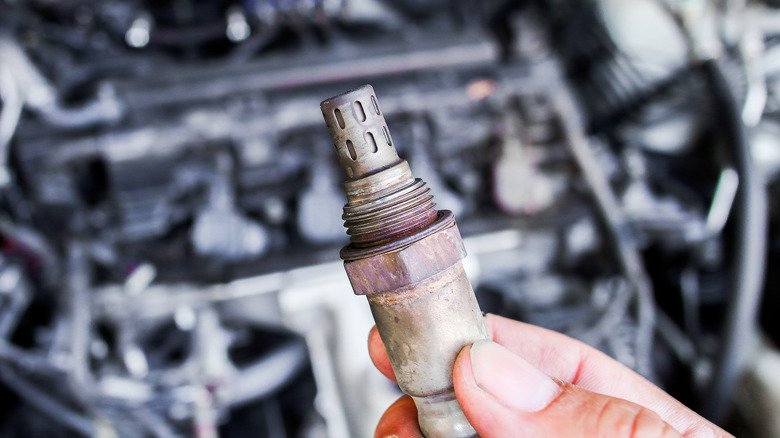
When was the last time you thought about your vehicle’s often overlooked parts, like the O2 sensor? The truth is that the O2 sensor serves a very important purpose and it can go bad, which means you should stay on top of it. What makes replacing them a bit tricky, however, is that O2 sensors don’t actually have a universal replacement schedule as some other engine components do.

Typically, O2 sensors are designed to last between 60,000 and 100,000 miles. Heated sensors can fall in that range, while newer wide-band O2 sensors could last 100,000 miles or more. However, some automakers do give their own recommendations, including Rolls-Royce, which suggests replacing the O2 sensor every 150,000 miles. In contrast, Jaguar says O2 sensors should be replaced on its vehicles every 90,000 miles. Some brand even specify different recommendations by model year, with Jeep saying that 1987-2017 Wrangler and Wrangler Unlimited models should have an O2 sensor replacement every 72,000 miles, or 72 months, depending on what comes first.

Sensor prices can vary based on the brand, type, and the vehicle it fits. For example, a Bosch O2 narrow band sensor sells for under $40 at Auto Zone, while a GM Genuine Parts heated sensor costs around $150. The cost can also depend on the vehicle’s make and model, as the Bosch wide-band O2 sensor for a 2025 Toyota Camry SE will set you back about $400. However, a 2000 Ford Explorer Sport has multiple brands and types, starting under $35 and going as high as $130.

Why your O2 sensors are so important
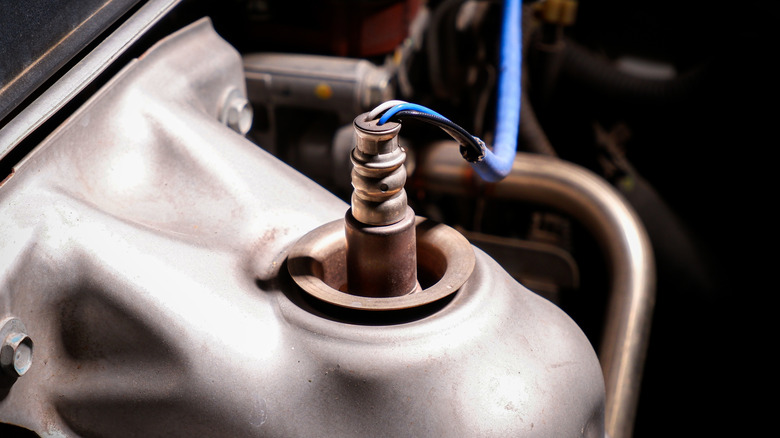
O2 sensors are designed to do just what the name suggests, as they control the air-fuel mixture needed for an engine’s combustion. They’re located in the exhaust system, where they measure the amount of oxygen remaining in the exhaust gases after the fuel has burned. This information is sent to the engine’s Powertrain Control Module (PCM), which uses the readings to gauge whether the engine is running with too much fuel or too much air. The PCM then adjusts the system accordingly.

If your vehicle begins to misfire, it can allow unburned fuel to enter the exhaust system. This can put stress on the O2 sensors. The same is true of a clogged air filter, as it can cause the vehicle to run with too much fuel. Driving with a faulty O2 sensor can cause problems, but regular maintenance will help ensure you get the most life possible from your sensors. This means watching for issues that could contaminate them, like excessive oil consumption and coolant leaks.

Modern vehicles typically use multiple O2 sensors and you should always replace them in pairs as needed. Upstream sensors are located before the catalytic converter and help regulate fuel delivery. Downstream sensors are located after the converter and are responsible for monitoring the converter’s performance. Some newer vehicles may also use wide-band O2 sensors, which can measure the air-fuel mixture across a wider range. This allows for more precise engine control.


Source link

Leave a Reply

Subscribe to Our Newsletter

Get our latest articles delivered straight to your inbox. No spam, we promise.

Recent Reviews


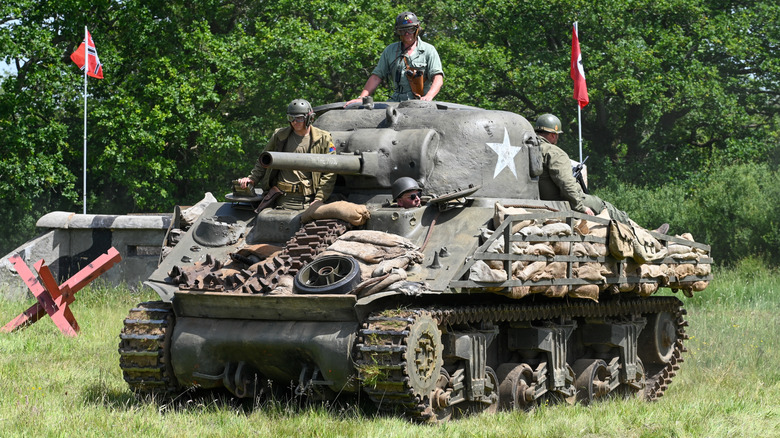
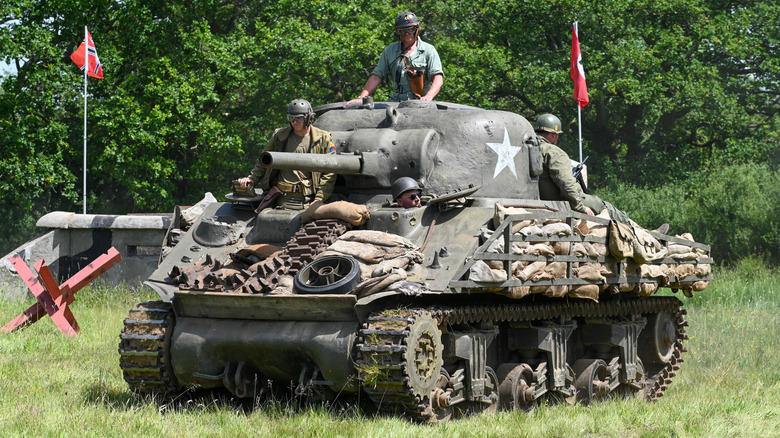
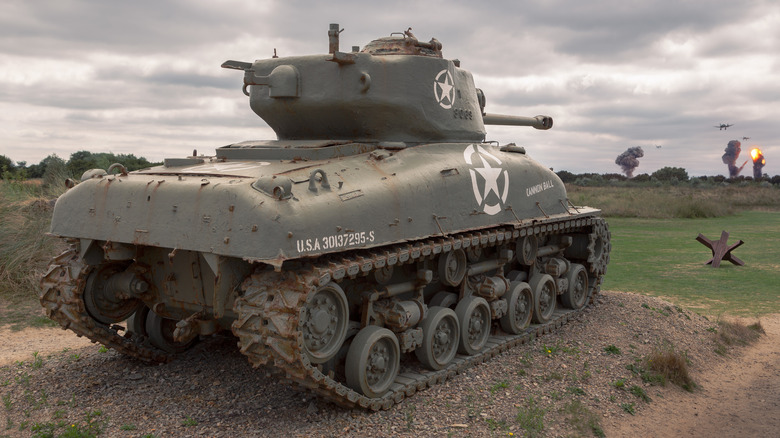
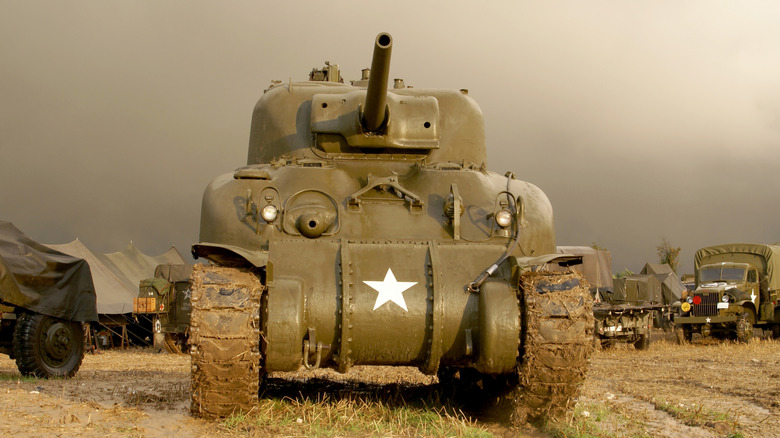
A 100-year-old World War II veteran was recently reunited with the tank he drove during the Battle of Iwo Jima. The tank was an M4 Sherman, and the veteran was Marine Corporal Leighton Willhite. The M4 Sherman was America’s most common tank during that war, with about 50,000 produced before the war’s end. It dominated the battlefield long after WWII.

The detective work behind the reunion of the soldier and the tank was performed by Jonathan Bernstein, Arms and Armor Curator at the National Museum of the Marine Corps. Bernstein did extensive research at the National Archives into the unique aspects of the tanks of the 5th Tank Battalion that served on Iwo Jima. It turns out that this specific tank, named “Lucky,” had countermeasures designed to minimize the effects of Japanese magnetic anti-tank mines. This included nails welded point-up onto its upper surfaces to prevent the mines from being placed flush against its upper body, where they would cause major armor damage. While the nails were gone, the weld scarring remained from where they’d been attached. Photographs shot during the battle confirmed that “Lucky” was present there on March 1, 1945. According to Bernstein, it is very rare to be able to put a specific crew together with the tank they operated, but it definitely happened here.

Corporal Willhite, who was 18 at the time, also demonstrated immense bravery when he and his commander left the tank to rescue another tank crew who became trapped. Willhite received the Bronze Star with Valor.

What role did Sherman tanks play in the Battle of Iwo Jima?

The M4 Sherman tanks, as exemplified by “Lucky,” played a key role in the Battle of Iwo Jima, where their biggest strengths and weaknesses were displayed. The volcanic sand terrain was difficult for the tanks to negotiate, causing many transmission failures for the Shermans. It’s also where three U.S. Marine divisions went up against a heavily fortified Japanese force that had no qualms about sacrificing itself to slow the Marines’ advance. 

A favorite Japanese tactic was to attack the Marines’ tanks with satchel charges strapped to their backs, detonating their charges after sliding underneath the tanks, where the armor was not as strong. Magnetic mines that stuck to the tanks’ bodies were also used by the Japanese. This led to a variety of “adaptations” made to the Sherman tanks. 

These included the welded-on nails, plus wooden planks along the sides of the tanks that protected the tanks’ suspensions and reduced the effects of shaped charges. In addition, there were other adaptations, including spraying sand onto freshly painted areas of the tank to prevent Japanese magnetic mines from adhering to it. Sections of the tanks’ tread, known as track blocks, were also spot-welded onto vulnerable parts of the tanks, such as the front and the turret, where they offered additional protection and could be accessed if spare parts were needed. According to a report from the 5th Tank Battalion on the subject of Iwo Jima, “The all-around performance of the M4A3 tank was exceptionally good.” During the five-week battle that ended in victory, 7,000 Marines died, and 20,000 were injured.

What happened to Lucky between Iwo Jima and its recovery at Camp Lejeune in 2002?

Following the victory at the Battle of Iwo Jima, “Lucky” went back to Hawaii, where it was refitted for its next planned role, showing how tanks shaped the course of WWII. Along with 71 other tanks, “Lucky” was converted into a flame-thrower tank, which replaced around 60% of its ammunition storage capacity with tanks capable of holding 300 gallons of napalm. The event that these 72 tanks were being prepared for was the invasion of Japan, which ended up not happening, thanks to the atomic bombs “Little Boy” and “Fat Man” being dropped on Hiroshima and Nagasaki, Japan, in August of 1945. This, combined with the concurrent Soviet invasion of Manchuria, led to Japan’s formal surrender in September of that year. 

Later, “Lucky” was used as a training tank for an indeterminate period, after which it was sent to Camp Lejeune, the Marine base in North Carolina. It was left in a wooded area of the base until it was discovered by some Marines in 2002, who sent it to the National Museum of the Marine Corps. And the rest is history.

The story of “Lucky” and Corporal Willhite is just one small piece of the vast World War II panorama of events that stretched across the entire world by the time it ended. It exemplifies how millions of American and other Allied soldiers were engaged in bloody battles across many different locations, fighting for a cause they truly believed in. There’s a reason that this cohort is known as “The Greatest Generation.”


Source link