
Depending on how often you handle a screwdriver, a major brand power drill, or wrench, it’s a safe bet that you count “lefty-loosey, righty-tighty” among the universal truths in your life. Odds are that you’ve believed that from an early age too, as the phrase is one of those that has been passed down through the generations as an irrefutable fact.
As often as you’ve likely heard the phrase uttered over the years, you may be surprised to learn that it is not, in fact, a universal truth. There are exceptions to that rule though they are typically few and far between outside of certain industries.
The reason for the “righty-tighty” dominant world should be pretty obvious, as the setup generally makes it easier for right-handed people to tighten screws and nuts and all manner of fasteners. According to some estimates, these days the population is as right-handed as ever, with some 85-percent to 90-percent of the world’s occupants claiming right-handed dominance. Even still, the rule will only be true if the fastener you’re working with has not been reverse threaded.
Here’s why a fastener might be threaded in reverse
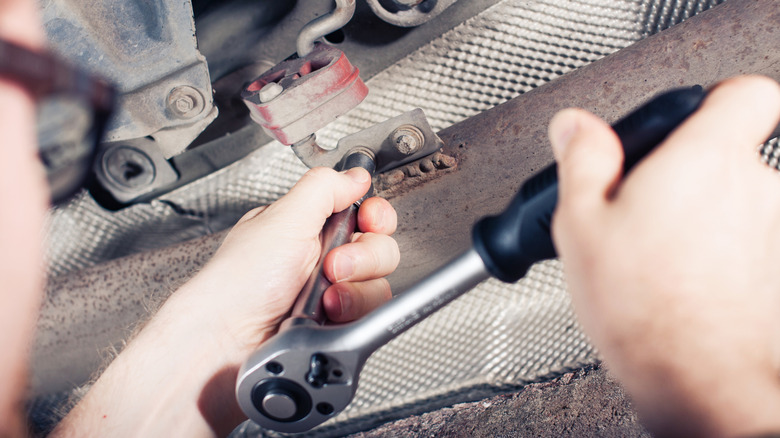
If you are working with a fastener that has been reverse threaded, the tightening and loosening procedures will, obviously, work exactly the opposite. If that entire concept bothers you, you can take heart in knowing that reverse threaded fasteners aren’t particularly prominent and largely used with engines and machines that feature moving parts.
That means you may more frequently encounter reverse threaded fasteners when you are working with an automobile and sometimes even lawn mower blades. These reverse threaded items may sometimes be referred to as “left-handed” screws, nuts, or bolts. If you’re wondering why they exist, it’s largely due to potential safety concerns. The science behind the concept is pretty sound too, as engine and machine parts that turn tend to more easily loosen with standard fasteners, as the normal torquing motions force them away from the fastening point.
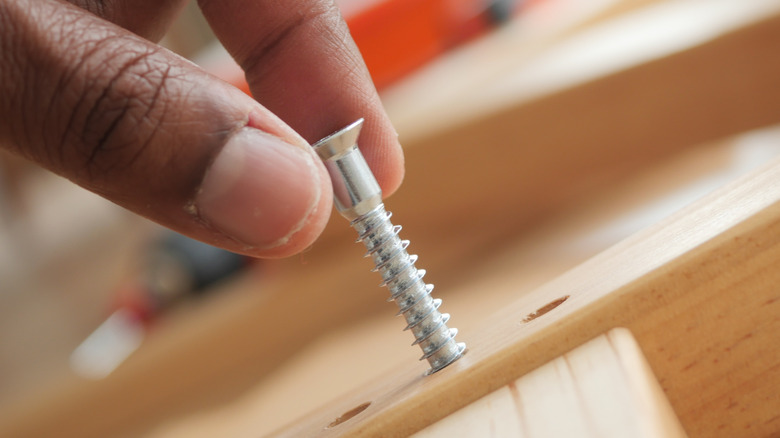
As you’ve likely surmised, reverse threaded fasteners are designed to produce the exact opposite effect, with torquing motions instead ensuring the nut, bolt or screw stays tight to the fastening point. There’s also an easy way to determine if the fastener is normal or reverse threaded, as the former’s threads will appear to run up to the right on inspection, and the latter will run up to the left. It will, of course, also be most obvious when you try to loosen or tighten them.

Stephan is the sports journalist for the Maple Grove Report.