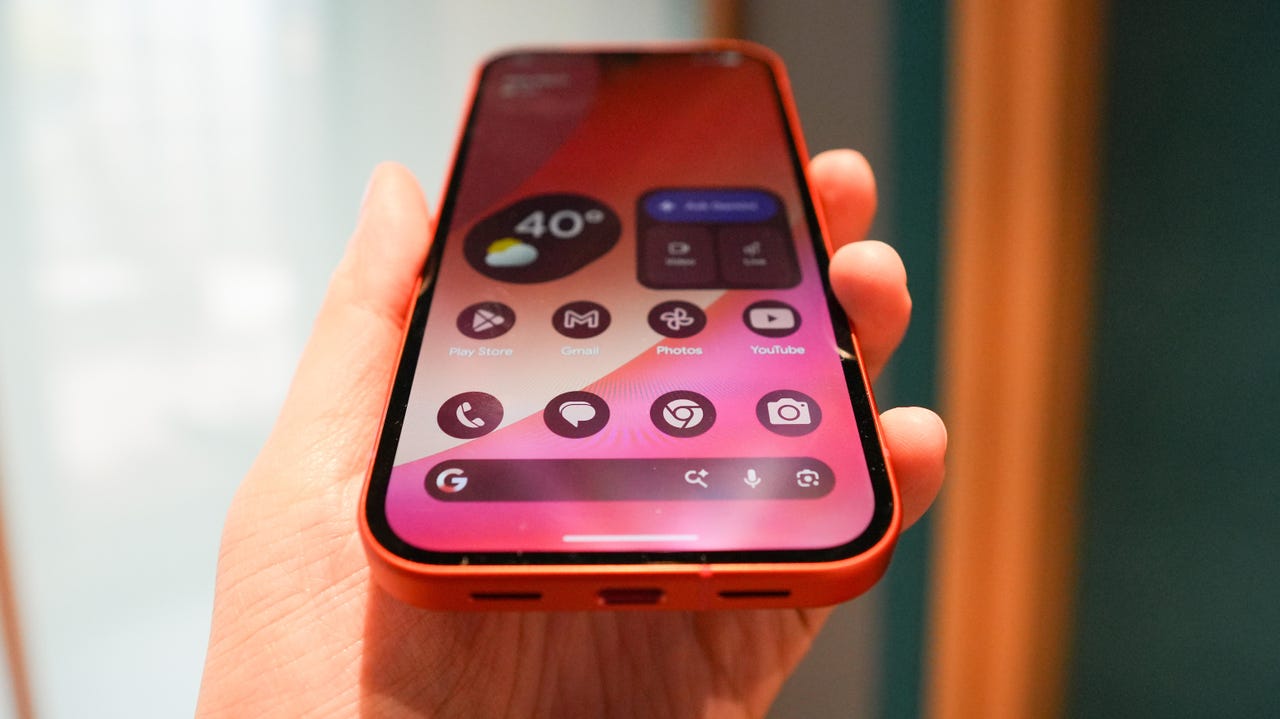
I’ve been a Google phone diehard for 10 years – here’s my 5-part wishlist for Pixel 11


Google Pixel 10a

Kerry Wan/ZDNET

Follow ZDNET: Add us as a preferred source on Google.


ZDNET’s key takeaways

  • Google will officially unveil the Pixel 11 lineup on Aug. 12.
  • The new Pixel Glow feature could be the highlight.
  • Pixels need an AI kill switch and better magnetic accessories.

Google has officially scheduled the Pixel 11 event — Aug. 12. In less than a month, we’ll see what Google has in store for this year, including a redesigned Fold, the Pixel Watch 5, and the Pixel 11 phone lineup with the highly-touted Pixel Glow. Pixel Glow is a multi-colored LED light feature on the rear of the phone. It was initially thought this might be a light strip around the camera bar, but the latest leaks show a circular light that lives in the current flashlight position. 

Also: Own a Pixel? You can add device protection now for $5/month – but should you?

I’ve been a Pixel user since the first phone debuted in 2016, and I’m still firmly on team Google. However, I feel like Pixel phones are starting to become a little stale compared to the innovative powerhouse they once were. Google is promising a lot for its next phone series, and while I know some (maybe even most) of my wishlist won’t happen, here’s what I’d love to see at the Pixel 11 event. 

What I want from the Pixel 11

1. Find a way to keep the thermometer

First introduced with the Pixel 8 Pro in 2023, the built-in thermometer has become one of my favorite Pixel features. I use it often for a quick check if my kids aren’t feeling well, and it’s come in handy quite a few times if I’m out with family or friends and someone wonders if they might have a fever. It’s a fantastic “check out what my phone can do” trick, and I can’t count how many times someone asked how I did it.  

Also: Google Pixel 10a review: Should Android users consider anything else at this price?

Several leaks of the upcoming Pixel 11 Pro indicate that the temperature sensor is being dropped to make room for the Pixel Glow feature. It’s not clear exactly what phones are getting Glow (at least the Pro), but I hope Google can find a way to eventually make these two features coexist if the shiny new lights are coming to the whole Pixel 11 lineup. 

2. Maximum functionality for the Glow feature 

If Google is going to kill my favorite feature for Pixel Glow, I hope it’s not just a light show for notifications. The new lights do look cool, and it seems like this could be a nice way to keep your phone out of your hands (by deciding if the color-coded notification is worth your attention), but I’d like to see Google to get the most use possible out of Glow — functions like a camera timer, charging status indicator, connection to Android’s “At a glance” notifications to see how close your rideshare or delivery is, or a soft fill light for photos.

3. More Pixelsnap accessories

If there’s one area I am jealous of Apple, it’s MagSafe accessories. I’ve added a generic metal ring to my phone case and a magnetic holder to my car, and I love snapping my phone in sight when I need it. Google introduced this to the Pixel 10 lineup with Pixelsnap, but I want to see more than just a charger and stand. 

4. Add an AI kill switch 

While I’m not all-in on AI on my phone, I do use some of my Pixel 9 Pro’s AI features (namely the photo editing, video boost, and Gemini). As companies keep injecting AI into every conceivable corner of our tech, some consumers are starting to push back. If Google could include an AI kill switch — something like “Local processing only” or “Classic mode,” it would win some of those fans. Frame it as a privacy measure, or as a way to save battery life — users should have a way to turn AI totally off.

5. Ditch lithium-ion batteries

Several phone manufacturers, notably Motorola and OnePlus, have ditched traditional lithium-ion batteries for silicon carbon. The biggest names, though, like Apple, Samsung, and Google, have yet to follow suit. A switch to silicon carbon could not only fix battery problems that have plagued Google phones for years now, but it would also allow for a larger battery capacity without making the device bulky (for comparison, these manufacturers can fit 6,000mAh to 7,300mAh batteries while Google caps out at 5,100mAh). This would result in more expensive manufacturing costs and a new supply chain, but it would position Google at the front of the pack. 


Source link

Leave a Reply

Subscribe to Our Newsletter

Get our latest articles delivered straight to your inbox. No spam, we promise.

Recent Reviews


Misinformation about sunscreen makes up a small portion of TikTok videos about the subject, but those posts are disproportionately popular and widely shared, a new study finds.

Wellness topics are commonly affected by misinformation spread online. That includes content related to sunscreen — a crucial tool in preventing skin cancer. A new peer-reviewed study conducted by researchers at the University of Alberta found that misinformation on TikTok receives higher audience engagement compared to pro-sunscreen content. 

The study looked at 971 of the most-viewed TikTok videos about sunscreen and found that the most-viewed videos had anti-sunscreen messaging. These videos only made up a small fraction of content found on TikTok (6%), compared to pro-sunscreen videos (86.8%). And only 1.5% of the posts the researchers reviewed claimed sunscreen caused harm.

Although there are fewer anti-sunscreen videos, these attract the most attention because the messaging is more provocative, the researchers said. Public health officials have been concerned about the anti-sunscreen movement that claims, falsely, that sunscreen is harmful or prevents the health benefits of sun exposure. Among the myths these messages spread include that sunscreen causes cancer, it blocks the absorption of Vitamin D and that it’s toxic to humans. The popularity of this content on TikTok could influence viewers, particularly younger ones, to avoid it altogether. 

It’s not surprising that many Americans turn to social media for health advice. A Pew Research Center survey released in April found 36% of Americans reported getting health information at least sometimes from social media. (And 22% said they got health information from AI chatbots.) Wellness influencers know how to make particularly engaging content, which makes it easier for others to believe the message they’re sharing — even if it’s false or misleading. 

Experts attribute the willingness of Americans to believe sunscreen misinformation to a wide range of factors.

“I think sunscreen skepticism grew out of a few overlapping movements: clean beauty, distrust of institutions, fear of synthetic ingredients and a general wellness culture that tends to frame ‘natural’ as automatically safer,” Dr. Melanie Palm, a board-certified dermatologist and cosmetic surgeon at Art of Skin MD, tells CNET. Sensationalized messages spread easily on social media because they feed on real human fears. 

Although there’s relatively more pro-sunscreen TikTok content, experts believe the messaging for this has been short-sighted as well. The study found that the majority of sunscreen content promoted on TikTok was mainly centered around its beauty benefits, versus only 6% mentioning cancer risk reduction.

“For many people, especially younger people, photoaging feels more relevant than cancer prevention,” Palm says. Not that sun protection lacks beauty benefits. ”I don’t think it’s wrong to talk about the beauty benefits of sunscreen because sunscreen does help prevent brown spots, uneven tone, collagen breakdown, and premature aging,” Palm says. 

Since sunscreen content has leaned more towards the beauty angle, its skin cancer prevention messaging has been downplayed. “Dermatologists and brands need to say it [sunscreen can prevent skin cancer] more clearly, and we need to say it in plain language,” Palm says. The problem is that often the facts on social media sound like a lecture. Palm believes experts can work on explaining themselves better without diluting the science and being less dismissive if a patient is worried about sunscreen use.

“We can say, ‘I understand why that sounds concerning — here is what the evidence actually shows, and here are options if you prefer mineral sunscreen, tinted sunscreen, fragrance-free formulas or newer filters,’” Palm suggests. 

Palm recommends experts active on social media focus on shorter videos, simpler analogies and real-life examples of sun damage. That’s just one piece of the equation. Sunscreen manufacturers marketing their products on social media often use fear-based language. Palm recommends that they focus on educating the public instead. This includes explaining common terms such as “broad-spectrum” or why it’s important to reapply sunscreen. “Show sunscreens on different skin tones, because if a product leaves a white cast or pills under makeup, people are not going to wear it daily,” Palm says. 

With research showing that more people are receiving their news from social media, it’s prime time for experts to appear as relatable as possible when sharing content on social platforms. Sunscreen brands can aim to educate younger people on the importance of skin protection and still speak about its beauty benefits. Even if you’re sharing the truth on social media, the way you get that message across is just as important if you want to reach a greater audience. 


Source link