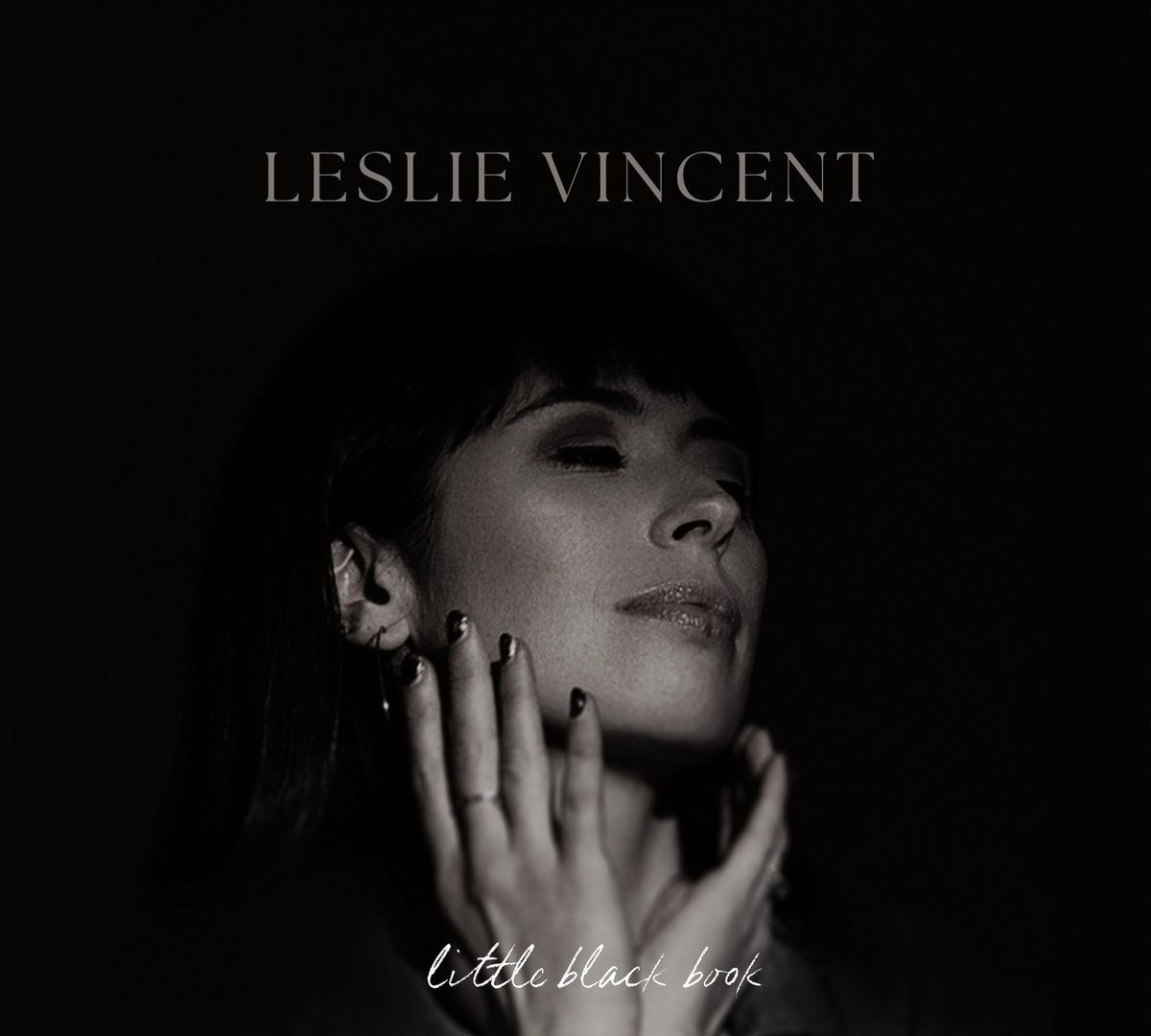
Like all great artists, Leslie Vincent contains multitudes. The two primary wolves fighting to be fed these days are the quirkily commercial classic jazz singer Americana Highways compared to “Amy Winehouse had she gone full-tilt jazz,” and the prolific, genre-free, would-be PJ Harvey of White Bear Lake who’s working on a new punk song.
“Oh, I want to try so many different things,” said the 36-year-old Vincent last week over a late lunch at Ingredients, her favorite diner near the home she shares with her wife of five years, Allison Vincent. “I want to try more abstract imagery. I want to try different perspectives. I want to try more storytelling songs. I love the idea of blending folk-style lyrics with jazz. I also write songs out of the jazz tradition, so I wrote a punk song recently.”
The song, “Counter-Culture Kid,” is about “how I always tend to love these things that are niche, and I envy people that love things that are mainstream. Like, football and things, like I too want to love things that are mainstream, and I do try, and I just can’t be interested. So the song is trying to come to terms with that,” said Vincent. “We had fun jamming out on it and I had the distortion up on the microphone and it was just for my own admission and joy. Am I going to put that on my next record? Maybe. You never know.”
Related: ‘Streets of Minneapolis’: 32 protest songs inspired by the Twin Cities’ ICE resistance
That rebel yell, experimentation, and improvisational chops are part of what makes Vincent’s voice stand out from the pack, along with her heart-riveting live shows and her delightful new album “Little Black Book,” all of which unfailingly leave listeners uplifted, hopeful, and inspired. To be sure, my dad and your dad would absolutely love her classic-modern-torchy-electrifying-jazz and her magnetic stage presence, but more importantly, hers does.

“My dad’s a huge, huge supporter. My mom, too, but my dad is always going around town (in Boston), where he just loves to talk me up to everyone and anyone,” she said. “He just got dental surgery, and they were like, ‘Do you want to listen to anything in particular during surgery?’ He said, ‘Yes! My daughter’s music!’ He runs listening to my music, so that’s really fun. We just share that, and since I was a kid he’s been cheering me on.”
Much to cheer about in the Vincent crew these days, as “Little Black Book,” Leslie’s third album, and first full-length collection of her original songs, and her warm and connective live shows have gained her a new, fast-growing audience. No wonder: She’s a wildly inventive interpreter, an ace songwriter and bandleader, and over the last few months I’ve seen her make big theaters feel intimate, and tiny bars feel timeless. She’s a rare talent, in other words, capable of creating an effortless and almost preternatural connection with audiences.
What’s the secret, beyond her natural talent?
A theater background, for one, which brings to mind an entire cadre of fellow local singer/songwriters and former/current theater kids (Megan Kriedler, Annie Enneking, Doug Collins, Sarah Morris, to name only a few) who similarly know how to lasso a room. A one-time poetry major at Emerson College in Boston and a full-time musical theater fanatic (“I was just listening to ‘Sweeney Todd’ on the way over”), Vincent got her Musical Theater bachelor’s degree at Catholic College in Washington, D.C., moved to Minneapolis in 2016 for her first professional acting job (as Carole King in the St. Paul History Theater’s production of “Teen Idol: The Bobby Vee Story”), and never left.
Turns out her theater background has served her well in reaching out and touching original music-loving audiences.
“A lot of my training was in connecting lyrics to music and storytelling and phrasing, and so I try to think about that, because when I’m in the audience, that’s what I connect to the most,” she said. “I try really hard not to do songs that I can’t connect to, so I try to have my own narrative, whether I set that narrative up before I sing or I just try to convey that feeling (by thinking about a loved one or another person’s lived-in experience) while I’m singing. I try to be connected, and I try to be authentic, and I just try to channel authenticity.”
It was at that 2016 History Theater gig where Vincent first got the idea she might not be a lifer in the theater, and where her own original music became a calling.
“The musical director, George Mauer, after hearing me sing one time, he pulled me aside after rehearsal. He was like, ‘Hey, do you sing jazz?’ I was like, ‘Not really.’ He said, ‘I think you should sing with me, really.’ And so I just started to gig with him, and I loved it. I just loved it. I was like, ‘This is so freeing.’ There’s a lot of theater people who like the constraints of theater, who really like that they have directors to tell them what to do, what words to say. [Actors] don’t pick the material … I think I loved it more from the outside, honestly, than being in it.
“I mean, I love musicals and theater, but once I found my artistic freedom, I was like, ‘Oh, I like this a lot. I’m the boss I want.’ And the thing about jazz, too, the beauty of the art form among a million beauties is that you can really honor your own sensibilities in a given day. So there’s a tune that I might call in the morning; ‘Hey, let’s just do a slow swing, we’re waking up, let’s just swing it out,’ but then by midnight, it’s ‘Let’s go, let’s do something crazy.’ Just by how I’m feeling, I can make those choices.
“I released my first record in 2020 and then I was like, ‘Oh yeah, I love this.’ Then I got my own band together and started to rehearse and record with them, then tweaked the band a little bit (to the current lineup of pianist/keyboardist Patrick Adkins, guitarist Blake Foster, bassist Matt McIntyre, drummer Ben Ehrlich, and trumpeter Mitch Van Laar), and now we just made a record, and I think these are my guys for a while. We get along really well. Now we’re on the road together, so that really bonds you. We’re just like happy little cats, man.”
Local audiences have several chances to catch Vincent live this summer as she’s got a busy slate of duo and full band shows scheduled, including Friday at the Twin Cities Jazz Festival and a Pride-affiliated show Wednesday in St. Paul.
Does her marriage inform her art and singing?
“It certainly informs my writing, because it’s inherent in my writing,” she said. “As I play out of town more, I’m always sort of gauging how much of myself I want to share on stage. I was originally approaching it from like radical honesty and vulnerability, but sometimes I don’t always feel safe, and so now I’m trying to balance my own peace of mind, especially on stage when I’m singing and band leading. I’m trying to be a little bit more gentle with myself, like I don’t have to share it all, but usually when I do, I’ve gotten a lot of responses like, ‘I came to see you because I’m also queer, and I feel camaraderie with you, I’m here with my girlfriend,’ or something. I sometimes have really beautiful and unexpected conversations in small towns or rural communities that I really take to heart.”
Next up for Vincent is studio time for recordings that could become the follow-up to “Little Black Book,” and more touring. She’s fond of saying “jazz saved my life,” noting that she holds deep gratitude for the music’s tradition and its power to go deep.
“I could write a million essays on how jazz has saved my life, and one of them is just like I feel like it’s chilled me out so much,” she said. “It just has taught me to let go of things that don’t matter, to really care about the things that do matter, and just to know that it’s gonna be OK.
Related: The history of the ‘Minneapolis Sound’ pioneered by Prince
“I just feel like it. It honors my artistry and my humanity on a daily basis. Again, I can show up and call tunes in whatever way I want to call them. I can express what I want to express, and I can make what I want to make, and the more I make within those parameters, the more comfortable I feel, just in my daily life. I just like doing different things. I like the challenge of it.
“I mean, as a kid I was listening to it for fun, like [Frank] Sinatra and Ella [Fitzgerald], and stuff like that. My grandfather was really into it. I just kind of got to it that way, but I guess what I mean by that is I’m not sure I would still be a performer if I was still in theater. Honestly, without [jazz], I’m not sure who I would be as a person, and so all the gifts that it’s given me in terms of growth, creativity, self-expression, community, has been everything.
“The theater foundation was important, and super instrumental, but what I’m saying when I say ‘jazz saved my life’ is I think if I had stayed that course, I think I would have quit, right? Because it wasn’t fulfilling me in the way that it fulfills other people. Some of it did, but a lot of it didn’t. A lot of it was taking direction from other people, and I just preferred my own artistic vision.”
Related