Only One Man Got To Fly NASA’s X-15 Rocket-Powered Plane & The Space Shuttle


With planes like the now-famous Lockheed-designed SR-71 Blackbird and the U-2 Dragon Lady capable of flying at extremely high altitudes, touching the edge of space is something that a handful of aviators have actually managed to do. Crossing that barrier in a winged vehicle is an incredibly rare feat, though, and only one pilot managed to do so in two of the U.S.’ most iconic vehicles.

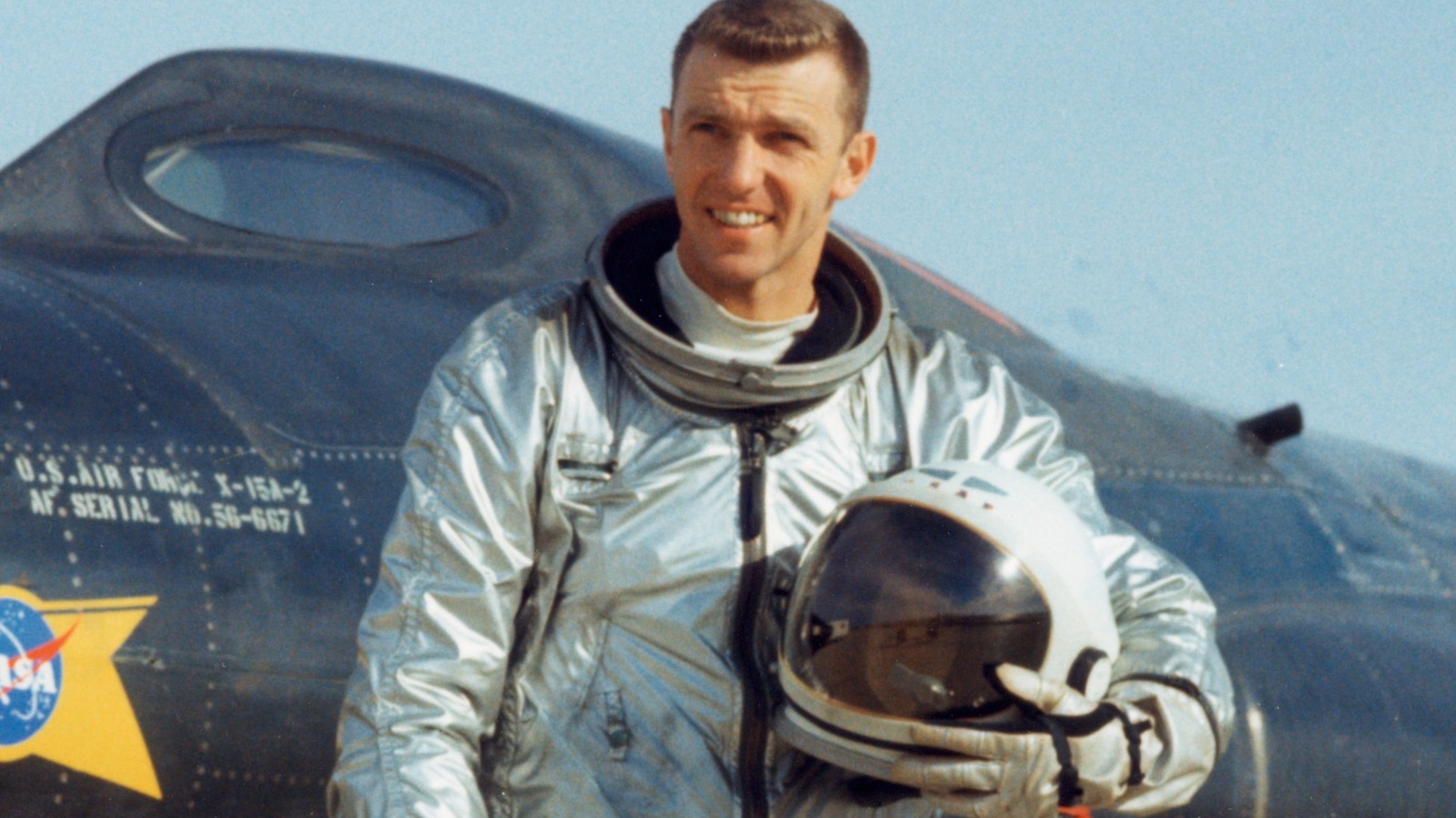
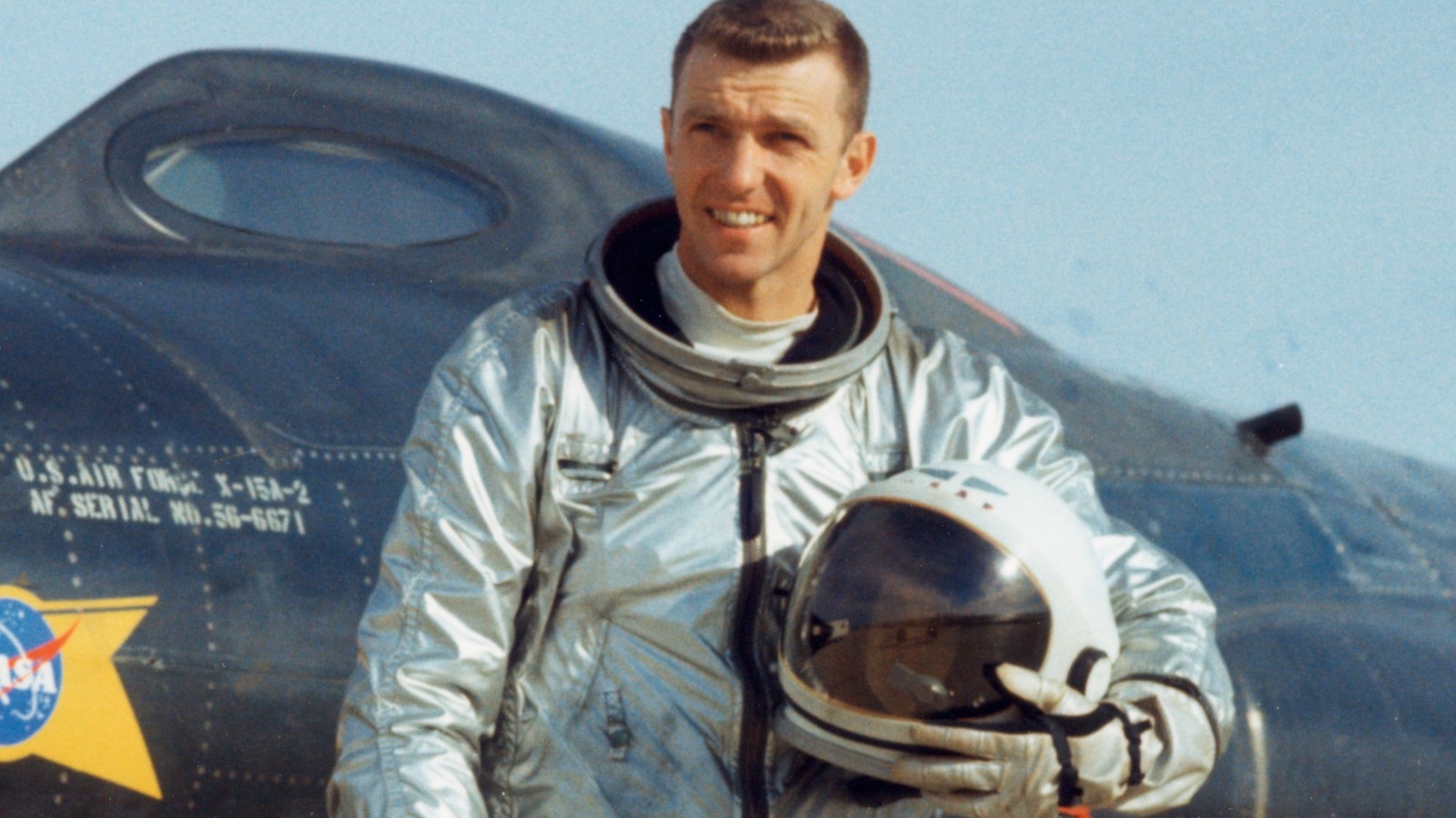
In 1965, then-Capt. Joe Engle flew the rocket-powered X-15 plane at altitudes of over 50 miles on three flights, crossing the Kármán line – the height that NASA, the U.S. military, and the National Oceanic and Atmospheric Administration designate as the boundary between the atmosphere and space — and earning his astronaut wings in the process. This was just the start of Engle’s impressive achievements, though, because he went on to join NASA’s astronaut program in 1966. He joined during the legendary Apollo program and could have landed on the Moon, but he never got the chance. 

Engle remained with NASA, though, and he eventually got to do something few people ever achieve: fly the Space Shuttle. This makes Joe Engle the only person to fly the X-15 and the Space Shuttle, placing him among the nation’s aviation greats like Scott Crossfield and Neil Armstrong, both of whom also flew the incredibly fast X-15. Still, only Engle flew two winged vehicles into space, setting him apart even from such esteemed company.

Capt. Joe Engle’s X-15 flights

The X-15 Hypersonic Research Program was a joint effort between the National Advisory Committee for Aeronautics (later, NASA), the U.S. Navy, the U.S. Air Force, and North American Aviation Inc., which built the plane. The goal was to study piloted hypersonic flight, and the information learned from the program helped to directly influence the design of the Mercury, Gemini, and Apollo programs’ vehicles. It also influenced the Space Shuttle’s design and operation.

Capt. Joe Engle joined the X-15 program in June 1963, though he initially hoped to be selected for NASA’s astronaut program. The Air Force pulled that request, sending him to Edwards Air Force Base in California to test the X-15 instead. While Engle is probably best known for flying above the Kármán line three times, those flights were only a small part of his total time in the X-15. Engle flew the X-15 16 times before finishing with the program in October 1965.

On February 2, 1965, Engle took the aircraft to Mach 5.7 (3,866 mph), while his highest-altitude achievement in the X-15 came on June 29, 1965, when he soared up to 280,600 feet, or 53.1 miles. His flights were also exciting in other ways, too; on his first flight, which was also his shortest, Engle lost radio contact with a B-52 and performed an unauthorized 360-degree roll on his flight back to Edwards AFB.

Astronaut Joe Engle’s Space Shuttle missions

In 1966, Joe Engle was one of only 19 “Spacemen” selected by NASA for its astronaut program. He began with the agency as support for Apollo 10, and later became the backup Lunar Module Pilot for Apollo 14. He didn’t get the opportunity to fly, however, as Edgar D. Mitchell performed the mission without the need for a backup. After that mission, Engle became the primary Lunar Module Pilot for Apollo 17, but NASA bumped him for Harrison H. Schmitt.

That was the closest Engle got, as NASA abandoned the Apollo 18 mission. As of writing, nobody has returned to the Moon’s surface, though NASA plans to return via the massive Artemis Moon Rocket by 2028. After losing out on the Apollo program, Engle commanded STS-2, the second test flight of the Space Shuttle, which took place in 1981. That was only a test flight, though it gave Engle vital experience with the newly developed reusable shuttle while setting him up for his eventual command of STS-511, the 20th Space Shuttle mission and sixth flight of Space Shuttle Discovery.

Engle remained a member of the Air Force until he retired in 1986 at the rank of colonel. He retired the same year from NASA, but later accepted the rank of brigadier general in the Kansas Air National Guard. In 1991, Engle retired from the Air National Guard as a major general and was honored as an inductee of the Aerospace Walk of Honor, the Astronaut Hall of Fame, the Kansas Aviation Hall of Fame, and the National Aviation Hall of Fame.


Source link

Leave a Reply

Subscribe to Our Newsletter

Get our latest articles delivered straight to your inbox. No spam, we promise.

Recent Reviews


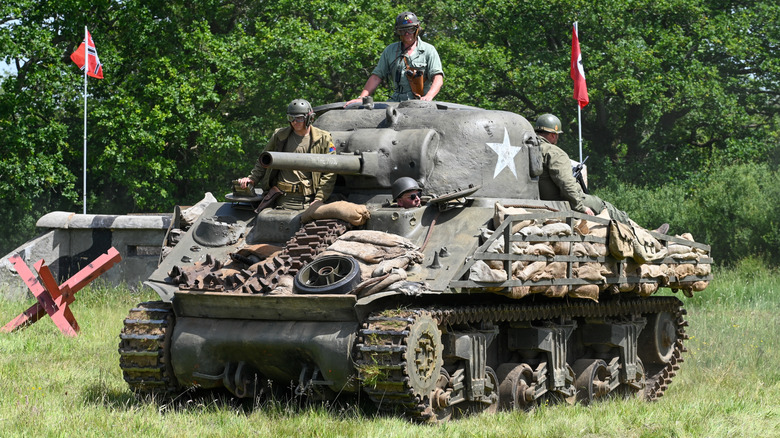
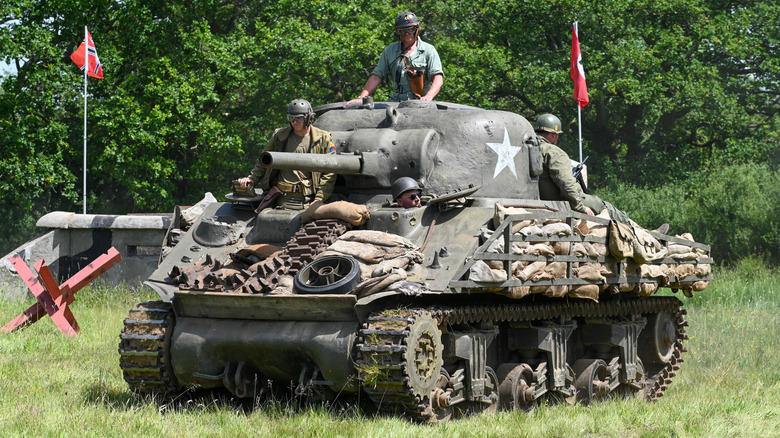
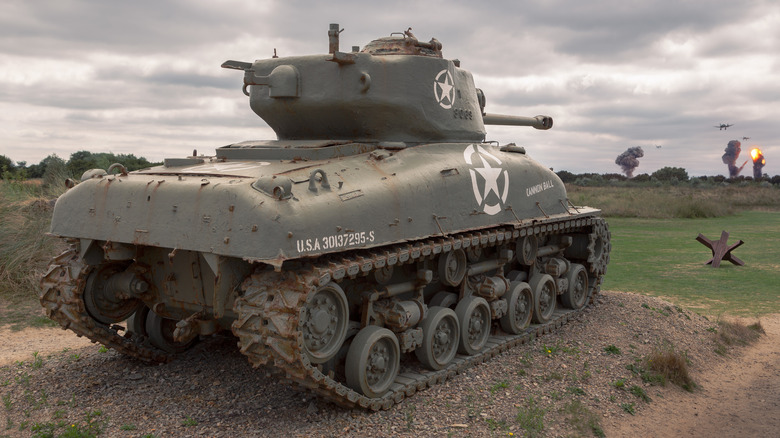
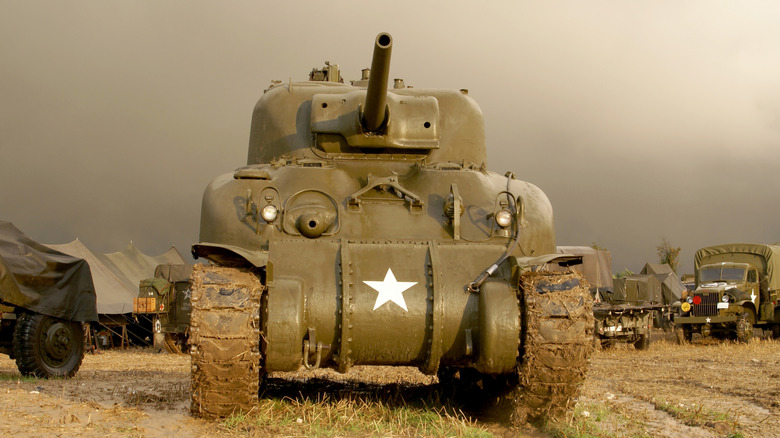
A 100-year-old World War II veteran was recently reunited with the tank he drove during the Battle of Iwo Jima. The tank was an M4 Sherman, and the veteran was Marine Corporal Leighton Willhite. The M4 Sherman was America’s most common tank during that war, with about 50,000 produced before the war’s end. It dominated the battlefield long after WWII.

The detective work behind the reunion of the soldier and the tank was performed by Jonathan Bernstein, Arms and Armor Curator at the National Museum of the Marine Corps. Bernstein did extensive research at the National Archives into the unique aspects of the tanks of the 5th Tank Battalion that served on Iwo Jima. It turns out that this specific tank, named “Lucky,” had countermeasures designed to minimize the effects of Japanese magnetic anti-tank mines. This included nails welded point-up onto its upper surfaces to prevent the mines from being placed flush against its upper body, where they would cause major armor damage. While the nails were gone, the weld scarring remained from where they’d been attached. Photographs shot during the battle confirmed that “Lucky” was present there on March 1, 1945. According to Bernstein, it is very rare to be able to put a specific crew together with the tank they operated, but it definitely happened here.

Corporal Willhite, who was 18 at the time, also demonstrated immense bravery when he and his commander left the tank to rescue another tank crew who became trapped. Willhite received the Bronze Star with Valor.

What role did Sherman tanks play in the Battle of Iwo Jima?

The M4 Sherman tanks, as exemplified by “Lucky,” played a key role in the Battle of Iwo Jima, where their biggest strengths and weaknesses were displayed. The volcanic sand terrain was difficult for the tanks to negotiate, causing many transmission failures for the Shermans. It’s also where three U.S. Marine divisions went up against a heavily fortified Japanese force that had no qualms about sacrificing itself to slow the Marines’ advance. 

A favorite Japanese tactic was to attack the Marines’ tanks with satchel charges strapped to their backs, detonating their charges after sliding underneath the tanks, where the armor was not as strong. Magnetic mines that stuck to the tanks’ bodies were also used by the Japanese. This led to a variety of “adaptations” made to the Sherman tanks. 

These included the welded-on nails, plus wooden planks along the sides of the tanks that protected the tanks’ suspensions and reduced the effects of shaped charges. In addition, there were other adaptations, including spraying sand onto freshly painted areas of the tank to prevent Japanese magnetic mines from adhering to it. Sections of the tanks’ tread, known as track blocks, were also spot-welded onto vulnerable parts of the tanks, such as the front and the turret, where they offered additional protection and could be accessed if spare parts were needed. According to a report from the 5th Tank Battalion on the subject of Iwo Jima, “The all-around performance of the M4A3 tank was exceptionally good.” During the five-week battle that ended in victory, 7,000 Marines died, and 20,000 were injured.

What happened to Lucky between Iwo Jima and its recovery at Camp Lejeune in 2002?

Following the victory at the Battle of Iwo Jima, “Lucky” went back to Hawaii, where it was refitted for its next planned role, showing how tanks shaped the course of WWII. Along with 71 other tanks, “Lucky” was converted into a flame-thrower tank, which replaced around 60% of its ammunition storage capacity with tanks capable of holding 300 gallons of napalm. The event that these 72 tanks were being prepared for was the invasion of Japan, which ended up not happening, thanks to the atomic bombs “Little Boy” and “Fat Man” being dropped on Hiroshima and Nagasaki, Japan, in August of 1945. This, combined with the concurrent Soviet invasion of Manchuria, led to Japan’s formal surrender in September of that year. 

Later, “Lucky” was used as a training tank for an indeterminate period, after which it was sent to Camp Lejeune, the Marine base in North Carolina. It was left in a wooded area of the base until it was discovered by some Marines in 2002, who sent it to the National Museum of the Marine Corps. And the rest is history.

The story of “Lucky” and Corporal Willhite is just one small piece of the vast World War II panorama of events that stretched across the entire world by the time it ended. It exemplifies how millions of American and other Allied soldiers were engaged in bloody battles across many different locations, fighting for a cause they truly believed in. There’s a reason that this cohort is known as “The Greatest Generation.”


Source link