Sony Will Pay Out $7.85M in PlayStation Store Credit as Part of Game Voucher Settlement


You may be eligible to claim part of an upcoming $7.85 million settlement payout if you’re a PlayStation customer who lives in the US. The case centered on an allegation that Sony “unlawfully eliminated competition and monopolized the market for [its] digital games” by no longer selling game-specific vouchers that let PlayStation owners buy digital games from different online shops.

The class-action lawsuit Caccuri v. Sony Interactive Entertainment alleged that Sony’s actions caused “consumers to pay more for certain digital games than they otherwise would have paid on the PlayStation Store.” It alleges that this action is a violation of antitrust laws, as it forces PlayStation customers to buy from a single storefront at an inflated price.

Put simply, the lawsuit alleges that Sony limited the sale of digital games on other marketplaces, funneling customers into its own PlayStation Store. Some of these games include PlayStation exclusive titles, such as The Last of Us, as well as third-party games like Mass Effect Trilogy and Resident Evil 4.

The lawsuit was initially settled in 2024, but the settlement was rejected twice during the approval process — most recently in July 2025 (PDF), when the presiding judge said the proposed plan “[did] not provide an estimated recovery or a range of potential recovery for class members.” The approval process was reinitiated in April.

Sony denied that it engaged in any wrongdoing or that settlement class members were damaged by its actions, and the court has not decided if the company violated any laws. Despite this, the court has preliminarily approved the $7.85 million settlement payment, subject to the court’s final approval hearing.

The settlement website is live now. The hearing is scheduled to take place on Oct. 15, and it’s meant to confirm the settlement sum, allocate up to 25% of the funds for attorneys’ fees and create a plan to distribute the rest of the money to eligible class members.

If you fit all of the criteria to be part of the Sony PlayStation game-voucher settlement, you’re automatically a class member in this lawsuit and will be able to collect a portion of the settlement money — added directly to your PlayStation Network account wallet — sometime after the final approval hearing.

Gamers who have deactivated their PlayStation Network accounts can apply for the settlement payment by sending qualifying purchase information to the email address info@PSNDigitalGamesSettlement.com. Customers with deactivated accounts will receive cash payments instead of PSN account accreditation.

You can opt out of the settlement if you’d like to retain your right to sue Sony separately in regard to its game-voucher sales practices. If you don’t send a written request to the court opting out of or objecting to the settlement by July 2, you will remain part of the settlement class.

Who can be part of the Sony PlayStation settlement?

Not every PlayStation owner is automatically eligible. The money is reserved for those who purchased a digital game through the PlayStation Store during a period after Sony ceased its sales of game-specific vouchers for alternative online storefronts.

In order to join, you must meet the following qualifications:

  1. Be a living individual human being in the US or its territories.
  2. Have purchased one of the eligible digital games (PDF) through the PlayStation Store between the period of April 1, 2019 and Dec. 31, 2023.

Affected individuals are automatically part of the settlement class and will receive their compensation through their PlayStation Network account wallet, subject to approval at the final hearing, the date and time of which could change. Any updates will be posted to the settlement website.

How much will the Sony PlayStation settlement pay?

It’s unclear how much each settlement class member will receive, though we know affected parties will automatically receive compensation in the form of PlayStation account funds.

Up to a quarter of the $7.85 million settlement will be used to pay attorneys’ fees, taxes and other administrative costs. The remaining settlement money will be administered equally to every settlement class member. Settlement class members will likely see a couple of dollars added to their PlayStation accounts once the funds are fully allocated.


Source link

Leave a Reply

Subscribe to Our Newsletter

Get our latest articles delivered straight to your inbox. No spam, we promise.

Recent Reviews


There are certain engine configurations that are known even to those whose interest in engines is minimal. For instance, most people will know what makes a V-engine a V-engine, and even the differences between an in-line and flat engine

One engine design trait that’s perhaps less well-known is also related to the engine block, but not to with how the cylinders are arranged in the engine, rather with how they’re supported and cooled. When looking at this aspect of engine design, there are really three main types of engine block to look at. At the extremes are closed-deck and open-deck engine blocks, with some modern engines taking a halfway house approach with a semi-closed design. 

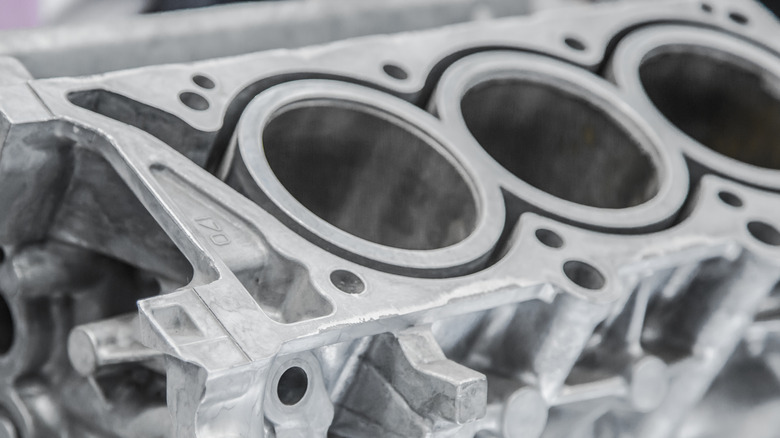
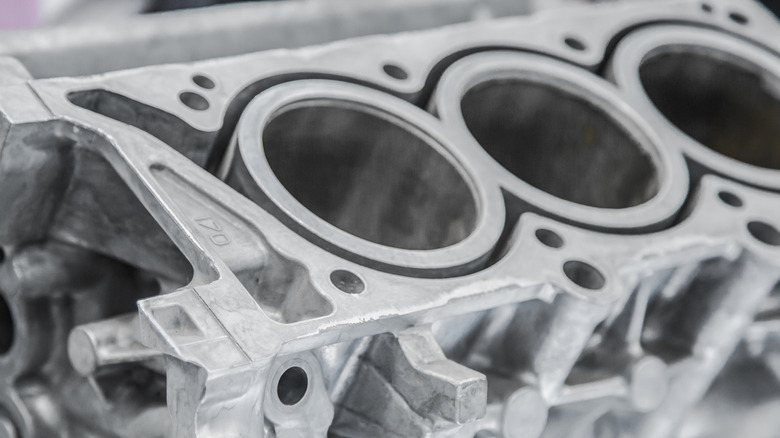
Let’s start by defining what an engine deck is. Essentially, the engine deck is that part of the block that the head gasket sits on, and the engine head attaches to. This means that an inline engine with a single line of cylinders will have one deck, whereas a V-configuration with two banks of cylinders will have two decks. 

Now that we understand that, we can begin to discuss the differences between closed-deck and open-deck engine blocks. In an open-deck engine, there is open space around the top of the cylinders that allows the coolant to circulate more freely. In a closed-deck design, in case you haven’t guessed it by now, the deck features extra material that offers less in the way of cooling, but it does support the cylinders more rigidly. Let’s pop the cylinder head off and have a closer look at these engine block types and why they matter more than you may think. 

Open-deck engines are cool, but flawed

For engine makers, there are definite advantages to open-deck designs — they cost less to manufacture when compared to closed-deck engines, and keep the engine cooler by exposing more of the surface area of the cylinder to the cooling liquid. 

However, all this open space around the cylinders is all very well and good when looking at cooling and manufacturing complexity — but cracks start to appear (sometimes literally) when we look at other aspects of closed-deck engine blocks. While it’s unfair to call open-deck engines unreliable and leave it at that, there are trade-offs in the design, and these become more noticeable in high-performance situations.

Essentially, the lack of material at the top of the engine deck means the engine is less structurally rigid right at the point where it meets some of the most extreme forces engines have to cope with — the combustion point at the top of the cylinder.

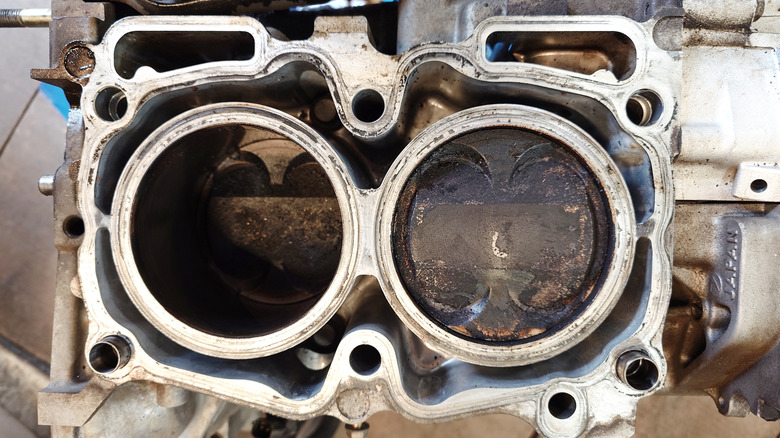
If you removed the head from an open-deck design and look down at the deck, this structural weakness is visible. From this viewpoint, the cylinders look separate from the rest of the engine block, with the gap between the two being used for coolant, as some open-deck designs have limited support at either end of the cylinder bank. While this gives more space for coolant to move freely, the downside is that it also does the same for the cylinder. Over time, even the limited movements of cylinders can weaken the head gasket and bring all the associated troubles that follow such a failure. 

Why some engines use closed- and semi-closed deck designs

Open-deck engine blocks are optimized for cooling and manufacturing efficiency. However, incorporate such a configuration in a high-revving, turbocharged brute of an engine and, well, it could end very badly. This is why such engines will usually use a closed-deck configuration. 

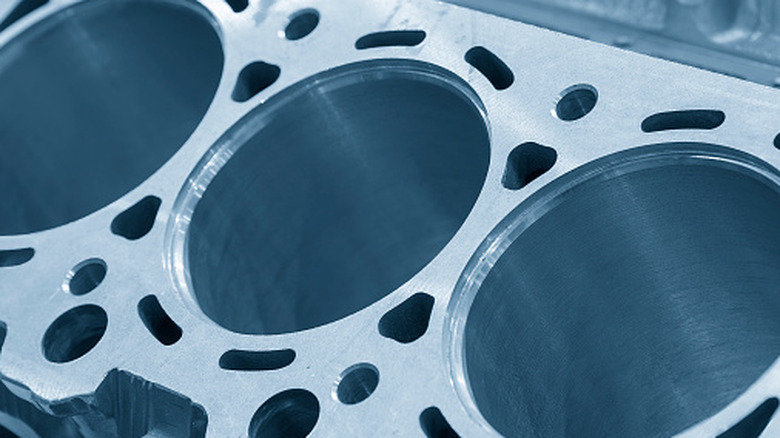
In a closed-deck engine, the open spaces around the cylinders of an open deck are filled with additional material. Obviously, the removal of such space and the flexibility it gives to the cylinders substantially strengthens the engine block. This is why some people fill engine blocks with concrete — it removes the flexibility afforded by the presence of cooling chambers. This is especially important for high-performance engines, but to call it overkill for the family runabout is not overstating the case. 

However, and the more observant among you will be there by now, filling an engine’s cooling cavities with material may add strength — but at the expense of cooling efficiency. This is why many modern turbocharged engines or higher-performance engines use a halfway house design in the form of semi-closed decks. 

Semi-closed decks are a compromise design that offers more rigidity to the cylinders by adding more support points. These supports are usually at the top of the cylinder. For instance, while there are pros and cons to Subaru’s EJ20 engine, the company released a version with a semi-closed deck with four additional support points, which should make it less prone to bore distortion. Ultimately, open-deck and closed-deck engine blocks represent design decisions based on the demands the engine is expected to handle. 


Source link