
SpaceX wants to launch 100,000 more Starlink satellites – for 100x the bandwidth


starlink rocket with satellite

Joe Raedle/Getty Images

Follow ZDNET: Add us as a preferred source on Google.


ZDNET’s key takeaways

  • Starlink’s 100,000 satellites will dwarf existing constellations.
  • When deployed, SpaceX promises the network will deliver gigabit speeds.
  • When it comes to satellite internet, Starlink has no real competition.

Do you like Starlink internet? If so, you’ll love that its parent company, SpaceX, has applied to the Federal Communications Commission (FCC) for permission to launch 100,000 third-generation (Gen3) Starlink satellites. The upshot for users? SpaceX promises to deliver “ultra-low-latency” multi-gigabit symmetrical broadband.

Now, I’ll believe that when I see it. Today’s advertised peak is “up to” around 300 to 400+ Mbps down, but typical real-world speeds are much lower. Over at ZDNET’s sister publication, PCMag, reviewer Brian Westover found that even on Starlink’s top home plan, the Residential Max plan, mean download speeds plateaued in the 145 megabits per second (Mbps) to 170 Mbps range, with upload speeds of just under 40 Mbps.

Also: I built my own Wi-Fi router with a Raspberry Pi for Starlink and solar control – here’s how

That’s plodding compared to my home AT&T Internet fiber, which, day in and day out, delivers 2.1 gigabits per second (Gbps) download and upload speeds. I never would have dreamed of such speeds when I was still using a 300-baud modem. But these days, almost no one uses modems, and if you’re not living in a broadband-rich area, you may not have access to fiber internet. For people like Westover, who lives in rural Idaho, Starlink isn’t just great; it’s a necessity.

SpaceX’s Gen3 filing

In its FCC application, SpaceX seeks authority to deploy a Gen3 Starlink system in very low Earth orbit (LEO). The filing positions Gen3 as a successor and expansion beyond the existing Gen1 and Gen2 constellations. Today, there are nearly 11,000 Starlink satellites in orbit. If approved, Starlink will launch and operate 100,000 satellites.

These Gen3 satellites will weigh more than 2,000 kilograms, or over two tons. That means SpaceX won’t be able to launch a meaningful number of satellites at once using its workhorse Falcon 9 rockets. Instead, CEO Elon Musk has said SpaceX will need to use Starship, which still isn’t ready for prime time. In the meantime, Falcon Heavy rockets would be able to launch sufficient Gen3 satellites to deliver the service.

SpaceX has told the FCC that the Gen3 network is intended to serve not only consumers and enterprises but also government customers and “billions of AI-powered devices worldwide,” tying the constellation directly to projected compute and data-transport demands from large-scale AI systems. This is no AI data center in space, but it’s a step in that direction.

Massive spectrum request

The application seeks access to an unusually broad span of spectrum, including Ku-, Ka-, V-, E-, W-, and D-band frequencies. Downlink bands cited in the filing include 10.7 to 13.4 GHz, 17.3 to 21.2 GHz, and 37.5 to 42.5 GHz, while uplink bands span multiple ranges up to approximately 231.5 to 275 GHz. SpaceX requests waivers of FCC rules, such as Section 2.106, to assemble larger contiguous channels for high-capacity fronthaul, backhaul, and massive uplink.

Also: This 3-in-1 adapter for the Starlink Mini made all the difference for its power delivery

All this means Gen3 could interfere with rival satellite internet services and other wireless services. SpaceX promises to operate on a noninterference, nonprotected basis and to engage in “good-faith coordination” with incumbents and federal users.

For you, that means you’ll need to upgrade your existing Starlink user terminals and antennas to make the most of the new satellite constellation’s gigabit speeds. This upgraded end-user hardware is expected to be available shortly.

According to the filing, SpaceX claims the hardware and spectrum plan can deliver on the order of a 100-fold increase in total Starlink bandwidth. Starlink’s current real-world latency is roughly 30 to 50 ms for most users. Gen3, SpaceX promises, will drop that to below 20 ms.

Starlink rivals

Starlink’s highest residential rate is now $130 a month. While SpaceX hasn’t announced rates for its new Gen3 service, I expect it to be at least $200 a month, and I won’t be surprised if it ends up being $300 a month.

Also: How I turned my Starlink Mini into the ultimate off-grid internet device

Starlink’s main satellite broadband rivals are Amazon Leo, Eutelsat-OneWeb, and forthcoming systems such as Telesat Lightspeed and Blue Origin’s TeraWave. Moreover, legacy geosynchronous Earth orbit (GEO) players Hughesnet and Viasat are still in business.

However, when I say rivals, I’m being kind. Amazon Leo is only now getting ready to deliver the internet to customers, while Eutelsat-OneWeb is really a business-first network and not for Joe User. Meanwhile, GEO players are starting to go out of business. They simply can’t deliver the speed today’s demanding customers need. Nothing spells that out more than Hughesnet’s recent deal with SpaceX to refer its customers to Starlink.

Next steps at the FCC

The application will move through the FCC’s Space Bureau process, including a public notice and comment period during which rivals and interest groups can file petitions to deny, seek conditions, or propose modifications to SpaceX’s plans. Approval is not guaranteed, and any eventual grant could include strict conditions around debris mitigation, spectrum coordination, and interference protections, especially given the nonconforming high-frequency bands SpaceX wants to use for Gen3.

Additionally, astromers are strenuously objecting to Starlink’s plans. A recent European Southern Observatory study argues that large constellations, specifically Starlink, would have “devastating effects on astronomy.”

Also: This tiny satellite device replaced my smartwatch while adventuring off-grid

Still, if the FCC signs off on even a substantial fraction of the 100,000-satellite request, Gen3 Starlink would redefine the scale of satellite broadband. It would also certainly ensure that, going forward, Starlink will be almost everyone’s first choice for satellite internet.




Source link

Leave a Reply

Subscribe to Our Newsletter

Get our latest articles delivered straight to your inbox. No spam, we promise.

Recent Reviews


How to get Siri AI - join the waitlist today

Apple / Elyse Betters Picaro / ZDNET

Follow ZDNET: Add us as a preferred source on Google.


ZDNET’s key takeaways

  • Siri AI requires the iOS 27 developer beta and a waitlist.
  • A free Apple Developer account is enough to install the beta.
  • Apple says Siri AI will launch in beta later this year.

Apple finally gave Siri the major update everyone has wanted for years, moving it from the voice assistant era to the intelligent AI era.

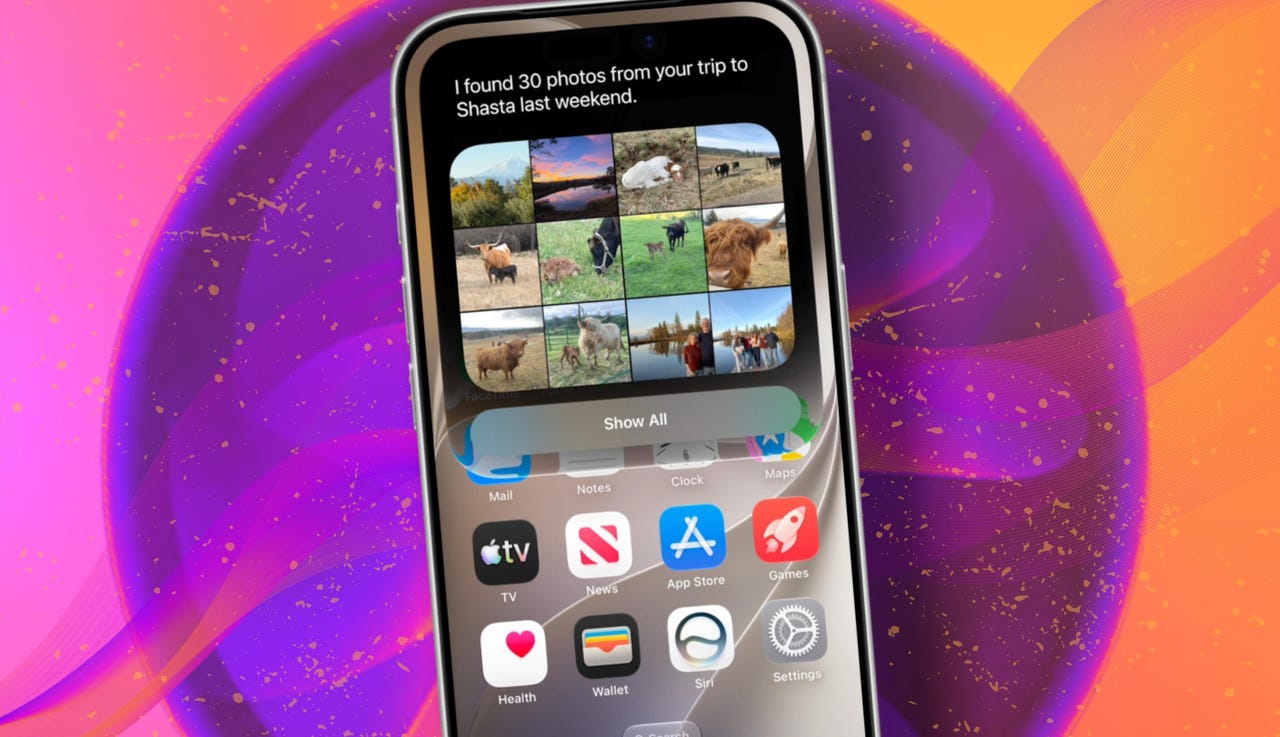
At WWDC 2026 in June, the company introduced Siri AI, a new version of Siri “powered by Apple Intelligence.” Apple said Siri AI is more conversational, understands personal context, can answer broader questions, and can take action across apps. It can also use my information from messages, emails, photos, notes, and the screen itself to get more done on my behalf.

Also: The two biggest iOS 27 features at WWDC for me had nothing to do with Siri AI

The catch? (There’s always one, right?) The iOS 27 developer beta needs to be installed first, and even then, there is a waitlist.

How to get Siri AI

What you’ll need: An iPhone 15 Pro or Pro Max, any iPhone 16 model, or any iPhone 17 model running the iOS 27 developer beta.

Install the iOS 27 developer beta on a secondary device, but be sure to back it up first. Remember, developer betas are unfinished software. Apps can crash or glitch, battery life can drain, and features can disappear.

The good news is Apple no longer requires a $99-a-year Apple Developer Program membership just to get access to beta software. A free Apple Developer account is enough. To join, if you haven’t before, simply go to Apple’s Developer website or use the Apple Developer app, sign in, and agree to the developer terms.

Also: 3 new MacOS 27 features make it worth upgrading right away for me – Siri included

Once that’s done, any new developer beta will automatically appear for the iPhone associated with that Apple Account. To check for iOS 27 and install it now, open Settings > General > Software Update > Beta Updates. From there, select iOS 27 Developer Beta, go back to the Software Update screen, and install the update.

Need help? Check out ZDNET’s guide on installing the iOS 27 developer beta.


Show more

Install the iOS 27 developer beta

Elyse Betters Picaro / ZDNET

After the iOS 27 developer beta is installed, the iPhone will reboot, but Siri AI will not automatically be available to try. Apple is using a waitlist. To join it, open the Settings app, go to Apple Intelligence and Siri, and select “Try New Siri.” Follow the prompts to opt in. Once a spot opens, a notification will appear saying New Siri is available.

Also: Getting real about WWDC and Siri AI – Video

Apple has not confirmed how long the wait will take, but it has said Siri AI will be available in beta “later this year.”


Show more

Join the Siri AI waitlist

Elyse Betters Picaro / ZDNET

Should you wait to try Siri AI?

Maybe. The iOS 27 developer beta is the only route to Siri AI right now. But it’s meant for developers testing apps and APIs, not for most people who need a stable daily phone. Only install it on an iPhone that’s not used every day, or wait for the iOS 27 public beta. That’s expected in July and is easy for anyone to try. An official release for the general public isn’t expected until this fall.

Also: How Data Can Improve Your Health and Wellness

As for me? I joined. I have a spare iPhone running the iOS 27 developer beta right now, and the first thing I did was get on the waitlist to try Siri AI. But that’s because I’m usually excited to try AI tools, and I want to play with the new Siri and be able to write about it. 

Should you join Siri Ai waitlist?

Elyse Betters Picaro / ZDNET

What can Siri AI do?

Apple said the new Siri AI is “a dramatically more capable and conversational assistant” that can help you “find information and get things done throughout the day.” That’s nice, but what, specifically, can it do? According to Apple, the new Siri AI can:

Also: Will your iPhone support Siri AI? The answer is complicated

  • Access “broad world knowledge for up-to-date answers” on any topic.
  • Provide “detailed responses” and “natural back-and-forth conversation.”
  • Use “personal context” in messages, emails, and photos to help find what you need.
  • Find details like restaurant tips, hotel confirmations, and trip photos.
  • Understand what’s on screen and answer questions about it.
  • Use “Visual Intelligence” in Camera and screenshots.
  • Take actions across apps, including drafting emails and editing or sharing photos.
  • Let you ask about images, files, and text from context menus.
  • Generate, rewrite, and proofread text systemwide.
  • Match punctuation and tone in Mail and Messages based on how you usually write.
  • Save “conversation history” in a dedicated Siri app.
  • Offer more expressive voices and better dictation.
  • Help split bills with Apple Cash.
  • Run across iPhone, iPad, Mac, Apple Watch, CarPlay, AirPods, and Vision Pro.
  • Work from Spotlight on iPad and Mac.

When will Siri AI be available?

Apple said it will be available in beta “later this year,” starting in English.

Which iPhone models support Siri AI?

The answer is complicated, but here’s my best guess:

  • iPhone 15 Pro and iPhone 15 Pro Max
  • All iPhone 16 models
  • Any later iPhone models

Apple hasn’t provided a supported device list, but its iOS 27 page shows Siri AI requires “an Apple Intelligence-enabled device.” Apple’s support page for Apple Intelligence also lists “iPhone 15 Pro models, and iPhone 16 models or later.” Apple’s iOS page uses similar wording for Apple Intelligence in iOS 27, as well: “all iPhone 16 models and later, iPhone 15 Pro, iPhone 15 Pro Max.”

There are also regional limits. Apple said Siri AI will “not initially” be available in the EU on iPhone and iPad.


Show more


Source link
