The Type Of Data Collected (And Why It’s A Problem)


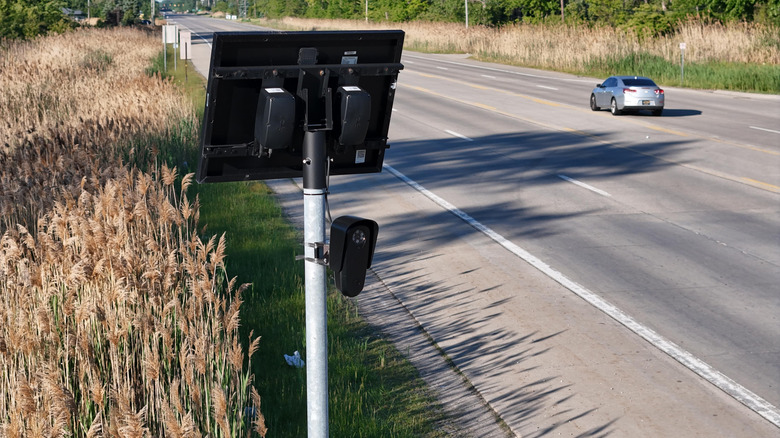
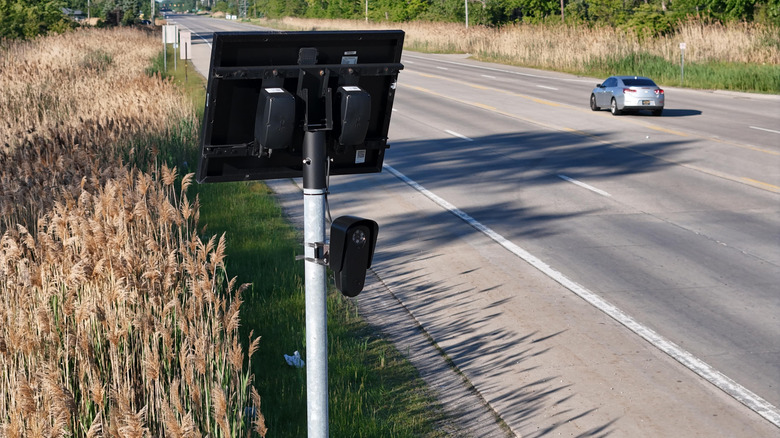
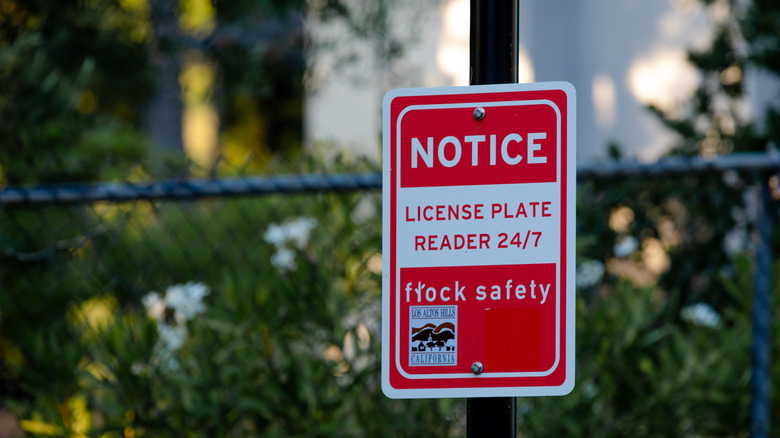
Once you learn how to spot a Flock Safety camera, you start seeing them everywhere. There are over 80,000 such AI-powered automated license plate recognition (ALPR) devices across the US today, collectively scanning tens of billions of plates every month. Beyond your license plate numbers, Flock Safety cameras also capture your vehicle’s make and model, color, and any visible distinguishing features, such as trailers, toolboxes, bumper stickers, or bike racks.

Police departments, neighborhood HOAs, businesses, and private property owners can all subscribe annually to lease Flock cameras and software. And while Flock insists the system is merely a vehicle-identification tool, that doesn’t make it any easier to stomach their existence. It’s hard not to feel unsettled by them… and that’s before you get into any one of the many controversies surrounding these devices.

These aren’t like CCTV cameras. They aren’t the same as traffic light cameras, either. According to Flock, the cameras can only document what’s already visible from public roads. They don’t collect any facial recognition data or other biometric info from you. Instead, Flock says its cameras are simply meant to help generate investigative leads, without using any personal information beyond a person’s “vehicle fingerprint.” The company also says any collected data is automatically deleted after 30 days (unless local laws require a different retention period). Still, no matter what Flock says in its PR-speak, there’s no denying the ways this data can be (and has already been) abused.

Flock Safety data is being misused, and Flock’s not doing enough to stop it
The biggest problem lies in Flock’s nationwide database. This massive trove of “vehicle fingerprints” allows law enforcement agencies to search vehicle records collected nationwide. Thanks to Flock, those with access can effectively create a detailed record of where people travel and when. And by expanding access beyond law enforcement to private-sector organizations, Flock cameras create new opportunities for watch lists, blacklists, and broader forms of monitoring outside the law.

Traffic violations are one thing. But in recent years, this Flock camera information has also been used to assist in immigration enforcement, track abortion-related cases, and even stalk innocent civilians. Nevertheless, Flock takes something of a hands-off approach to its data (and its misuse). Per Flock’s site, “the customer owns the data, decides whether to share it, and can manage access based on its own policies and needs.” All things considered, it feels like they’re playing dumb about what’s really going on.

At this point, it hardly matters whether the cameras collect facial recognition data. Vehicle information can clearly be just as invasive. Through it all, Flock continually tries to argue its data isn’t what it obviously is: de facto mass surveillance. Flock is both denying culpability and doing next to nothing to stop the data from being misused. That should concern every American, not just those behind the wheel.


Source link

Leave a Reply

Subscribe to Our Newsletter

Get our latest articles delivered straight to your inbox. No spam, we promise.

Recent Reviews


Google’s latest Android update takes aim at the growing problem of imposter scam calls. It also expands Circle to Search functions and AirDrop compatibility to more Android devices, and introduces safety features for kids. The new capabilities are starting to roll out now.

The update comes on the heels of a larger Android 17 update that Google unveiled last month, which bakes AI even deeper into the operating system. Called Gemini Intelligence, it’s designed to turn AI agents into true assistants that proactively lend a hand without needing to be asked.

This month’s Android updates are a bit less flashy but arguably more practical — especially as scam calls become more sophisticated. Here’s what’s in store.

Fake call detection

Android’s fake call detection feature, which is baked into the Phone app, will alert you if it appears someone is impersonating one of your contacts. For instance, if you get a call from “Mom” and the system flags it as a scam, you’ll see an alert reading, “This may not be Mom. Someone may be pretending to call from your contact’s number.” This can be an especially handy feature as AI makes it easier to replicate the voices of friends and family members, leading to more sophisticated — and detrimental — scams. 

Fake call detection works by conducting a real-time check of both phones to gauge whether the caller is who they say they are. When your actual mom is calling, for instance, her verified device will send an end-to-end encrypted private confirmation signal over RCS. But when the scammer impersonating your mom calls — likely using an internet spoofing dialer and an AI voice cloner — their device won’t have that confirmation signal. Your phone will then check with your mom’s phone to confirm she didn’t place the call. You’ll get the alert and a prompt to hang up. 

The feature is rolling out globally this month in Phone by Google on devices with Android 12 and higher, starting with Pixel devices. Both the contact and the person receiving the call need to be using Google’s Phone app. Fake call detection also requires RCS capability in Google Messages.

Watch this: Android’s Biggest AI Update: Everything to Know About Gemini Intelligence

Book Insights in Google Play Books

Another new feature called Book Insights helps you refresh your memory or dig up information about what you’re reading on Google Play Books. You can tap “Catch me up” to get a recap of where you left off (similar to the Story So Far feature on Amazon’s newer Kindle models). You can also highlight a passage to ask questions or dig deeper into specific themes or characters. Book Insights is rolling out in the Google Play Books app and is available on certain titles in English. 

AirDrop across more Android devices

Perhaps one of the most anticipated features to arrive in recent months is support for Apple’s AirDrop in Quick Share. Finally, it’s easy to seamlessly share photos, videos and other media across iPhones and Android phones with a few taps

AirDrop compatibility is already available on certain phones including the Google Pixel 9 and 10, and the Samsung Galaxy S26 series. Now, it’ll work on more Android devices, including the Galaxy Z Fold 7, Z Flip 7, Z TriFold, S24 series, Z Fold 6 and Z Flip 6. It’ll also be supported on the OnePlus 15, Xiaomi 17T Pro, Honor Magic V6 and Vivo X300 and X300 Pro.

See also: How to Use Apple’s AirDrop on Samsung Galaxy S26 Phones

Circle to Search’s outfit feature expands

Google’s Circle to Search feature quickly pulls up details about what’s on your device’s screen. It got a fashion-forward boost earlier this year with the addition of Find the Look, which, as the name suggests, helps you find an entire outfit from a photo or screenshot. You can also see how that outfit might look on you using an AI-powered virtual try-on feature. Find the Look is now available on all devices that support Android 14 and up with Circle to Search.

Sift through your own wardrobe in Google Photos

Another outfit-oriented feature lets you mix and match pieces you own and try them on virtually. Called Google Photos Wardrobe, it’ll catalog what you’re wearing throughout your photo library and turn those outfits into images you can sift through to piece together your next look. This is rolling out next week to certain users in the US, India and Brazil with Android 10 and up.

Kids can tap into Personal Safety app features

New safety features are arriving soon for kids under 13. They’ll be able to access features in the Personal Safety app such as displaying medical information and featuring emergency contacts on their lock screen. They can also turn on car crash detection, which automatically contacts emergency services and texts emergency contacts if there’s an accident. The Personal Safety app is available globally.  

Cook up some fun emoji combos

And lastly, you’ll be able to combine emoji to better match what you’re feeling. Emoji Kitchen in Gboard includes new sticker combinations, like a mouse with a pink heart, that you can send to your friends for a more creative and whimsical touch. 


Source link