


Seoul does not ease you in. It is a city of vertical distances, constant motion, and neighborhoods that feel like separate worlds — ancient palaces one block, glass towers the next, traditional markets tucked between both. For families, that intensity is both the appeal and the challenge. The moments that stay with you are rarely the famous landmarks. They are the ones that happen when you are not exhausted from getting there.
A Seoul family trip works best when the logistics stop competing with the experience. The city rewards curiosity, but it asks something in return: enough energy left at midday to follow an unexpected alley, to linger at a market stall, to let a six-year-old dictate the next hour.
This guide is built around that idea — how families actually move through Seoul, and what makes the difference between a trip that wears you down and one that opens the city up.
Traveling to Seoul With Your Family? Here’s a Convenient Option For You
Seoul rewards travelers who move at their own pace. This private 9-hour tour gives your family exactly that: a professional driver, a fully flexible itinerary, and hotel pickup included, so the day starts without stress.
➔ Visit the destinations that matter to your group — Gyeongbokgung Palace, Bukchon Hanok Village, Namsan Seoul Tower, the DMZ, Nami Island, or a combination you choose
➔ Fully customizable itinerary, adjusted in real-time based on your group’s energy and interests
➔ Private vehicle throughout — no shared coaches, no waiting for other travelers
➔ Hotel pickup is included for a seamless start
➔ Shore excursions available, with guaranteed return to your ship on time
➔ Ideal for families, multi-generational groups, and travelers with specific accessibility or dietary needs
The Moment Everything Shifts
I remember watching a multi-generational family — grandparents, parents, and a six-year-old — step out of Incheon Airport into a waiting van. Their faces carried that familiar mix of jet lag and polite apprehension. As they settled in, their shoulders dropped for the first time since landing.
The real turning point came three hours later. Instead of joining the lunch crowds at a tourist restaurant, our guide suggested a hanok teahouse in Bukchon that accommodated both the grandfather’s dietary needs and the child’s restless energy. The parents exchanged a look of relief. That is the kind of local knowledge that changes the texture of a trip.
This connects to jeong (情) — the Korean concept of deep, warm connection. Good local guides treat guests less like clients than like friends visiting their hometown for the first time.
Related read: Why You Should Travel to South Korea During Cherry Blossom Season
Seoul’s Physical Reality
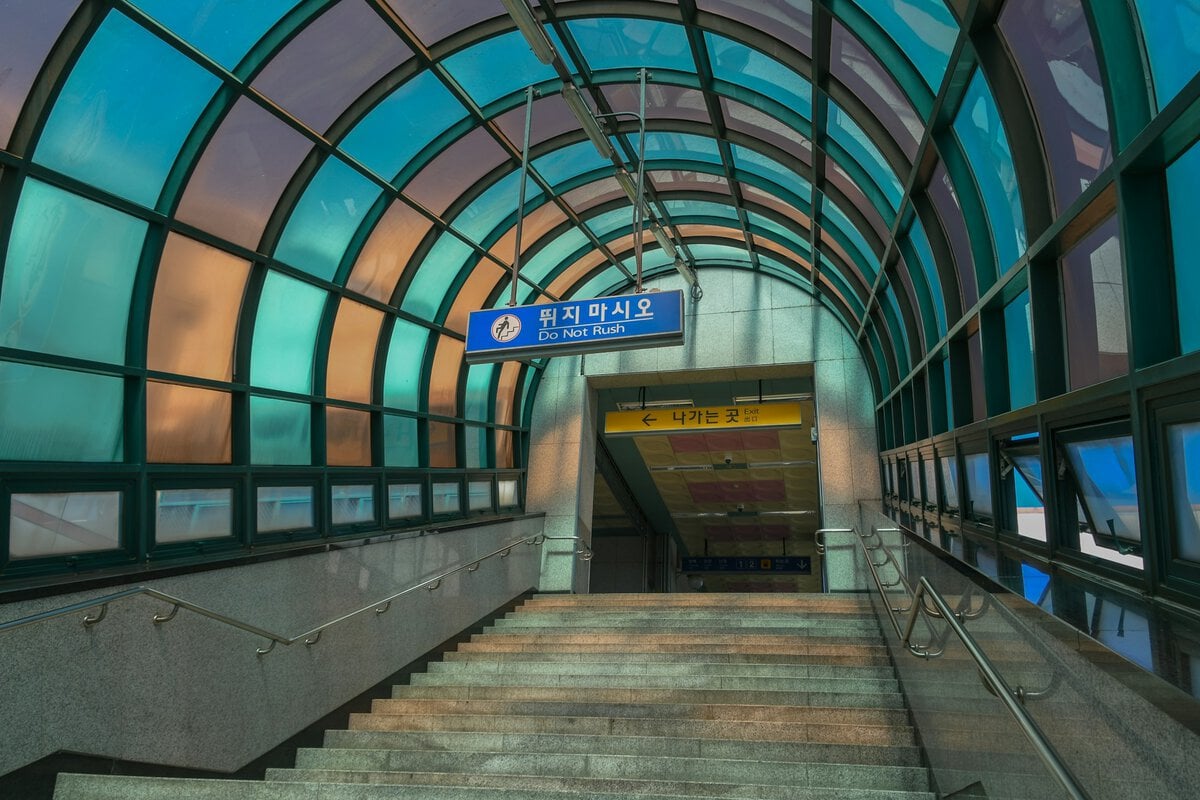
Travel blogs love claiming Seoul is “easily walkable” and “cheap to explore by subway.” This advice ignores Seoul’s brutal reality: endless subway stairs, massive transfer distances underground, steep hills threading through historic neighborhoods, and crowds that can overwhelm by midday.
What most travelers don’t realize is that Seoul’s subway system, while excellent, demands serious physical stamina. Gyeongbokgung Palace alone covers 15 hectares with significant walking. Add the slopes of Bukchon Hanok Village, the sprawling layout of traditional markets, and the distances between districts, and you’re looking at miles of walking—often uphill.
Private transport — whether a hired driver, a rental car, or a guided vehicle — removes a layer of fatigue that can otherwise define the middle of the day.
Reading the City’s Rhythm
Every Seoul day unfolds differently. Skilled guides practice nunchi (눈치) — reading a room, or in this case a group, without being told what is needed. When a child gets restless during a palace visit, the response is a pivot to an interactive craft workshop. When older travelers need a quiet interval, certain temple gardens offer that without detouring far.
This kind of flexibility also applies to the city’s live rhythm. An unannounced street festival in Hongdae, perfect sunset timing at Banpo Bridge, a market vendor offering fresh samples of Korean street pancakes — these are the moments that reward groups who are not locked into a rigid schedule.
Where Seoul Reveals Itself
The contrasts in Seoul are sharp and they are the point. Stepping from a quiet side street into the warm, savory noise of Gwangjang Market. Moving from modern Gangnam’s glass towers directly into the 600-year-old courtyards of Changdeokgung Palace, where pine-scented air carries a different sense of time.
You can only appreciate those contrasts when you are not worn out from getting there. The discoveries that tend to stick — a family-run restaurant where three generations cook together, a rooftop garden overlooking the Han River, an artisan workshop in Insadong that is not on the standard circuit — are not far from the main attractions. They just require a guide who knows which corner to turn.
The Seoul Nobody Photographs
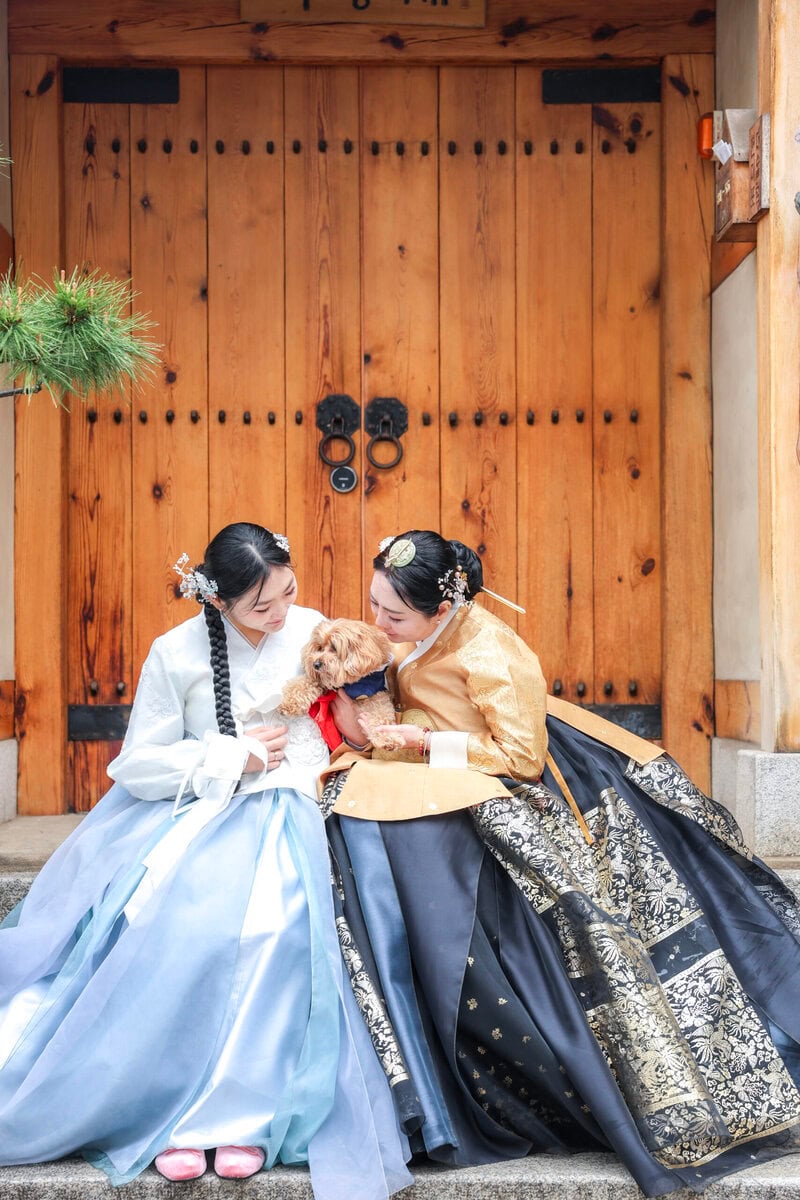
Beyond the well-documented spots, Seoul has a quieter register. Neighborhood markets where vendors have worked the same stalls for decades. Bukchon’s less-visited alleys, away from tour group traffic, where you can hear wooden doors sliding and neighbors talking on hanok stoops. Temple gardens that welcome children and explain etiquette without condescension.
A guide who speaks Korean fluently and has actual relationships with market vendors and local restaurateurs changes what is accessible. Not just linguistically — socially. You move from observing Korean life to briefly joining it.
The Energy of True Freedom
Seoul demands flexibility, and our completely custom approach gives you something rare in travel—the freedom to follow your curiosity without consequence. Feel drawn to that traditional music performance? We adjust the schedule. Want to spend an extra hour in that fascinating museum? No problem. Craving street food but worried about language barriers? Your guide handles everything.
This freedom extends to practical necessities. Need a bathroom break? We know the cleanest facilities. Require specific dietary accommodations? We have backup restaurants ready. Forgot something essential? We know where to find it quickly. Travel anxiety dissolves when every logistical detail flows seamlessly.
Our guests often describe this feeling as “floating through Seoul”—experiencing the city’s energy without fighting its complexity. You move from ancient to modern, traditional to contemporary, local to international, all while maintaining your comfort base.
The Practicalities of Moving Around on a Seoul Family Trip
Private van touring in Seoul typically runs 8 to 9 hours and can accommodate groups of varying sizes. Pickup is usually available from Incheon Airport, cruise ports, or central hotels.
Timing matters by season. Spring and fall offer straightforward outdoor conditions for palace visits and market exploration. Summer tours work better when planned around air-conditioned intervals. Winter tours lean on covered markets, hanok teahouses, and warming street foods, with heated transport between locations.
Costs vary by group size and itinerary. Expect the base price to include the vehicle, fuel, parking, and guide time. Meals, attraction entry fees, and shopping are typically separate.
Wear comfortable shoes — palace courtyards and market floors are uneven. Dress for the season, since you will move between outdoor sites and climate-controlled interiors. If you are traveling with young children, bring whatever they need for a long day out; the van should have room for it.
Frequently Asked Questions
How does private van touring compare to Seoul’s subway for families?
Seoul’s subway is efficient but physically demanding — most stations involve stairs, and transfers can mean long underground walks. For families with young children or older relatives, private transport removes that friction and makes the day’s pacing more flexible. Whether that trade-off is worth it depends on your group’s mobility and how tightly packed your itinerary is.
Can you genuinely customize a private tour, or does it follow a set route?
Reputable private guides in Seoul adapt in real-time based on what the group responds to. If the palace runs long because the kids are engaged, the schedule adjusts. If someone discovers an interest in Korean ceramics, a pottery workshop can replace a more generic stop. That said, it is worth asking any guide upfront how they handle changes, since flexibility varies.
What is the best time of year to visit Seoul with a family?
Late March through May and September through November offer the most comfortable temperatures for walking between outdoor sites. Summer (June to August) is hot and humid but manageable if you plan indoor breaks and start early. Winter visits are cold but rewarding — the city has a different atmosphere, and popular sites are far less crowded.
Is Seoul suitable for families with very young children?
Yes, with some planning. The city’s main attractions involve more walking than they might appear on a map, and stroller access is inconsistent in older neighborhoods like Bukchon. Having a home base in a central neighborhood — Jongno-gu or Mapo-gu — and keeping afternoons flexible makes a significant difference with younger children.
How do families handle dietary restrictions or food allergies in Seoul?
Seoul’s food culture is deeply embedded in the travel experience, and the city is increasingly accommodating of dietary needs. Vegetarian and gluten-free options exist but require some navigation — markets and restaurant menus are not always labeled in English. A guide who can communicate dietary requirements in Korean makes this considerably easier. It is worth flagging any serious allergies before the day begins.

Stacie Harris is a local resident and reporter of the Maple Grove area. Stacie reports on medicine and science for the Maple Grove Report.




