Why Did U.S. Automakers Start Switching To Metric Bolts In The ’70s?


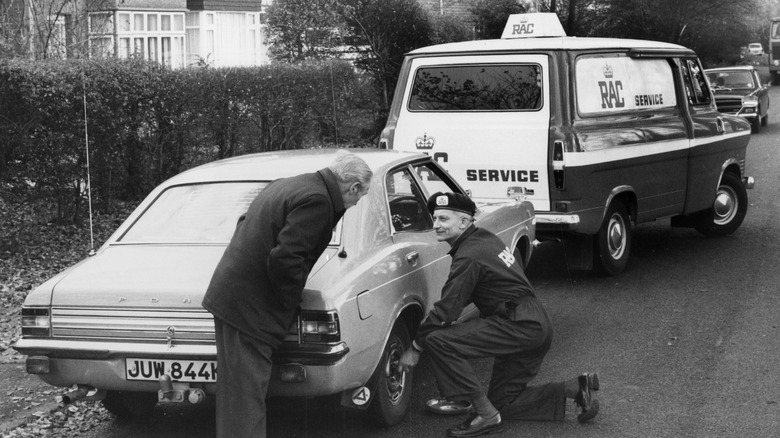
Walk through the service bay of any American car dealership in the early 1960s and nearly every wrench hanging on the wall would have been sized in fractions of an inch. By the end of the 1970s, however, mechanics increasingly found themselves reaching for metric tools to service vehicles built throughout America’s automotive heartland. This change was not immediate, but it reflected a profound transformation in the American auto industry.

The catalyst for this transformation lies in a combination of globalization, engineering efficiency, and growing international competition. As American manufacturing expanded, the disadvantages of maintaining uniquely American tooling became harder to ignore. Metric offered greater standardization, simplified manufacturing processes, and made it easier to share components between vehicles sold across international markets.

The transition wasn’t smooth. Imperial, or Society of Automotive Engineers (SAE), fasteners continued to be used alongside metric hardware well into the 1980s. Even today there remains some evidence of America’s imperial measurements legacy across locally produced automobiles. Regardless, this shift represented a critical step in how America’s domestic automotive production aligned with an increasingly interconnected automotive world.

Manufacturing for a global commercial environment
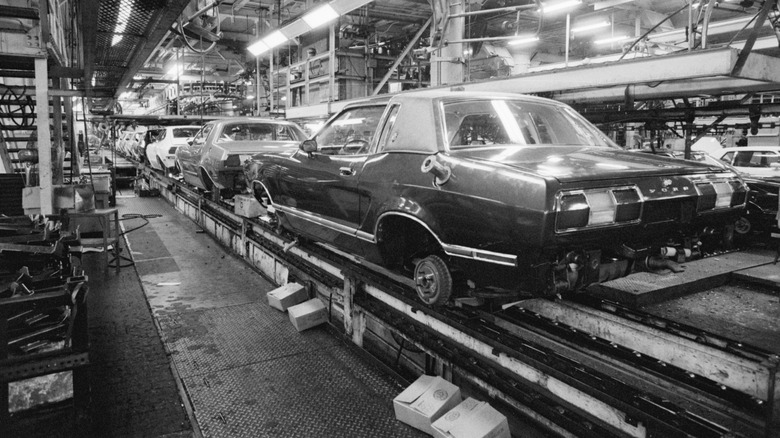
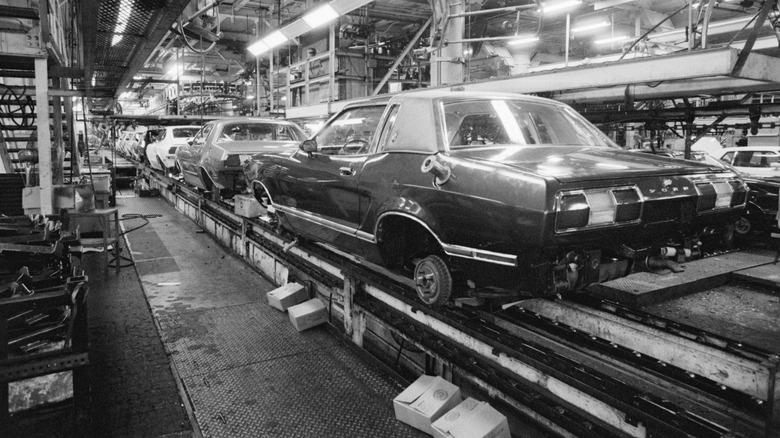
During the 1970s, the American automotive industry found itself operating in a globally expanding commercial environment. As American automakers sought to grow their presence internationally, they increasingly relied on foreign production to improve efficiency, reduce costs, and meet growing demand. Many of these operations were located in countries where the metric system was already deeply embedded in industrial practice, making metric the natural choice for outsourced production.

Ford expanded production across Europe and Mexico while increasingly integrating components and sub-assemblies from overseas suppliers, primarily Japan. General Motors, the first to begin introducing metric tooling in 1973, expanded forging, foundry, and engine production in Mexico while strengthening assembly operations in Canada. These international networks allowed American manufacturers to access lower-cost labor and create more integrated global supply chains, but they also demanded common measurement standards. Metrication simplified this dispersal of production.

Simultaneously, while American manufacturers expanded foreign production and sales, Japanese and European companies were establishing a stronger presence in the U.S. Following the 1973 Oil Embargo and subsequent decline of the muscle car era, foreign automakers gained popularity in the United States by offering reliable, fuel-efficient alternatives to larger domestic vehicles. As import numbers grew, American repair shops and parts suppliers were increasingly exposed to vehicles designed entirely around the metric system.

America increasingly recognized the isolation that was inherent to imperial usage, and that the common technical language of metric was necessary for operations spread across multiple countries. Although the United States never formally adopted the metric system as its primary national standard, the success of imported vehicles during the 1970s played a major role in driving the automotive industry toward metrication and greater integration with international manufacturing practices.

An Imperial Legacy

Across modern production, America’s automotive industry maintains numerous links to its history in imperial production. Horsepower ratings, wheel diameters measured in inches, and fluid capacities expressed in quarts, remain common features of American automobiles. However, these coexist alongside specific metric expressions. Engine and drivetrain specifications are typically expressed in liters, electrical and wiring standards use metric ISO standardization, and almost all fasteners on American-built vehicles are metric.

Perhaps one of the last nonmandatory imperial bolts that could be found on an American-built automobile was the 7/16″-20 flange bolts securing the driveshaft to the differential housing on the Dana super 44 rear axle, present on generation III+ Dodge Viper SRT-10s until as recently as 2017. In 2026, only one example of an imperial fastener or bolt can be consistently found within mainstream, international auto manufacturing. For America specifically, in accordance with 49 CFR 571.209 (Federal Motor Vehicle Safety Standard 209), seatbelt assemblies must utilize a specific 7/16″-20 Unified National Fine bolt for seatbelt and harness anchors.

More than half a century after America began its shift to metric hardware, almost every American-built vehicle still carries a small reminder of the country’s engineering past. The federally mandated 7/16″-20 seatbelt anchor bolt remains one of the last physical pieces of the American motor industry’s imperial legacy.


Source link

Leave a Reply

Subscribe to Our Newsletter

Get our latest articles delivered straight to your inbox. No spam, we promise.

Recent Reviews


1,000W, 10-port charger for $45... predictably disappointing.

1,000W, 10-port charger for $45… predictably disappointing. 

Adrian Kingsley-Hughes/ZDNET

Follow ZDNET: Add us as a preferred source on Google.


ZDNET’s key takeaways

  • Things that look “too good to be true” invariable are just that.
  • This example got dangerously hot in a short period of time before dying. 
  • There’s no legitimate charger that comes close to delivering on the 1,000W promise.

Being a tech reviewer for a living means that I get offered some very interesting things. Not interesting as in Bugatti supercars or jewel-encrusted Fabergé eggs, but interesting as in “this thing could easily be a fire hazard — want to take a look?”

Also: The best GaN chargers of 2026: Expert tested

Submissively, I often say yes. And I’m glad I did with the most recent pitch, because it was very interesting indeed.

Meet the “interesting” charger

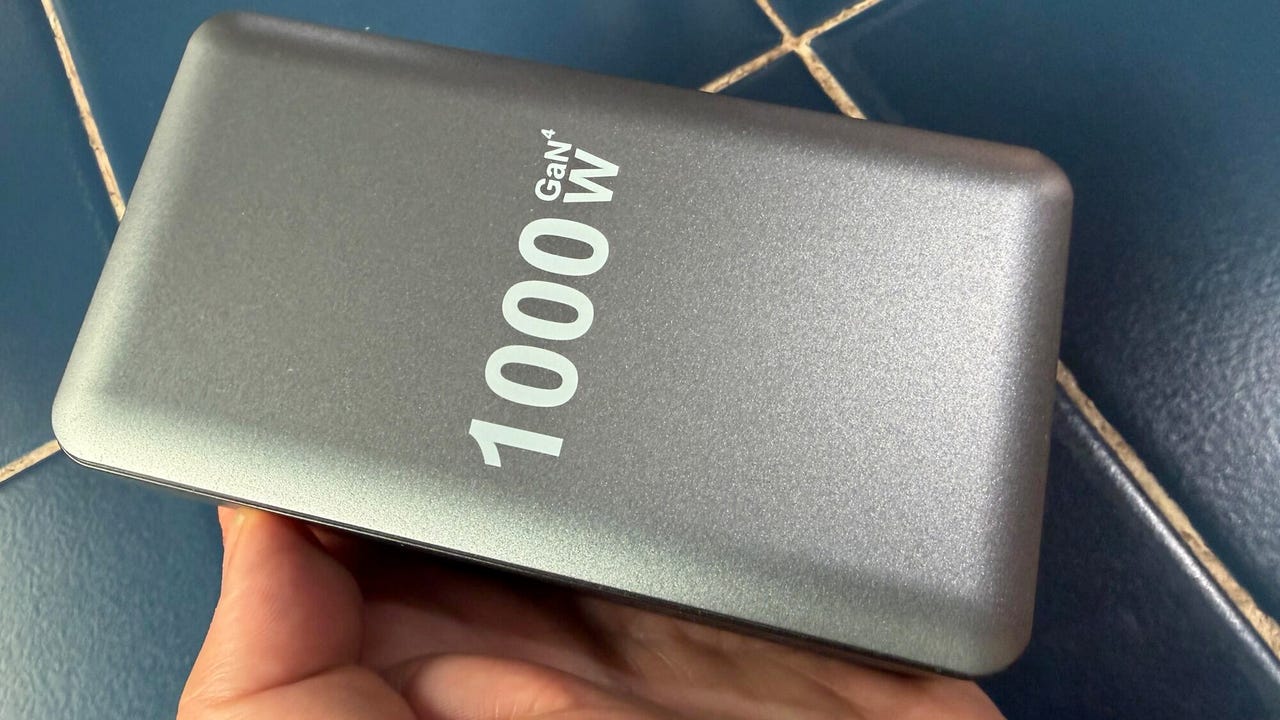
This time around, the thing of interest was a charger that claimed to deliver an incredible 1,000W through its ten ports — four 140W USB-C ports, four 100W USB-C ports, and two 20W USB-A ports. 

The person who bought this charger told me that they’d plugged it in, used it to charge their phone for “a few minutes,” got worried when it became “a little hot,” and unplugged it.

That's a lot of promise... but (spoilers), they don't deliver!

That’s a lot of promise… but (spoilers), they don’t deliver!

Adrian Kingsley-Hughes/ZDNET

The unit was suspiciously light and plasticky, especially given its built-in power supply. Compare this to Ugreen’s Nexode 500W charger, which weighs a hair under 5 lb.

There was also a slight whiff of melty plastic, which made me think that this had been a bit more than a little hot. 

Also: This $4 router reboot timer is the cheap internet fix I didn’t know I needed – and it works reliably

Color me suspicious, but I had a gut feeling that the only way this charger would be able to push out 1,000W would be if it caught fire. 

Turns out I wasn’t far wrong.

How long would it last? Answer: Minutes

Talk is cheap. It was time to test the charger. 

So I plugged it in, turned it on, and started using it. Within a couple of minutes of starting to use it, I noticed a few things:

  • No matter what I tried, I couldn’t persuade the charger to deliver more than about 60W from any of the ports. 
  • As for peak output, I managed to get close to 250W.
  • The power output was very uneven and noisy, fluctuating wildly. The more ports I used, the worse it got.
  • The unit got very hot to the touch very quickly, even under light loads. 
  • But… before I could get the thermal camera out to check how hot it got, there was a pop and the unmistakable smell of “Magic Smoke.” The charger had been sent to Silicon Heaven within minutes.

Annnnd… POP! This is the moment the charger gave up the ghost.

Adrian Kingsley-Hughes/ZDNET

Diagnosis time

Time to take it apart and have a look inside. For an item that plugged into the mains power, this unit was shockingly easy to take apart. 

A thin sheet of easily removable plastic is a that separates curious hands from live AC power.

A thin sheet of easily removable plastic is a that separates curious hands from live AC power.

Adrian Kingsley-Hughes/ZDNET

And even unplugged and broken, it was capable of delivering zaps! If the case came off while this was plugged into an outlet, it could very easily be deadly.

There’s charge still in some of the capacitors, and these could deliver quite a zap despite the unit being broken and unplugged!

Adrian Kingsley-Hughes/ZDNET

After getting inside, the unit was filled with a grey goo that I’d seen in a previous disappointing charger I’d taken apart. This is a thermal paste that’s used to try to dissipate the heat generated by the components. 

It’s not really going to work because it’s sealed in a plastic box with no effective heatsink. It’s a token gesture at best. At worst, it creates a mass that’ll slowly heat up and hold temperature because it’s got no way to get rid of it.

Behold the grey goo!

Adrian Kingsley-Hughes/ZDNET

Next to this goo was a bank of capacitors — the black cylinders in the photo — which were the cause of the failure. They’d clearly overheated, with three of them showing signs of bulging.

The problem!

Adrian Kingsley-Hughes/ZDNET

Well there’s the problem!

I also noticed that two of the components — bridge rectifiers that are used to turn AC mains into DC — have been fixed on an angle to make the touch a metal heatsink. It’s not really an effective way to cool down components.

The bottom line

Another “too good to be true” device bites the dust. It’s not the first one I’ve come across, and it won’t be the last.

Moral of the story here is that manufactures are using big number marketing — in this case 1,000W and masses of ports — to scalewash poor quality products. 

This might be a half-decent product if it was built to deliver 100W, but there’s no end of competition at that end of the market. Silkscreen “1,000W” on the outside, sprinkle in a few reviews that feel scripted and fake, and all of a sudden it’s interesting and exciting… right up until it blows up. 

Also: My top 7 laptop-bag essentials now, after decades of remote work

I know of no 1,000W charger. In fact, the 500W Ugreen Nexode is the highest-power charger that I’ve tested that’s legit. And the price is also legit — $250. 

But it’s built to deliver on what it promises and is packed with safety features, including “tip-over protection,” which cuts the output when the unit tips over and prevents it from falling on its side, where it can’t dissipate heat effectively. Now that’s an attention to safety that I like to see in a product that handles that much power. 

But if you want 1,000W of output, you’ll have to buy two and duct tape them together.


Source link