
We may receive a commission on purchases made from links.
Let’s face it — cleaning a house, especially a large one, can get rather taxing. The effort is only exaggerated if you work a 9-5, come back home, and have to cook dinner. Add cleaning into the mix, and you’re left with pretty much no time for recreational activities or hanging out with friends and family. A simple yet effective solution to this problem is a robot vacuum from a reliable brand. Unlike traditional handheld vacuum cleaners that require you to walk through every nook and cranny of the house, a robot vacuum automates the process. It maps out your entire house using built-in sensors and then cleans each room with precision. While these fancy robot vacs were expensive when they initially came out, the technology has since been democratized. You can now get a sophisticated robot vacuum without breaking the bank.
The best part is that these robot vacuums can clean different types of surfaces. Whether your home has tiles, wooden flooring, or carpet throughout, these robot vacuums can clean your entire house without you having to move an inch. Moreover, while some robot vacuums can only sweep the floor (that’s all you need for carpets), we’ve also included options that can mop the floor with water and detergent. This is useful for areas such as the kitchen or for the entire house if you have tiles. Since these are all affordable options, we’ve limited the list to robot vacuums that are priced under $500.
iRobot Roomba 105
For a long, long time, whenever somebody mentioned robot vacuums, the default name that came to mind was Roomba. That’s because iRobot — the brand behind Roomba — makes a wide variety of robot vacuums at various price points. The Roomba 105 is an entry-level vacuum that gets a lot of basics right. The onboard LiDAR scanner creates a map of your entire home, after which you can choose to clean your entire house or specific areas like the kitchen, bedrooms, etc. The Roomba 105 supports multi-surface cleaning, so you can use it on tiles, wooden surfaces, and even carpets. Notably, this particular variant is a dry-only cleaner, so it only sucks in dust and cannot mop the floor.
This makes it ideal for those who have carpeted flooring throughout. Notably, iRobot has added an auto-emptying base to the Roomba 105 — a feature uncommon among robot vacuums at this price point. The best part is that the base can store dust for up to 75 days, so you don’t have to worry about cleaning the dust tank manually after every cleaning session. With over 19,000 reviews and an average rating of four, it’s clear that the Roomba 105 is popular among budget-conscious buyers. Users are generally happy with the way the bot cleans. It’s a big improvement over older generations of Roombas in this price segment, so it’s nice to see that the brand has worked on its products while still maintaining an affordable price tag.
Lefant M210 robot vacuum
If you’re looking for Roomba alternatives that are cheaper yet still do a good job of keeping your house neat and tidy, consider the Lefant M210 robot vacuum cleaner for just $90. It’s amazing to see that robot vacuums have become so affordable that you can get one that cleans your entire house for under $100. While it may not have the bells and whistles of some other options on this list, it does the one job it’s supposed to do — cleaning — quite well, as per users. It has a slim profile, so it can go under your furniture with ease. As per the brand, the M210 is ideal for hard floors, so it may not be the best option for carpets.
The Lefant M210 specializes in picking up pet hair, which can be a real savior if you’re tired of sweeping the floor multiple times a day. As per the brand, the robot can clean for up to 120 minutes continuously before needing a charge. When it’s low on battery, it automatically returns to the base for a quick recharge. Unlike the Roomba 105, though, the base here is only for charging, as the Lefant M210 doesn’t have a self-emptying feature. Once the dust bag is full, you will have to empty it manually before the next cleaning session. However, that’s just nitpicking at this point, especially considering the price. In fact, it’s so affordable that you can pick multiple units to clean different levels of your house.
Tikom G8000 Max robot vacuum and mop
If you’re willing to spend slightly more than $100, the Tikom robot vacuum offers better features and a slightly longer runtime of 150 minutes. For starters, the G8000 is more versatile because it’s designed for use on both hard floors and carpets. Moreover, it also comes with its own remote control, so you don’t have to connect the robot to Wi-Fi and control it via your smartphone if you don’t want to. The biggest advantage, though, is that this Tikom robot vacuum supports both sweeping and mopping, which is quite a luxury at this price point. Thanks to features typically found on more expensive models, the Tikom vacuum has garnered over 4,500 reviews with an average rating of 4.4.
Users are impressed by its suction power, which easily cleans wooden floors and rugs. An auto-emptying base would have sweetened the deal even more, but at this point, it almost feels greedy to expect more features from a robot vacuum that costs just over $100. The biggest moat for the Tikom vacuum is that it can save you a substantial amount of time each day. It cleans and mops surfaces simultaneously, so you don’t have to run the robot twice to perform separate tasks. You can also schedule cleaning tasks when you’re away, so you can walk into a clean house every time you arrive.
Shark Matrix Clean AV2511AE
Shark is a well-known brand in the home appliances space, especially in the cleaning niche. Since it’s an established brand, the Shark AV2511AE‘s companion app offers certain perks that aren’t common on robot vacuums from lesser-known brands. For instance, you can set virtual boundaries in the app, so the vacuum won’t cross them and enter areas it’s not supposed to. Then, there’s precise mapping via the built-in LiDAR scanner, which lets the vacuum clean every nook and cranny of the house. Less expensive vacuums generally skimp on this and rely on object-detection sensors to avoid obstacles when moving around the house. If these features are important to you, the Shark Robovac can be a reliable option.
It has a self-emptying base that can store the contents of the dirtbag for up to two months, which is excellent. If you have a busy schedule, this is a huge blessing. The runtime, however, is slightly less than that of some other options on this list. It can clean your house for up to 90 minutes at a stretch, which isn’t a lot if you have a large house. Users say the Shark AV2511AE is quieter than some other robot vacuums, which can be important if you’re trying to sleep when it’s cleaning or you have pets at home. The app is also easy to use — certainly a bonus for those who aren’t tech-savvy. The only thing missing is a mop functionality, which should have been there, considering the asking price.
Dreame L40s Ultra CE
Dreame is a premium brand that makes some of the most technologically advanced robot vacuums, and the L40s Ultra CE is no exception. If you’re willing to spend $400 and want a vacuum cleaner that’s loaded with features, look no further. For starters, the vacuum has a massive 13,000Pa suction power, which means dirt particles on hard flooring or even carpets can be sucked in easily. Despite its high suction power, the Dreame L40s Ultra CE has a 260-minute runtime, which is sufficient to clean a large house before needing a recharge. Speaking of charging, this robot vacuum’s charging dock is where a lot of the magic happens.
Firstly, it’s an auto-emptying base, so all the dust gathered is stored inside it for up to 100 days. That’s more than three months of no manual cleaning required, which is impressive. Since the L40s Ultra CE also has mopping functionality, it automatically draws the required amount of water from the base and then flushes dirty water back into it, all without any human intervention. Not just that, but the mop pads are also cleaned and dried automatically when the robot heads back to the base. These are all important features to know about before buying a robot vacuum, and the fact that you’re getting all of them on a vacuum priced under $400 makes this an excellent deal.
Eufy 11S Max robot vacuum
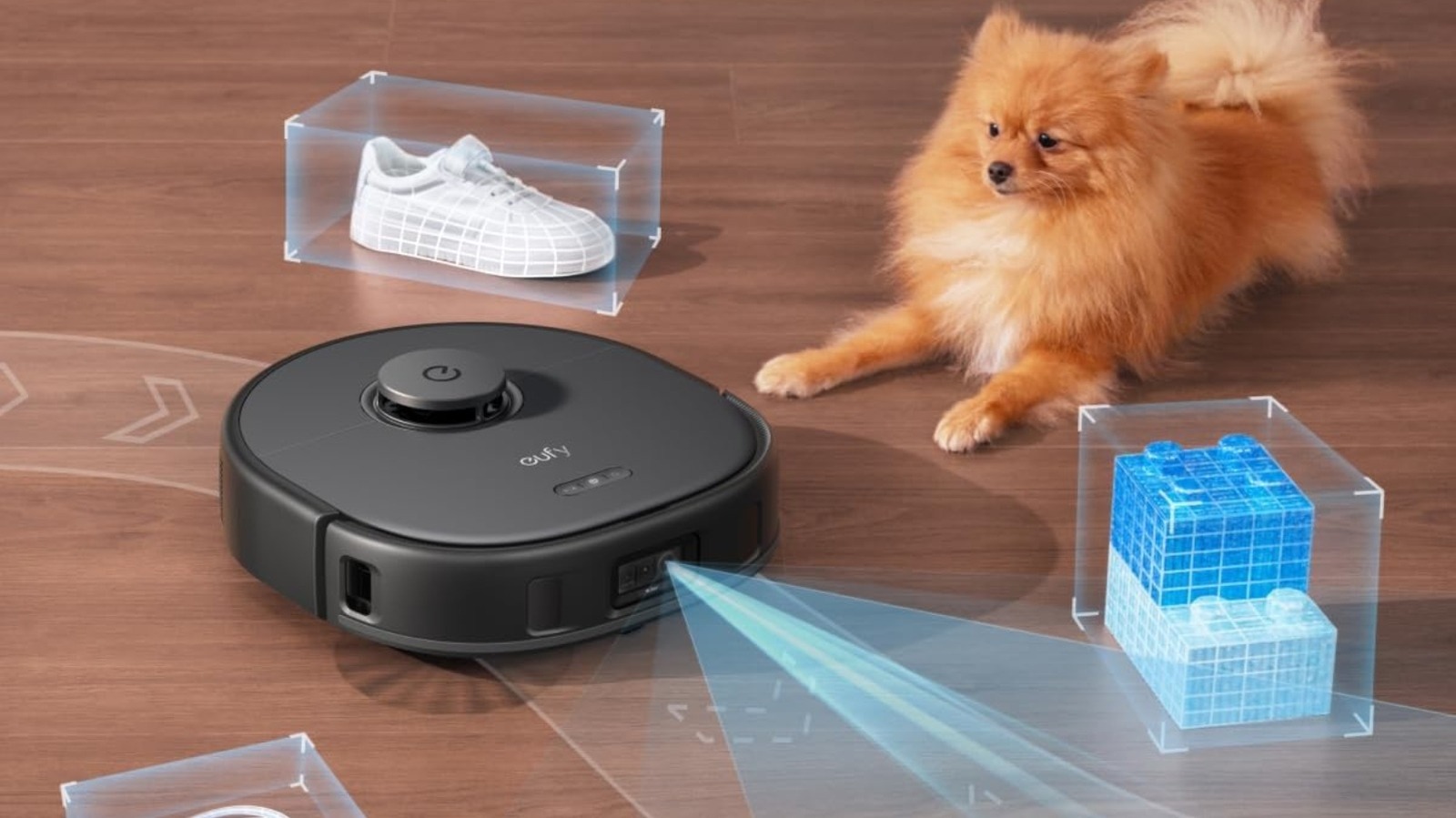
Anker’s phone chargers are a top choice for many people, especially since phone manufacturers stopped including adapters in the box. After all, the brand makes high-quality accessories that are reliable yet affordable. Well, the same ethos has carried over to its sister brands, including Eufy. The Eufy 11S Max robot vacuum is affordable, coming in at just $150. Despite that, it’s compact, well-built, and rather quiet when cleaning. It doesn’t have many bells and whistles, so if you’re looking for fancy features, you may want to consider other options. That said, it gets the basics right, and that’s exactly why the Eufy 11S Max has a whopping 59,000 reviews on Amazon with a rating of 4.3.
Users say it does a fine job of cleaning hard floors and jute rugs, which is vital for a house with different types of flooring. The Eufy 11S Max is also great for those who have privacy concerns with traditional robot vacuums. For starters, there are no cameras or LiDAR sensors onboard, so the robot does not create a map of your house. Moreover, there’s no Wi-Fi connectivity, so the robot has no means to send data to remote servers. You do get object detection.
Ecovacs Deebot T50 Pro
Ecovacs is yet another brand that’s known for making feature-rich robot vacuum cleaners that don’t cost a bomb. A quick look at the feature set of the Ecovacs Deebot T50 Pro will tell you it’s an excellent vacuum cleaner with capable specifications. 15,000 Pa of suction power, specialized object avoidance algorithms, sweeping and mopping, and, of course, a self-emptying base. All of this for just $350. Additionally, the charging base can clean and dry the mop pads on its own. So you don’t really have to manually clean the robot until it’s time to empty the base. Moreover, the brand has also included hot-water mopping and hot-air drying, which can help clean stains — a feature that’s mostly absent from generic robot vacs.
Users are mostly happy with the Ecovacs Deebot T50 Pro’s cleaning and features. One gripe users mention is the vacuum’s inability to go under certain furniture that may appear low. Despite not being too thick, it apparently refuses to fit under furniture with low clearance or in dark areas. This can be a bummer, since it means that there will be certain sections in your house that won’t be fully clean. That said, the object avoidance system is reliable and works as advertised. This is an important feature to have if you have pets or kids, since you may often have objects lying around on the floor.
Roborock Q10 S5+
The Roborock Q10 S5+ is a compact robot vacuum that’s preferable if you’re not a fan of large, space-consuming base stations. Despite the smaller base, though, you will only have to empty the collected dirt bag once every 70 days, which is rather impressive. All the usual features, such as sweeping and mopping, obstacle avoidance and anti-tangle brushes, are present. The onboard motor produces 10,000Pa of suction power, which should be sufficient for most surfaces. There’s a LiDAR scanner onboard for precise mapping and thorough cleaning.
Roborock also claims to have trained the algorithms so that they automatically detect the surface they’re cleaning on and decide whether to mop there. So if there’s an area in your house with tiles that transitions to carpet, the Q10 S5+ will mop the tiled flooring but stop when it reaches the carpet. This sort of smart functionality is nice to see in a robot vacuum that costs just over $300. Long-term users of the product mention how it’s a reliable robo vac that gets the basics right and cleans pet fur, strands of hair, crumbs, etc., well. You don’t get the feature to clean the mop pads automatically, so you’ll have to do that yourself. Considering the price, it’s a fair omission, in our view.
Eufy X10 Pro Omni
If you’re convinced to buy a product from Eufy because you use and trust Anker’s accessories, the X10 Pro Omni is probably the best option to consider under $500. It has many features similar to those of other robot vacuums on this list, plus a few more. For instance, the auto-lift functionality lifts the bot automatically when it detects a carpet or a rug. Then, there’s the 1 kg downward-pressure mopping to remove stains and particles that have gotten stuck to the floor. Post-cleaning, the base blows hot air onto the mop pads to dry them, so they’re ready quickly for the next cleaning session. Like most products on this list, this product only needs you to empty the base once every two months.
While all of these features are probably the best you can get for the price, there’s one area where Eufy has slightly cut corners — the one that is probably the most important in an appliance like this — suction power. Unlike a few other robot vacuums on this list that have 10,000+ Pa of suction power, the Eufy X10 Pro Omni’s 8,000Pa seems on the low side. Going by the 4.3 rating from close to 50,000 users, though, the X10 Pro Omni is a bang for your buck, and the brand’s customer service in case of any issues is also reliable.
How we picked these robot vacuums
For a robot vacuum to make this list, it must be priced under $500. Apart from price, we factored in essential parameters such as suction power, runtime, area coverage, wet and dry capabilities and the presence of an auto-emptying base. Moreover, all the options mentioned here have a minimum rating of four on Amazon or other online storefronts, with at least 1,000 reviews.

Stephan is the sports journalist for the Maple Grove Report.