


Maple Grove Daily

Maple Grove Daily

Subscribe to Our Newsletter

Get our latest articles delivered straight to your inbox. No spam, we promise.


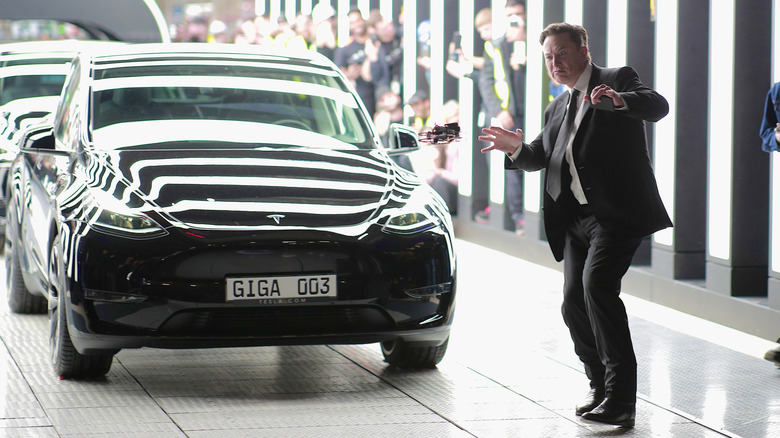
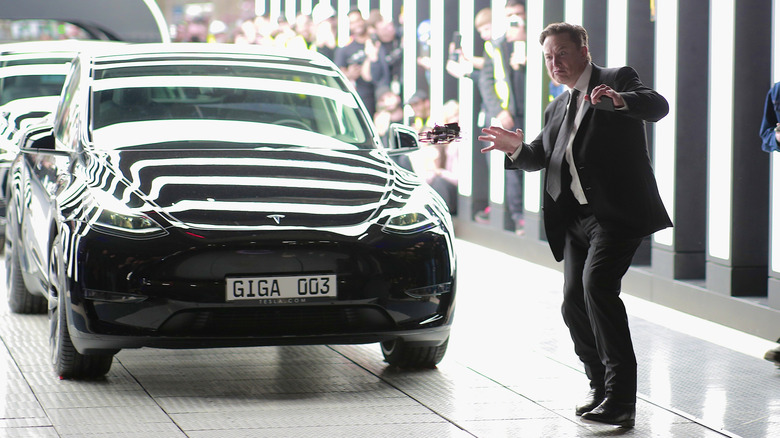
Elon Musk is many things — a billionaire, a rocket builder, a social media provocateur — but first, he’s a car guy. Long before he was running Tesla, he was spending his first big paycheck on a McLaren F1, which he believes is the best car in the world. Since then, his relationship with cars has only grown more complicated and mysterious.

Tesla, the company he joined in 2004 and has led since 2008, has grown from a single-model electric car startup into one of the most influential automakers on the planet. Its lineup has spanned the Model S, Model 3 Model X, Model Y, and the Cybertruck, though Tesla has since discontinued the Model S and the Model X. Regardless, Musk has driven, tested, or been spotted in most of them at one point or another.

So which Tesla vehicles does the CEO actually drive? Back in 2019, Musk revealed on X that his day-to-day rotation included the Model S Performance — equipped with the then-new Raven motor — along with the Model 3 Performance, and the Model X when he had his kids in tow. Since then, he’s been spotted in newer models, including a Cybertruck prototype in Austin.

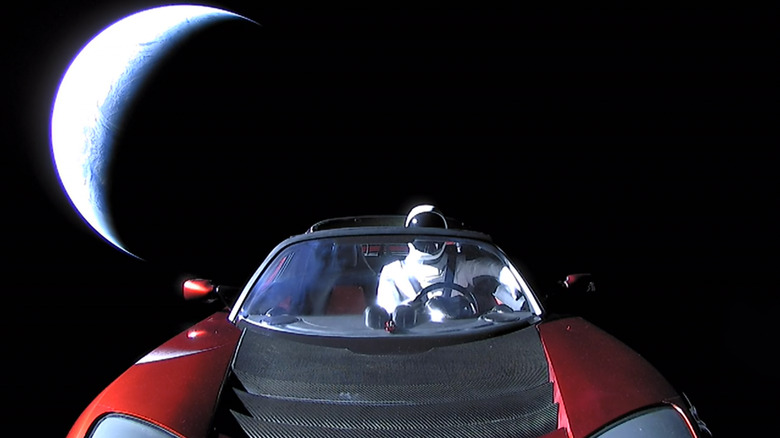
While Musk rarely updates the public on his garage, the Model S remains the Tesla most closely associated with him, alongside more recent appearances in the Cybertruck. His most famous Tesla, however, is still the original Roadster that SpaceX launched into orbit aboard Falcon Heavy in 2018. These are the Tesla models Elon Musk actually drives or has driven.

A closer look at Elon’s Teslas
Musk’s relationship with the Model S goes back further than most people realize. As early as 2015, Time Magazine reported he said at Tesla’s annual shareholder meeting that “I’m testing the latest version of autopilot every week. Typically, two or three builds per week that I’m testing on my car.” By 2018, when he appeared on The Joe Rogan Experience #1169, he confirmed the Model S was still his go-to, saying directly: “Model S P100D. That’s the car that I drive.”

By 2019, he had upgraded. In the aforementioned 2019 post on X, Musk revealed his Model S had been fitted with an adaptive damping suspension in addition to the Raven motor, along with a development version of the FSD computer that had not yet been made available to the public. The Model X is also the Tesla with a most personal backstory behind it. During a 2012 interview with Autoblog, Musk criticized the Audi Q7 he owned at the time for its notoriously difficult third-row access, saying that “you need to be dwarf mountain climber to get into the back seat.”

That frustration directly shaped the Model X. Musk said in the same interview that the Falcon wing doors were his idea, born out of a need for a door that could open in tight spaces while still allowing access to the third row without moving the second-row seat. Although these Falcon doors have proven to be quite problematic, In his 2019 X post, he confirmed the Model X remains his go-to when driving with his kids.

Elon Musk’s car collection

Although information on the Tesla models Elon owns and drives is somewhat limited, his broader car collection is more publicized. Likely the most expensive car in Elon Musk’s collection was the McLaren F1 — and we say “was” deliberately, since Musk no longer owns it. After crashing it while uninsured, watching it catch fire, and having it undergo a complete rebuild by McLaren Special Operations, he sold the car in 2007.

One of the oldest cars in Musk’s collection was the 1920 Ford Model T reportedly gifted to him by one of his friends as a symbol of how it changed the automotive industry and how Musk does the same. A well-known vintage also owned by Musk is the 1967 Jaguar E-Type roadster. Likely one of the coolest cars in his collection is the 1976 Lotus Esprit “Wet Nellie,” a car used in the 1976 “The Spy Who Loved Me” James Bond movie.

Musk’s collection also included a few older German luxury cars like the 1974 BMW 320i (his first car), a Hamman-modified 2005 BMW M5, and the 2010 Audi Q7 he criticized when talking about Model X Falcon doors. Musk’s 2012 Porsche 911 Turbo was actually directly tied with his connection with Tesla. When Musk offered AC Propulsion’s Alan Cocconi $250,000 to convert his Porsche 911 Turbo to electric, Cocconi refused. 

It was then that AC Propulsion’s CEO Tom Gage suggested Musk speak with Martin Eberhard, who had just launched a small electric car startup called Tesla. In the same Joe Rogan podcast we mentioned above, Elon noted that the Jag and the Ford are the only two gasoline cars he owned at the time, meaning that the majority of the collection is no longer his.



Source link


Google's Gemini AI

Lance Whitney/ZDNET

Follow ZDNET: Add us as a preferred source on Google.


ZDNET’s key takeaways

  • Google has introduced a cheaper AI Ultra plan at $100 a month.
  • The full Ultra Plan is now $50 cheaper at $200 a month.
  • Certain AI Pro subscribers also get YouTube Premium Lite for free.

Looking to subscribe to one of Google’s Gemini AI plans? That decision just got trickier thanks to the latest changes. Yes, Google has rejiggered its various AI plans with lower prices and more features.

Also: Google I/O 2026 live: The latest updates

At its I/O conference on Tuesday, Google kicked off another variant of its most expensive AI Ultra plan, but with a lower price tag. Aimed at developers, tech workers, and creative pros, the lower-cost version will run $100 a month. At that price, the subscription offers the following benefits.

  • A usage limit five times higher than the AI Pro plan in both the Gemini app and the AI-powered Google Antigravity agentic development tool
  • Priority access to Google Antigravity
  • Integration with the new Gemini 3.5 Flash for quicker testing and debugging of your computer code
  • 20TB of cloud storage to house those hefty databases and media content
  • A YouTube Premium individual plan with ad-free access to YouTube videos

Also: OpenAI’s new image watermarks make it easier to spot AI fakes – here’s how

For developers and other pros who want the full AI Ultra plan, Google has cut the monthly price from $250 to $200. At that cost, you get a usage limit 20 times higher in the Gemini app and Google Antigravity, along with an array of other perks.

More new features for every plan

Whether you opt for the full AI Ultra plan or the new and cheaper variant, a couple of other features are heading your way.

Gemini Spark. Available only in the US, Gemini Spark is a new AI agent that aims to follow your commands to perform specific assignments on its own, under your direction. Spark can navigate across Google’s different products and services to handle complex tasks more quickly than you could manually. Rolling out to testers this week, Spark will launch as a beta in the US next week for all Google Ultra AI subscribers.

Also: Google’s new AI Search box is here – along with agents and 5 more upgrades

Project Genie. Currently available as a Google Labs experiment, Project Genie is a research prototype that lets you conjure up your own interactive virtual worlds. By supplying text descriptions and images, you’re able to create mini games and other environments populated by your own characters. Genie is now popping out of its experimental bottle and heading around the globe to all Google AI Ultra users on the $200 plan. Plus, you’ll be able to tap into Google’s Street View to add a dose of reality to your fictional lands.

If you’re a developer or other pro eyeing one of the two Ultra plans, the less expensive variant may be your best bet. If you find yourself hitting its limits, you can always switch to the more expensive subscription. Otherwise, that $100-a-month price tag makes the cheaper one quite tempting.

Ah, but Google isn’t forgetting about people on its other AI plans, including Plus and Pro.

Gemini Omni. Rolling out globally to all four AI plans (Plus, Pro, and the two Ultras) is the new Gemini Omni model, designed to generate videos. Omni takes a multimodal approach, which means you can add your own text, images, and videos to create your short video productions. You can fashion the characters, scenes, visuals, sounds, and effects, and then edit your video to fine-tune it. Omni will take the stage in the Google Flow video generator to help achieve greater consistency in character and voice from one scene to another.

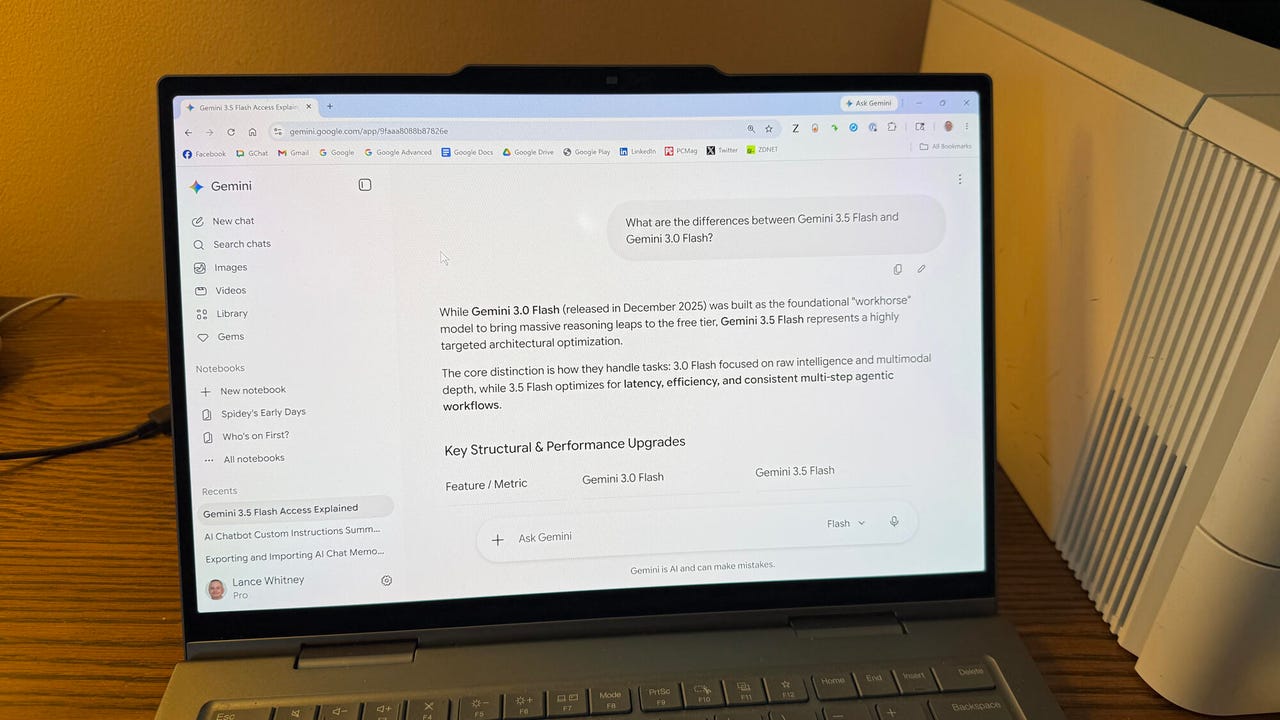
Gemini 3.5 Flash. Now rolling out globally across all four Google AI plans, the new Gemini 3.5 Flash frontier model promises faster speeds and greater understanding than its predecessor, especially for agentic and coding tasks.

Also: I tested ChatGPT Plus vs. Gemini Pro to see which is better – and if it’s worth switching

AI inbox in Gmail. Already available to AI Ultra plans and now rolling out to AI Plus and AI Pro plans in the US, Gmail’s AI inbox aims to help you better manage your inbox. Analyzing the torrent of emails you likely receive, Gemini will suggest items for your to-do list, mark those items as done, draft replies, and find links to related files in Google Docs, Sheets, and Slides.

Daily brief. Accessible to all Google AI subscribers, the daily brief is another feature moving from experimental status to full availability. Here, an AI agent scours your emails, calendar appointments, and Gemini chats to see what’s new, urgent, or overdue. The daily email you receive compiles all those items into a digestible, readable list and suggests next steps. The goal is to review your priorities and take action on the most pressing ones.

YouTube Premium Lite plan at no extra charge

And there’s one more thing.

YouTube Premium Lite. Free access to YouTube Premium is already included in a Google AI Ultra plan. But now it’s expanding. Over the next few days, AI Pro subscribers in certain countries will get a free YouTube Premium Lite plan at no extra charge. In contrast to a full Premium plan, the Lite flavor quashes ads for gaming, fashion, beauty, news, and other topics but still displays them for music and many other videos.

Also: YouTube Premium vs. Premium Lite: Is the cheaper tier still your best deal?

Google measures how much you use Gemini to make sure you stay within the limits of your plan. But the way your use is calculated has now changed. Instead of treating each prompt as equal against your limits, Google is using a compute-based model. This approach factors in the complexity of your prompt, the features you use, and the length of your chat. Your limit will refresh every five hours until you reach your weekly quota.

If you hit your limit, you’ll be shifted from the larger AI models to the smaller ones. AI Pro and AI Ultra subscribers can also purchase AI credits on the go if they need to continue using the more advanced models for Google Antigravity, Google Flow, and the Gemini app.

Unless you’re a developer who needs an Ultra plan, the decision comes down to the AI Plus plan at $8 a month and the AI Pro plan at $20 a month. The Plus subscription limits how much you can use Gemini and other AI features by imposing stricter quotas. If you’re currently looking for a Gemini plan but don’t anticipate heavy usage, you may want to opt for the AI Plus subscription and save yourself $12 a month or $144 a year.

Also: Google’s AI Overviews will show you advice from other people now

Another option, though, is to look for a discount. For example, Verizon offers a perk: you pay $10 a month for an AI Pro subscription. This is the main reason I stick with the Pro plan; otherwise, I would seriously consider the Plus plan.

Whichever plan you choose, remember that Google charges for them on a monthly basis. That means you can always switch to a different subscription from one month to another to see which one works best.


Source link

Recent Reviews

