Maple Grove Daily

Maple Grove Daily

Subscribe to Our Newsletter

Get our latest articles delivered straight to your inbox. No spam, we promise.


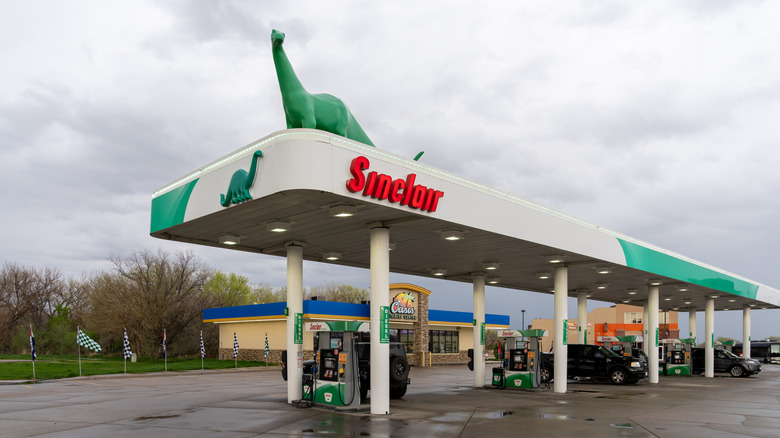
Sinclair gas stations can be found across 32 states in the United States, with most locations in California, Colorado, Idaho, and Utah. The gas stations are instantly recognizable thanks to the green Apatosaurus in their logos – and sometimes standing outside. 

Sinclair gas stations kept their iconic branding even after Sinclair Oil was purchased by HollyFrontier Corporation and Holly Energy Partners for $2.6 billion. The parent company rebranded as HF Sinclair, merging the two entities as they work together to grow their renewable diesel, lubricants, and marketing businesses. 

Before the merger, Sinclair Oil was a privately held firm. The founder, Harry F. Sinclair, started working in the oil business at just 20 years old. He sold lumber to oil derricks, leading him to become the richest man in Kansas aged just 31 years old. He founded Sinclair Oil Corporation in 1916 at 40 years old. It became the seventh largest oil company in the United States by the 1920s, a few decades after the first ever gas station popped up in the U.S. Before that, people filled up their cars with gas rather differently.

The story behind Sinclair’s dinosaur?

Sinclair’s advertising started using a large dinosaur back in 1930. Multiple dinosaurs were used at that point, but the long-necked giant stood out. Known as DINO, it was originally called a Brontosaurus, but it’s now called an Apatosaurus, due to the confusion of the Brontosaurus being an individual species. “Sinclair has followed the prevailing opinions of the scientific community,” the company stated

Two years after DINO’s debut, Sinclair registered the mascot as a trademark. DINO appeared at multiple World’s Fairs, including as a fiberglass animatronic in Sinclair’s Dinoland exhibit at the New York World’s Fair in 1964 and 1965. Around this time, he was also featured in the Macy’s Thanksgiving Day Parade. Today, you can see the 70-foot version of DINO, previously featured at Dinoland, at the Dinosaur Valley State Park in Texas. DINO is also “lovingly parodied,” as Sinclair itself says, as the Dinoco logo, which almost sponsored Lightning McQueen in Pixar’s “Cars.” Of course, you can still se DINO outside some Sinclair gas stations. 


Source link


For serious outdoor DIYers familiar with the best and worst lawn mower brands, choosing the right machine is an easy prospect. But for others, just knowing one type of lawn mower from the next can be challenging. For example, engine placement isn’t the only difference between a rear engine riding mower and a lawn tractor. There’s actually a lot more to it than that, beginning with function.

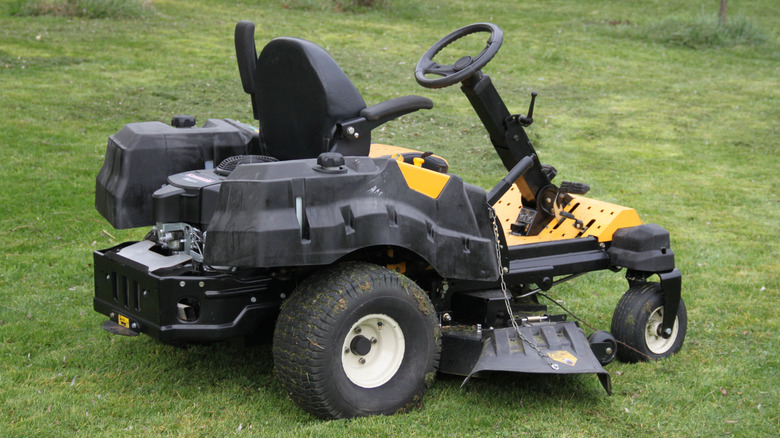
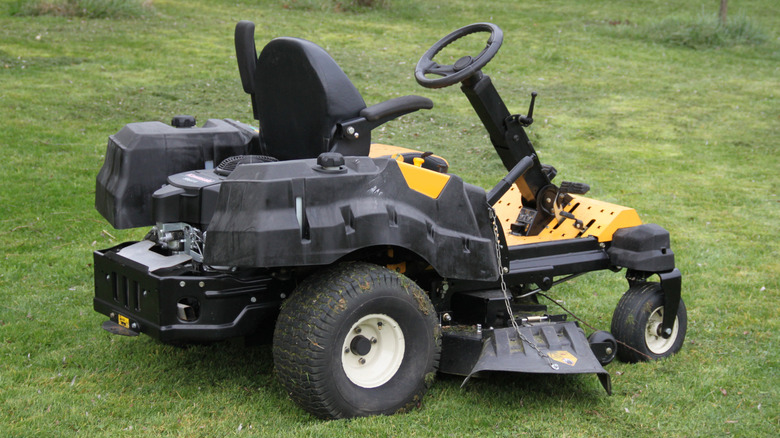
A rear engine mower is built for the task at hand. It’s easy to operate and gets the job done without the need for any additional capability. It’s a basic design, with a cutting width of around 20 to 30 inches and a top speed of about five miles per hour. Rear engine models aren’t as big as other mowers, and are lower to the ground than bigger machines. They can also cost less than their larger counterparts.

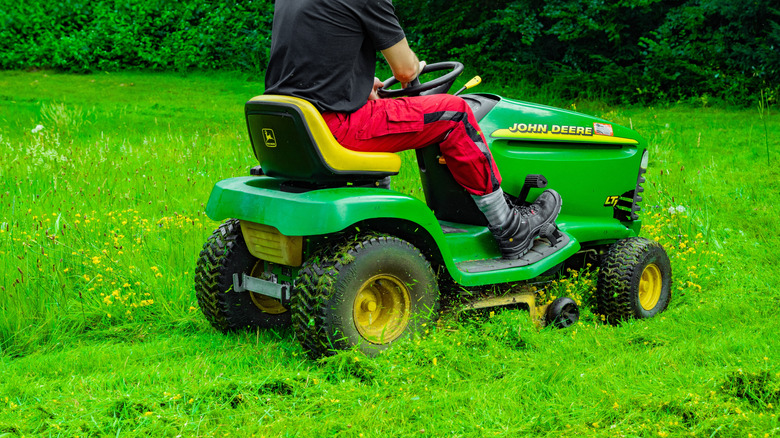
In contrast, lawn tractors, including the best mowers made by John Deere, are a step above rear engine models and can do much more than just mow the grass. These machines are heavy-duty and built to take various attachments like snow plows and can also tow other equipment as well. Their cutting width is typically in the 40 to 50-inch range, utilizing two blades instead of one. They’re more stable overall than rear engine mowers and are considered a more practical solution for larger areas.

Engine type and choosing the right mower

Rear engine mowers primarily differ from lawn tractors because of engine placement, but why is that the case to begin with? The reason is because the rear engine mower’s design allows lawn mower manufacturers like Toro to construct a compact machine with a smaller cutting deck. This means easier storage and simpler operation in small to medium-sized lawns. They’re also easier to steer in tight places and are ideal for light duty work.

When it comes to the engine type, rear engine mowers typically utilize a single-cylinder four-stroke setup. This is part of the machine’s compact design, as smaller mowers do not need as much cutting power as larger models. This can also make for a quieter operation overall. In contrast, most lawn tractors usually use either single-cylinder or multi-cylinder four-stroke engines, depending on the model. Because of this, it’s more complex than a single cylinder and can handle more heavy-duty work.

So when choosing which type of mower is best, users must first look at the size of their yard. For smaller properties with close turns, a rear engine mower would probably be the best option. For larger yards with more ground to cover and more work to do besides mowing, a lawn tractor would be the ideal choice. While each mower could technically do the job in either situation, it would be a case of not enough capability in one, and perhaps too much capability in the other.


Source link

Recent Reviews