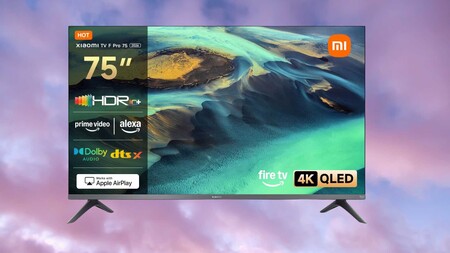
TV F Pro‘s size is backed up by a QLED panel built on quantum dot technology, with Xiaomi quoting 16.7 million colours and 90% coverage of the DCI-P3 gamut that Hollywood colourists rely on to grade films.
Paired with 4K UHD resolution and HDR10+ support, the picture is built to hold onto fine detail in both the darkest shadows and the brightest highlights without ever washing anything out during tricky high-contrast scenes.
Fast motion gets help too, since MEMC processing smooths out judder during fast-paced sports and action scenes, and a Game Boost mode pushes the panel up to 120Hz over HDMI for smoother console gaming sessions.
Advertisement
That Game Boost mode is worth a closer look before buying, since the 120Hz refresh only kicks in at 1080p rather than native 4K, so it pays to know exactly what you’re getting for gaming.
Sound comes from a pair of 10W speakers tuned for Dolby Audio and DTS:X, which should lift dialogue and effects a reasonable amount above what a typical built-in TV speaker usually manages on its own.
The smart platform is where this set earns its keep day to day, running Fire TV natively with Netflix, Prime Video, and Disney+ all sitting together on one home screen without any extra streaming boxes.
Alexa is built directly into the remote, so switching inputs, adjusting the volume, or asking for a specific show can all be handled by voice alone instead of hunting through menus manually every single time.
Apple users are covered too, since built-in AirPlay support lets you send video, photos, or music from an iPhone, iPad, or Mac straight to the screen without needing any extra cables or dongles at all.
Advertisement
At £499 for a 75-inch QLED Fire TV with Alexa and AirPlay built in, this is the kind of deal that makes upgrading to a genuinely big screen for a main living room finally feel affordable rather than aspirational.
A budget TV that offers solid value for the money. It could be better in some areas, and the image quality could be refined but this is less expensive than the Fire TV 4-Series and in several ways, it’s better than Amazon’s rival.
Android 17 is here, along with the June Pixel Drop.
The OS is rolling out to Pixel devices first.
Users are getting upgraded productivity, security, and more.
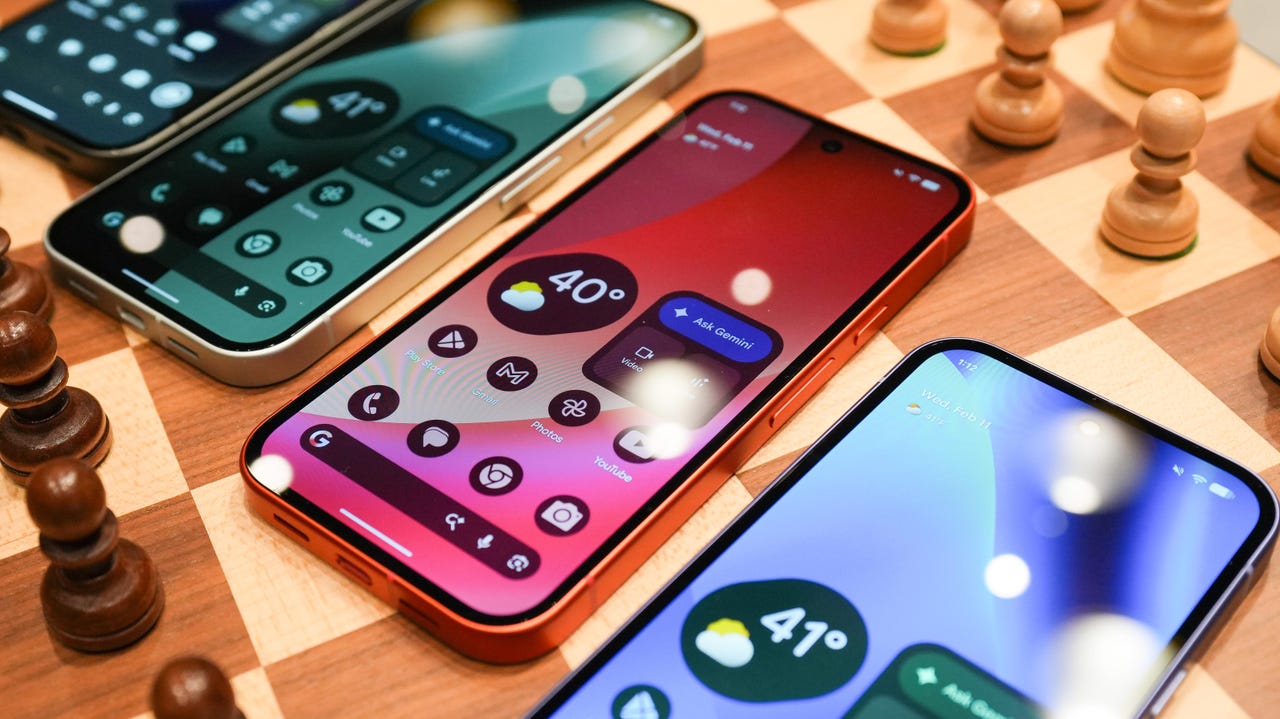
Android 17 is officially here, and it’s a doubly good day for Pixel users, as it’s bringing the June Pixel Drop with it.
Google has rolled out its annual OS update and its latest collection of Pixel-exclusive features at the same time, and the updates pack not only some practical features that will make an impact on how you use your phone daily, but also security protections, some new translation tricks, and more. Pixel Watches — the 2 and later — are included, too, with a potentially life-saving feature addition.
Here’s a look at what’s new in Android 17, which starts rolling out today to Pixel phones first and then to other devices “throughout 2026,” along with what’s new in the June 2026 Pixel Drop.
What’s new in Android 17?
Since many manufacturers now offer longer update windows, usually 4 to 7 years, a wide range of devices are eligible. The updated OS starts rolling out today to Pixel 6 phones and newer. Samsung’s Galaxy S23 series and newer will get it as One UI 9, along with the Flip 5 and newer, Galaxy A24 and newer, and Tab S9 series. OnePlus will bring Android 17 to the OnePlus 11 and newer.
1. App Bubbles
Perhaps the most useful feature is Bubbles, which lets you turn any app into a floating bubble on your main screen. All you have to do is long-press an app, and it becomes an easy-to-access bubble. If you consistently switch back and forth between apps or need to access a certain app often, like a map or airline app while you’re on a trip, you can now find what you need more quickly.
Pixel Folds are getting a special Bubble Bar at the bottom of the screen that lets you organize, move, and access your recent bubbles from one dedicated space.
2. Additional security
Android 17 is also bringing boosted security.
To start, you can now grant an app temporary access to your exact location and share only specific contacts.
Additionally, an enhanced “Mark as lost” feature, located in Find Hub, lets you lock a missing phone with your biometrics, so even if a thief has your passcode, they can’t access anything on your device or turn off tracking.
Improvements to Live Threat Detection block more suspicious apps and scams, Google explained, and enhanced Advanced Protection mode helps keep you safe from sophisticated threats. Lastly, Google is reducing the number of times someone can attempt to guess your PIN and adding longer wait times between failed attempts.
Also new is Screen Reactions, which lets you take a selfie video overlaid on a screen recording in lieu of a green screen; a 50/50 gaming mode with a dynamic pad for foldables; and built-in parental controls beyond Pixel devices, so you can set screen time limits and content filtering with a PIN, even if you don’t link your Google Account.
What’s in the June Pixel Drop?
Beyond Android 17, Pixel users are getting several Pixel-specific upgrades in the June Pixel Drop.
1. Custom greetings for Take a Message
Introduced in 2025, Take a Message expands on the Pixel call screening feature and gives you a real-time transcript of what the caller is saying, along with AI-generated follow-up steps. Now, Take a Message has custom greetings, letting you record a personalized outgoing message instead of the default voice.
2. New AI models
Two new AI models are making their way to Android phones. The first is Gemini Omni, a new way to create and edit videos. Gemini Omni lets you type in a prompt and get a custom, high-quality video. This is available on all devices with the Gemini app for Gemini Pro users only.
Also on the way is Lyria 3, which lets you create original tracks using text prompts or images as inspiration. You can prompt Gemini with the style, vocals, and tempo you want. This is coming to all Android 17 Pixel phones and Folds.
3. Voice Translate for the Pixel 10a
One of the Pixel 10 series’ exclusive features is Voice Translate, which provides a real-time translation on phone calls in the speaker’s voice. ZDNET’s Sabrina Ortiz tried the feature last fall, noting how quickly the feature worked and how well it copied her voice. Voice Translate is getting a small expansion, coming to the Pixel 10a.
Pixel users are also getting an expansion of Android Quick Share compatibility with AirDrop, coming to the Pixel 9a and Pixel 8a, and an expansion of Magic Cue to more apps, coming to the Pixel 10 series.
What’s new for Pixel Watches?
Pixel Watches are only getting one new feature, but it’s a potentially big one. Core detection features, including Car Crash Detection, Fall Detection, and Loss of Pulse Detection, are getting emergency sharing. If a severe event is detected, Google explains, your Pixel will call emergency services and notify your chosen contacts. You can toggle emergency contacts on or off for each type of event.
Fall Detection is coming to the Pixel Watch, plus the 2, 3, and 4, while Car Crash Detection is coming to the Pixel Watch 2, 3, and 4. Loss of Pulse Detection is only coming to the last two generations, the Pixel Watch 3 and 4.
To provide the best experiences, we use technologies like cookies to store and/or access device information. Consenting to these technologies will allow us to process data such as browsing behavior or unique IDs on this site. Not consenting or withdrawing consent, may adversely affect certain features and functions.
Functional
Always active
The technical storage or access is strictly necessary for the legitimate purpose of enabling the use of a specific service explicitly requested by the subscriber or user, or for the sole purpose of carrying out the transmission of a communication over an electronic communications network.
Preferences
The technical storage or access is necessary for the legitimate purpose of storing preferences that are not requested by the subscriber or user.
Statistics
The technical storage or access that is used exclusively for statistical purposes.The technical storage or access that is used exclusively for anonymous statistical purposes. Without a subpoena, voluntary compliance on the part of your Internet Service Provider, or additional records from a third party, information stored or retrieved for this purpose alone cannot usually be used to identify you.
Marketing
The technical storage or access is required to create user profiles to send advertising, or to track the user on a website or across several websites for similar marketing purposes.