Experts May Have Drastically Underestimated The Lifespan Of EV Batteries


For all the technological advancements they promise, EVs haven’t entirely convinced people about their batteries. Many people may assume they wear down as fast as the units in phones do, which seems like a valid fear at first considering how pricey batteries are to replace. However, they have turned out to be well capable of lasting as long as the cars themselves. Recent research has proven that the industry has been setting its battery lifespan numbers way too low — by a huge margin, too.

A Wall Street Journal report from July has laid out how far off the early predictions were. It cited figures by Recurrent, which found that an electric car — even after five years of use — still retained 95% of its driving range. That’s impressive, and it gets even more so when the actual claims by EV makers are taken into account. One example is Tesla, which for most of its cars, promises the battery will stay above 70% of its original capacity for eight years. However, if the Recurrent report is anything to go by, the degradation is a lot slower, so the promise looks rather humble.

Take one particular 2016 Tesla Model S 90D that has spent nearly a decade serving as a UK airport taxi as an example. As reported by InsideEVs, the car had racked up around 430,000 miles on its original battery and motors. Yet through it all, it only lost about 65 miles of range. Some back of the napkin math later, you’d arrive at a battery capacity of roughly 78% at the time.

Why companies have been getting it all wrong

A big reason estimates have been so off is apparently because lab tests have been roughing up batteries a little too much. Research coming out of Stanford in 2024 put 92 lithium-ion batteries through their paces for over two years. They found that real-world driving is actually a lot easier on the batteries. All that stopping, starting, and staying parked for hours actually helps the cells recover.

Taking all this into account, they concluded that most batteries could last up to a whopping 40% longer than previously thought. The lead researcher went as far as saying that the industry had been testing those poor batteries wrong. One of the lead authors even noted that something like hard acceleration – a huge power drainer and therefore also long assumed to be rough on a pack — seemed to actually slow the wear a bit rather than speed it up.

Viet Nguyen-Tien, a research officer at the London School of Economics, told WSJ that the newest electric cars now hold up roughly as long as gas cars. In fact, newer estimates peg a pack’s useful life somewhere between 15 and 20 years.

Batteries are getting better, too

At the same time, batteries themselves have been getting better — and getting cheaper too while at it. Since 2010, prices have dropped more than 90%, per BloombergNEF. At the same time, newer cells are also more consistent and their software is able to squeeze more life out of them than ever before.

Another fear customers have had is about fast charging, that speeding things up leads to faster degradation. The thing is that while fast charging does take a toll, it’s far lower than what you might assume. According to a January 2026 study by Geotab, a vehicle data company, the average yearly battery degradation of studied cars was around 2.3%. For cars that were heavily reliant on high-power DC fast chargers (rated above 100kW), that number was found closer to just 3.0%. And for cars charging primarily at home, it was around 1.5%. Heat plays a role, too, according to the same report. Compared to cars in milder climate, cars operating in hot areas wear down about 0.4% faster each year. However, with batteries now estimated to last longer than previously thought, all these worries may be even smaller than they previously were.


Source link

Leave a Reply

Subscribe to Our Newsletter

Get our latest articles delivered straight to your inbox. No spam, we promise.

Recent Reviews


Google Pixel 10a

Kerry Wan/ZDNET

Follow ZDNET: Add us as a preferred source on Google.


ZDNET’s key takeaways

  • Android 17 is here, along with the June Pixel Drop.
  • The OS is rolling out to Pixel devices first.
  • Users are getting upgraded productivity, security, and more.

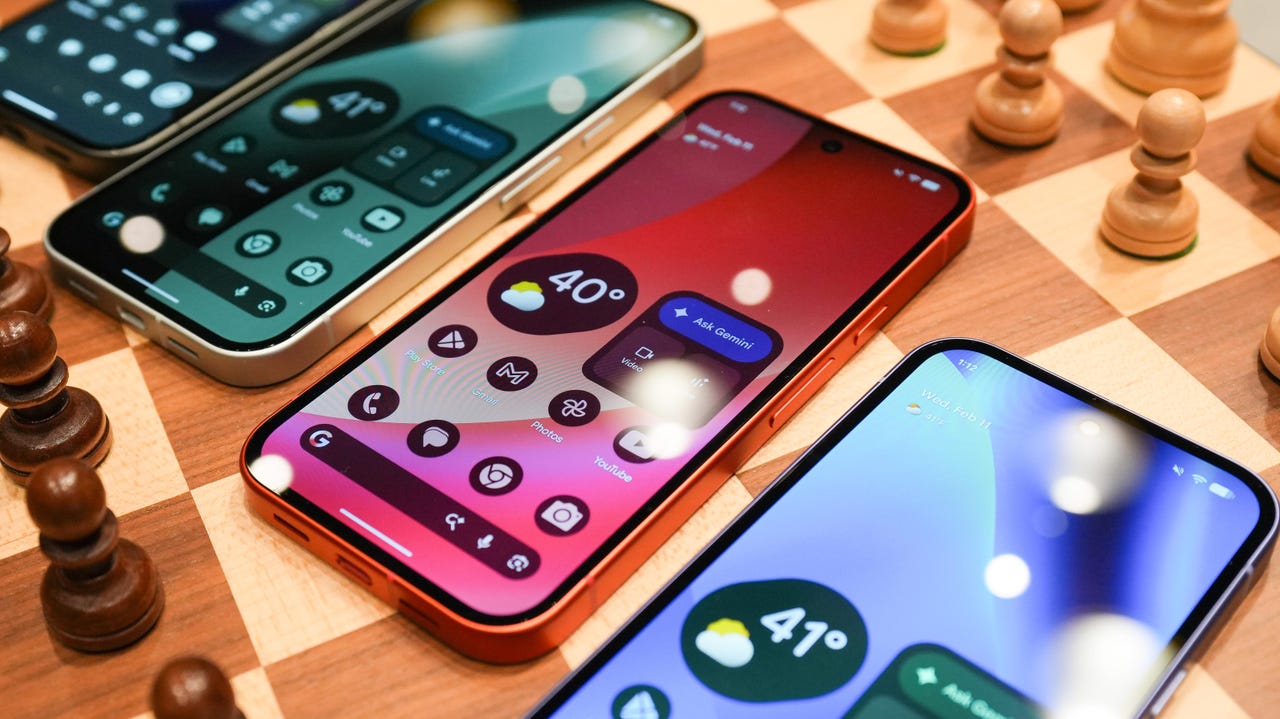
Android 17 is officially here, and it’s a doubly good day for Pixel users, as it’s bringing the June Pixel Drop with it.

Google has rolled out its annual OS update and its latest collection of Pixel-exclusive features at the same time, and the updates pack not only some practical features that will make an impact on how you use your phone daily, but also security protections, some new translation tricks, and more. Pixel Watches — the 2 and later — are included, too, with a potentially life-saving feature addition.

Also: I’m a devoted iPhone user but Android 17 is tempting me with its new video and social features

Here’s a look at what’s new in Android 17, which starts rolling out today to Pixel phones first and then to other devices “throughout 2026,” along with what’s new in the June 2026 Pixel Drop.

What’s new in Android 17?

Since many manufacturers now offer longer update windows, usually 4 to 7 years, a wide range of devices are eligible. The updated OS starts rolling out today to Pixel 6 phones and newer. Samsung’s Galaxy S23 series and newer will get it as One UI 9, along with the Flip 5 and newer, Galaxy A24 and newer, and Tab S9 series. OnePlus will bring Android 17 to the OnePlus 11 and newer.

1. App Bubbles

Perhaps the most useful feature is Bubbles, which lets you turn any app into a floating bubble on your main screen. All you have to do is long-press an app, and it becomes an easy-to-access bubble. If you consistently switch back and forth between apps or need to access a certain app often, like a map or airline app while you’re on a trip, you can now find what you need more quickly.

Pixel Folds are getting a special Bubble Bar at the bottom of the screen that lets you organize, move, and access your recent bubbles from one dedicated space.

2. Additional security

Android 17 is also bringing boosted security. 

To start, you can now grant an app temporary access to your exact location and share only specific contacts. 

Additionally, an enhanced “Mark as lost” feature, located in Find Hub, lets you lock a missing phone with your biometrics, so even if a thief has your passcode, they can’t access anything on your device or turn off tracking. 

Improvements to Live Threat Detection block more suspicious apps and scams, Google explained, and enhanced Advanced Protection mode helps keep you safe from sophisticated threats. Lastly, Google is reducing the number of times someone can attempt to guess your PIN and adding longer wait times between failed attempts.

Also: How to clear your Android phone cache – the 30-second routine every user should be doing

3. Screen reactions and more

Also new is Screen Reactions, which lets you take a selfie video overlaid on a screen recording in lieu of a green screen; a 50/50 gaming mode with a dynamic pad for foldables; and built-in parental controls beyond Pixel devices, so you can set screen time limits and content filtering with a PIN, even if you don’t link your Google Account.

What’s in the June Pixel Drop?

Beyond Android 17, Pixel users are getting several Pixel-specific upgrades in the June Pixel Drop.

1. Custom greetings for Take a Message

Introduced in 2025, Take a Message expands on the Pixel call screening feature and gives you a real-time transcript of what the caller is saying, along with AI-generated follow-up steps. Now, Take a Message has custom greetings, letting you record a personalized outgoing message instead of the default voice.

2. New AI models

Two new AI models are making their way to Android phones. The first is Gemini Omni, a new way to create and edit videos. Gemini Omni lets you type in a prompt and get a custom, high-quality video. This is available on all devices with the Gemini app for Gemini Pro users only.

Also: Everything we saw at Google I/O: Gemini 3.5, Android XR glasses, Spark, and more

Also on the way is Lyria 3, which lets you create original tracks using text prompts or images as inspiration. You can prompt Gemini with the style, vocals, and tempo you want. This is coming to all Android 17 Pixel phones and Folds.

3. Voice Translate for the Pixel 10a

One of the Pixel 10 series’ exclusive features is Voice Translate, which provides a real-time translation on phone calls in the speaker’s voice. ZDNET’s Sabrina Ortiz tried the feature last fall, noting how quickly the feature worked and how well it copied her voice. Voice Translate is getting a small expansion, coming to the Pixel 10a.

Also: iOS 27 envy? 4 features you can already use on an Android phone (including Samsung models)

4. Android Quick Share expansion and more

Pixel users are also getting an expansion of Android Quick Share compatibility with AirDrop, coming to the Pixel 9a and Pixel 8a, and an expansion of Magic Cue to more apps, coming to the Pixel 10 series.

What’s new for Pixel Watches?

Pixel Watches are only getting one new feature, but it’s a potentially big one. Core detection features, including Car Crash Detection, Fall Detection, and Loss of Pulse Detection, are getting emergency sharing. If a severe event is detected, Google explains, your Pixel will call emergency services and notify your chosen contacts. You can toggle emergency contacts on or off for each type of event.

Also: This silent Android feature scans your photos for ‘sensitive content’ – how to uninstall it

Fall Detection is coming to the Pixel Watch, plus the 2, 3, and 4, while Car Crash Detection is coming to the Pixel Watch 2, 3, and 4. Loss of Pulse Detection is only coming to the last two generations, the Pixel Watch 3 and 4.


Source link