This UK Satellite’s Thermal Camera Raises Major Privacy Concerns


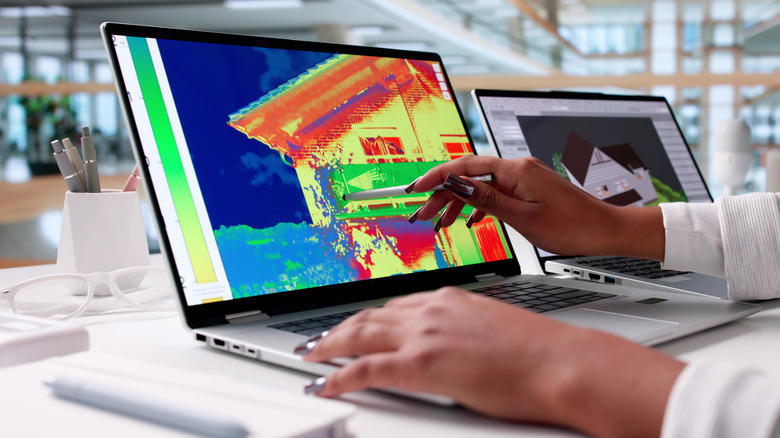
Modern technology often comes with safety concerns, including everything from mobile apps that track your location to traffic cameras that store your personal information. Those concerns also extend to SatVu’s HotSat-2, a thermal imaging satellite currently orbiting the Earth. HotSat-2 can monitor everything from industrial operations to heat patterns in large cities, and it can even detect movement inside buildings. This raises some serious questions about privacy.

HotSat-2 doesn’t work like an X-ray camera that can see through walls, or even everyday tech that can track your activity. But the technology it utilizes has reportedly been used for intelligence missions, including monitoring a nuclear facility in North Korea. SatVu’s capabilities are so precise that the company says its thermal imagery can determine whether specific equipment, such as pumps at a nuclear reactor, is operating or inactive based on its heat signature. The company has also demonstrated the tech’s capability through previous imagery at other locations, including Japan’s Yokosuka Naval Base, the Ruwais Refinery in the United Arab Emirates, and the Albuquerque International Airport in the U.S.

As of this writing, there has been no documented evidence that SatVu has violated anyone’s privacy or personal liberties with its thermal imaging technology. However, the fact that this technology exists and could potentially be used for those purposes is alarming. The company’s stated applications for its satellite technology does include national security, where SatVu says its thermal data can be used to monitor activity, patterns, and anomalies in areas of “strategic importance.”

The evolution of thermal surveillance
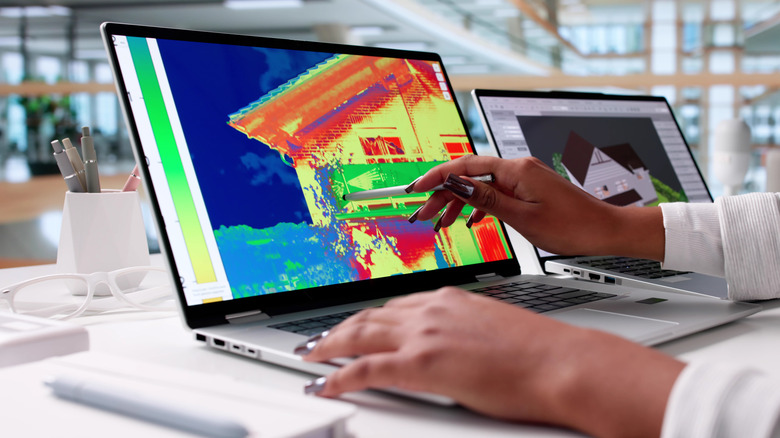
Thermal cameras are used for more than just imaging around your home or garage, and privacy concerns over thermal technology have hit much closer to home than the HotSat-2 satellite. In 2001, the U.S. Supreme Court addressed the privacy implications of thermal imaging in Kyllo v. United States. The case involved federal agents using a thermal imaging device to scan a suspect’s home during a marijuana investigation. The Court ruled that the search violated the suspect’s Fourth Amendment rights because it revealed information about the inside of a private home using a device that wasn’t commonly available to the public. Such an operation would first require a warrant.

Of course, while that case focused on a single home, HotSat-2 represents a much larger application of the same thermal imaging technology. At the time of the satellite’s launch on March 30, 2026, SatVu stated that the satellite’s purpose was to provide insight into the operational status of certain facilities, including power plants, refineries, and transportation hubs. HotSat-2 would serve as the first step of a larger company effort to deploy a constellation of thermal imaging satellites.

On June 29, 2026, HotSat-2 officially transitioned from a tech demonstration satellite to an operational system. The satellite captured thermal imagery at an oil refinery in Cuba, two days before Cuban authorities announced the activity. HotSat-2 also captured thermal signatures at the Sasol Secunda complex in South Africa, allowing analysts to determine the fuel and chemical facility’s operational status.


Source link

Leave a Reply

Subscribe to Our Newsletter

Get our latest articles delivered straight to your inbox. No spam, we promise.

Recent Reviews


How to get Siri AI - join the waitlist today

Apple / Elyse Betters Picaro / ZDNET

Follow ZDNET: Add us as a preferred source on Google.


ZDNET’s key takeaways

  • Siri AI requires the iOS 27 developer beta and a waitlist.
  • A free Apple Developer account is enough to install the beta.
  • Apple says Siri AI will launch in beta later this year.

Apple finally gave Siri the major update everyone has wanted for years, moving it from the voice assistant era to the intelligent AI era.

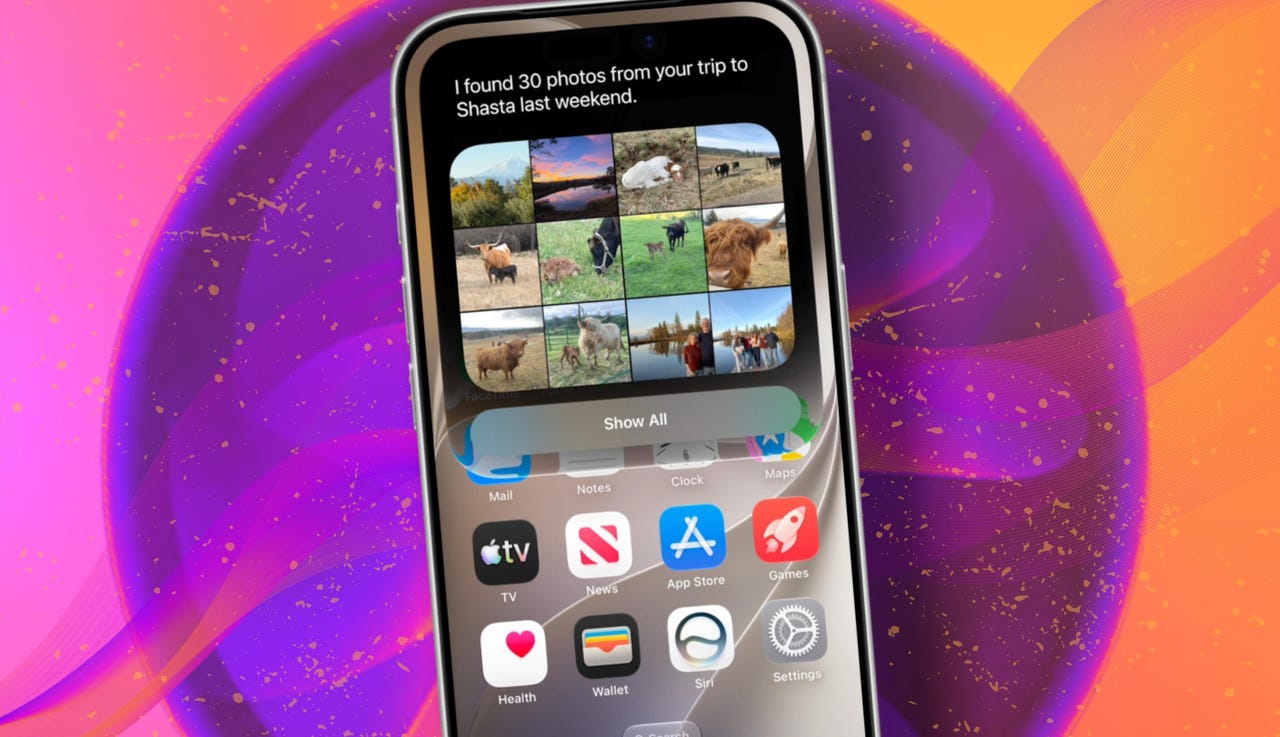
At WWDC 2026 in June, the company introduced Siri AI, a new version of Siri “powered by Apple Intelligence.” Apple said Siri AI is more conversational, understands personal context, can answer broader questions, and can take action across apps. It can also use my information from messages, emails, photos, notes, and the screen itself to get more done on my behalf.

Also: The two biggest iOS 27 features at WWDC for me had nothing to do with Siri AI

The catch? (There’s always one, right?) The iOS 27 developer beta needs to be installed first, and even then, there is a waitlist.

How to get Siri AI

What you’ll need: An iPhone 15 Pro or Pro Max, any iPhone 16 model, or any iPhone 17 model running the iOS 27 developer beta.

Install the iOS 27 developer beta on a secondary device, but be sure to back it up first. Remember, developer betas are unfinished software. Apps can crash or glitch, battery life can drain, and features can disappear.

The good news is Apple no longer requires a $99-a-year Apple Developer Program membership just to get access to beta software. A free Apple Developer account is enough. To join, if you haven’t before, simply go to Apple’s Developer website or use the Apple Developer app, sign in, and agree to the developer terms.

Also: 3 new MacOS 27 features make it worth upgrading right away for me – Siri included

Once that’s done, any new developer beta will automatically appear for the iPhone associated with that Apple Account. To check for iOS 27 and install it now, open Settings > General > Software Update > Beta Updates. From there, select iOS 27 Developer Beta, go back to the Software Update screen, and install the update.

Need help? Check out ZDNET’s guide on installing the iOS 27 developer beta.


Show more

Install the iOS 27 developer beta

Elyse Betters Picaro / ZDNET

After the iOS 27 developer beta is installed, the iPhone will reboot, but Siri AI will not automatically be available to try. Apple is using a waitlist. To join it, open the Settings app, go to Apple Intelligence and Siri, and select “Try New Siri.” Follow the prompts to opt in. Once a spot opens, a notification will appear saying New Siri is available.

Also: Getting real about WWDC and Siri AI – Video

Apple has not confirmed how long the wait will take, but it has said Siri AI will be available in beta “later this year.”


Show more

Join the Siri AI waitlist

Elyse Betters Picaro / ZDNET

Should you wait to try Siri AI?

Maybe. The iOS 27 developer beta is the only route to Siri AI right now. But it’s meant for developers testing apps and APIs, not for most people who need a stable daily phone. Only install it on an iPhone that’s not used every day, or wait for the iOS 27 public beta. That’s expected in July and is easy for anyone to try. An official release for the general public isn’t expected until this fall.

Also: How Data Can Improve Your Health and Wellness

As for me? I joined. I have a spare iPhone running the iOS 27 developer beta right now, and the first thing I did was get on the waitlist to try Siri AI. But that’s because I’m usually excited to try AI tools, and I want to play with the new Siri and be able to write about it. 

Should you join Siri Ai waitlist?

Elyse Betters Picaro / ZDNET

What can Siri AI do?

Apple said the new Siri AI is “a dramatically more capable and conversational assistant” that can help you “find information and get things done throughout the day.” That’s nice, but what, specifically, can it do? According to Apple, the new Siri AI can:

Also: Will your iPhone support Siri AI? The answer is complicated

  • Access “broad world knowledge for up-to-date answers” on any topic.
  • Provide “detailed responses” and “natural back-and-forth conversation.”
  • Use “personal context” in messages, emails, and photos to help find what you need.
  • Find details like restaurant tips, hotel confirmations, and trip photos.
  • Understand what’s on screen and answer questions about it.
  • Use “Visual Intelligence” in Camera and screenshots.
  • Take actions across apps, including drafting emails and editing or sharing photos.
  • Let you ask about images, files, and text from context menus.
  • Generate, rewrite, and proofread text systemwide.
  • Match punctuation and tone in Mail and Messages based on how you usually write.
  • Save “conversation history” in a dedicated Siri app.
  • Offer more expressive voices and better dictation.
  • Help split bills with Apple Cash.
  • Run across iPhone, iPad, Mac, Apple Watch, CarPlay, AirPods, and Vision Pro.
  • Work from Spotlight on iPad and Mac.

When will Siri AI be available?

Apple said it will be available in beta “later this year,” starting in English.

Which iPhone models support Siri AI?

The answer is complicated, but here’s my best guess:

  • iPhone 15 Pro and iPhone 15 Pro Max
  • All iPhone 16 models
  • Any later iPhone models

Apple hasn’t provided a supported device list, but its iOS 27 page shows Siri AI requires “an Apple Intelligence-enabled device.” Apple’s support page for Apple Intelligence also lists “iPhone 15 Pro models, and iPhone 16 models or later.” Apple’s iOS page uses similar wording for Apple Intelligence in iOS 27, as well: “all iPhone 16 models and later, iPhone 15 Pro, iPhone 15 Pro Max.”

There are also regional limits. Apple said Siri AI will “not initially” be available in the EU on iPhone and iPad.


Show more


Source link