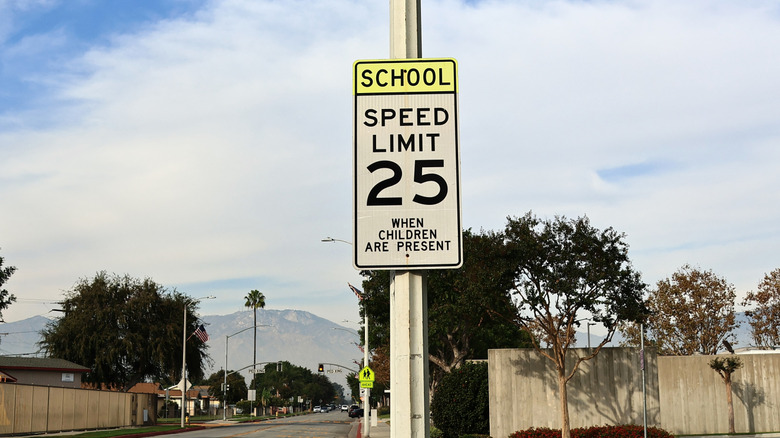

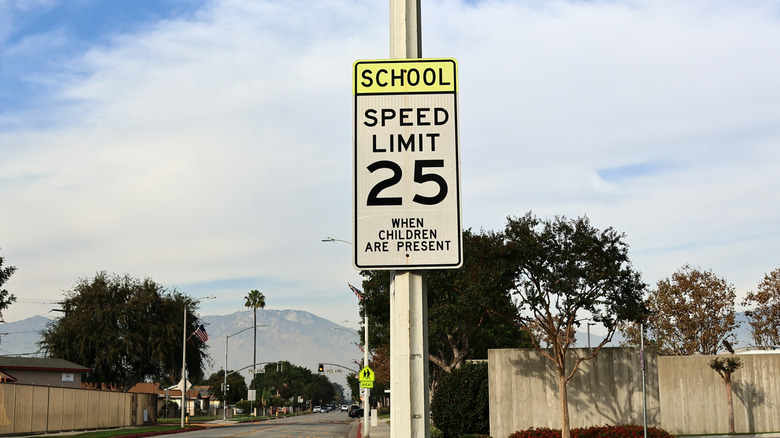
You don’t have to speak Latin to know what a prima facie speed limit is. This fancy-sounding term really just means “on the face of it,” and it represents a type of speed law where going over the posted limit creates a presumption that the driver’s speed was unsafe. However, despite the way it sounds, it doesn’t automatically make that driver guilty of speeding. Instead, drivers still have an opportunity to defend themselves. You’re allowed to argue your speed was reasonable and prudent under the specific road, traffic, or weather conditions at the time.
Unlike an absolute speed limit, where going over the posted number by even 1 mph qualifies as a violation, a prima facie system recognizes that a single posted speed can’t reasonably account for every driving situation. So it shifts the burden of proof to the driver. You’ll have to defend yourself and convince the court that traveling above the posted limit was reasonable given the conditions at the time.
Some states apply prima facie speed laws more broadly than others. Texas, for example, considers all posted speed limits to be prima facie limits. It could have something to do with the fact that the state has some of the fastest speed limits in the country, as well. Illinois, on the other hand, considers all posted speed limits to be absolute.
Can you get a ticket for exceeding the prima facie speed limit?

Under an absolute speed law, exceeding the posted limit is automatically unlawful. That’s grounds for a speeding ticket. But what about under a prima facie or presumed system? In these cases, exceeding the limit creates a legal presumption that you’re allowed to challenge in court. Of course, you’ll have to present enough convincing evidence that your speed was indeed reasonable given the conditions at the time. That could mean pictures of the roadway at the time, diagrams of the location, testimony from others about traffic conditions, and any other evidence that shows traveling faster than the posted limit was a prudent decision. Speeding to keep up with the flow of traffic isn’t an excuse, so don’t try to use it.
Naturally, the more you exceed a prima facie speed limit, the harder it’s probably going to be to convince a judge that you were being reasonable and safe. If anything, it might be easier to argue your case if you got a ticket for going slower than the prima facie speed limit, not faster. Just make sure you’re not going too slow in the left lane, of course. Think bad weather or slow-moving traffic, for example.

Stephan is the sports journalist for the Maple Grove Report.